Smart Rings for Health Tracking (UK 2026) – Sleep, Recovery & Heart Insights on Your Finger
A practical UK comparison of Oura Ring 4, Samsung Galaxy Ring and RingConn Gen 2 for sleep, recovery, heart-rate trends and everyday wellness tracking.
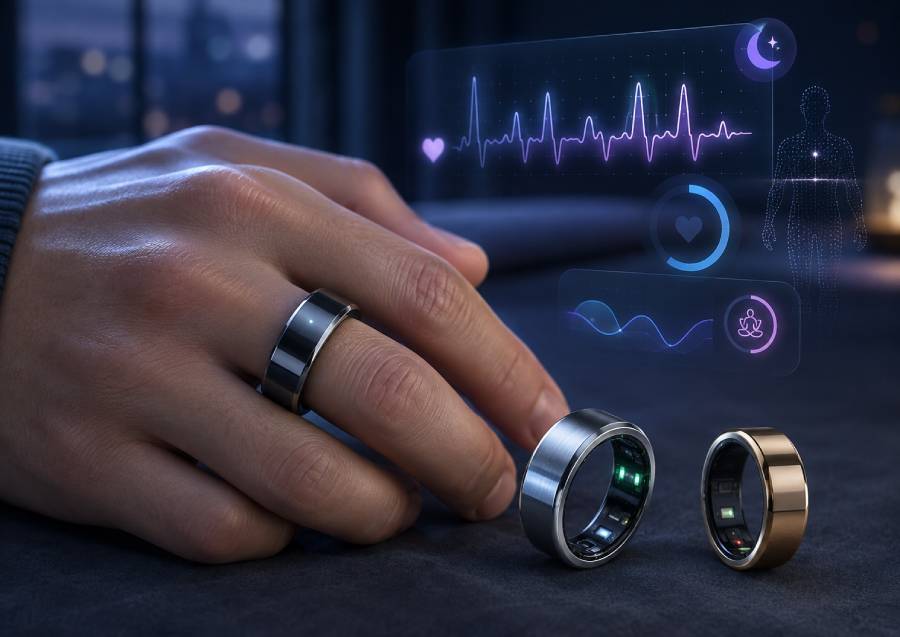
This is our 2026 guide, reviewed for sleep tracking, recovery context, heart-rate trends, comfort, battery life and long-term value.
🥇 Oura Ring 4 — Best overall for sleep, recovery and long-term health trends — Check price on Amazon UK
🥈 Samsung Galaxy Ring — Best for Samsung Galaxy owners and Samsung Health integration — Check price on Amazon UK
🥉 RingConn Gen 2 — Best for sleep-apnoea-focused tracking without a subscription — Check price on Amazon UK
Continue to the full reviews to see which ring best matches your phone, sleep goals and attitude to ongoing costs.
Introduction
This guide is for UK buyers who want unobtrusive overnight tracking without wearing a smartwatch to bed. A smart ring can record useful patterns in sleep, resting heart rate, heart-rate variability, temperature and activity, but the buying decision goes well beyond the number of sensors. Comfort, sizing, app interpretation, phone compatibility, charging frequency and recurring fees all shape whether the ring remains useful after the novelty wears off.
When comparing smart rings for health tracking, UK buyers should also keep their expectations realistic. These are consumer wellness products: they can reveal trends worth paying attention to, but they cannot diagnose sleep apnoea, heart disease or another medical condition. Symptoms or concerning changes still need professional assessment.
We selected exactly three distinct options: Oura Ring 4 for the most rounded sleep and recovery experience, Samsung Galaxy Ring for buyers already invested in Samsung Health, and RingConn Gen 2 for long claimed battery life and sleep-breathing insights without a subscription.
What makes smart rings for health tracking in the UK worth buying in 2026?
- Useful interpretation, not just sensor data: Heart rate, HRV, temperature and oxygen readings are more helpful when the app turns repeated measurements into understandable sleep, recovery and longer-term trends. Oura’s strength is this wider context, while Samsung concentrates on Samsung Health and Energy Score. RingConn has a more focused sleep-breathing proposition.
- The right phone ecosystem: Oura officially supports suitable iPhones and Android phones. Galaxy Ring requires Android 11 or later, Samsung Health and a Samsung account, with certain AI functions reserved for Galaxy smartphones. Current RingConn phone requirements should be checked before purchase because the supplied research does not establish them clearly. [2][4]
- A cost model you accept: Oura’s richer analysis depends on an active membership. RingConn promotes Gen 2 without a recurring subscription. Think about several years of ownership rather than comparing the rings solely by their initial prices. [1][5]
- Comfortable, accurate sizing: A smart ring is intended to maintain sensor contact overnight, so a loose or uncomfortable fit can undermine both readings and regular use. Use the model-specific sizing kit, wear a sample for a full day and overnight where possible, and allow for normal finger swelling. [1][3]
- Realistic battery expectations: Manufacturer figures are not directly comparable test results. Oura states a typical 5–8 days, Samsung quotes up to 6–7 days depending on size, and RingConn claims 10–12 days. Settings, enabled features, fit, battery age and usage can all alter the result. [1][3][5]
- Clear medical boundaries: A heart-rate anomaly or sleep-apnoea risk indication can be a prompt to seek advice, not a diagnosis. NICE says a sleep study is used to diagnose obstructive sleep apnoea/hypopnoea syndrome and determine its severity. [9]
The best choice is therefore the ring whose compromises fit your routine. Oura asks you to accept membership for deeper interpretation; Samsung asks you to commit to Android and ideally the Galaxy ecosystem; RingConn trades some app maturity for subscription-free ownership, longer claimed endurance and specialised sleep-breathing monitoring.
Top 3 smart rings worth buying — UK 2026
1. Oura Ring 4 — Best overall for sleep, recovery and long-term health trends
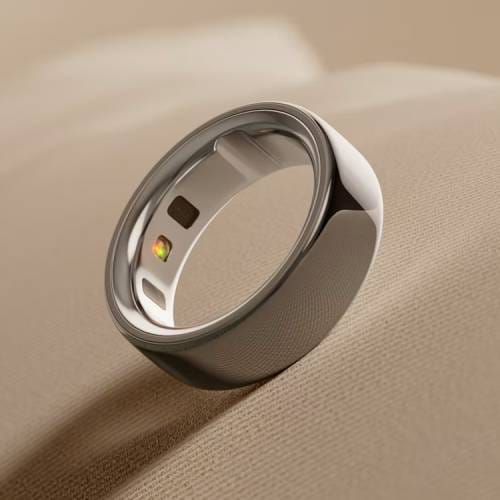
The premium all-round choice for buyers who want their nightly measurements translated into useful, readable health and recovery context.
Oura Ring 4 is the most balanced option in this comparison because its hardware, app and trend analysis are designed to work as one system. Its sensors include green and infrared photoplethysmography for continuous heart rate plus sleep-time HRV and respiration, red and infrared LEDs for overnight blood-oxygen measurement, a digital temperature sensor and an accelerometer. Oura uses these inputs for sleep, activity, stress and readiness-style interpretation rather than leaving the wearer to make sense of isolated figures. [1]
The design matters because this is something you may wear every night. Ring 4 has a fully titanium construction and recessed interior sensors, replacing the more noticeable protruding sensor arrangement found in earlier designs. Independent review observations describe the smoother interior as more comfortable for daily use, although it remains thicker than an ordinary wedding band. [1][7] It comes in sizes 4–15, but Oura says its Ring 4-specific sizing kit should be used because sizing differs between generations. Sensor alignment on the palm side of the finger also matters for reliable contact. [1]
Oura states a typical battery range of 5–8 days. That is enough to avoid daily charging, but it is not a fixed promise: ring size, settings, enabled features, activity, usage and battery age can all affect runtime. The ring has 100 m water resistance for uses including swimming and sauna wear, although Oura does not position it for diving. [1]
Compatibility is broader than Samsung’s: the current Oura requirements list iOS 16 or later, or Android 11 or later with Google Play services and Bluetooth 5.0 support. [2] The important ownership trade-off is membership. Oura ties detailed sleep analysis, advanced temperature monitoring, blood-oxygen sensing, stress and activity features, 24/7 heart-rate tracking and longer-term reports to an active membership. Check the current UK charge before buying rather than assuming the upfront price covers the complete experience indefinitely. [1]
It is also a health-and-recovery tracker first. Buyers wanting detailed live workout information on the wrist may still prefer to use a dedicated sports watch alongside it; independent review findings have judged Oura’s running and workout tracking less compelling than its sleep and trend analysis. [7]
Why this pick
✅ Pros
- Broad sleep, heart-rate, HRV, oxygen, respiration, temperature and activity tracking in one coherent system.
- Comfort-focused titanium design with recessed interior sensors and broad iPhone/Android support.
- Strong app interpretation for recovery and longer-term personal trends rather than disconnected measurements.
⛔ Cons
- The richest analysis requires an ongoing Oura membership, increasing the long-term ownership cost.
Main standout feature: Oura’s main advantage is the way it converts repeated overnight signals into sleep, recovery and longer-term context. That makes it more useful for habit tracking than a ring that merely presents raw numbers.
Who it is best for: Choose Oura Ring 4 if sleep quality and recovery trends are your priorities, you want iPhone or Android flexibility, and you are comfortable paying for membership. Avoid it if you principally want subscription-free ownership or detailed live workout metrics.
2. Samsung Galaxy Ring — Best for Samsung Galaxy owners and Samsung Health integration
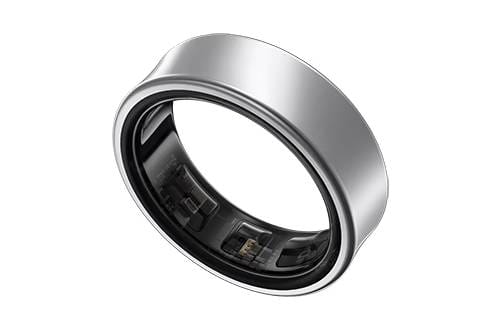
The low-friction choice for Galaxy-phone users who want passive sleep and wellness data inside the Samsung Health system they already use.
Samsung Galaxy Ring has the clearest ecosystem-led role of the three products. It tracks movement, optical heart rate and skin temperature, while Samsung Health uses overnight information for sleep stages and patterns, nighttime movement, heart rate, sleep-time HRV and Sleep Coaching. Energy Score brings together sleep, activity and heart-rate activity to provide a daily overview. [3] The benefit is not necessarily a radically different sensor set; it is having those measurements integrated with the Samsung services and devices already forming part of your routine.
The hardware is deliberately discreet and screen-free. Samsung specifies a titanium frame, a width of 7 mm and thickness of 2.6 mm. Weight varies with size, ranging from 2.3 g for size 5 to 3.3 g for size 15. [3] You review health information and battery status on your phone rather than glancing at the ring, which suits set-and-forget tracking but not buyers who want live information on the device itself. Independent review findings support this passive ownership character. [8]
Samsung rates the ring to 10 ATM and IP68 and says it can be worn while washing hands, showering and swimming. It also warns that water and dust resistance is not permanent and may deteriorate over time. [3] As with any wearable ring, avoid treating titanium or a resistance rating as immunity from scratches or physical damage.
Battery life depends partly on size. Samsung states up to six days for sizes 5–11 and up to seven days for sizes 12–15 under its test conditions. The case can be charged wirelessly or through USB-C, which is convenient for travel and gives the ring a protected place to recharge. [3] Do not assume every size will achieve seven days, particularly when real use and battery ageing differ from controlled testing.
Compatibility is the decisive limitation. A compatible Android smartphone running Android 11 or later, the current Samsung Health app and a Samsung account are required. Some AI functions additionally require a Galaxy smartphone. [4] It is therefore not suitable for iPhone owners, and people with non-Samsung Android phones should confirm exactly which Samsung Health and Galaxy AI functions will work before paying.
Fit deserves the same attention as the technology. Samsung advises buyers to wear a sample sizing ring for more than a day before confirming their size. [3] That allows you to assess comfort during sleep and account for finger-size changes across the day.
Why this pick
✅ Pros
- Natural integration with Samsung Health, including sleep insights, Sleep Coaching and Energy Score.
- Lightweight titanium construction with strong stated water and dust resistance for everyday wear.
- Charging case supports wireless or USB-C charging and is convenient for travel.
⛔ Cons
- It does not support iPhone, and some of its most attractive AI functions require a Samsung Galaxy smartphone.
Main standout feature: Its defining advantage is Samsung Health integration. For an existing Galaxy owner, sleep, activity and heart information arrive in a familiar app rather than requiring an entirely separate wellness ecosystem.
Who it is best for: Buy it if you already use a compatible Galaxy phone and want a screen-free companion to Samsung Health. Avoid it if you own an iPhone or would be buying into Samsung’s ecosystem solely for the ring.
3. RingConn Gen 2 — Best for sleep-apnoea-focused tracking without a subscription
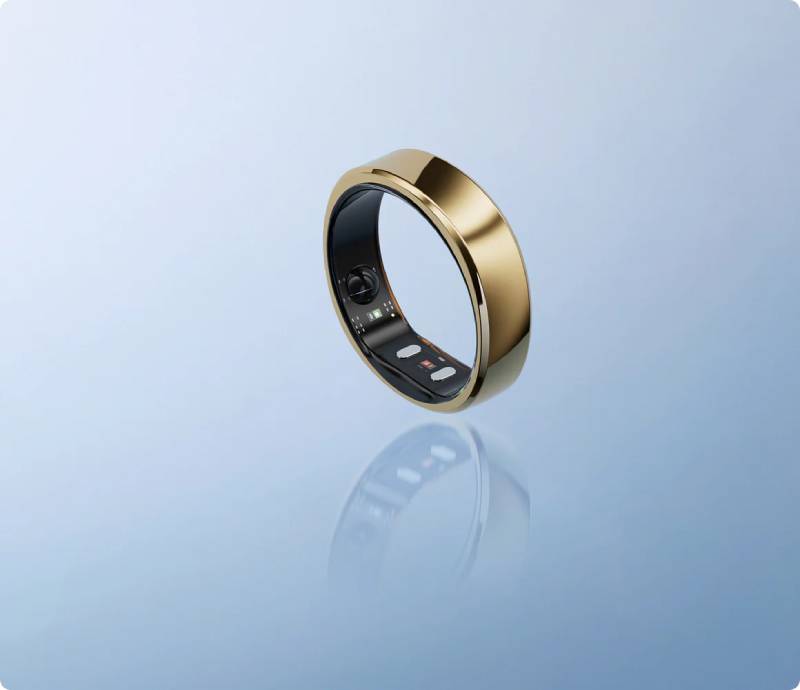
The specialist choice for buyers prioritising sleep-breathing trends, long claimed battery life and freedom from a recurring membership fee.
RingConn Gen 2 has a narrower but highly practical reason to buy it. RingConn promotes obstructive-sleep-apnoea risk assessment using estimated AHI-related information, higher-frequency overnight SpO₂ monitoring and counts of oxygen drops of 3% or more. The ring also covers sleep stages including REM and deep sleep, respiration and HRV insights. [5] These tools may help a wearer spot recurring patterns and prepare a more informed conversation with a clinician.
The wording is important: this is risk-oriented wellness monitoring, not a sleep-apnoea diagnosis. NICE says diagnosis and assessment of obstructive sleep apnoea/hypopnoea syndrome severity are based on a sleep study, and it warns that oximetry alone can be inaccurate in some circumstances. [9] Loud snoring, witnessed breathing pauses, gasping or choking during sleep, or persistent daytime sleepiness should prompt a discussion with a GP regardless of what the app reports.
RingConn’s other major advantage is ownership economy. Gen 2 is promoted without subscription fees, so its health and sleep features do not add another recurring membership. [5] That makes it attractive for someone planning to gather trends over several years and unwilling to pay continuously for app analysis. The compromise is that independent review findings have described some app functions as beta, so buyers expecting the most mature and polished software experience may find Oura more convincing. [6]
The ring uses an aerospace-grade titanium-alloy construction with an epoxy-resin inner material. Depending on size, RingConn states a weight of 2–3 g and a thinnest point of 2 mm. [5] Independent testing has found it slim, light and comfortable, although the finish was reported to be susceptible to scratching. [6] People who lift heavy weights or regularly expose jewellery to hard surfaces should take particular care.
Battery endurance is the headline specification. RingConn claims 10–12 days from the ring and more than 150 days of additional power through the charging case. [5] Those are manufacturer estimates rather than guaranteed results. Independent review observations indicate that sleep-apnoea monitoring can reduce battery life, so buyers using its signature feature most frequently should not expect the maximum figure on every charge. [6]
The supplied research does not establish current official mobile operating-system requirements for Gen 2. Before ordering, check RingConn’s current compatibility information for your exact phone. Amazon shoppers should also verify that the listing is specifically for RingConn Gen 2, not Gen 2 Air or Gen 3.
Why this pick
✅ Pros
- Specialised overnight oxygen and sleep-breathing risk information alongside sleep stages, respiration and HRV.
- No recurring subscription fee for its health-tracking proposition.
- Class-leading claimed 10–12-day ring battery, plus substantial charging-case reserve.
⛔ Cons
- Sleep-apnoea monitoring can shorten battery life, and the app may feel less mature than Oura’s established software experience.
Main standout feature: RingConn combines sleep-breathing-focused monitoring with subscription-free ownership. No other ring in this comparison offers that same pairing as its primary reason to buy.
Who it is best for: Choose it if you want to observe sleep-breathing and oxygen patterns without paying a membership and value longer intervals between charges. Avoid it if you expect diagnostic answers or want the most polished long-term health interpretation.
Smart rings for health tracking UK comparison
| Best for | Exact model | Key specifications | Key strength | Main limitation | Typical UK buyer |
|---|---|---|---|---|---|
| Sleep, recovery and long-term trends | Oura Ring 4 | Titanium; recessed sensors; heart rate, sleep HRV, respiration, overnight SpO₂, temperature and movement; typical 5–8-day battery | Most coherent all-round interpretation and cross-platform support | Detailed feature set requires active membership | iPhone or Android user who values app-led health context |
| Samsung Health integration | Samsung Galaxy Ring | Titanium; optical heart-rate, temperature and movement sensors; 10 ATM/IP68; up to 6–7 days depending on size | Low-friction fit for Galaxy phones and Samsung Health | Android only; some AI features need a Galaxy smartphone | Existing Samsung Galaxy owner seeking passive sleep tracking |
| Sleep-breathing trends without subscription | RingConn Gen 2 | Titanium alloy; sleep stages, SpO₂, respiration and HRV; claimed 10–12-day battery; charging case | Subscription-free sleep-apnoea-risk-oriented monitoring | Not diagnostic; specialist monitoring can reduce battery life | Value-conscious buyer focused on sleep breathing and endurance |
Oura Ring 4: 👉 Check price on Amazon UK
Samsung Galaxy Ring: 👉 Check price on Amazon UK
RingConn Gen 2: 👉 Check price on Amazon UK
What to consider before buying
- Start with your phone: Oura is the flexible iPhone/Android option. Galaxy Ring requires Android and makes most sense with a Galaxy smartphone. Check RingConn’s current official compatibility details for your exact handset before purchase. [2][4]
- Use the correct sizing process: Do not order from your ordinary jewellery size alone. Wear the brand’s sample ring through a normal day and overnight where possible. Fingers swell, and secure sensor contact affects comfort and data consistency.
- Calculate ongoing value: Oura’s membership is central to its richer analysis. RingConn’s no-subscription approach can be more economical over several years. Compare total ownership cost, not just today’s price. [1][5]
- Treat battery figures as estimates: Oura quotes a typical range, while Samsung and RingConn use “up to” claims. Ring size, settings, battery age and specialist monitoring can all change charging frequency.
- Think about your daily routine: Titanium helps with weight and durability, but finishes can still scratch. Remove a ring where it could be crushed, catch on equipment or be damaged by heavy barbell work. Water resistance should not be assumed to remain unchanged forever.
- Respect the medical boundary: Smart-ring information may highlight a pattern, but it cannot confirm sleep apnoea or explain heart-related symptoms. Seek medical advice for symptoms or persistent concerns. [4][9]
Frequently asked questions
Which is the best smart ring for sleep, recovery and heart-rate trends?
Oura Ring 4 is the strongest all-round choice in this comparison. It combines continuous heart rate, sleep HRV and respiration, overnight blood oxygen, temperature variation and movement with detailed sleep and longer-term interpretation. Its main trade-off is that the fuller feature set depends on an active Oura membership. It is better suited to health and recovery context than to replacing a sports watch for live workout data. [1][7]
Can Samsung Galaxy Ring work with an iPhone?
No. Samsung requires a compatible Android phone running Android 11 or later, Samsung Health and a Samsung account. Certain AI features also require a Galaxy smartphone. If you use an iPhone, Oura Ring 4 is the suitable cross-platform option among these three, subject to Oura’s current operating-system and Bluetooth requirements. [2][4]
Can RingConn Gen 2 diagnose sleep apnoea?
No. RingConn describes risk assessment, estimated AHI-related information and overnight oxygen-drop tracking, not a clinical diagnosis. NICE says a sleep study is used to diagnose obstructive sleep apnoea/hypopnoea syndrome and establish severity. Speak to a GP if you have loud snoring, witnessed breathing pauses, choking or gasping in sleep, or persistent daytime sleepiness. [5][9]
How often do these smart rings need charging?
Oura states a typical 5–8 days. Samsung quotes up to six days for sizes 5–11 and up to seven days for sizes 12–15. RingConn claims 10–12 days, plus substantial reserve from its case, but sleep-apnoea monitoring may shorten that figure. Treat all three as estimates affected by settings, usage and battery condition. [1][3][5][6]
Final verdict
- Oura Ring 4 is the best overall choice for broad sleep, recovery and long-term health context, provided you accept the membership cost — 👉 Check price on Amazon UK
- Samsung Galaxy Ring is the best fit for Galaxy owners who want their sleep and wellness information integrated into Samsung Health — 👉 Check price on Amazon UK
- RingConn Gen 2 is the best subscription-free choice for long claimed battery life and sleep-breathing-focused trends — 👉 Check price on Amazon UK
For most UK buyers, Oura is the safest all-round recommendation. Samsung is more logical if Galaxy integration removes friction from daily use, while RingConn offers the clearest value case for avoiding a recurring fee. Whichever you choose, prioritise sizing and compatibility, and treat health readings as personal trends rather than medical conclusions.
Thank you for reading!
- ChoiseWise