Samsung Galaxy S26 vs Google Pixel 10 vs OnePlus 15 (UK 2026) – Ultimate Flagship Showdown
Three very different flagships — how the Galaxy S26, Pixel 10 and OnePlus 15 compare on camera, speed and battery.
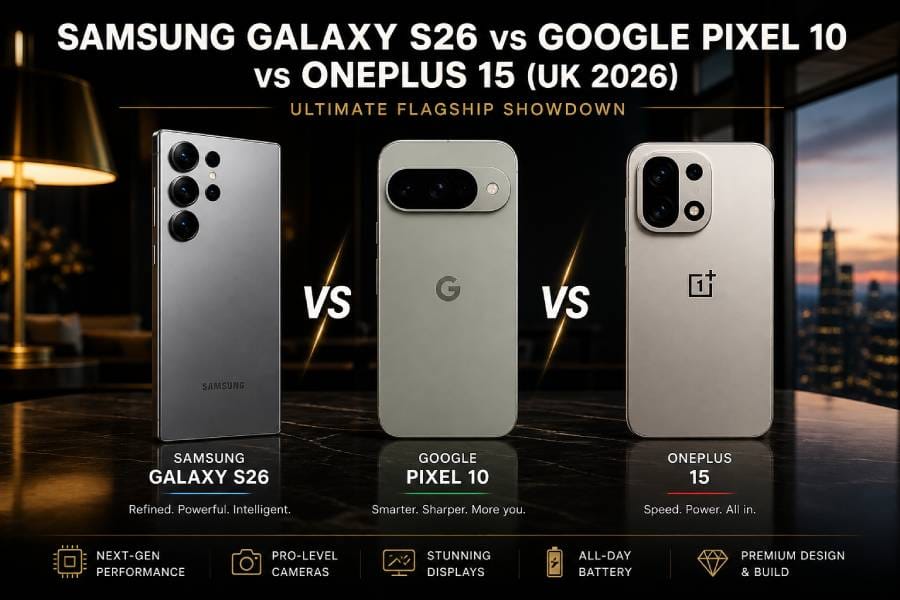
Compared for performance, camera, battery & value – updated 2026
🥇 Samsung Galaxy S26 – Best overall flagship → Check price on Amazon UK
🥈 Google Pixel 10 – Best camera & AI → Check price on Amazon UK
🥉 OnePlus 15 – Best performance & battery → Check price on Amazon UK
👉 Scroll down for full comparisons and Amazon UK links.
Introduction
This guide is for UK buyers who want one premium Android flagship in 2026 and have narrowed the shortlist to three of the clearest choices. The Samsung Galaxy S26 is the balanced option: compact enough to feel manageable, polished enough to feel premium, and backed by Samsung’s mature software, ecosystem extras and long support window. The Google Pixel 10 is the camera-and-AI-first choice, aimed at buyers who want the smartest point-and-shoot photography, Google’s cleanest version of Android and genuinely useful on-device features. The OnePlus 15 takes the opposite route: it is built around raw speed, huge battery capacity, very fast charging and gaming-ready hardware. [1]
To keep this comparison useful for real buyers rather than just spec-sheet readers, the phones were weighed on the things that matter most day to day: sustained performance, camera reliability, battery endurance, charging convenience, software support, AI features, design and UK value. Official launch materials and product pages were checked first, then matched against independent review testing to see how each phone behaves in normal use.
What Makes a Great Flagship Phone in 2026
- Performance and chipset power: A proper flagship still needs to feel fast three years from now, not just on launch day. That means strong peak speed, good thermal control and enough headroom for AI features, gaming and multitasking. Samsung aims for balance, Google ties performance closely to on-device AI, and OnePlus pushes hardest on outright speed. [2]
- Cameras and AI photography: In 2026, the best phone camera is not just about megapixels. Processing, colour science, zoom quality, low-light consistency and editing tools matter just as much. That is why Pixel remains so strong, Samsung stays dependable, and OnePlus is more appealing for buyers who value speed and battery over camera supremacy.
- Display quality and refresh rate: A flagship screen should be bright, colour-rich and smooth, whether you are reading outdoors, streaming, scrolling or gaming. Samsung and Google prioritise polished everyday viewing, while OnePlus adds a larger 1.5K LTPO panel with up to 165Hz in supported games.
- Battery life and charging speed: Good battery life is now expected, but charging convenience separates great phones from merely good ones. Samsung is adequate, Pixel is comfortably modern with Qi2-friendly wireless charging, and OnePlus is the endurance champion with the fastest charging setup of the group for UK buyers.
- Software support and AI features: A flagship should age well. Samsung and Google both offer seven years of OS and security support, while OnePlus is smoother than ever on OxygenOS 16 but still trails on long-term update length. AI now matters too, especially for search, writing, call handling, editing and contextual help.
- Build quality, water resistance and extras: Premium materials, dependable water resistance and useful extras all add up. Samsung and Pixel offer IP68 protection with polished flagship finishes; OnePlus goes further on paper with IP66, IP68, IP69 and IP69K ratings plus magnetic-compatible cases.
- Value for money: Raw spec value is only one part of the story. In UK launch pricing, Pixel 10 started lowest at £799, OnePlus 15 undercut Samsung at £849 on OnePlus UK, and Galaxy S26 launched at £879. The best-value buy therefore depends on whether your priority is camera, balance or endurance. [3]
Top 3 Picks
1. Samsung Galaxy S26 – Best overall flagship
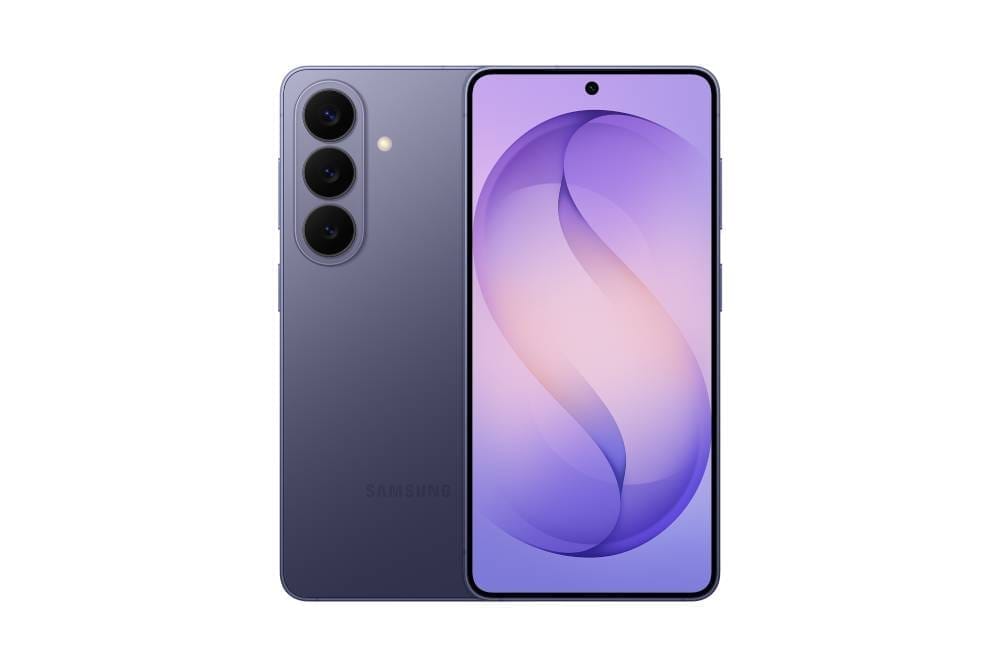
Samsung Galaxy S26 is the safest premium buy in this comparison because it gets almost everything right. In the UK, Samsung positions it as the compact flagship in the range, with a 6.3-inch Dynamic AMOLED 2X display, 12GB of RAM, 256GB or 512GB storage, a 4,300mAh battery and a lightweight 167g body. The regular UK model also uses Samsung’s Exynos 2600 for Galaxy, and independent testing suggests it is close enough to flagship Qualcomm performance to feel genuinely quick in day-to-day use. Add One UI 8.5 on Android 16, Samsung’s Galaxy AI features and software support through 2033, and it looks like the most rounded long-term buy here. It also makes the most sense if you already use Samsung accessories or prefer the company’s broader ecosystem. [4]
The camera story is less flashy but still practical. You get a 50MP main camera, 12MP ultra-wide, 10MP 3x telephoto and a 12MP selfie camera. Samsung’s hardware is not the most adventurous in this group, yet the actual experience is reliable: good detail in daylight, very solid video for a phone this size, strong selfies and useful software touches such as Nightography processing, Photo Assist and Horizontal Lock video stabilisation. Where it falls short is against the Pixel 10 for effortless still photography in difficult lighting, and against the OnePlus 15 for sheer hardware drama. Still, if you want a camera system that rarely surprises you in a bad way, the S26 is easy to trust.
Battery life is good rather than class-leading. Samsung quotes up to 30 hours of video playback, and real-world review testing puts the phone at roughly 40 hours between charges with moderate use. That is enough for a full day with confidence, but not the multi-day stamina you get from OnePlus. Charging is similarly sensible rather than standout: 25W wired and 15W wireless. In return, you get the most balanced blend of size, build, display quality, software longevity and day-to-day polish in the group, which is why it takes the overall crown. [5]
Why this pick
✅ Pros:
- Excellent all-round balance of display, performance, size and software longevity.
- Useful Galaxy AI tools, polished One UI and strong Samsung ecosystem integration.
- Reliable cameras and very good video in a manageable flagship body.
⛔ Cons: Charging and low-light still photography are good, not best-in-class.
Main standout feature: Samsung gets the balance right better than anyone here. The S26 does not dominate a single category, but it has the fewest meaningful compromises for most UK buyers.
Who it’s best for: Buyers who want the safest all-round flagship, especially if they value display quality, polished software, strong support and the wider Samsung ecosystem more than headline-grabbing charging speeds or AI gimmicks.
Amazon UK Check: 👉 Check price on Amazon UK – the Galaxy S26 launched from £879 in the UK, so it is worth comparing live Amazon pricing across the 256GB and 512GB versions.
Check our website: for more details about Samsung Galaxy S26.
2. Google Pixel 10 – Best camera & AI
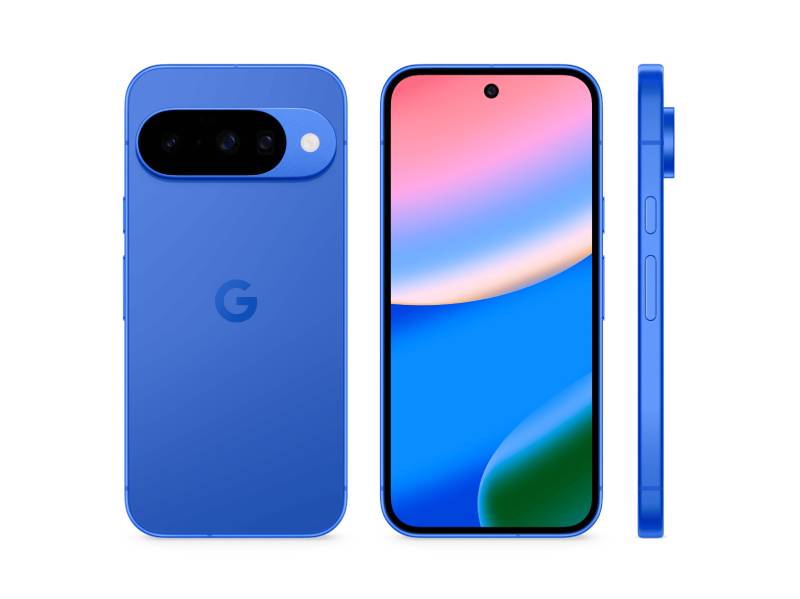
Google Pixel 10 is the pick for buyers who care most about photography, software intelligence and a cleaner Android experience. Official specs give it a 6.3-inch OLED display with 60–120Hz refresh, 12GB of RAM, 128GB or 256GB storage, the Tensor G5 chip and a 4,970mAh battery, while Google launched it in the UK from £799. It is not trying to win the benchmark war against OnePlus, and it is not as broad an all-round package as Samsung, but it is arguably the most distinctive flagship of the three because Google’s hardware and software are pulling in exactly the same direction. [6]
That is clearest in the camera system. Pixel 10 finally gives the base model a proper zoom story with a triple-camera setup: 48MP main, 13MP ultra-wide and a 10.8MP 5x telephoto, plus a 10.5MP selfie camera. In use, that translates into the most dependable point-and-shoot photography in this showdown. Independent review testing found that Google still leads at producing good-looking images without much effort from the user, especially in mixed lighting and higher-contrast scenes. The AI tools are also more practical than most rivals’ efforts: Auto Best Take, Add Me and Camera Coach all have clear everyday uses, while Magic Cue is one of the better examples of smartphone AI helping quietly in the background rather than shouting for attention.
Performance is improved too. The Tensor G5 is a meaningful step up over Google’s previous chip and is designed first and foremost to run Pixel’s AI systems well, but it still trails the fastest Qualcomm silicon on raw output. Battery life is solid, with Google quoting 24+ hours and review testing seeing about 33 hours of heavy use or roughly a day and a half to two days more generally. Charging is respectable rather than blistering: up to 55% in around 30 minutes with a 30W USB-C PPS charger, plus 15W Pixelsnap wireless charging with Qi2 certification. As a result, the Pixel 10 is not the absolute beast of the group. It is simply the easiest recommendation for buyers who want the best photos and the most useful AI.
Why this pick
✅ Pros:
- Best point-and-shoot camera experience in this comparison, now with a genuinely useful 5x telephoto.
- Clean Android 16 experience with seven years of updates and strong Google AI features.
- Good battery life and Qi2-friendly Pixelsnap wireless charging add practical everyday convenience.
⛔ Cons: Raw speed and charging are comfortably good, but they are not the strongest in this three-phone field.
Main standout feature: The Pixel 10 is the most intelligent camera phone here. It combines very strong image processing with the most convincing day-to-day AI features of the three.
Who it’s best for: Buyers who want photography first, clean Android second and helpful Google AI throughout. If you take lots of family photos, want great colours without editing and prefer smart software over spec-sheet bravado, this is the one to buy.
Amazon UK Check: 👉 Check price on Amazon UK – the Pixel 10 launched from £799 in the UK, which makes Amazon deals especially interesting if camera quality is your top priority.
Check our website: for more details about Google Pixel 10
3. OnePlus 15 – Best performance & battery
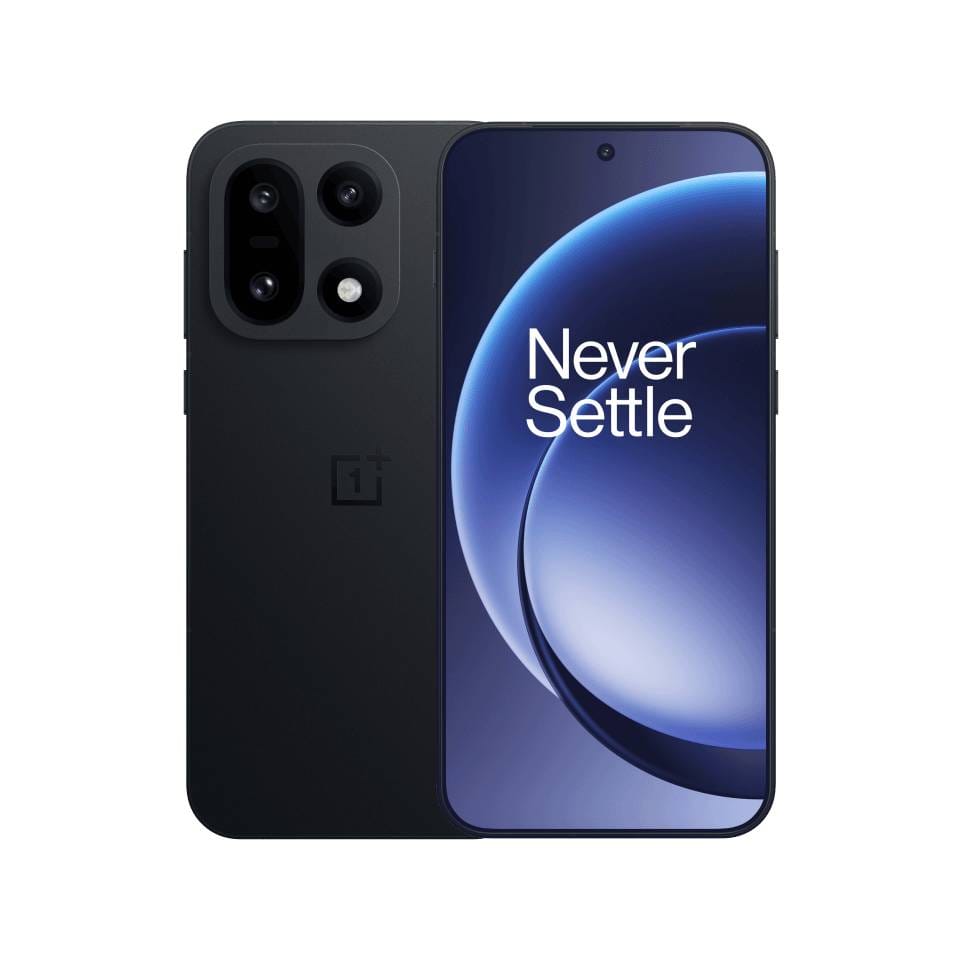
OnePlus 15 is the most specialised flagship in the comparison, but that specialisation is exactly why it earns a place. It is built for buyers who want raw pace, serious endurance and a phone that still feels fast when the workload gets heavier. Official launch materials put the focus front and centre: Snapdragon 8 Elite Gen 5, a triple-chip architecture, aggressive cooling, a 6.78-inch 1.5K LTPO display and a 7,300mAh Silicon NanoStack battery. The UK official listing also positioned it sharply on price, with the 12GB/256GB model listed at £849 before trade-in and a 16GB/512GB option above that. [7]
Performance is where the OnePlus 15 really separates itself. OnePlus says the phone is built around sustained speed, and independent testing backs that up. Tom’s Guide recorded Geekbench 6 scores of 3,618 single-core and 11,116 multi-core, while review coverage from TechRadar and 91mobiles repeatedly highlighted how strong the phone feels in gaming and heavy multitasking. The display is equally ambitious: adaptive 1–120Hz in normal use, but up to 165Hz in supported games, plus always-on 120fps in selected titles according to OnePlus. If you play demanding games, keep many apps open or simply want a phone that feels overpowered in the best way, this is the standout. [8]
The camera system is better than “performance phone” stereotypes suggest, but it is still not the main reason to buy this handset. You get a triple 50MP rear setup with a 3.5x periscope telephoto and a 32MP front camera, and official launch materials emphasise DetailMax processing, action shooting and strong video features. In practice, reviews are positive about daylight detail, zoom and motion handling, but more reserved about low-light consistency and overall camera class leadership. Software is smooth too, with OxygenOS 16, Plus Mind and Google AI features onboard, though update support remains shorter than Samsung and Google at four years of Android updates and six years of security updates.
Battery and charging are the real headline. This phone lasts more than two days in serious testing, with some reviewers pushing close to three days. OnePlus pairs that huge battery with up to 120W wired charging internationally, 50W AIRVOOC wireless charging and excellent durability credentials including IP66, IP68, IP69 and IP69K. Put simply, no other phone here matches the OnePlus 15 for heavy-use endurance.
Why this pick
✅ Pros:
- Fastest performance of the three, especially for gaming and sustained heavy use.
- Best battery life in the comparison, paired with genuinely ultra-fast charging.
- Big, smooth display and very strong value for buyers who prioritise performance-per-pound.
⛔ Cons: Camera tuning and long-term software support are not as convincing as Samsung or Google.
Main standout feature: Nothing else here combines this level of raw speed, battery size and charging speed in one package. It is the most obvious choice for power users.
Who it’s best for: Performance-hungry users, mobile gamers, frequent travellers and anyone who is tired of daily charging. If your priority is a phone that keeps going long after the others want a top-up, the OnePlus 15 is the easiest recommendation of the group.
Amazon UK Check: 👉 Check price on Amazon UK – OnePlus UK listed the 12GB/256GB model at £849 before trade-in, so Amazon pricing is worth checking if you want flagship speed without paying Samsung money.
Comparison Table
|
FEATURE |
Samsung Galaxy S26 |
Google Pixel 10 |
OnePlus 15 |
|
Display |
6.3in
Dynamic AMOLED 2X, FHD+, 120Hz |
6.3in
OLED, 1080 x 2424, 60–120Hz |
6.78in
LTPO OLED, 1.5K, 1–120Hz adaptive, up to 165Hz in gaming |
|
Processor |
Exynos
2600 for Galaxy in the UK |
Google
Tensor G5 |
Snapdragon
8 Elite Gen 5 |
|
RAM |
12GB |
12GB |
12GB
/ 16GB |
|
Storage |
256GB
/ 512GB |
128GB
/ 256GB |
256GB
/ 512GB |
|
Rear cameras |
50MP
main + 10MP 3x telephoto + 12MP ultra-wide |
48MP
main + 13MP ultra-wide + 10.8MP 5x telephoto |
50MP
main + 50MP ultra-wide + 50MP 3.5x telephoto |
|
Front camera |
12MP |
10.5MP |
32MP |
|
Battery |
4,300mAh |
4,970mAh |
7,300mAh |
|
Charging |
25W
wired, 15W wireless |
30W
wired, Qi2/Pixelsnap wireless up to 15W |
Up
to 120W wired in UK/international markets, 50W AIRVOOC wireless |
|
Operating system at launch |
One
UI 8.5 based on Android 16 |
Android
16 |
OxygenOS
16 based on Android 16 |
|
IP rating |
IP68 |
IP68 |
IP66
/ IP68 / IP69 / IP69K |
|
UK launch timing |
Announced
February 2026, on sale March 2026 |
Announced
August 2025, on sale August 2025 |
Launched
November 2025 |
|
Best for |
Buyers
who want the safest all-round flagship |
Buyers
who want the best camera and Google AI |
Buyers
who want maximum performance and battery life |
Samsung Galaxy S26 → Check price on Amazon UK
Google Pixel 10 → Check price on Amazon UK
OnePlus 15 → Check price on Amazon UK
Key Differences
- Chipset and AI: Samsung Galaxy S26 is the more balanced flagship, with enough speed for anything most buyers will do and a strong Galaxy AI layer on top. Google Pixel 10 is less about benchmark dominance and more about AI-aware responsiveness, with Tensor G5 built around Google’s software stack. OnePlus 15 is the raw-speed choice, pairing Snapdragon 8 Elite Gen 5 with a triple-chip architecture, aggressive cooling and gaming-centric tuning.
- Camera focus: Pixel 10 is the best camera-first phone here, especially if you value effortless point-and-shoot photos, dependable 5x zoom and smart Google editing tools. Samsung Galaxy S26 is more conservative on hardware, but still very reliable for everyday photos, selfies and video. OnePlus 15 is strong in daylight and action, yet still feels more performance-first than camera-first in overall tuning. [9]
- Battery and charging: Samsung gives you dependable flagship stamina, but it is the least exciting on charging. Pixel 10 lasts longer and adds Qi2-friendly wireless charging. OnePlus 15 is on another level altogether, with a 7,300mAh battery and class-leading wired and wireless charging for heavy users.
- Software and updates: Samsung and Google are easier long-term buys because both offer seven years of support. Samsung’s One UI is richer and more customisable; Google’s Pixel software is cleaner and more tightly tied to Gemini and Magic Cue. OnePlus 15 feels slick and modern on OxygenOS 16, but its support promise is shorter.
- Price and value: At launch, Pixel 10 set the price floor at £799, OnePlus 15’s UK listing started at £849, and Galaxy S26 launched from £879. So Pixel is the best camera value, OnePlus is the best performance value, and Samsung is the best “least-risk” premium buy.
What to Consider Before Buying
- Your priorities: Start with the main question. If you want the safest all-round choice, buy Samsung. If you care most about photography and AI, buy Pixel. If you want speed, gaming and battery first, buy OnePlus. [10]
- Size and ergonomics: Samsung Galaxy S26 is the easiest to live with physically, thanks to its lighter 167g compact body. Pixel 10 is still manageable but noticeably heftier at 204g, while OnePlus 15 is the largest phone here and suits buyers who prefer a bigger screen.
- Display preferences: If you want a smaller flagship that still feels premium, Samsung and Pixel are both strong. If you want the most expansive screen and smoothest gaming-ready panel, OnePlus is clearly ahead.
- Software ecosystem: Samsung makes most sense if you already like One UI or use other Samsung kit. Pixel is ideal if you want Google’s clean Android design and Gemini-led features. OnePlus sits between them with more customisation and strong fluidity, but not the same long support promise.
- Battery and charging habits: If you charge overnight and do not want to think about it, Samsung is fine. If you want an extra safety margin plus magnetic wireless convenience, Pixel is more attractive. If you hate charging anxiety altogether, OnePlus is the obvious answer.
- Updates and support: Samsung and Google are the long-haul choices with seven-year support windows; OnePlus is less reassuring if you plan to keep the phone for many years.
- Price and budget: Launch pricing puts Pixel first for camera value, OnePlus first for performance value and Samsung first for buyers who are willing to pay a bit more for the most rounded package. Live Amazon discounts can change the gap, which is why those price checks matter.
FAQ
Which phone has the best camera?
For most buyers, the Google Pixel 10 has the best camera because it delivers the most dependable point-and-shoot results, very strong processing and a genuinely useful 5x telephoto. Samsung Galaxy S26 is still very good, especially for balanced everyday shooting and video, while OnePlus 15 is better thought of as a performance flagship with a good camera rather than a camera flagship.
How long does the battery last on each phone?
Samsung Galaxy S26 is roughly a solid full-day phone and can stretch towards 40 hours with moderate use. Google Pixel 10 is stronger at around a day and a half to two days for many people. OnePlus 15 is the battery king and can comfortably pass two days, with some testing getting close to three.
Are these phones 5G and future-proof?
Yes. All three support 5G, all launched on Android 16-based software, and all sit in the premium flagship tier. The difference is long-term support: Samsung and Google both go longer than OnePlus.
Do any of these phones have unique features?
Yes. Samsung Galaxy S26 stands out for Galaxy AI and its polished ecosystem feel; Pixel 10 stands out for Magic Cue, Camera Coach and Pixelsnap; OnePlus 15 stands out for its 165Hz gaming-ready display, 7,300mAh battery and unusually broad durability ratings.
Which phone is best value?
If value means camera quality per pound, Pixel 10 is the strongest answer. If it means performance and battery per pound, OnePlus 15 is the best buy. If it means taking the least risk and getting the most balanced premium experience, Samsung Galaxy S26 earns its higher price.
Final Verdict
Samsung Galaxy S26: best for users who want the safest all-round flagship and the fewest compromises. → Check price on Amazon UK
Google Pixel 10: best for photography, point-and-shoot ease and Google AI. → Check price on Amazon UK
OnePlus 15: best for performance-hungry users, gamers and heavy battery users. → Check price on Amazon UK
We update our comparisons regularly to keep everything accurate, up to date, and UK-focused.