Best Waterproof Phones (UK 2026) – IP68 Beasts That Survive Drops, Dunks & Daily Abuse
Built for British weather — our top waterproof phone picks for rain, spills, muddy walks and the occasional drop.
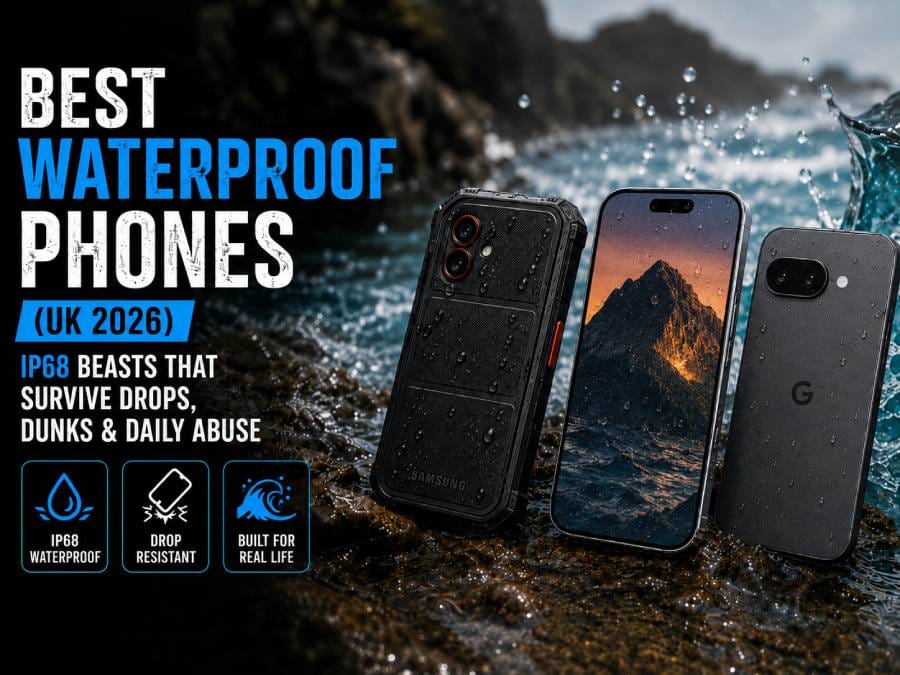
Reviewed for waterproofing, durability & everyday protection – updated 2026
🥇 Apple iPhone 17 — Best all-round waterproof phone → Check price on Amazon UK
🥈 Samsung Galaxy XCover7 Pro — Best rugged waterproof phone → Check price on Amazon UK
🥉 Google Pixel 9a — Best value waterproof phone → Check price on Amazon UK
Scroll down to see full reviews and Amazon UK links.
Introduction
This guide is for UK buyers who want a phone that can cope with real life: wet commutes, kitchen spills, muddy walks, family chaos, travel, and the occasional ugly drop onto concrete. Waterproofing matters more in Britain than marketing copy often admits, because for most people the danger is not deep diving — it is drizzle, puddles, sink splashes, damp pockets and being caught outside in miserable weather. The three phones here cover that spread neatly: a polished mainstream pick from Apple, a true workhorse from Samsung, and a value-led everyday option from Google. [1]
It is worth clearing up one thing straight away: in phone buying, “waterproof” usually means water-resistant to a tested standard, not invincible. IP ratings matter because they tell you how well a phone resists dust and water ingress under lab conditions. IP68 is the benchmark here, but the details still vary by brand: Apple rates the iPhone 17 to 6 metres for 30 minutes, Samsung rates the Galaxy XCover7 Pro to 1.5 metres for 30 minutes, and Google certifies the Pixel 9a to IP68 while also warning that resistance is not permanent and should not be treated as full waterproofing. [2]
For this guide, the shortlist is intentionally locked to three phones. They were then ranked on ingress protection, structural toughness, screen durability, camera quality, battery life, day-to-day usability, and how convincing each feels for a UK buyer in 2026 rather than on a spec sheet alone.
What Makes a Great Waterproof Phone in 2026
- IP ratings still do the heavy lifting. For mainstream buyers in 2026, IP68 is the sweet spot because it means sealed dust protection and brand-certified water resistance under IEC testing. The exact promise still differs by model, though: Apple’s iPhone 17 goes much deeper on paper than Samsung’s XCover7 Pro, while Google certifies the Pixel 9a to IP68 but is very explicit that this is still not the same thing as being truly waterproof. [3]
- Water-resistant is not the same as waterproof. All three phones are built to survive accidents and rough weather, but none should be treated like a purpose-built underwater camera. Apple says resistance can weaken over time and advises against swimming or bathing with the iPhone, Samsung warns against salt water, pool water and other “unclean” liquids, and Google says not to take Pixel phones into a swimming pool or body of water.
- Drop resistance matters just as much as water resistance. A phone that survives a sink splash but cracks on the first pavement hit is not a strong durability buy. That is why rugged certification, stronger cover glass and chassis design matter: Samsung gives the XCover7 Pro MIL-STD-810H testing and Gorilla Glass Victus+, Apple adds Ceramic Shield 2 and improved scratch resistance, and Google gives the Pixel 9a a durable but less premium Gorilla Glass 3 setup.
- Screen and frame durability are part of the package. In real use, the front glass, frame and corners usually take the most punishment. Apple uses an aluminium body with Ceramic Shield 2 on the front, Samsung pairs its rugged frame with Victus+ and a grippier shape, while Google combines a satin metal frame with a composite back that is practical rather than luxurious.
- Port protection and long-term sealing are easy to overlook. Water resistance is not permanent on any of these phones, and drops, cracks, repairs and general wear can reduce how well seals hold up. That means drying USB-C ports properly, not charging a wet device, and not assuming that a two-year-old IP68 phone is as resistant as it was on day one.
- Battery life and practical usability matter just as much as lab ratings. A good waterproof phone should be the phone you actually want to use every day. Apple’s iPhone 17 gives you a premium 6.3-inch 120Hz display and all-day endurance, Samsung adds a removable battery and glove/wet-screen usability for field work, and Google’s Pixel 9a combines long battery life with a much friendlier entry price. [4]
Top 3 Picks
Apple iPhone 17 – Best all-round waterproof phone
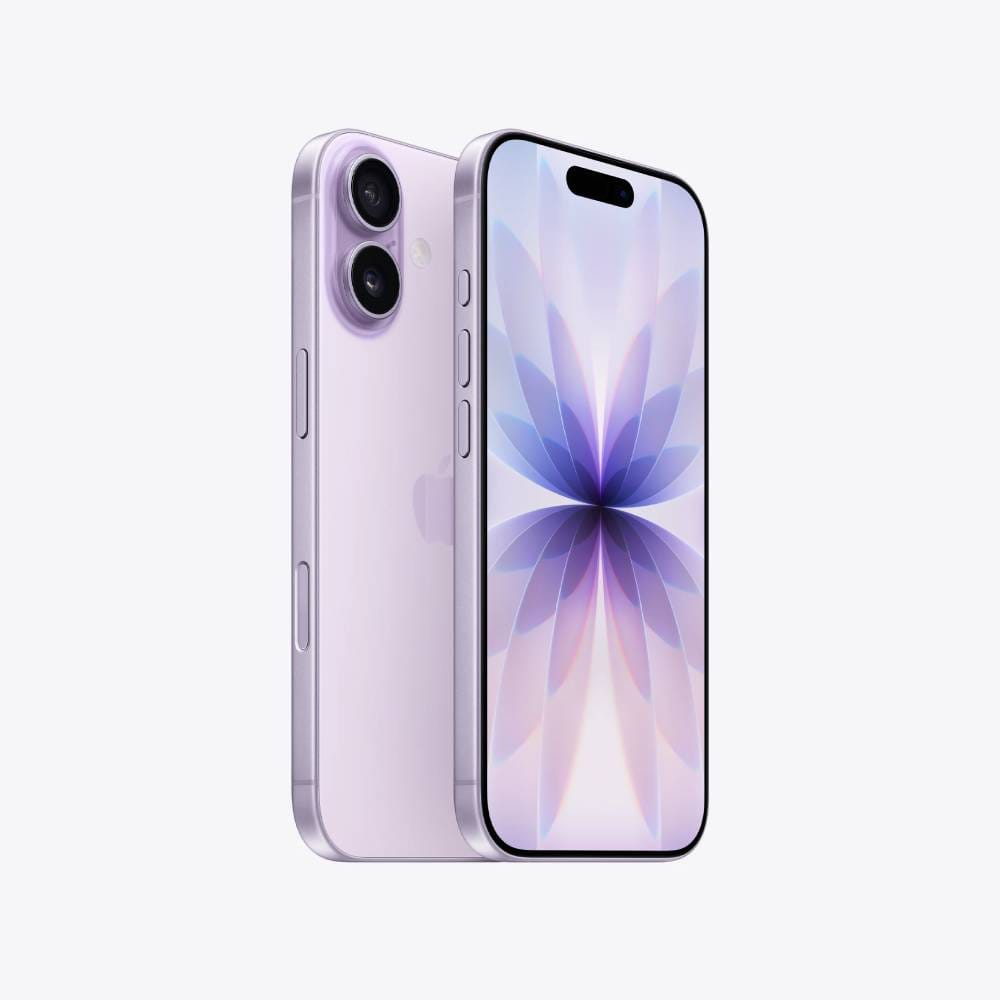
If you want the best all-round waterproof phone for most UK buyers, the iPhone 17 is the easiest recommendation here. It is not a rugged worksite handset, and Apple’s own support language makes that clear, but it gives you the best blend of premium feel, proper IP68 protection, top-tier everyday performance, and genuinely strong camera quality. Apple rates it IP68 for up to 6 metres of freshwater for 30 minutes, which is the strongest on-paper water-resistance claim of the three phones in this guide. At the same time, Apple also says that water resistance is not permanent, that users should avoid swimming or bathing with the phone, and that liquid damage is not covered under warranty. In other words, it is the strongest mainstream waterproof-style buy here, not a licence to treat it like dive gear. [5]
That distinction matters in real life. For the sort of abuse most buyers actually deal with — heavy rain, damp hands, coffee spills, bathroom splashes, messy family kitchens, and the occasional panic-inducing drop into shallow water — the iPhone 17 is exactly the kind of phone you want. Apple has also upgraded the front protection to Ceramic Shield 2, and both Apple’s marketing and third-party testing point to better scratch resistance than earlier standard iPhones. Tom’s Guide’s durability round-up found the new material more resistant to scratching than expected, although unprotected 6-foot drop tests still showed that glass breakage remains very possible. So yes, it is durable, but a case is still sensible if you are hard on your phone.
The reason it wins overall rather than just on waterproofing is that everything else is strong too. You get a 6.3-inch OLED panel with ProMotion up to 120Hz, the A19 chip, 256GB as the base storage tier, and Apple-rated battery life of up to 30 hours of video playback. TechRadar found the battery solid for a full day, and the camera package is comfortably the most polished of the three picks: a 48MP main, a 48MP ultra-wide, and a 12MP Center Stage front camera that makes everyday photos, travel shots and video calls feel distinctly more premium than what you get on the cheaper Pixel or the tougher Samsung. UK pricing starts at £799, and current Amazon UK listings match that for the 256GB model. [6]
Why this pick: It gives you the best balance of water resistance, premium day-to-day usability, camera quality and long-term ownership appeal.
✅ Pros:
- Excellent mainstream durability without feeling bulky
- Strongest camera system here for everyday photos and video
- Premium 120Hz display and 256GB base storage make it feel future-ready
⛔ Cons: Still not a true rugged phone, and liquid damage remains outside warranty cover
Main standout feature: A premium everyday phone that handles rain, spills and daily knocks without sacrificing camera or polish.
Who it’s best for: iPhone users, families, commuters and travellers who want proper IP68 reassurance without moving to a chunky rugged handset.
Amazon UK Check: 👉 Check price on Amazon UK
Check our website: for more details about Apple iPhone 17
Samsung Galaxy XCover7 Pro – Best rugged waterproof phone
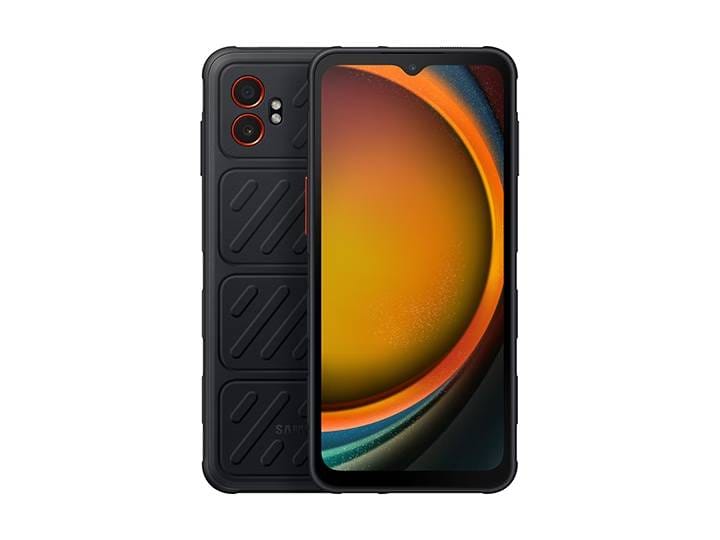
If the word “waterproof” for you really means survive boots-on, rough-use reality, the Galaxy XCover7 Pro is the clear winner. This is the only one of the three that is genuinely built around hard knocks rather than just premium-phone spill protection. Samsung gives it IP68 resistance, MIL-STD-810H certification, Gorilla Glass Victus+, a ruggedised chassis, a removable battery, and a display with increased touch sensitivity for use with gloves and wet hands. Samsung’s own materials also note testing for dust, vibration, drop-related conditions and even workplace sanitisers, which makes it feel more believable as a phone for trades, warehouses, emergency work, healthcare settings, outdoor travel or simply very clumsy households. [7]
On water resistance, Samsung rates the XCover7 Pro for submersion in up to 1.5 metres of freshwater for 30 minutes. That is a smaller depth claim than Apple’s, but in practice the Samsung’s rugged frame and grippier, less fragile-feeling design make it the phone you would trust more when the job gets messy. It is far better suited than the iPhone 17 or Pixel 9a to repeated rain exposure, muddy environments, van dashboards, work belts, tool bags and sudden drops onto rougher surfaces. The flip side is that Samsung still warns that water resistance is not permanent, that the phone should not be exposed to salt water, pool water, soapy water or high-pressure water, and that it should be dried thoroughly after getting wet. So even rugged phones still have limits. [8]
What really makes the XCover7 Pro stand out is how practical the rest of the package is. The 6.6-inch 120Hz LCD is bright enough outdoors, the Snapdragon 7s Gen 3 is plenty fast for work apps and everyday use, there is microSD expansion up to 2TB, and the 4,350mAh battery is user-replaceable — still a rare and genuinely useful feature in 2026. Samsung rates video playback at up to 22 hours, while TechRadar found battery life adequate rather than class-leading, which sounds fair. The camera setup, a 50MP main plus 8MP ultra-wide, is serviceable and perfectly fine for documentation, quick snaps and scanning, but it is not the reason to buy this phone. Buy it because it is the toughest, most work-ready choice of the three. Current Amazon UK pricing is around £425 for the Enterprise Edition listing, which makes it look surprisingly strong value if ruggedness is your priority.
Why this pick: It is the only phone here that feels designed for repeated rough handling rather than just occasional accidents.
✅ Pros:
- Proper rugged design with convincing drop-and-water credentials
- Removable battery and glove/wet-screen usability are genuinely useful
- Strong value for a work-focused rugged phone in the UK
⛔ Cons: Camera quality and overall polish are behind the iPhone 17 and Pixel 9a
Main standout feature: Real rugged durability that feels built for job sites, travel abuse and rough daily use.
Who it’s best for: Tradespeople, delivery drivers, outdoor workers, healthcare environments, frequent travellers and anyone who destroys normal phones.
Amazon UK Check: 👉 Check price on Amazon UK
Check our website: for more details about Samsung Galaxy XCover7 Pro
Google Pixel 9a – Best value waterproof phone
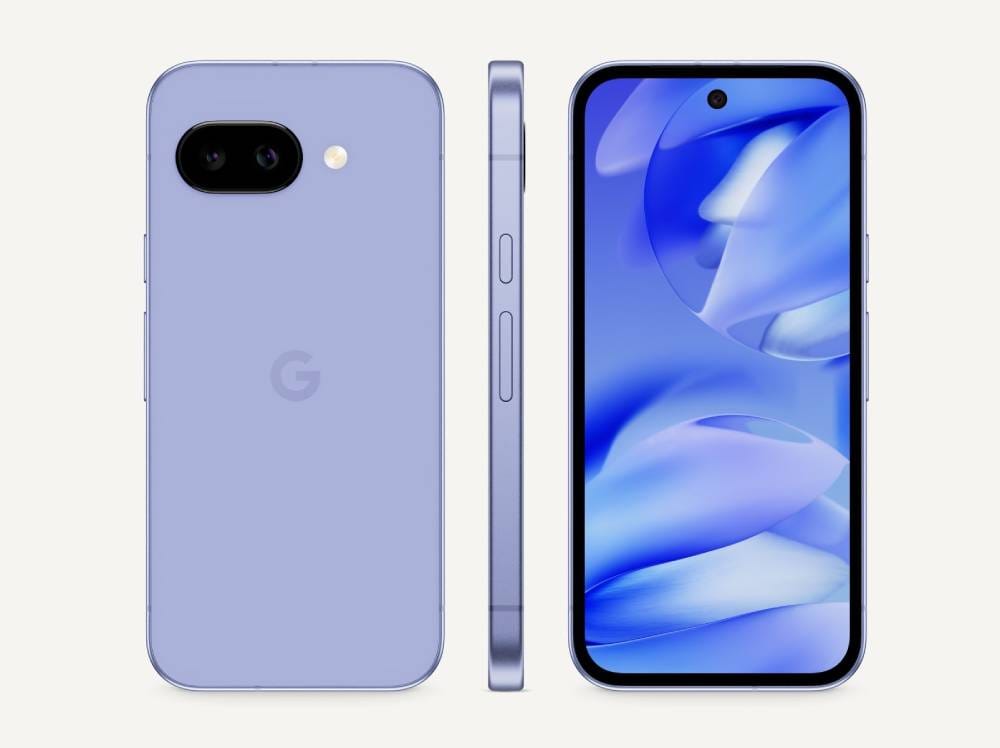
If you want the most sensible waterproof-style buy for the least money, the Pixel 9a is the sweet spot. It does not have the XCover7 Pro's rugged credentials and it does not feel as premium as the iPhone 17, but it gets the big everyday things right: IP68 dust and water resistance (certified to 1.5 metres for 30 minutes, compared to the iPhone 17's 6-metre claim), a 6.3-inch 120Hz display, a practical satin metal frame with composite matte back, a large 5,100mAh battery, and one of the best camera experiences you can get at this end of the market. Google's own UK pricing currently starts at £399 for the 128GB version on the Google Store, making this phone an excellent proposition for budget-conscious buyers in 2026.[9]
From a durability point of view, the Pixel 9a is best understood as a very good everyday water-resistant phone, not a rugged one. It will cope well with British rain, spilled drinks, sink accidents, damp pockets, buggy bags and family handling. But Google is unusually direct about the limits: its support guidance says Pixel phones are water-resistant rather than truly waterproof, that normal wear can reduce resistance, that you should not submerge the phone or take it into a shower, swimming pool or body of water, and that liquid damage voids the warranty. Google’s Pixel 9a regulatory guide also notes that drops can reduce water resistance over time. That is honest, and it means the 9a is a sensible buy for real life rather than a phone you should deliberately test in the sea or pool.
Where the Pixel 9a really overdelivers is value after the accident-proofing. The dual rear camera system pairs a 48MP main with a 13MP ultra-wide, while macro mode, Night Sight and Google’s image processing make the phone feel more expensive than it is. Tom’s Guide praised the camera upgrades and recorded 13 hours and 8 minutes in its battery benchmark, while The Guardian said the Pixel 9a’s main camera can outperform many pricier flagships and reported up to 57 hours between charges with lighter use. TechRadar was also strong on the phone’s long software runway, with seven years of OS, security and Pixel Drop updates helping the 9a feel like a safer long-term purchase than many cheap Androids. The only real durability caveat is that Gorilla Glass 3 is older and less confidence-inspiring than Apple’s Ceramic Shield 2 or Samsung’s Victus+, so a decent case still makes sense.
Why this pick: It gives you proper IP68 reassurance, excellent cameras and long battery life at a price that undercuts the iPhone 17 by a wide margin.
✅ Pros:
- Best value blend of water resistance, camera quality and battery life
- Excellent photography for the money
- Seven years of updates strengthen long-term ownership value
⛔ Cons: Not genuinely rugged, and its screen protection is the least premium of the three
Main standout feature: Big everyday protection and great camera quality at a genuinely accessible UK price.
Who it’s best for: Families, commuters, students, travellers and anyone who wants a dependable IP68 phone without paying flagship money.
Amazon UK Check: 👉 Check price on Amazon UK
Check our website: for more details about Google Pixel 9a
Comparison Table
|
Feature |
Apple iPhone 17 |
Samsung Galaxy XCover7 Pro |
Google Pixel 9a |
|
IP rating |
IP68,
up to 6m for 30 mins |
IP68,
up to 1.5m for 30 mins |
IP68 |
|
Rugged / drop protection |
Strong
everyday durability, but not rugged |
Proper
rugged design with MIL-STD-810H and Victus+ |
Everyday
durable, but not rugged |
|
Display size |
6.3in
OLED, 120Hz |
6.6in
LCD, 120Hz |
6.3in
pOLED, 120Hz |
|
Build materials |
Aluminium
body, Ceramic Shield 2 front, glass back |
Ruggedised
chassis, Gorilla Glass Victus+, removable battery design |
Gorilla
Glass 3, composite matte back, satin metal frame |
|
Battery life |
Up
to 30 hours video playback |
Up
to 22 hours video playback; removable 4,350mAh battery |
30+
hours; 5,100mAh battery |
|
Camera quality |
Best
overall |
Functional
rather than flagship |
Best
value camera package |
|
Typical UK price |
~£799 |
~£425–£559 |
~£349–£399 |
|
Best for |
Best
all-round choice |
Rough
daily use and outdoor work |
Best
value everyday waterproof-style buy |
Apple iPhone 17 → Check price on Amazon UK
Samsung Galaxy XCover7 Pro → Check price on Amazon UK
Google Pixel 9a → Check price on Amazon UK
What to Consider Before Buying
- IP68 sounds simple, but the fine print matters. It tells you the phone is dust-tight and has passed a manufacturer-defined freshwater immersion test, but Apple’s claim is deeper than Samsung’s, and Google is particularly strict in warning that IP68 is not the same as full waterproofing. The safest mindset is to treat IP68 as protection against accidents, not permission to use the phone like sports kit.
- Salt water, chlorine and warranty issues are a big deal. Apple says liquid damage is not covered under warranty. Samsung warns against exposure to salt water, pool water, soapy water and other contaminants. Google says not to take Pixel phones into swimming pools or bodies of water, and its Pixel 9a guide also says liquid damage voids the warranty. If your phone gets splashed with anything more unpleasant than clean water, rinse or dry it properly straight away.
- Rugged phone versus normal flagship is the biggest buying fork in the road. The iPhone 17 and Pixel 9a are safer versions of normal phones. The Galaxy XCover7 Pro is a deliberately rugged tool with trade-offs: bulkier design, weaker camera polish and a more utilitarian screen, but far more confidence if your phone gets knocked around for a living.
- A case still matters, even with IP68. Better scratch resistance and water sealing do not make any of these indestructible. Apple’s own support warns that drops can affect water resistance, Google says the same for Pixel, and third-party drop testing still showed shattered glass on recent iPhones after serious falls. Built-in durability is great; layered protection is better.
- Camera and performance trade-offs are real. The iPhone 17 is the premium all-rounder, the Pixel 9a is the camera-value champion, and the XCover7 Pro is the durability specialist. Decide whether you care most about photo quality, outright toughness, or getting the best overall deal per pound spent.
Frequently Asked Questions
Are waterproof phones really waterproof?
Not in the literal sense. They are water-resistant to tested standards, usually IP68, but brands still warn that resistance can weaken with wear and that repeated submersion is a bad idea. Treat them as protected against accidents, rain and spills rather than as underwater devices.
What does IP68 mean?
It means the phone is dust-tight and has passed a freshwater immersion test under IEC 60529. The exact depth and duration still depend on the manufacturer: Apple rates the iPhone 17 to 6 metres for 30 minutes, while Samsung rates the XCover7 Pro to 1.5 metres for 30 minutes.
Can I use a waterproof phone in the sea or swimming pool?
It is not recommended. Salt water, chlorine and other contaminants can damage seals, ports and speakers, and both Samsung and Google explicitly warn against those environments. Apple also advises against swimming or bathing with the iPhone.
Which waterproof phone is best for rough daily use?
The Samsung Galaxy XCover7 Pro. It is the only one here with a genuinely rugged design, MIL-STD-810H testing, Victus+ protection, glove/wet-screen usability and a removable battery, which makes it the best choice for harder physical environments.
Final Verdict
- Buy the Apple iPhone 17 if you want the best all-round waterproof phone: premium feel, the best cameras here, strong everyday durability and the least compromise as a daily driver → Check price on Amazon UK
- Buy the Samsung Galaxy XCover7 Pro if your phone gets battered, soaked, dirty or dropped regularly and you want genuine rugged credibility rather than just flagship polish → Check price on Amazon UK
- Buy the Google Pixel 9a if you want the smartest value pick: proper IP68 protection, excellent cameras and strong battery life for much less money → Check price on Amazon UK
Still deciding?
If you'd like to dive deeper into the specs or see how these models compare side-by-side, check out:
- 📊 Compare these phones here
- 📱 See full product details for Apple iPhone 17
- 📱 See full product details for Galaxy XCover7 Pro
- 📱 See full product details for Google Pixel 9a
We update our comparisons regularly to keep everything accurate, up to date, and UK-focused.