Portable Projectors Worth Buying (UK 2026) – Big-Screen Movies Without a Huge TV
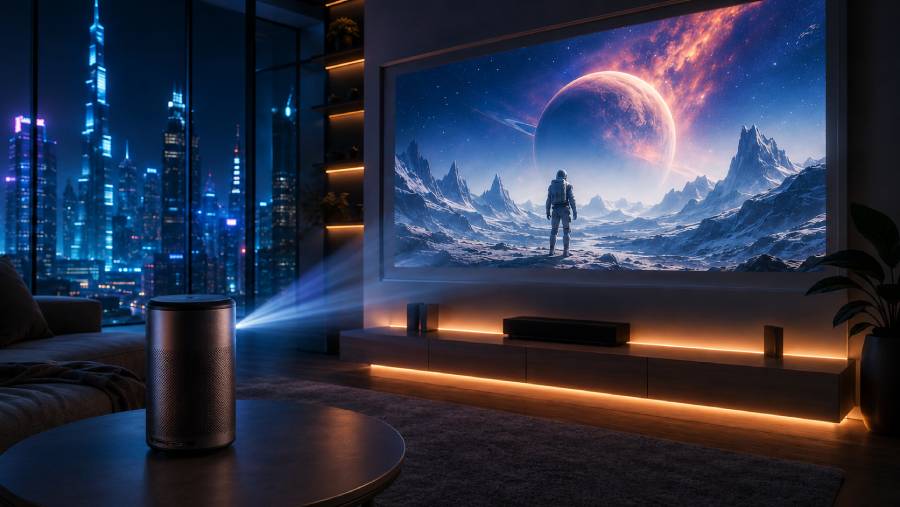
Reviewed for picture quality, brightness, streaming, portability, setup, battery options & value – updated 2026
🥇 Anker Nebula Capsule 3 Laser – Top overall/value portable pick → Check price on Amazon UK
🥈 XGIMI MoGo 4 Laser – Best premium/feature-rich portable projector → Check price on Amazon UK
🥉 BenQ GV50 – Best flexible bedside-to-outdoor all-rounder → Check price on Amazon UK
👉 Scroll down to see full reviews and Amazon UK links
Introduction
If you want a genuinely portable way to get a big-screen film night without mounting or storing a huge television, these are the three projector types worth looking at in 2026. They suit bedrooms, rented flats, student rooms, occasional living-room movie nights, holiday rentals, caravan trips, and after-dark garden use better than a traditional TV because they are easier to move, easier to store, and far less visually dominant when not in use. The trade-off is simple: even a very good portable projector still needs dim or dark conditions far more than a decent TV does, and none of these should be bought on the assumption that they will comfortably replace a bright living-room television in daytime use.[1][4][7]
A couple of practical caveats matter straight away. Built-in battery runtime is not the same thing as full-brightness runtime. A projector may last around two and a half hours on battery, but that often means Eco mode or reduced brightness. Native resolution also matters more than marketing shorthand: a projector that is natively 1080p can still accept a higher-resolution signal, but it is not the same thing as true native 4K projection. And a “smart” projector is only as convenient as its licensed apps, HDMI support and setup tools such as autofocus, keystone correction and screen fit.[8]
For this guide, we focused on the three locked models in the brief and prioritised current UK brand pages, official specifications, support FAQs, current UK retail availability, and reputable independent testing.
What Makes a Great Portable Projector in 2026
A great portable projector in 2026 is not the one with the wildest marketing claims. It is the one that gives you the cleanest, easiest, least-frustrating big-screen experience in a dark room.
- Native 1080p really matters. All three picks here are native Full HD, which is the practical sweet spot for portable projectors. That is very different from merely accepting a 4K input signal. BenQ explicitly states that the GV50 will accept signals up to 4K UHD while projecting natively at 1080p, which is the right way to think about this class of product.
- Measured brightness matters more than vague “lumens” claims. Nebula quotes 300 ANSI lumens for the Capsule 3 Laser, XGIMI quotes 550 ISO lumens for the MoGo 4 Laser, and BenQ quotes 500 ANSI lumens for the GV50. ANSI and ISO figures are both far more useful than unverified marketplace claims, but they are not identical standards, so buyers should not compare them as if they were perfectly interchangeable.
- Dark-room performance is still the real test. Portable projectors can look excellent after dark or in a properly dimmed bedroom, but even the better ones lose impact fast in daylight. Independent testing on the Capsule 3 Laser and GV50 makes the same broader point: these products make most sense in controlled lighting, not in sunlit living rooms.[12]
- Streaming convenience is now a buying criterion, not a bonus. Licensed Netflix and a proper Google TV implementation are far more important than a long list of half-working apps. Nebula’s current UK page positions the Capsule 3 Laser as a Google TV projector with officially licensed Netflix, XGIMI does the same for the MoGo 4 Laser, and BenQ’s current UK buy page explicitly highlights instant Netflix access through built-in Google TV.[11]
- Automatic setup is helpful, but not magic. Autofocus, auto keystone and screen-fit features make room-to-room use much easier. The downside is that aggressive digital correction can slightly reduce effective sharpness, especially from awkward angles. That is worth it for convenience in many bedrooms and temporary setups, but it is still better to place the projector as squarely as you can.
- Battery claims need context. A genuinely portable projector should make sense away from the wall socket, but “battery-powered” does not always mean “full performance unplugged”. BenQ is especially transparent here, explaining that brightness changes depending on whether you are on mains power, built-in battery, or a lower- or higher-wattage USB-C PD power bank. XGIMI also notes that unplugged startup defaults to Eco mode, and Nebula’s official page pairs its 2.5-hour claim with PD charging support rather than promising TV-like brightness on battery alone.[9][10]
- A plain wall is fine, but a screen is better. You can absolutely project onto a clean wall, especially in a bedroom or rental. But a proper screen usually improves colour consistency, perceived contrast and the overall finish of the image, particularly once you start pushing toward 100 inches and beyond.
Top 3 Portable Projectors Worth Buying — UK 2026
1. Anker Nebula Capsule 3 Laser – Top overall/value portable pick
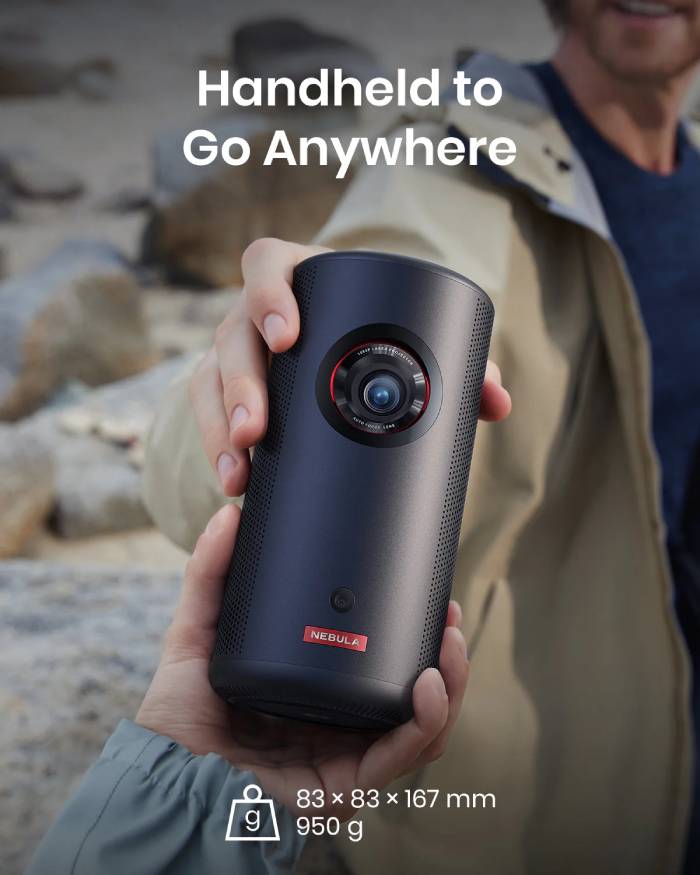
This is the easiest recommendation for most UK buyers who want a genuinely portable projector rather than a “small projector” that still feels tied to the mains. The Capsule 3 Laser remains one of the neatest all-round packages in the category: official UK specs list a laser light source, DLP 0.23-inch DMD imaging, native 1920 × 1080 resolution, 300 ANSI lumens, a 1.2:1 throw ratio, 40- to 120-inch image size, Google TV, officially licensed Netflix, Chromecast, auto focus, auto keystone, auto screen fit, auto obstacle avoidance, HDMI 2.1/ARC, sub-28dB noise, PD 20V/2.25A power input, and a built-in 52Wh battery rated for up to 2.5 hours in Eco mode.
In real use, the Capsule’s biggest strength is that it does not ask much of you. It is tiny, roughly 83 × 83 × 170 mm, about 0.9 kg, and simple to move between rooms or take away for a weekend. That makes it especially good for bedrooms, rental flats, travel, family visits and after-dark outdoor use. Its laser light source helps it look punchier and cleaner than many cheap LED mini projectors of similar size, but you still need realistic expectations: 300 ANSI lumens is firmly dark-room territory, and independent testing continues to back that up. RTINGS describes it as a very dim projector that looks washed out with ambient light, while still recognising the convenience of the battery build and built-in smart platform.[1][3]
What keeps it in the top spot is balance. It is not the brightest here, not the strongest-sounding here, and not the most feature-heavy here. But it is the least intimidating to own. You get the most bag-friendly form factor of the three, proper licensed streaming, a built-in battery, and sensible auto-setup features in a package that still feels like a consumer tech product rather than an AV hobby project. Just do not confuse it with the standard Capsule 3, the Capsule 3 Laser refurbished listing, or older Android TV pages that describe Netflix differently. The current new UK product page is the one you want to match on Amazon before you buy.[1][2][13]
Why this pick
✅ Pros:
- Very compact, genuinely battery-portable design with a 52Wh battery and PD charging support.
- Proper Google TV experience with officially licensed Netflix and Chromecast.
- Easy everyday setup thanks to auto focus, auto keystone, screen fit and obstacle avoidance.
⛔ Cons:
- 300 ANSI lumens is still modest, so it needs a dim or dark room and is not a daylight TV replacement.
Main standout feature:
Its standout feature is not one single spec but the combination of a laser light source, licensed streaming, and true grab-and-go battery portability in a body that is closer to a travel speaker than a living-room appliance.
Who it’s best for:
It is best for renters, students, bedroom viewers, travellers and casual movie-night buyers who want the simplest, smallest, least-fussy all-round portable projector and are happy to watch mainly in low light.
👉 Check price on Amazon UK
This is the pick to watch if you want the best balance of picture credibility, portability and built-in streaming rather than the headline-brightest spec sheet. Also note that a travel case is sold separately, and prices can move a lot between official promotions and marketplace sellers.[13][15]
2. XGIMI MoGo 4 Laser – Best premium/feature-rich portable projector
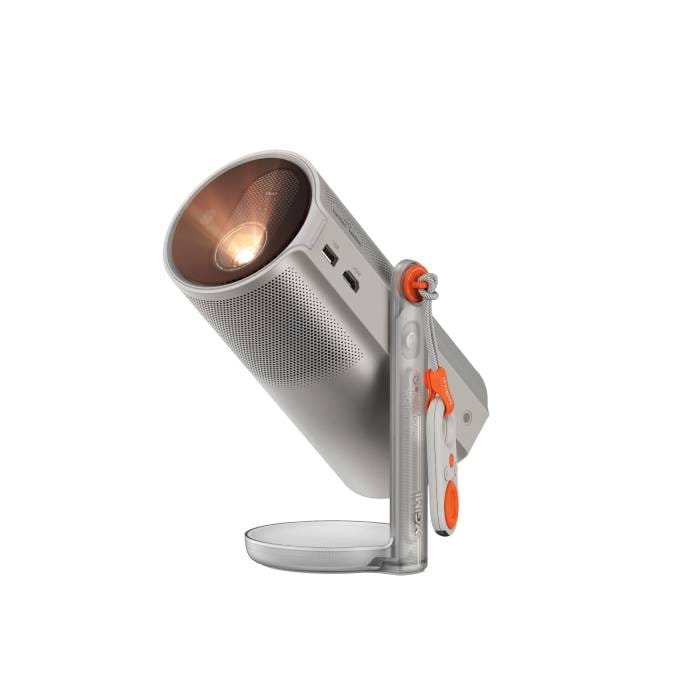
If you want the richest, most ambitious portable package of the three, this is it. XGIMI’s official UK page positions the MoGo 4 Laser as a portable triple-laser projector with native 1920 × 1080 resolution, 550 ISO lumens, a 0.23-inch DMD chip, 1000:1 contrast, HDR10 support, Google TV, licensed Netflix, Wi‑Fi 5, Bluetooth 5.1, HDMI with ARC, USB-C PD 3.0 charging input, USB-A, dual 6W Harman Kardon speakers, a 71.28Wh battery, around 2.5 hours of unplugged video playback in Eco mode, and a 360-degree adjustable stand. The current UK page also quotes up to 20ms gaming latency at 1080p/60Hz with auto keystone off, up to 56ms with auto keystone on, and up to four years of OTA software support from the product’s mass-production date.
In plain English, this is the most “feature-first” pick here. It is brighter on paper than the Nebula, more playful in design, stronger in built-in audio, and more flexible in physical positioning thanks to its integrated rotating stand. It is also the best of the three if you like the idea of ceiling projection, ambient lighting gimmicks, speaker mode, and a more premium-feeling entertainment device rather than just a simple portable screen. Independent review coverage broadly lines up with that picture: PC Gamer found it stylish, flexible and enjoyable for casual multimedia use, but still firmly a dark-room projector rather than a bright-room TV substitute.[6]
There are, however, two buyer cautions. First, do not overread XGIMI’s setup language. The UK marketing page talks about ISA Technology that automatically aligns and adjusts the image, but the detailed official spec section for the same UK page leaves Intelligent Screen Alignment and Intelligent Obstacle Avoidance blank. So I would not buy it specifically for those exact functions unless the Amazon listing and current firmware notes make them explicit for your unit.
Second, the official UK materials conflict on filter inclusion. The formal spec section says the box includes x4 Magnetic Creative Filters, while the lifestyle section says the Sunset filter is included and the other three require separate purchase. That is exactly the sort of listing ambiguity that makes Amazon bundle verification important.
Why this pick
✅ Pros:
- Stronger quoted brightness and richer premium feature set than the other two locked picks.
- Excellent portability features, including built-in battery, rotating stand, casual gaming mode and good built-in audio.
- Proper Google TV with licensed Netflix and long-term OTA support from XGIMI.
⛔ Cons:
- Official UK materials are a little inconsistent on filter bundle details and some setup features.
Main standout feature:
The standout feature is the way it combines better paper brightness, stronger built-in audio and a 360-degree stand into something that still feels portable enough for bedroom, holiday-rental and small outdoor use.
Who it’s best for:
It is best for buyers who want the most premium-feeling portable projector here, value the strongest all-in-one entertainment package, and are willing to pay more for the extra flexibility and polish.
Amazon UK Check:
👉 Check price on Amazon UK
This is the premium pick, so the price matters.
3. BenQ GV50 – Best flexible bedside-to-outdoor all-rounder
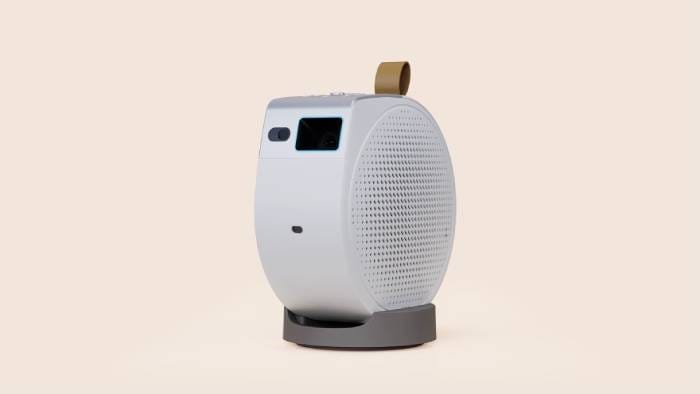
The GV50 is the least “tiny” of these three, but also the most purpose-built for relaxed room-to-room film watching. Official BenQ UK material makes its identity unusually clear: this is the GV50, MPN 9H.JSR77.59E, with native 1920 × 1080 resolution, 500 ANSI lumens, DLP projection, laser light source, 1.2:1 throw ratio, HDR10 and HLG support, 92% Rec.709 coverage, Google TV based on Android 11, built-in battery, HDMI 2.0b with HDCP 2.3, HDMI ARC with 5.1-channel audio return, USB-A, a multifunction USB-C port with DisplayPort, PD input, PD output and reader support, Bluetooth 5.0, Google Cast and compatible iOS mirroring, quoted 22.4ms input lag at 1080p/60Hz, and a 2.1-channel audio system made up of two 4W speakers plus a 10W woofer chamber. BenQ also explicitly states support for autofocus, auto 2D keystone correction, screen fit, obstacle avoidance, image rotation and eye protection, and markets the product heavily for bedside and ceiling projection with approximately 135° vertical and 360° horizontal angle freedom.[7][8]
This makes the GV50 the most practical choice if your projector will live on a bedside cabinet, move between wall and ceiling projection, or be used in different parts of the house rather than thrown into a backpack every weekend. BenQ’s design is bigger and heavier at about 2.1 kg, but it also gives you the best built-in audio here and the most versatile USB-C implementation. That is especially useful if you want simpler one-cable use with certain devices or more flexibility around power banks and charging. BenQ’s own FAQs are better than most brands’ at explaining the compromises, too: with the supplied adapter, brightness is effectively full; on the built-in battery, general brightness drops to 70%; below 20% battery it can fall much further; and USB-C power banks need more than 65W for full-brightness use while simultaneously charging the projector. Lower-power 45W–65W PD sources can run the projector but will not charge the battery during active use.[8][9][10]
This is also the most transparent of the three about what it is not. It is still a dark-room projector, not a daytime TV replacement. It still projects natively at 1080p even when fed a 4K signal. And its clever auto-correction tools are convenient, but they do not repeal the usual projector rules about straight placement and light control. What Hi-Fi’s review broadly supports that picture, praising the versatility, battery power and big-screen convenience while still treating it as a compact projector that shines most in the right conditions.[8][12]
Why this pick
✅ Pros:
- Superb flexibility for bedside, wall and ceiling use, with excellent auto-setup tools.
- Better built-in sound and more useful USB-C functionality than the other two picks.
- Clear, honest power-bank and brightness guidance from BenQ’s own support pages.
⛔ Cons:
- Larger and heavier than the two cylindrical rivals, so it is less “throw in a small bag” portable.
Main standout feature:
Its standout feature is the combination of flexible bedside-to-ceiling projection and genuinely useful USB-C connectivity, which makes it feel more adaptable in everyday home use than most portable projectors.[7][8]
Who it’s best for:
It is best for buyers who care more about angle freedom, ceiling projection, fuller sound and practical in-home flexibility than about getting the smallest possible body.[7][12]
Amazon UK Check:
👉 Check price on Amazon UK
The GV50 is the one to watch if you want the most bedroom-friendly and USB-C-flexible setup, but you should verify the exact listing carefully because BenQ’s line-up includes similar-looking GV-series models. A carry bag is optional, not standard, and if you plan to use a power bank you may also need a higher-wattage USB-C PD battery pack and a proper USB-IF certified cable. Prices and stock can change, and current UK retailer pricing has already been moving around the high-£500s.[8][9][11][14]
Comparison Table
| Feature | Anker Nebula Capsule 3 Laser | XGIMI MoGo 4 Laser | BenQ GV50 |
|---|---|---|---|
| Best for | Top overall/value portable pick | Best premium/feature-rich portable projector | Best flexible bedside-to-outdoor all-rounder |
| Exact model | D2426; current UK SKU data also shows D2426212[1][2] | MoGo 4 Laser; Amazon-linked page commonly lists ASIN B0F389TT14 and item model H0048[4][5] | GV50; UK MPN 9H.JSR77.59E[8] |
| Display technology and light source | DLP 0.23" DMD, laser[1] | DLP 0.23" DMD, triple laser[4] | DLP, laser[8] |
| Native resolution | 1920 × 1080[1] | 1920 × 1080[4] | 1920 × 1080[8] |
| Official brightness figure | 300 ANSI lumens[1] | 550 ISO lumens[4] | 500 ANSI lumens[8] |
| Recommended image size | Officially 40–120"; best in a dark room[1][3] | Officially 40–200"; XGIMI recommends 60–120" for best viewing[4] | Officially 60–120"; around 100" at about 3m[7] |
| Smart platform | Google TV[1] | Google TV[4] | Google TV on Android 11[8] |
| Licensed Netflix support | Officially licensed Netflix on current UK new page[1] | Officially licensed Netflix[4] | Instant Netflix access highlighted on official buy page[11] |
| Other major streaming apps | Google TV ecosystem; check exact UK app availability[1] | Official page explicitly mentions Prime Video and more; UK catch-up apps may change[4] | Google TV ecosystem; support depends on exact UK model, software version, streaming service and connection method[8] |
| Autofocus | Yes[1] | Yes, uninterrupted auto focus[4] | Yes[7] |
| Automatic keystone correction | Yes[1] | Yes, uninterrupted auto keystone[4] | Yes, auto 2D keystone correction[7][8] |
| Screen fit and obstacle avoidance | Officially confirmed on current UK page[1] | Not formally confirmed in spec table; check exact listing and firmware[4] | Officially confirmed[7] |
| HDMI connection | HDMI 2.1/ARC[1] | HDMI with ARC[4] | HDMI 2.0b with HDCP 2.3; ARC 5.1-channel audio return[8] |
| Wireless casting | Chromecast[1] | DLNA / Google Cast[4] | Google Cast and compatible iOS mirroring[8] |
| Built-in speaker | 8W Dolby Digital[1] | 2 × 6W Harman Kardon[4] | 2.1-channel 18W system: 2 × 4W + 10W woofer chamber[8] |
| Built-in battery | Yes, 52Wh[1] | Yes, 71.28Wh[4] | Yes[8] |
| Stated battery runtime | Up to 2.5 hours in Eco mode[1] | Up to 2.5 hours video in Eco mode[4] | Up to 2.5 hours in Eco mode; BenQ states this was measured while streaming YouTube[10] |
| External power-bank support | Supports PD charging; check exact power bank and cable[1] | Requires compatible 65W–150W third-party power source; optional PowerBase Stand available[4] | Officially confirmed; 45W–100W USB-C PD, but more than 65W is needed for full-brightness use while charging[9][10] |
| Stand / angle flexibility | Compact body; separate stand/case options exist[15] | Built-in 360° adjustable stand[4] | Ultra-flexible base; ~135° vertical and 360° horizontal[7] |
| Weight | 0.9 kg[1] | 1.32 kg[4] | 2.1 kg[8] |
| HDR support | Check exact listing; do not buy it mainly for HDR impact[1] | HDR10 supported; HDMI note says HDR10, not HDR10+[4] | HDR10 and HLG supported[7][8] |
| Gaming features / input lag | Better for casual, slower-paced gaming than serious competitive play[3] | Up to 20ms at 1080p/60Hz with auto keystone off; 56ms with it on[4] | 22.4ms at 1080p/60Hz[8] |
| Required accessories | Consider a travel case, screen, tripod/stand, or Bluetooth speaker[15] | Optional PowerBase Stand, screen, case and possibly extra filters depending on listing[4][5] | Optional carry bag, high-wattage USB-C PD power bank, certified cable, possible external speaker[8][9][11] |
| Best portable-projector strength | Smallest, easiest true grab-and-go all-rounder | Most feature-rich premium portable package | Best ceiling/bedside flexibility and strongest in-box audio |
| Main limitation | Lowest brightness here; best in a dark room[3] | Premium pricing and some listing ambiguity on bundle details[4][5] | Largest and heaviest of the three; battery brightness behaviour needs attention[8][10] |
| Typical UK buyer profile | Renter, student, traveller, casual movie-night user | Buyer who wants the most complete premium portable feature set | Bedroom viewer or home user who values ceiling projection and USB-C versatility |
Anker Nebula Capsule 3 Laser → Check Price on Amazon UK
XGIMI MoGo 4 Laser → Check Price on Amazon UK
BenQ GV50 → Check Price on Amazon UK
What to Consider Before Buying a Portable Projector
- Start with the room, not the projector. If you cannot dim the room properly, a projector is already working against you. Blackout curtains, evening viewing and sensible screen sizes matter more than spec-sheet optimism.[3][6][12]
- Treat ANSI and ISO lumens with respect, but not as identical. They are both better than vague “LED lumens” or “marketing lumens”, but you still need to compare carefully and think about real viewing conditions rather than brochure math.
- Know the difference between native 1080p and accepted 4K input. BenQ explicitly supports up to 4K UHD input, but it still projects natively at 1080p. That distinction matters when buyers expect “4K-looking” results from a portable projector.[8]
- Check throw ratio and realistic image size. Big quoted maximums are not the same as best-looking sizes. XGIMI’s official page says 40–200 inches but recommends 60–120 inches for best viewing. That is the kind of guidance you should trust.[4]
- A plain wall is usable, but not ideal. A proper screen can improve consistency and perceived polish. If your wall is textured, off-white or coloured, a screen becomes more worthwhile.
- Battery support comes in layers. Built-in battery, USB-C PD charging and extended-runtime accessories are different things. BenQ and XGIMI are especially clear that power-bank wattage and mode affect brightness and charging behaviour.
- Streaming certification matters. Native, licensed Netflix is much better than workaround-heavy app platforms. App availability can still change by region and software version, so if BBC iPlayer, ITVX or Channel 4 matter, verify the exact UK listing before you buy.
- Ports still matter. HDMI is still the simplest fallback for a console, laptop or streaming stick. USB-C can be brilliant on the BenQ, but only with the right device and cable. Certified cables and correct PD profiles are not optional engineering trivia here.[8][9]
- Built-in audio is convenient, not magical. These are good enough for straightforward bedroom viewing, but a Bluetooth speaker or soundbar can still make a noticeable difference for larger spaces or outdoor use.
- For Amazon UK, verify the basics every time. Check exact model name, generation, seller, fulfilment, condition, plug, returns and warranty. Portable projector listings are exactly the kind of product pages where “similar model” confusion can cost you.
Frequently Asked Questions
Can a portable projector replace a television?
Not in every room. These are best thought of as flexible big-screen devices for darker conditions, not universal TV replacements for bright daytime viewing.
How dark does the room need to be?
Dim is good, dark is better. The lower the ambient light, the larger and more satisfying the image will look.
Do I need a projector screen?
No, but a proper screen usually gives a cleaner, more consistent result than an ordinary wall, especially at bigger sizes.[7]
Can I watch Netflix without a streaming stick?
Yes, these three are all positioned around built-in Google TV with native Netflix support, which is one of the main reasons they are worth considering over cheaper alternatives.
Which one is best for most UK buyers?
For most people, the Nebula Capsule 3 Laser is the safest all-rounder. If you want more premium features, choose the XGIMI MoGo 4 Laser. If you care most about bedside and ceiling use, choose the BenQ GV50.
Final Verdict
- Anker Nebula Capsule 3 Laser is the top overall/value portable pick for buyers who want laser picture quality, genuine built-in-battery portability, licensed streaming and a compact design at the most accessible “true portable” size of the three → Check price on Amazon UK.
- XGIMI MoGo 4 Laser is the best premium/feature-rich option for buyers who prioritise the strongest quoted brightness, triple-laser colour, Google TV, built-in battery, Harman Kardon sound and a 360-degree stand → Check price on Amazon UK.
- BenQ GV50 is the best flexible bedside-to-outdoor all-rounder for buyers who value ceiling projection, a highly adjustable base, fuller 2.1-channel sound, USB-C versatility and room-to-room use → Check price on Amazon UK.
For UK buyers, the right decision comes down to how you plan to use the projector. If portability means “packable and minimal”, go Nebula. If it means “premium entertainment gadget with more wow factor”, go XGIMI. If it means “easy ceiling-and-bedroom cinema without fuss”, go BenQ.
We update our comparisons regularly to keep everything accurate, up to date, and UK-focused.