Phones for Navigation & GPS Use (UK 2026) – Reliable Picks for Drivers, Walkers & Commuters
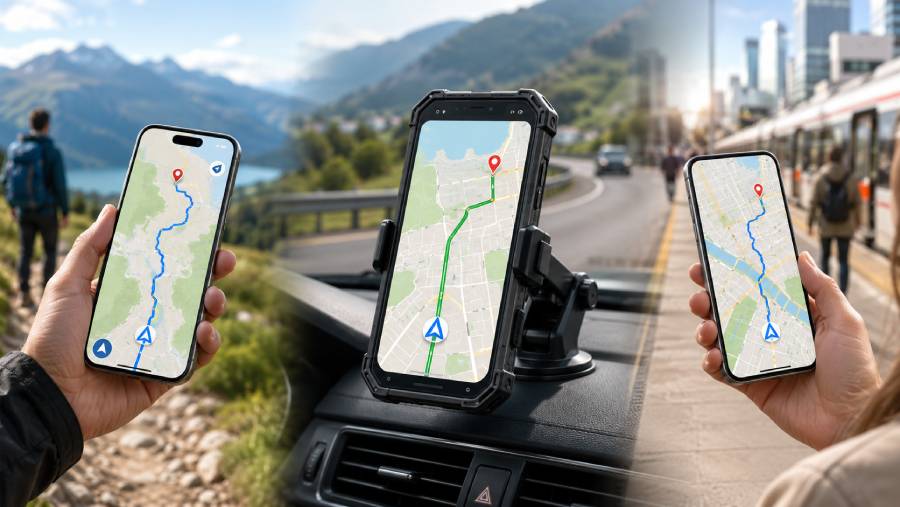
Reviewed for GPS accuracy, navigation reliability, battery life, screen visibility & travel use – updated July 2026
🥇 Xiaomi 15T – Best overall phone for accurate navigation → Check price on Amazon UK
🥈 Ulefone Armor 34 Pro – Best rugged GPS phone for drivers and outdoor use → Check price on Amazon UK
🥉 HONOR 600 Pro 5G – Best 2026 navigation phone for commuters and travellers → Check price on Amazon UK
👉 Scroll down to see full reviews and Amazon UK links
Introduction
If you use your phone for Google Maps every day, rely on Waze in traffic, follow Citymapper on trains and buses, or need dependable walking, cycling or hiking routes, navigation is no longer a minor extra in a phone purchase. In 2026, a good navigation phone needs more than a basic “GPS” tick-box. Real-world performance also depends on broader GNSS support, sensors such as a digital compass and gyroscope, strong mobile-network support for live traffic and quick rerouting, enough storage for offline maps, and a screen you can still read on a bright dashboard or a sunny pavement. Google’s own support pages also make clear that offline maps are useful, while Android location accuracy can combine GPS, Wi‑Fi, mobile networks and sensors when conditions are difficult. [1]
That is why the three picks here are deliberately different. The Xiaomi 15T is the strongest all-rounder for buyers who want modern GNSS support, dual-frequency positioning that is officially confirmed, and everyday comfort. The Ulefone Armor 34 Pro goes in the opposite direction, prioritising battery size, ruggedness and field use over portability. The HONOR 600 Pro 5G is the fresher 2026 commuter and travel option, pairing a lighter body with strong connectivity, fast charging and a UK-spec sheet that is more mainstream-friendly than a huge rugged phone. All three are current, relevant options for UK buyers, and this guide focuses on UK or European specifications wherever they could be verified.
What Makes a Great Phone for Navigation and GPS in 2026
- GNSS support matters more than a simple GPS label. A stronger navigation phone usually supports multiple satellite systems such as GPS, Galileo, GLONASS, BeiDou, QZSS and sometimes NavIC. That does not guarantee perfect positioning, but it gives the phone more sources to work with when routes get messy in cities, near tree cover or on longer trips. [2]
- Dual-frequency positioning can help, if the exact model confirms it. Phones that officially list combinations such as GPS L1+L5 and Galileo E1+E5a can be better at handling difficult environments, but dual-frequency support is still not a magic fix for tunnels, dense urban canyons, heated windscreens or poor app settings.
- Compass and motion sensors still matter. Walking directions, map orientation, lane changes and dead-reckoning-style movement all benefit from a proper electronic or digital compass plus accelerometer and gyroscope support. Android’s own help also notes that sensors can improve location accuracy when satellites are obscured. [3]
- A bright screen is a navigation feature. A map is only useful if you can read it quickly. Strong peak brightness helps outdoors, but practical visibility also depends on reflections, panel quality and heat. Rugged phones can sometimes have huge batteries but comparatively dimmer screens, which is worth knowing before you mount one in a car. [4]
- Battery life and charging speed are both important. Navigation drains phones quickly, especially with high brightness, 5G, Bluetooth and constant rerouting. A phone with a huge battery but slow charging can still be awkward; equally, a slimmer phone with strong fast charging may be easier to live with day to day.
- Offline maps and network support are a practical safety net. Google Maps lets you download offline areas, and Citymapper also supports saved journeys and offline elements, which can be genuinely useful on the Tube, in rural areas or while travelling. But offline maps are not the same as live traffic, and poor mobile data can still limit recalculation and alerts.
- Size, weight and durability should match your routine. Very rugged phones can be great in vans, on site and on hikes, but heavy bodies are less pleasant in a pocket or on a bike mount. Slimmer phones suit commuting better, while IP ratings and rugged certifications matter more if your phone is exposed to rain, dust, mud or job-site knocks. [5]
Top 3 Phones for Navigation and GPS Use — UK 2026
1. Xiaomi 15T – Best overall phone for accurate navigation
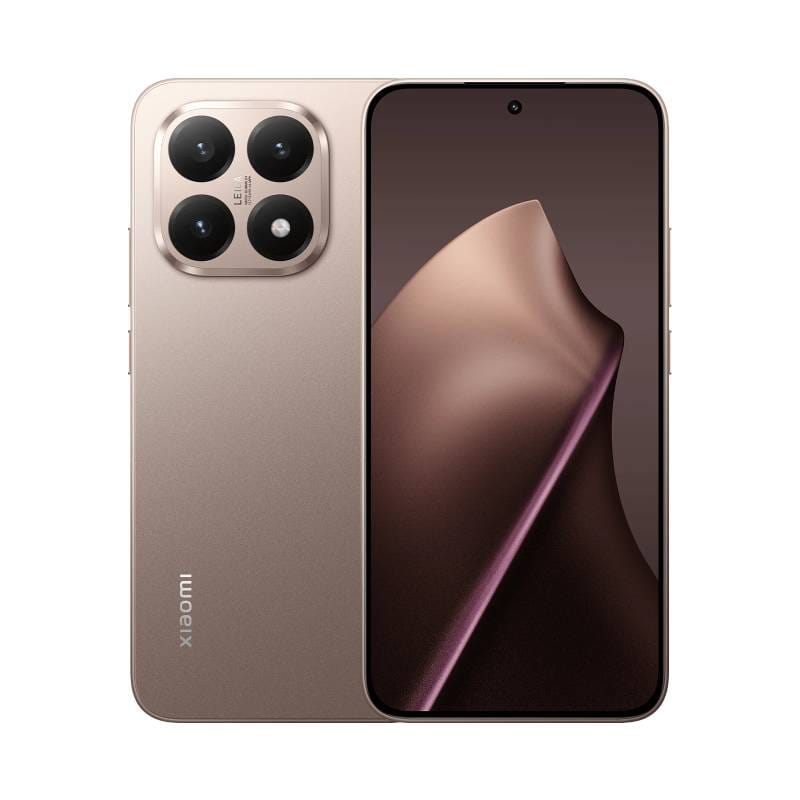
The Xiaomi 15T is the most balanced navigation choice here. It is the phone I would start with for most UK buyers who use maps heavily but still want something that feels like a normal everyday handset rather than a specialist tool. Xiaomi’s UK spec page is unusually strong for location details: it officially lists GPS L1+L5, Galileo E1+E5a, GLONASS G1, BeiDou, QZSS L1+L5 and NavIC L5, plus A‑GPS, electronic compass, wireless-network positioning and data-network positioning. That is exactly the sort of detail you want to see before trusting a phone with daily route guidance. [6]
In practice, that makes the Xiaomi especially appealing for drivers using Google Maps or Waze, as well as for walking directions and urban commuting where quick orientation matters. The phone also offers flexible SIM support on the UK page: dual Nano‑SIM, Nano‑SIM plus eSIM, or even eSIM plus eSIM, which is useful for travel or for keeping work and personal data plans separate. Storage is 12GB+256GB or 12GB+512GB, so there is plenty of room for offline maps, downloaded travel areas and cached media, even though expandable storage is not listed.
The other reason the Xiaomi 15T lands in first place is usability. Its 6.83-inch AMOLED screen is large enough for car navigation and walking maps, while Xiaomi rates peak brightness at 3200 nits. Independent testing from Notebookcheck also found the panel bright enough to be very usable in practice, even if manufacturer peak-brightness figures and measured full-screen brightness are not the same thing. Battery capacity is 5500mAh, 67W charging is officially supported, and Xiaomi says no power adapter is included in the UK box, so buyers should check the listing carefully. IP68 water and dust resistance helps with British weather, and at 194g with a 7.5mm body it is far more comfortable than a rugged alternative. [7]
The limits are sensible ones rather than deal-breakers. Long navigation sessions with high brightness will still drain battery faster than headline figures suggest, and any slim phone can warm up on a summer dashboard. But if you want the best mix of navigation hardware, screen quality, everyday feel and UK-friendly practicality, the Xiaomi 15T is the strongest overall pick here.
Why this pick
✅ Pros:
- Officially confirmed dual-frequency GNSS support with GPS L1+L5, Galileo E1+E5a and QZSS L1+L5.
- Large, bright AMOLED display and a slim 194g body that still feels practical for everyday use.
- Strong balance of battery life, 67W charging, eSIM flexibility and enough storage for offline maps.
⛔ Cons:
- No charger is included in the UK box, and long high-brightness navigation sessions will still eat into battery.
Main standout feature:
The Xiaomi 15T is the only phone here with clearly listed dual-frequency navigation support on its official UK spec page, which gives it the cleanest case for buyers who care about positioning confidence as much as battery life and screen quality.
Who it’s best for:
Most UK buyers. It suits drivers, commuters, walkers and travellers who want strong navigation credentials without carrying an 825g rugged brick every day.
Amazon UK Check: 👉 Check price on Amazon UK – The Xiaomi 15T usually sits in the upper mid-range rather than true flagship territory, which is one reason it looks so strong as a navigation buy. Its GNSS specification is the best documented of the three, but you should still check the latest Amazon UK price, the exact UK or European model, charger inclusion, seller reputation and warranty details because stock, import configurations and bundled accessories can change.
2. Ulefone Armor 34 Pro – Best rugged GPS phone for drivers and outdoor use
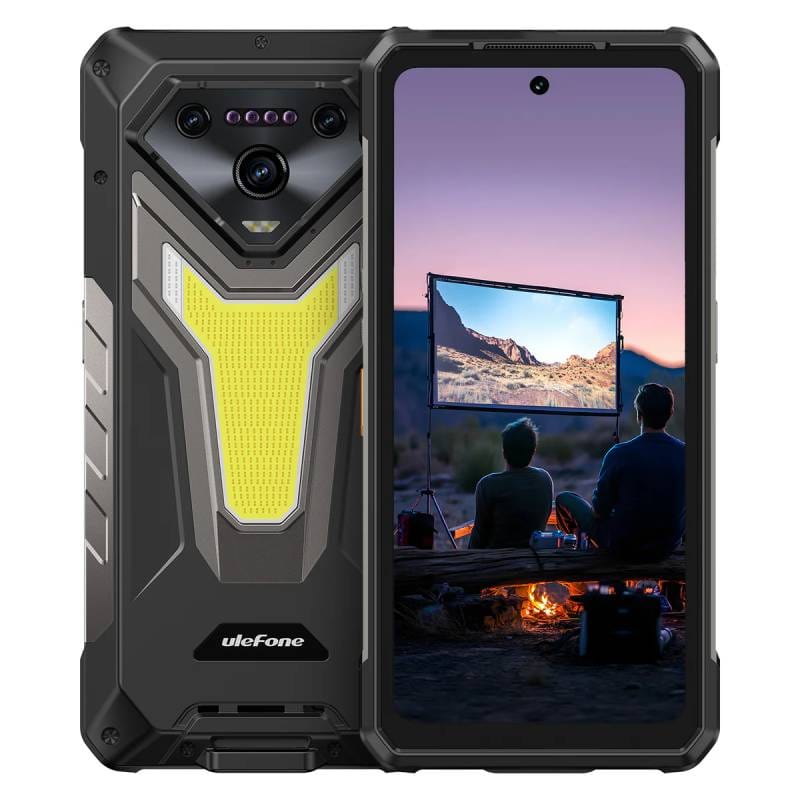
The Ulefone Armor 34 Pro is the opposite of the Xiaomi: it is a specialist navigation companion built around endurance and survivability rather than pocket comfort. That makes it the right option for delivery driving, van or 4x4 mounting, field work, hiking, camping and any job where the phone might spend hours on maps away from a charger. Ulefone’s own store page lists GPS, GLONASS, Galileo, BeiDou, QZSS and NavIC, along with a digital compass. It also lists a bigger-than-usual sensor package including acceleration, geomagnetic, gyro and air pressure sensors, which is genuinely useful for outdoor navigation compared with phones that only give you the basics. [8]
Its headline advantage is obvious: the 25,500mAh battery is enormous by smartphone standards. For all-day route guidance, delivery shifts, remote hiking weekends or working off-grid, that matters more than elegant design. Ulefone also supports 66W charging and 10W wired reverse charging, so the phone can double as a kind of emergency power bank for accessories. For offline maps, it is especially strong: 512GB internal storage is joined by a true three-card tray for Nano SIM + Nano SIM + microSD, which is great for carrying large downloaded map regions, GPX files, work apps and media without compromise.
The phone is also properly tough on paper, with IP68, IP69K and MIL‑STD‑810H claims, plus 5G support and a long list of supported European and UK carriers on the official store page. That said, Ulefone itself notes that carrier support can vary by region and dealer, and that list was compiled from carrier-band information rather than a UK-only product page. That is why this model needs more careful seller checking than the Xiaomi or HONOR. Specification may vary by UK or European model. [9]
The downside is equally obvious: this thing weighs 825g and is 32.7mm thick. TechRadar’s review is blunt that the weight is the big compromise and that the phone makes most sense once mounted to a vehicle or pack rather than carried like a normal daily device. The display is huge at 6.95 inches, but official peak brightness is only 600 nits, so it is not the screen pick here for sunny, reflective dashboard use. The software is far less mainstream-polished than HONOR or Xiaomi, and its imported-seller nature means you should be stricter about returns, warranty and exact regional model details. Still, if your priority is maximum endurance and rugged navigation hardware, no other pick in this guide is close.
Why this pick
✅ Pros:
- Huge 25,500mAh battery is built for very long navigation sessions and remote use.
- Official support for GPS, GLONASS, Galileo, BeiDou, QZSS and NavIC, plus compass, gyro and air-pressure sensor.
- Rugged design with IP68, IP69K, MIL‑STD‑810H and a three-card tray for dual SIM plus microSD offline-map storage.
⛔ Cons:
Extremely heavy and bulky at 825g, with only a 600-nit display and a form factor that is awkward for normal commuting.
Main standout feature:
The standout here is not just the battery size, but the whole endurance-first package: huge power reserves, rugged protection, dual-SIM plus microSD flexibility and a sensor setup that makes sense for field work and outdoor routing.
Who it’s best for:
Drivers using a mount, outdoor workers, delivery couriers, campers, hikers and buyers who care more about runtime and toughness than elegance or pocketability.
Amazon UK Check: 👉 Check price on Amazon UK – The Armor 34 Pro sits in a specialist rugged-phone bracket, and pricing can swing more than with mainstream brands because listings may be imported, bundled differently or sold by third-party sellers. Its battery, rugged ratings and storage flexibility are genuinely useful for navigation-heavy work, but this is the model where you most need to verify the exact seller, UK returns policy, warranty position, network compatibility and whether the listed unit is an official UK or European import before you buy. [10]
3. HONOR 600 Pro 5G – Best 2026 navigation phone for commuters and travellers
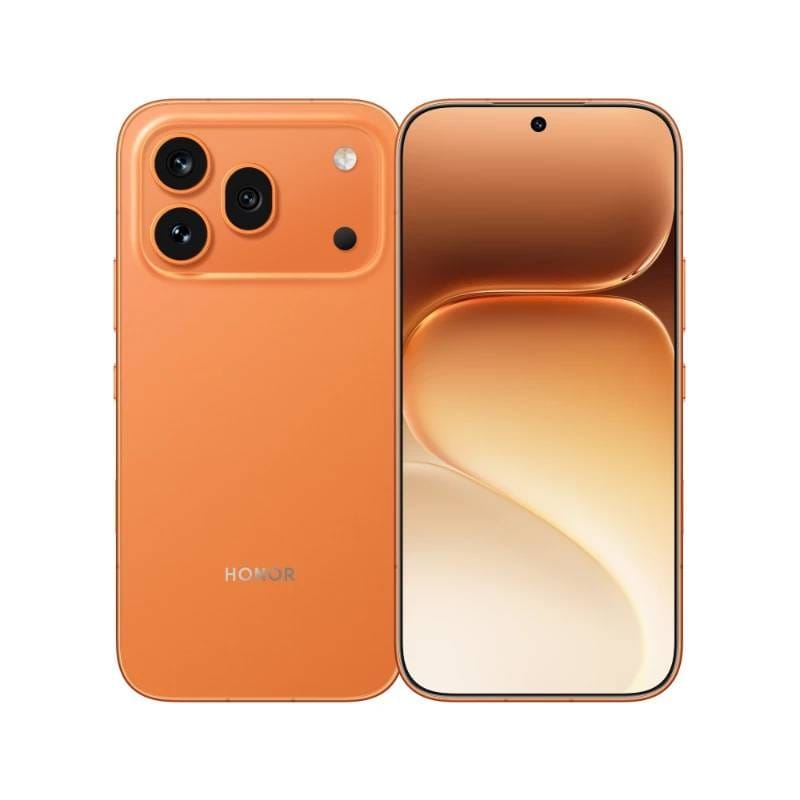
The HONOR 600 Pro 5G is the freshest pick in this guide and makes the most sense for buyers who want a more premium everyday phone than the Ulefone, but who still care about travel flexibility, battery life and reliable map use. HONOR announced the 600 series in April 2026, and the phone is now clearly present on HONOR UK’s site and buy pages, so it fits the brief as a current UK-relevant 2026 option rather than an ageing leftover recommendation. [11]
For navigation, the HONOR 600 Pro is well-equipped even though dual-frequency support is not officially confirmed on the UK spec page. HONOR lists GPS, AGPS, GLONASS, BeiDou, Galileo, QZSS and NavIC, along with network-based and WLAN-based positioning. The official UK sensors list also includes a digital compass, gyroscope and gravity sensor, which is what you want for walking directions, public-transport routing and fast map orientation. Travel usefulness is another plus: the UK spec page lists 5G, dual-SIM support and a SIM arrangement where the second slot can be Nano SIM or eSIM, although eSIM availability still depends on country and carrier. [12]
This is also a strong screen-and-battery phone for modern commuting. HONOR’s UK pages list a 6.57-inch AMOLED display, 6400mAh battery, 80W wired SuperCharge and 50W wireless charging. The headline “8000 nits” figure is an HDR peak claim rather than a normal all-screen output figure, but the phone is clearly designed to stay readable outdoors, and reviewers have generally praised the display and stamina. Importantly for this guide, the phone is only about 195g and 7.8mm thick, so it is dramatically more practical than the Ulefone for a pocket, handheld walking directions or train-platform use.
There are, however, two cautions to keep in mind. First, HONOR’s official UK page lists a 6400mAh battery, while HONOR’s global page has shown a higher 7000mAh figure for other markets, so regional verification matters here. Second, HONOR’s UK product pages do not state a clear phone-specific update commitment in the way some buyers might want, even though reviewers have reported solid long-term support; check the latest UK support wording at purchase. Add in the fact that it is pricier than the Xiaomi, and the HONOR becomes a very appealing commuter/travel choice rather than the overall best-value navigation buy.
Why this pick
✅ Pros:
- Fresh 2026 UK option with official support for GPS, AGPS, GLONASS, BeiDou, Galileo, QZSS and NavIC.
- Strong commuter-friendly mix of 6400mAh battery, 80W wired charging, 50W wireless charging and a lighter 195g body.
- Dual-SIM and eSIM flexibility make it more travel-friendly than many mainstream rivals.
⛔ Cons:
- Dual-frequency navigation is not officially confirmed on the UK spec page, and the UK battery spec differs from some other regional listings.
Main standout feature:
The HONOR 600 Pro is the best fit for buyers who want modern navigation features in a genuinely stylish everyday phone, not in a heavy rugged chassis. It feels like the most commuter-friendly interpretation of a navigation-first pick.
Who it’s best for:
Commuters, city travellers, students, public-transport users and frequent map users who want one phone to do everything well, with strong charging and travel flexibility but without Ulefone-level bulk.
Amazon UK Check: 👉 Check price on Amazon UK – The HONOR 600 Pro 5G sits in a more premium price bracket than the Xiaomi, so it makes most sense if you value its lighter design, stronger charging setup and newer 2026 positioning. Buyers should check the latest Amazon UK price, confirm the exact UK or European model, verify eSIM support with their carrier, and pay attention to the seller and warranty terms because regional battery and configuration differences can matter more than usual on this handset.
Check our website: for more details about Honor 600 Pro
Comparison Table
|
Feature |
Xiaomi 15T |
Ulefone Armor 34
Pro |
HONOR 600 Pro 5G |
|
Best for |
Best overall navigation balance |
Rugged endurance and outdoor use |
Fresh 2026 commuter/travel use |
|
Release timing |
Launched September 2025 |
Introduced May 2025 |
HONOR 600 Series launched April 2026; UK sales
live in 2026 |
|
GPS support |
GPS with A‑GPS; GPS L1+L5 officially confirmed |
GPS officially confirmed |
GPS and AGPS officially confirmed |
|
GLONASS |
Officially confirmed |
Officially confirmed |
Officially confirmed |
|
Galileo |
E1+E5a officially confirmed |
Officially confirmed |
Officially confirmed |
|
BeiDou |
Officially confirmed |
Officially confirmed |
Officially confirmed |
|
QZSS |
L1+L5 officially confirmed |
Officially confirmed |
Officially confirmed |
|
NavIC |
L5 officially confirmed |
Officially confirmed |
Officially confirmed |
|
Dual-frequency support |
Officially confirmed |
Not officially confirmed |
Dual-frequency not confirmed on UK spec page |
|
Compass and sensors |
Electronic compass, accelerometer, gyroscope
officially confirmed |
Digital compass, geomagnetic, gyro,
acceleration and air-pressure sensor officially confirmed |
Digital compass, gyroscope and gravity sensor
officially confirmed |
|
Display size |
6.83-inch AMOLED |
6.95-inch display |
6.57-inch AMOLED |
|
Brightness |
3200 nits peak claim |
600 nits peak claim |
8000 nits HDR peak claim |
|
Battery capacity |
5500mAh |
25,500mAh |
6400mAh on UK model |
|
Charging speed |
67W wired |
66W wired, 10W reverse |
80W wired, 50W wireless |
|
IP rating |
IP68 |
IP68 / IP69K |
IP68 / IP69 / IP69K |
|
Rugged certification |
None listed beyond IP68 |
MIL‑STD‑810H |
None listed beyond IP ratings |
|
Weight |
194g |
825g |
Approx. 195g |
|
Storage |
12GB+256GB or 12GB+512GB |
16GB+512GB + microSD up to 2TB |
12GB+512GB |
|
5G support |
Officially confirmed |
Officially confirmed |
Officially confirmed |
|
eSIM or dual-SIM support |
Dual-SIM with Nano‑SIM/eSIM options |
Dual Nano SIM + microSD; no eSIM listed |
Nano SIM + Nano SIM/eSIM; eSIM availability
varies by country/carrier |
|
Best navigation strength |
Best documented GNSS and dual-frequency
support in the group |
Massive battery and rugged hardware for long
shifts or remote use |
Travel-friendly connectivity and
commuter-friendly design |
|
Main limitation |
No charger in box; no microSD listed |
Heavy for daily use; dimmer display |
Dual-frequency not confirmed; regional spec
checks matter |
|
Typical UK buyer profile |
Drivers, walkers, daily commuters, frequent
Google Maps/Waze users |
Delivery drivers, outdoor workers, hikers,
vehicle-mounted use |
Travellers, students, rail commuters, everyday
map-heavy users |
Xiaomi 15T → Check Price on Amazon UK
Ulefone Armor 34 Pro → Check Price on Amazon UK
HONOR 600 Pro 5G → Check Price on Amazon UK
What to Consider Before Buying a Phone for Navigation and GPS Use
- Do not treat “GPS” as the whole story. Multi-constellation GNSS support, compass hardware and Android’s use of Wi‑Fi, mobile networks and sensors can all affect how stable your location feels in real use.
- Dual-frequency is helpful, not magical. If a phone officially confirms L1/L5 or equivalent support, that is a plus. But it still will not overcome every tunnel, city canyon, thick tree canopy or bad mount position.
- Think about your app mix. Google Maps is great for broad coverage and offline downloads, Waze is strongest for live driver reports and traffic awareness, and Citymapper is especially handy for public transport and saved offline journeys.
- Offline maps are worth setting up before a trip. They are useful in rural Britain, on underground routes and during travel, but real-time traffic and some rerouting features still depend on live connectivity.
- Brightness and heat matter in cars. A phone that looks brilliant on paper can still be awkward on a sunny dashboard. High brightness, charging and navigation together can also increase heat, so a good vent mount and sensible placement still matter.
- Battery capacity is only part of the equation. If you drive all day, huge capacity helps. If you commute and can top up easily, a lighter phone with faster charging may be the better buy.
- Check your mounting plans. A very heavy phone can stress some car mounts and feel clumsy on a bike or in a jacket pocket. The Ulefone especially needs realistic thought before you buy.
- For UK buyers, seller quality matters. Verify the exact UK or European model, warranty terms, returns policy, included charger, region-specific GNSS details where possible, and whether the listing is an import. That matters most with specialist rugged phones, but it is good practice with all three picks.
Frequently Asked Questions
Is dual-frequency GPS better for navigation?
Usually, yes. It can improve positioning in harder conditions when the exact model officially supports it, but it does not guarantee perfect accuracy everywhere.
Can I use maps without mobile data?
Yes. Google Maps supports downloaded offline areas, and Citymapper has offline journey features, but live traffic and some rerouting tools still work best with a connection.
Which phone is best for delivery drivers?
If you need maximum battery life and toughness, the Ulefone Armor 34 Pro is the most purpose-built. If you want something easier to live with every day, the Xiaomi 15T is the smarter overall choice.
Is a rugged phone good for everyday commuting?
Only if you really need the protection or battery. The Ulefone is much heavier than the Xiaomi and HONOR, so it makes more sense for vehicle mounting or outdoor work than normal city commuting.
Which of these three is best for most UK buyers?
The Xiaomi 15T. It offers the best blend of navigation hardware, screen quality, battery life and everyday practicality without the bulk or extra pricing compromises of the other two.
Final Verdict
In 2026, the best phone for navigation depends on whether you care most about outright positioning support, rugged endurance or travel-friendly everyday use.
- Xiaomi 15T is the best overall choice for buyers who want strong navigation accuracy, modern GNSS support and a practical everyday phone → Check price on Amazon UK
- Ulefone Armor 34 Pro is the best rugged option for drivers, outdoor workers and walkers who need huge battery life and durable navigation hardware → Check price on Amazon UK
- HONOR 600 Pro 5G is the best fresh 2026 option for commuters and travellers who want strong everyday performance, modern connectivity and reliable map use → Check price on Amazon UK
If you want to se side-by-side comparison go to our website:
For most UK buyers, the Xiaomi is the safest recommendation. The Ulefone is the specialist endurance tool, while the HONOR is the lighter, newer commuter and travel-friendly alternative. We update our comparisons regularly to keep everything accurate, up to date, and UK-focused.