Phones for Drone Pilots (UK 2026) – Bright Screens, Stable Apps & Reliable Controller Use
Reviewed for outdoor brightness, drone-app stability, controller compatibility, battery life & reliable flight use – updated July 2026
🥇 Apple iPhone 17 256GB – Best overall for stable drone apps → Check price on Amazon UK
🥈 OnePlus 15 12GB/256GB – Best for battery life and sustained performance → Check price on Amazon UK
🥉 HONOR Magic8 Pro 12GB/512GB – Best for outdoor visibility and durability → Check price on Amazon UK
👉 Scroll down to see full reviews and Amazon UK links
Introduction
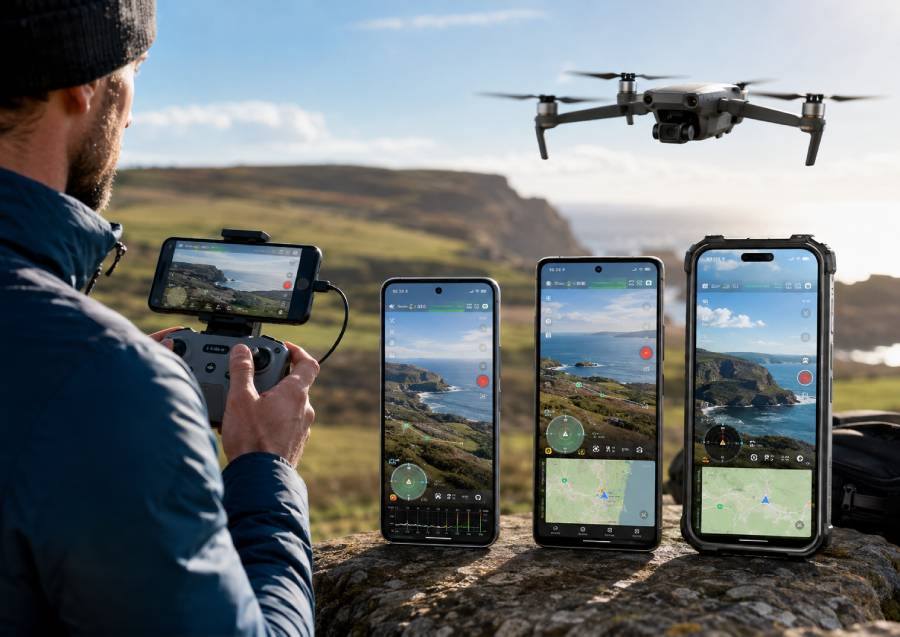
A phone matters more to drone flying than many buyers expect. If you use a controller without a built-in screen, your handset becomes the live-view monitor, the place where you run flight apps, cache maps, record the screen, download firmware, and often troubleshoot connections while standing outdoors in bright light. That means a phone that looks great indoors can still be a poor choice at the flying field if the display washes out, the USB link is fussy, or the battery drops quickly at high brightness. [1]
iOS and Android also differ in practical ways. DJI Fly is officially distributed through the App Store on iPhone, while DJI’s Android version is downloaded from DJI’s own site rather than Google Play. DroneDeploy’s current support is even more uneven: its Ground App is iOS-only, while its Flight app officially supports iPhone more clearly than it does most Android brands. [2]
Based on official specifications, compatibility information and independent testing, these three phones were chosen for UK buyers who want the clearest route to reliable controller use in 2026: the iPhone 17 for mainstream app confidence, the OnePlus 15 for huge battery reserves and rapid top-ups, and the HONOR Magic8 Pro for excellent outdoor visibility and very tough hardware.
What Makes a Great Phone for Drone Pilots in 2026
- Drone-app compatibility: Installing an app is not the same as having formal support. DJI publishes tested and recommended devices for DJI Fly, while DroneDeploy also separates officially supported devices from general requirements. That difference matters when you want fewer crashes, smoother live view, and less guesswork before a flight.
- Outdoor screen visibility: Big headline nits do not tell the whole story. Typical brightness, high-brightness mode, small-area boost and HDR peak figures can be very different. For flying, what matters most is how readable the app stays across a large, bright interface in midday conditions, plus how well the glass handles glare and reflections.
- Controller fit and weight: A larger phone can make the live feed easier to read, but it can also make a controller feel top-heavy. Common DJI RC-N2 and RC-N3 clamps support up to 180 × 86 × 10 mm, so all three picks fit physically on paper, yet a thick case or heavy phone can still affect comfort and cable seating. [3]
- Stable wired USB connection: For controller use, a dependable USB-C connection matters more than headline file-transfer speed. Even so, cable quality, connector position and case thickness can all affect whether the phone stays recognised properly during a session.
- Processor and thermal behaviour: Drone use combines bright display output, live video decoding, data or GNSS, map rendering, and sometimes screen recording or firmware downloads. That can heat a phone quickly. The right choice is not the phone with the most aggressive marketing, but the phone that stays responsive without turning uncomfortably hot. [4]
- Battery life and charging: High brightness and constant live view can drain a battery much faster than ordinary messaging or web use. Fast top-ups between flights are genuinely useful, especially if you travel with one phone and need it for flying, maps and normal daily use.
- Connectivity, storage and support: Dual-frequency location, 5G, Wi‑Fi 7, offline map caching, firmware downloads and enough storage for cached video, screen recordings and app files all make life easier. So does long software support, although Android brands still vary more than Apple here, and UK buyers should always verify the exact regional support wording.
Top 3 Phones for Drone Pilots (UK 2026)
1. Apple iPhone 17 256GB – Best overall for stable drone apps
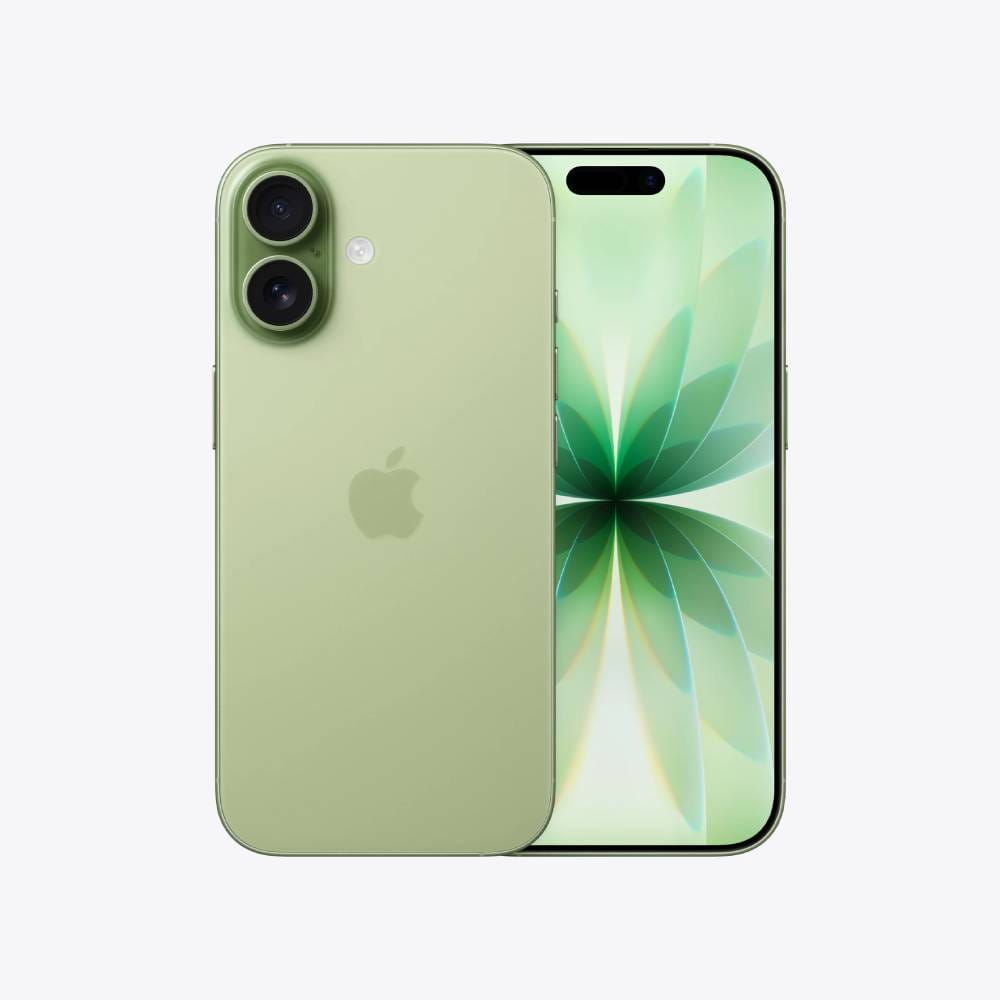
The iPhone 17 gets the balance right for most drone pilots. Its 6.3-inch OLED display is large enough to give the live feed breathing room, but the phone is still reasonably manageable at 149.6 × 71.5 × 7.95 mm and 177 g, which makes it notably easier to clamp and hold than the heavier Android alternatives here. Apple also confirms an anti-reflective coating and a 3,000-nit outdoor peak figure, but the more useful real-world takeaway is that independent testing found roughly 1,127 nits across a larger bright area, which is solid rather than magic-number spectacular. In practice, that is enough for confident outdoor flying, helped by reduced glare rather than raw brightness alone. [5]
Where the iPhone 17 really pulls ahead is software confidence. DJI’s current DJI Fly page explicitly lists iPhone 17 among its tested and recommended iOS models, and the app is available through Apple’s App Store. DroneDeploy is also clearer on iPhone than on Android: its Ground App is officially iOS-only, and its Flight app supports current iPhones running recent iOS versions. That does not mean every aircraft, controller and cable combination is automatically guaranteed, but it does mean the iPhone 17 has the strongest paper trail for mainstream drone use in this lineup. [6]
Performance is strong and steady for this job. Apple’s A19, iOS 26 and USB-C make for a tidy setup, and independent testing shows the iPhone 17 runs cooler than many high-end competitors under sustained load, even though it still throttles in heavier stress testing. Battery life is improved over earlier base iPhones, with Apple rating up to 30 hours of video playback, but it still does not have the huge battery reserves of the Android choices below. There is also a limitation UK buyers should know: the USB-C port handles charging and DisplayPort, but data stays at USB 2 speeds. That usually will not hurt controller use, though it is less ideal if you often move large files by cable. The box includes a USB-C cable, not a charger.
✅ Why this pick
Pros:
- Officially listed by DJI for DJI Fly on iOS.
- Sensible size and weight for long controller sessions.
- Reliable all-round display, performance and software support.
Cons:
- USB-C data remains USB 2, and battery size is modest next to the Android picks.
Main standout feature:
The standout here is not one giant headline spec, but the overall reduction in flight-day hassle. Official DJI Fly listing, App Store delivery, manageable size and a good anti-reflective screen make the iPhone 17 the easiest premium phone to recommend to most UK drone pilots.
Who it’s best for:
This is the best fit for pilots who prioritise stable mainstream app support, dependable everyday performance and a phone that feels comfortable in a controller rather than oversized and top-heavy. It is especially strong if you fly DJI regularly and want the clearest official compatibility path.
Amazon UK Check: 👉 Check price on Amazon UK - The iPhone 17 256GB sits in the premium mainstream bracket, and that price mainly buys cleaner app support and a more balanced overall drone-controller experience rather than the most extreme battery or brightness spec. Check the current Amazon UK price, confirm Buy New availability, verify the exact UK or European model, and make sure the seller, warranty, returns terms and charger expectations all make sense before ordering. Stock, pricing and seller bundles can change.
Check our website: for more details about Apple iPhone 17
2. OnePlus 15 12GB/256GB – Best for battery life and sustained performance
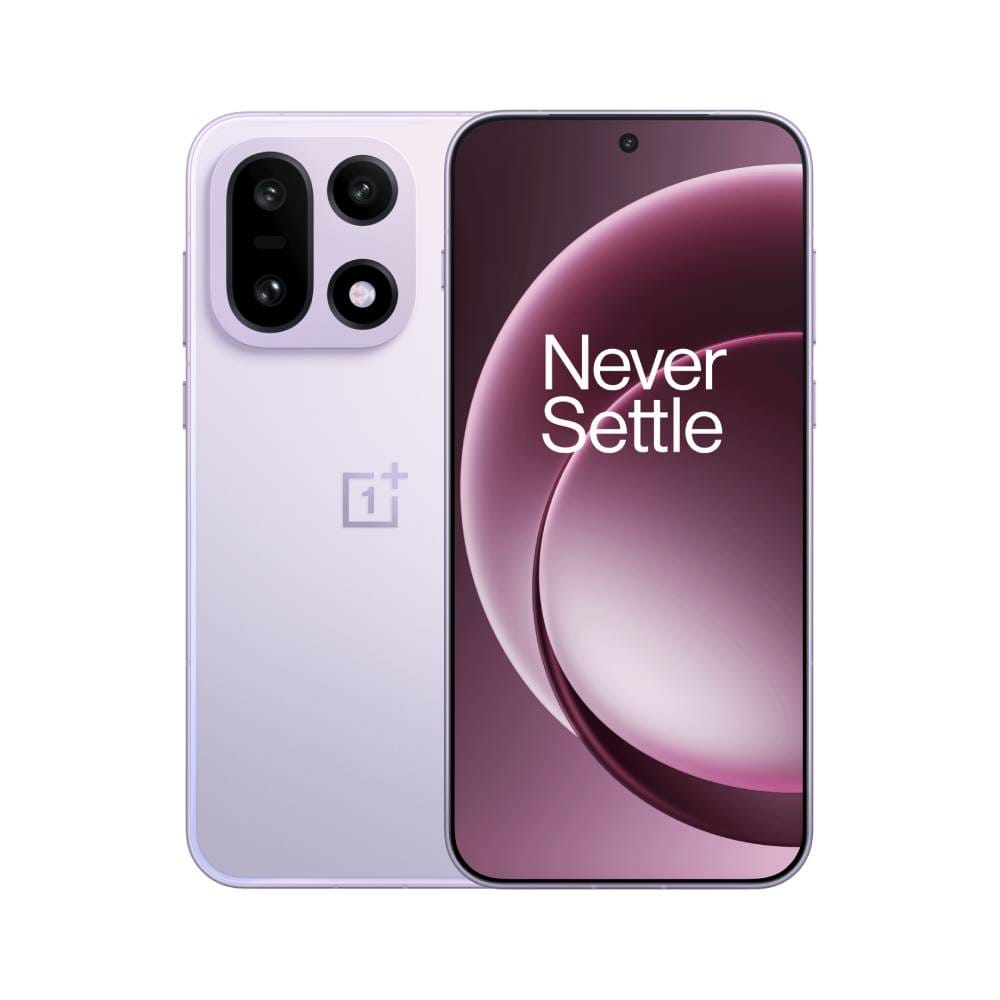
The OnePlus 15 is built around endurance. OnePlus gives it a huge 7,300mAh battery, a 6.78-inch LTPO display, 12GB RAM, 256GB UFS 4.1 storage and 120W wired charging on markets that support the full spec. For drone pilots, that combination is immediately appealing: more screen-on time at high brightness, less anxiety about back-to-back flights, and the ability to recover quickly between sessions. Independent testing backs up the battery story, with Notebookcheck reporting very strong runtimes and a phone that can comfortably stretch well beyond a normal work day. [7]
It is also well equipped for wired use and connectivity. OnePlus specifies USB 3.2 Gen 1, Wi‑Fi 7, Bluetooth 6.0, dual-band GNSS with L1/L5 support, and a body that remains within common DJI RC-N2/RC-N3 clamp limits at 161.4 × 76.7 × about 8.1–8.2 mm. The practical catch is weight: at 211–215 g depending on finish, it is noticeably heavier than the iPhone. It should physically fit common DJI phone clamps, but with a chunky protective case it may become awkward, and balance is not as comfortable over a long flight. [8]
The big caveat is compatibility confidence. DJI Fly’s current Android guidance is broad rather than reassuringly specific: it requires Android 9 or later, recommends mainstream flagships released after 2019, and publishes a tested-device list that does not explicitly name the OnePlus 15. The same caution applies to DroneDeploy, whose Android support pages name selected Samsung and Pixel devices rather than a general flagship free-for-all. So the OnePlus 15 is a strong hardware match for drone work, but it is not the Android pick for buyers who want the strongest official app-list paper trail. Thermal behaviour is also a genuine weakness. Independent testing found severe throttling in stress runs, temperatures close to 50°C, and some benchmark failures under heavy sustained load. That does not mean it will always misbehave while flying, but it does mean you should not describe it as thermally flawless.
✅ Why this pick
Pros:
- Huge battery reserves for longer outdoor flying sessions.
- Very fast wired charging and strong connectivity spec.
- Large display and good value for a premium Android flagship.
Cons:
- Official drone-app support is less clear than the iPhone, and heat under heavy load is a real limitation.
Main standout feature:
The main draw is stamina. No phone here gives you the same mix of very large battery capacity, rapid charging and flagship-grade hardware for long controller sessions where brightness, cached maps, mobile data and live view all hit the battery at once. [9]
Who it’s best for:
This is best for Android users who already understand that app compatibility must be checked carefully and who want the reassurance of extra battery margin more than they want the safest official tested-device status. It suits longer field sessions, travel days and pilots who top up quickly between flights.
Amazon UK Check: 👉 Check price on Amazon UK - The OnePlus 15 usually undercuts many premium rivals while still offering flagship-grade battery and charging hardware, which gives it very good value for drone-controller use if your app setup checks out first. Do check the Amazon UK price, Buy New status, exact UK or European model, charger inclusion, seller reputation, warranty cover and whether the listing is an imported variant. Listings and included accessories can vary.
3. HONOR Magic8 Pro 12GB/512GB – Best for outdoor visibility and durability
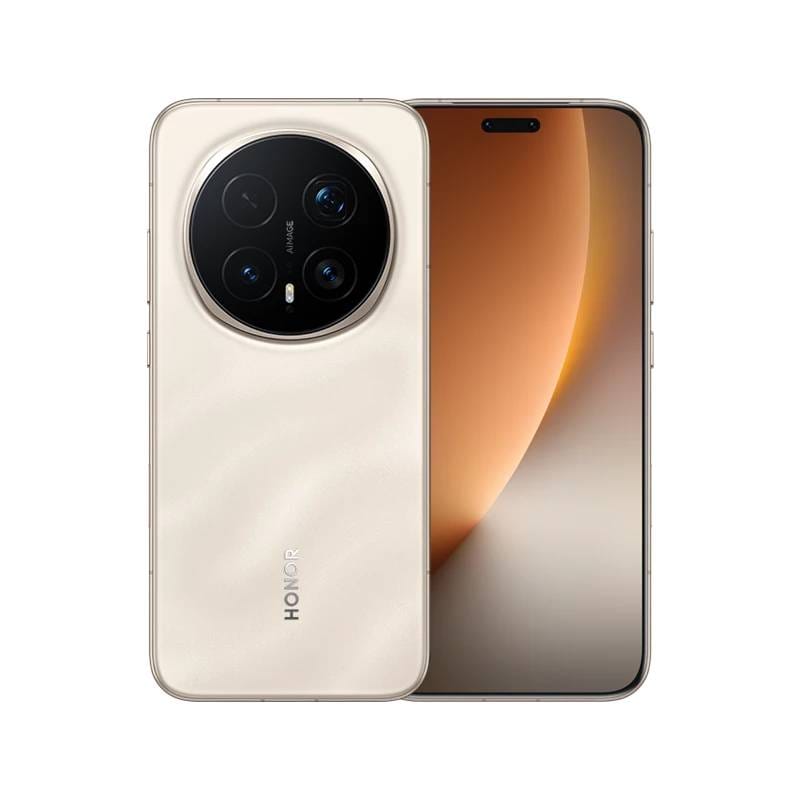
The HONOR Magic8 Pro is the most obviously field-oriented of the three. Its 6.71-inch OLED panel is paired with a very tough body, 512GB storage and unusually strong ingress ratings. HONOR quotes up to 6,000 nits HDR peak brightness and 1–120Hz refresh, but the more relevant number for drone use comes from independent testing, which measured roughly 1,821 nits across a bright larger area and over 3,200 nits on a smaller APL window. That makes this the strongest outdoor screen in the group for actual flight-app readability, not just for short HDR highlights. HONOR also backs the phone with IP68, IP69 and IP69K claims and NanoCrystal Shield glass, which makes it the easiest of these three to trust in exposed locations, damp conditions and generally rougher use. [10]
The rest of the hardware is equally strong on paper: Snapdragon 8 Elite Gen 5, 12GB RAM, 512GB storage, USB 3.2 Gen 1, Wi‑Fi 7, Bluetooth 6.0, multi-band GNSS and a 6,270mAh typical battery with up to 100W wired and 80W wireless charging. That storage capacity is genuinely useful for drone pilots who keep cached maps, screen recordings, firmware files and media on-device. The compromise is obvious once you clamp it in a controller: it is big and heavy at roughly 161.15 × 75.0 × 8.4 mm and about 219 g. That still falls inside common DJI RC-N2/RC-N3 clamp limits, but it is the most top-heavy handset here and the one most likely to feel better without a case. [11]
App compatibility is the same careful-Android story as the OnePlus. DJI Fly’s current Android page does not explicitly list the Magic8 Pro among its tested models, and DroneDeploy’s published Android support is still selective rather than broad. Autel Sky, by contrast, has modest platform requirements and an official manufacturer download page, so basic Autel use is less worrying on paper. Performance is very strong, but again you should stay realistic: independent testing found the HONOR stays cooler than the OnePlus overall, yet still drops about half its performance in sustained stress testing. HONOR’s wider Magic-series update promise in EU markets is encouraging, but UK buyers should still verify the exact Magic8 Pro wording on the model they buy.
✅ Why this pick
Pros:
- Excellent outdoor readability with very strong sustained brightness.
- Tough premium build with IP68/IP69/IP69K protection.
- 512GB storage and fast charging suit heavy drone use well.
Cons:
- Large size and 219 g weight make controller balance less comfortable than the iPhone.
Main standout feature:
The display is the real reason to buy it. The Magic8 Pro is the phone here that most confidently tackles bright outdoor conditions, and it does so while also giving you storage headroom and genuinely rugged flagship hardware. [12]
Who it’s best for:
This suits pilots who fly outdoors in strong sunlight, want lots of onboard storage, and care about durability almost as much as display quality. It is especially appealing if screen readability is your biggest daily annoyance and you are happy to accept a heavier controller setup.
Amazon UK Check: 👉 Check price on Amazon UK - The HONOR Magic8 Pro normally sits in premium-flagship territory, but its bright display, big storage and tough build give it a strong case for drone pilots who regularly fly outdoors. Check the current Amazon UK price, confirm Buy New availability, verify the exact UK or European version, and pay close attention to seller reputation, warranty, returns and charger inclusion. UK bundles and imported-model details can vary.
Comparison Table: Best Phones for Drone Pilots (UK 2026)
|
Feature |
Apple iPhone 17 256GB |
OnePlus 15 12GB/256GB |
HONOR Magic8 Pro 12GB/512GB |
|
Best for |
Stable drone apps overall |
Battery life and sustained performance |
Outdoor visibility and durability |
|
Display size |
6.3in OLED |
6.78in LTPO OLED |
6.71in OLED |
|
Outdoor-brightness information |
Apple says 3,000 nits outdoor peak; independent large-area result
around 1,127 nits |
HBM 1,800 nits on spec sheet; independent everyday max around 1,100
nits |
HONOR quotes 6,000 nits HDR peak; independent large-area result
around 1,821 nits |
|
Processor |
Apple A19 |
Snapdragon 8 Elite Gen 5 |
Snapdragon 8 Elite Gen 5 |
|
RAM and storage |
Apple does not market RAM here; 256GB storage confirmed |
12GB RAM / 256GB UFS 4.1 |
12GB RAM / 512GB |
|
Battery |
Apple does not publish mAh on UK spec page; up to 30 hours video
playback claim |
7,300mAh typical; huge reserve for long sessions |
6,270mAh typical for UK page; specification may vary by regional
model |
|
Charging |
Up to 50% in 20 mins with suitable adapter; charger sold separately |
Up to 120W wired, 50W wireless; charger inclusion should be checked
for UK listing |
Up to 100W wired, 80W wireless; original charger wording should be
verified for UK bundle |
|
Dimensions |
149.6 × 71.5 × 7.95 mm |
161.4 × 76.7 × 8.1–8.2 mm |
161.15 × 75.0 × 8.4 mm |
|
Weight |
177 g |
211–215 g depending on finish |
Approx. 219 g |
|
USB connection |
USB-C, DisplayPort, USB 2 data |
USB-C, USB 3.2 Gen 1 |
USB-C, USB 3.2 Gen 1 |
|
IP rating |
IP68 |
IP68 |
IP68 / IP69 / IP69K |
|
Operating system |
iOS 26 |
OxygenOS 16 based on Android 16 |
MagicOS 10 based on Android 16 |
|
Software support |
Strong long-term Apple support; no simple year-count promise on
product page |
OnePlus UK lists security support through 13 Nov 2031; verify exact
OS-upgrade wording |
HONOR says Magic series in EU markets gets seven years of Android OS
and security support; verify exact Magic8 Pro UK wording |
|
Drone-app compatibility |
DJI Fly officially lists iPhone 17; strong iOS support for
DroneDeploy |
Meets Android requirements for DJI Fly, but not explicitly listed on
current published tested list; compatibility depends on app and controller |
Same caution as OnePlus: likely general compatibility for some apps,
but not explicitly listed by DJI on current published tested list |
|
Controller-fit considerations |
Most comfortable fit of the three |
Fits common clamps on paper but heavier and more top-heavy |
Fits common clamps on paper but biggest balance penalty |
|
Main drone-use strength |
Official mainstream app confidence |
Long-session endurance |
Best sunlight readability |
|
Main limitation |
Smaller battery and USB 2 data |
Heat and app-list uncertainty |
Weight and size in clamp |
|
UK buyer profile |
Wants the safest all-round premium choice |
Wants battery-first Android power |
Wants outdoor screen strength and ruggedness |
Apple iPhone 17 256GB → Check price on Amazon UK
OnePlus 15 12GB/256GB → Check price on Amazon UK
HONOR Magic8 Pro 12GB/512GB → Check price on Amazon UK
What to Consider Before Buying a Phone for Drone Flying
- Check the exact app first: DJI Fly, DJI Pilot, DJI Enterprise-style apps, Autel Sky and DroneDeploy all have different support rules. A phone meeting the Android or iOS minimum version does not automatically mean your exact setup is officially supported.
- Check the controller too: Common DJI RC-N2 and RC-N3 clamps allow up to 180 × 86 × 10 mm, which means these phones fit physically on paper, but thick cases, right-angle cables and connector strain can still spoil the experience.
- Do not confuse installation with full compatibility: The iPhone 17 is clearly listed by DJI for DJI Fly. The OnePlus 15 and HONOR Magic8 Pro meet current Android-level requirements, but neither is explicitly named on DJI’s current published recommended list, so buyers should verify their exact phone, drone, controller, firmware and cable combination before relying on them.
- Be realistic about brightness: A 6,000-nit or 3,000-nit marketing figure is not the same as whole-screen sustained brightness in a flight app. If you regularly fly in strong sun, large-area measured brightness and reflections matter more than HDR headlines.
- Expect heat and battery drain: Live view, high brightness, GPS, mobile data, screen recording and firmware downloads can all stack up quickly. Fast charging between flights helps, but no phone should be treated as immune to heat-related slowdowns.
- Think about storage and offline use: Cached maps, firmware packages, screen recordings and downloaded media can grow quietly. A 256GB phone is enough for most pilots, but 512GB gives more breathing room if you keep lots of material locally. Offline maps can also reduce dependence on patchy mobile coverage.
- For Amazon UK, verify the listing properly: Check current price, Buy New availability, exact UK or European version, seller reputation, warranty, returns and charger inclusion. Imported stock can have different bundles, bands or support wording.
Frequently Asked Questions
Do all smartphones work with DJI Fly?
No. DJI publishes requirements and recommended tested devices. The iPhone 17 is explicitly named on DJI’s current published iOS list, while the OnePlus 15 and HONOR Magic8 Pro meet Android-level requirements but are not explicitly named on DJI’s current published recommended Android list.
Is an iPhone or Android phone better for drone pilots?
For the clearest mainstream app support, iPhone is usually the easier answer in 2026, especially for DJI Fly and DroneDeploy’s iOS-heavy support. Android can still be excellent, but support is often more conditional and should be checked more carefully.
How bright should a phone screen be for flying outdoors?
There is no single perfect number, but you want strong large-area brightness and good glare control rather than a flashy HDR-only peak. In this group, the HONOR Magic8 Pro is the strongest outdoor screen, while the iPhone 17 remains very usable thanks to a solid panel and anti-reflective treatment.
Will these phones fit every drone controller?
No. They fit common DJI RC-N2 and RC-N3 clamp limits on paper, but that does not guarantee universal fit across every controller, bracket or cable setup. Older or third-party controllers may differ.
Should I remove the phone case before using the controller?
Often, yes. If the case adds thickness, blocks the USB-C port or leaves the cable sitting at an angle, it is safer to remove it for flying. This matters most with the larger OnePlus 15 and HONOR Magic8 Pro.
Why can a phone overheat while flying a drone?
Because drone use can pile multiple demanding tasks together: bright display output, live camera feed decoding, GPS, map data, app processing, screen recording and warm outdoor temperatures. The OnePlus 15 and HONOR Magic8 Pro are both powerful, but independent testing still shows thermal throttling under heavier sustained loads.
Does a drone app require mobile data?
Not always. Many flights can be done without active mobile data once the app, aircraft firmware and maps are already set up. But data is useful for firmware downloads, syncing, account checks, map loading and location-based services before you head offline.
How quickly does drone use drain a phone battery?
Usually much faster than normal everyday use. High brightness and constant live view are the big drains. That is why the OnePlus 15 is so appealing for long sessions, while the iPhone 17 is more about balanced reliability than maximum runtime.
Final Verdict
- Apple iPhone 17 256GB is the best overall choice for drone pilots who prioritise stable mainstream app support, comfortable controller use and dependable everyday performance → Check price on Amazon UK
- OnePlus 15 12GB/256GB is the best choice for long flying sessions, large battery reserves and fast charging between flights → Check price on Amazon UK
- HONOR Magic8 Pro 12GB/512GB is the best choice for pilots who prioritise outdoor screen visibility, large storage and durable premium hardware → Check price on Amazon UK
For most UK buyers, the iPhone 17 is the easiest recommendation because it combines the strongest mainstream app confidence with a sensible size. The OnePlus 15 is the battery-first Android choice. The HONOR Magic8 Pro is the one to buy if bright outdoor flying is your main priority.
We update our comparisons regularly to keep everything accurate, up to date, and UK-focused.