Long-Video Recording Phones (UK 2026) – Stable 4K, Storage & Cooling for Events
Samsung leads this UK 2026 comparison with the most complete long-event storage workflow, while Xiaomi and OPPO offer compelling specialist filming features.
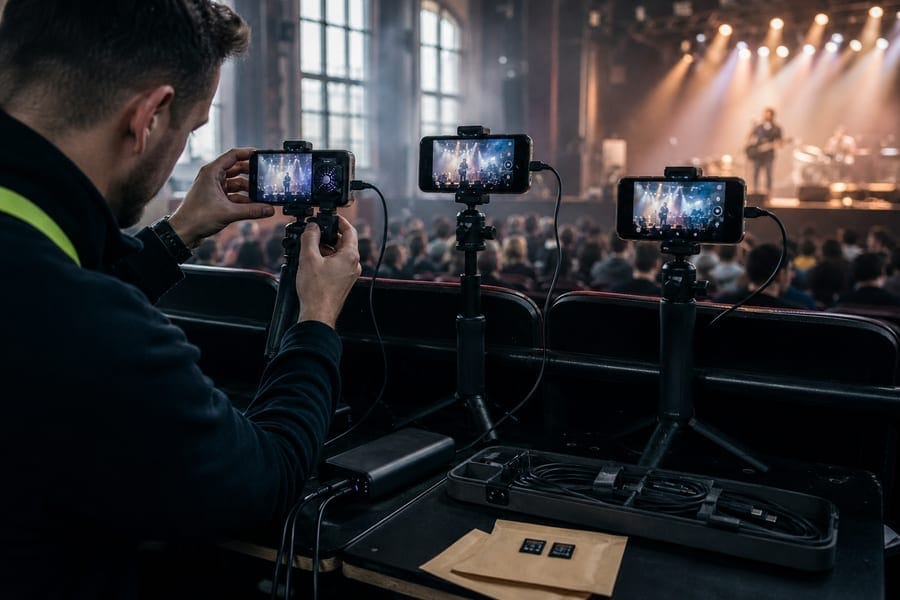
A wedding ceremony, full-length concert and planned creator shoot create different problems, but all demand more than a phone that merely lists 4K. Updated for UK buyers in 2026, this guide ranks Samsung first because it combines up to 1TB of internal storage with a documented route for recording APV video directly to external USB storage. Xiaomi is the format-focused choice, while OPPO is the strongest fit for buyers building a phone-centred filming rig.
🥇 Samsung Galaxy S26 Ultra — Best overall for long 4K recording, storage flexibility and sustained-performance headroom — Check price on Amazon UK
🥈 Xiaomi 17 Ultra — Best for 4K/120 Dolby Vision and Log workflows — Check price on Amazon UK
🥉 OPPO Find X9 Ultra — Best for a camera-first rig and the largest stated battery — Check price on Amazon UK
Continue to the detailed reviews for the important differences in stabilisation, storage configuration, cooling claims, charger requirements, editing compatibility and UK warranty support.
Introduction
The best long-video recording phones UK buyers can choose in 2026 are not necessarily the models with the highest resolution printed on the product page. All three phones in this guide can reach 8K/30 and 4K at up to 120fps in at least one documented mode, but those headlines do not answer the questions that matter halfway through a ceremony, stage performance or sports fixture. Available storage, battery state, venue temperature, stabilisation mode, cable security and codec compatibility can all determine whether the phone remains practical.
This guide is for buyers expecting to record substantial footage rather than occasional short clips. That includes parents filming school or sporting events, guests covering weddings, musicians recording performances, travellers documenting talks or festivals, and creators using a smartphone as a compact production camera. Their priorities will not always align. Someone who wants footage ready to share may prefer conventional 4K/30 or 4K/60, while an editor may deliberately choose Log, HDR or a high-quality professional codec and accept larger files and additional post-production.
The three locked choices are current 2026 models documented through official UK manufacturer material. Samsung announced the Galaxy S26 series on 25 February 2026, with general UK availability from 11 March. [2] Xiaomi and OPPO likewise maintain UK product and specification pages for their respective 2026 flagships. [7] [10] The ranking combines those verified facts with practical buyer-use-case judgement. It is not based on a controlled ChoiceWise endurance, stabilisation or thermal-shutdown test.
That qualification matters. No reviewed source provides a like-for-like continuous 4K recording duration or thermal limit for all three phones under identical conditions. Cooling hardware can reduce risk and support sustained workloads, but it cannot guarantee unlimited filming in direct sun, a warm venue or while charging. Battery capacity is similarly useful for planning without being a direct camera-runtime result.
The Amazon URLs are manually selected UK search links. They are not evidence of a fixed price, seller, condition, storage variant, included charger, fulfilment method or warranty route. Amazon results can change, so confirm the exact UK-compatible handset, seller, capacity, returns and manufacturer-support position before ordering.
Top 3 products worth buying – UK 2026
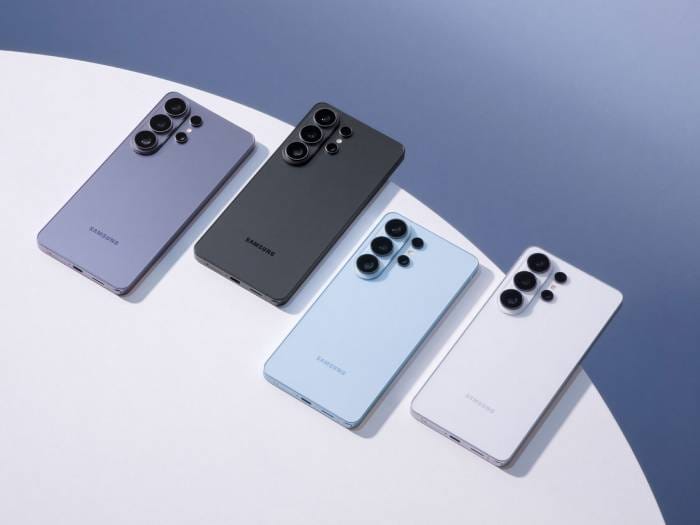
1. Samsung Galaxy S26 Ultra — Best overall for long-event recording
Pros:
- Official 256GB, 512GB and 1TB options, plus a documented APV direct-to-external-USB recording workflow.
- Records up to 8K/30 and offers 4K at up to 120fps in Pro Video.
- Redesigned vapour chamber, useful stabilisation features and seven generations of operating-system upgrades.
Con:
- Its 5,000mAh stated battery is the smallest here, while the standout external-SSD workflow adds cables, drive requirements and connection risk.
The Samsung Galaxy S26 Ultra takes first place because it provides the most complete answer to the storage side of long event recording. Samsung lists 256GB, 512GB and 1TB configurations, with 16GB of memory on the 1TB version and 12GB on the other two. It also specifies 8K recording at 30fps and 4K at up to 120fps in Pro Video. [1] Those capabilities place it alongside the other two premium phones for headline resolution, but the practical differentiator is what happens when internal storage is no longer enough.
Samsung documents APV recording to external USB storage from the native camera workflow, as well as recording to the phone itself. [3] [4] This can materially change how a prepared event is covered. A creator can connect a suitable SSD, record planned high-quality footage to that drive and then move the storage directly to compatible editing equipment. It does not make storage infinite, but it creates a clearer capacity expansion and file-transfer route than relying entirely on whatever free space remains on the handset.
The feature requires preparation. Samsung specifies USB 3.0 or later cabling, with 10Gbit/s recommended, exFAT formatting and sufficiently fast storage. For 8K/30 or UHD/120, its technical guidance calls for at least 400MB/s write speed and support for up to 4.5W of power. Samsung warns that recording can stop if write speed is inadequate or the cable connection is lost. [4] A buyer should therefore test the exact SSD, cable and mounting arrangement before an irreplaceable event. A loosely hanging drive is awkward in a crowd and more vulnerable to disconnection than a securely attached drive on a tripod, cage or gimbal.
APV also requires an informed post-production decision. Samsung presents it as a professional video codec with HDR and Log controls, but notes that unsupported devices may show stuttering playback or missing thumbnails. Conversion to HEVC can improve compatibility, although Samsung says conversion may reduce quality. [3] [4] For quick family clips or immediate social uploads, a more conventional format may be easier. For a planned edit where quality and grading flexibility matter, APV and external storage are more compelling.
Cooling is relevant but should not be overstated. Samsung says its redesigned Vapour Chamber and tailored thermal interface material provide 21% greater thermal performance. [1] That is a manufacturer design claim, not proof of an exact uninterrupted 4K runtime. Recording conditions still matter: direct sunlight, high display brightness, a case, mobile signal, charging and an attached SSD may all affect heat and power use. Samsung’s normal video-playback claim is not interchangeable with active camera capture either.
The 5,000mAh typical battery is smaller on paper than Xiaomi’s 6,000mAh and OPPO’s 7,050mAh capacities. Samsung says the phone can charge to as much as 75% in around 30 minutes under its stated conditions, but the research did not establish the mains-adaptor contents for every UK retail channel. [1] Buyers should plan around the exact retailer bundle rather than assume that everything required for the headline charging performance is included.
For movement, Samsung documents Super Steady with Horizontal Lock, intended to help keep footage level as the phone tilts or moves. [1] Stabilisation must still be checked in the intended resolution, lens and frame-rate combination. No single stabilisation label proves that 8K, 4K/120 and every Pro Video configuration receive identical treatment. Test clips at the venue, or in similar lighting and movement, are more valuable than discovering a mode restriction during the main performance.
The physical design also encourages supported use. The phone has a 6.9-inch display, measures 163.6 by 78.1 by 7.9mm and weighs 214g. [1] That is manageable for short handheld shots but substantial for an uninterrupted ceremony or keynote. A grip, compact tripod or gimbal can reduce fatigue and improve consistency. The IP68 rating adds reassurance around dust and splashes, but it should not be treated as permission to expose an expensive recording setup unnecessarily.
Main standout feature: the combination of a documented 1TB option and native-camera APV recording to suitable external USB storage. None of the other two locked phones has an equivalent UK-documented external-recording workflow in the reviewed evidence. It gives Samsung the strongest practical route for a long, planned shoot where storage pressure is a central concern.
Who it is best for: event videographers, creators and families who want a premium all-round phone with a clearly documented storage expansion workflow. Buyers who only want simple handheld clips may find APV, an SSD and cable management unnecessarily complicated, while those prioritising the largest possible battery reserve should consider OPPO. Choosing Samsung means accepting the smallest stated battery in the group and some workflow complexity in exchange for the best overall balance of internal capacity, external recording, stabilisation tools and long-term support. Samsung promises seven generations of OS upgrades and seven years of security updates from global launch. [6]
If you want the all-rounder for sustained long-form 4K recording and big internal storage, Samsung Galaxy S26 Ultra is our top pick on its ChoiceWise page.
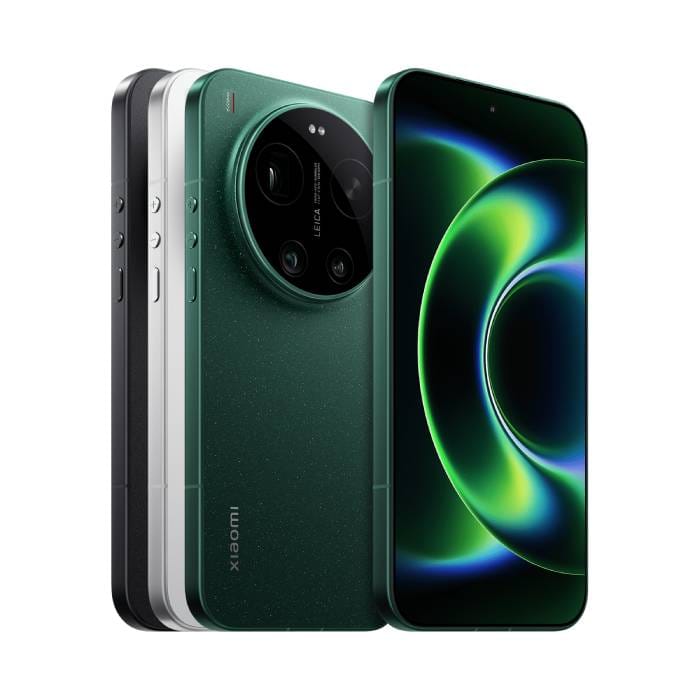
2. Xiaomi 17 Ultra — Best for cinematic format flexibility
Pros:
- Supports 4K Dolby Vision and Log recording at up to 120fps, alongside 8K/30.
- Official 512GB and 1TB UK configurations provide substantial local storage.
- Combines a 6,000mAh stated battery, 90W wired charging and a dedicated IceLoop cooling design.
Con:
- Xiaomi lists ShootSteady only up to 2.8K/60, so its strongest stabilisation mode cannot be assumed to apply to the headline 4K/120 options.
The Xiaomi 17 Ultra is the specialist choice for buyers who select a phone according to capture format rather than simply looking for a high-resolution camera. Xiaomi lists 8K at 30fps, 4K Dolby Vision at 30, 60 and 120fps, and Log recording at up to 4K/120. Its rear-camera specification also includes ACES support, Movie mode, Pro mode and a four-microphone array. [7] That collection is particularly relevant to experienced creators who understand frame rates, exposure, colour grading and delivery formats.
Dolby Vision and Log solve different problems. Dolby Vision can provide an HDR-oriented route for compatible screens and applications, potentially reducing the amount of manual grading a casual user wants to perform. Log is aimed at preserving flexibility for a deliberate grade, but it creates more work and depends on the editor, monitor and export workflow. A buyer should decide how footage will be delivered before choosing the most technically elaborate setting. Capturing everything in 4K/120 Log is rarely the most efficient way to document a complete event.
For many concerts, talks and ceremonies, 4K/30 or 4K/60 will be the more practical default. The 120fps modes are useful for intentional slow-motion sequences such as confetti, dance, sport or action, but they generate a heavier processing and storage workload. They can also impose different restrictions from ordinary modes. Xiaomi does not document every lens-and-mode combination in the research material, so buyers should verify the exact camera, frame rate, HDR or Log setting and stabilisation behaviour they plan to use.
That last point is especially important for a guide focused on stable 4K. Xiaomi lists ShootSteady only up to 2.8K at 60fps. [7] It would therefore be misleading to extend that feature automatically to 4K/120 Dolby Vision or Log. This does not mean the phone cannot produce stable-looking 4K footage; rather, the named ShootSteady mode has a documented resolution limit. A tripod, grip or compatible gimbal may be more dependable for a long take, and a short test should confirm how electronic stabilisation, cropping and lens selection behave in the required mode.
Storage is a major strength. Xiaomi officially offers 16GB/512GB and 16GB/1TB configurations, using UFS 4.1 storage. [7] The 1TB option provides a strong local capacity margin for high-resolution footage, although usable space is lower once the operating system, applications and existing media are considered. Unlike Samsung, no Xiaomi UK source reviewed for this guide verifies native-camera recording directly to external USB storage. Buyers should treat 1TB internal storage and an offload plan as the dependable workflow rather than assuming an SSD can act as a live recording destination.
The 6,000mAh typical battery gives Xiaomi a larger stated reserve than Samsung, though it remains below OPPO’s figure. Xiaomi also lists 90W wired HyperCharge and 50W wireless HyperCharge. [7] These are encouraging turnaround specifications, not controlled evidence that Xiaomi records for longer than Samsung in one defined 4K mode. Xiaomi explicitly says a power adaptor is not included in the box, so anyone wanting the advertised wired rate should budget for and verify a suitable charger. [7] [8]
Xiaomi describes a 3D Dual-Channel IceLoop cooling system with a 5,500mm² heat-dissipation area and a manufacturer-tested thermal-conductivity claim. [7] [8] This indicates that sustained demanding work was considered in the design, but it does not establish a guaranteed thermal-shutdown threshold or continuous event-recording time. Cooling performance can change with ambient temperature, case choice, charging, screen brightness and capture format. A rehearsal in the intended mode remains essential.
At 162.9 by 77.6 by 8.29mm and 218.4g in black or white, or 219g in Starlit Green, the Xiaomi is even heavier than Samsung. [7] Its 6.9-inch screen provides a generous monitoring area, but prolonged unaided filming will be tiring. The IP68 rating is useful around unpredictable weather, although Xiaomi explicitly says its laboratory rating does not represent all normal consumer conditions and can deteriorate through wear, damage or repair. It also says the phone is not intended for beach or pool use. [7]
Main standout feature: the explicitly documented combination of 4K/120 Dolby Vision and 4K/120 Log. It gives a knowledgeable filmmaker unusual flexibility to choose between an HDR-oriented workflow and footage intended for substantial grading, without stepping down from the high frame-rate headline.
Who it is best for: creators who already know why they need Log, Dolby Vision, ACES support or 120fps capture and who want as much as 1TB of local storage. It is less suitable for buyers who interpret “stable 4K” as one universal point-and-shoot mode, because Xiaomi’s strongest named stabilisation setting stops at 2.8K/60. The compromise is clear: Xiaomi offers the broadest verified format specification, but the buyer must take more responsibility for mode testing, stabilisation and file management. Its documented UK-inclusive international warranty runs for 24 months under qualifying authorised-channel and activation terms. [9]
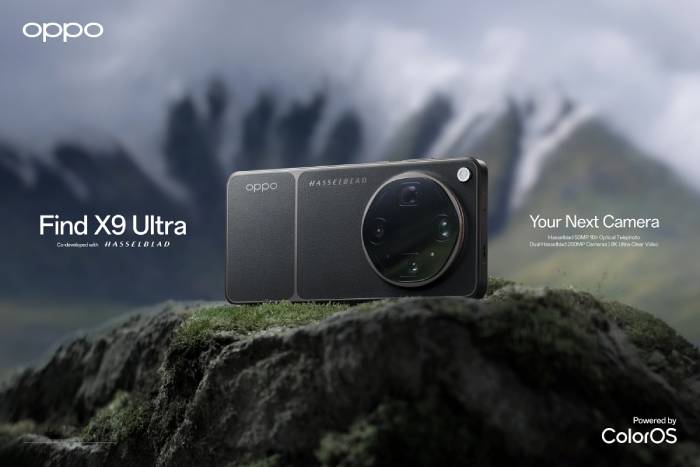
3. OPPO Find X9 Ultra — Best for a camera-first filming rig
Pros:
- The 7,050mAh stated battery is the largest in this three-phone comparison.
- Offers 8K/30, 4K/120 Dolby Vision, Log, real-time grade previews and custom LUT support.
- An optional TILTA KHRONOS system adds controls, cooling and an ND-filter pathway for rig-based filming.
Con:
- The UK capacity picture appears less favourable than its rivals, while the charger and most distinctive filmmaking accessories are separate purchases.
The OPPO Find X9 Ultra is the most overtly camera-system-oriented choice. OPPO lists recording up to 8K/30 and 4K/120 Dolby Vision, alongside Log recording, real-time grade preview and the ability to apply cinematic LUTs, including imported Cube LUTs. [10] These features make sense for someone who wants to treat a smartphone as the centre of a compact production setup rather than as a pocket camera used only for spontaneous clips.
The real-time grade preview is particularly useful in a deliberate workflow. Log footage can look flat before grading, so seeing a creative interpretation while recording may make exposure and colour decisions easier. Custom LUT support also helps a creator work towards a repeatable visual style. Those tools do not remove the need to understand colour management, however. The selected LUT, editing software and final delivery platform still need to agree, and a quick-turnaround buyer may be better served by a standard or Dolby Vision mode.
OPPO’s optional TILTA KHRONOS Kit gives this model its strongest physical distinction. OPPO says the system can add a focus handle, cooling back clip and ND-filter adapter. [10] The handle can support more camera-like control, while an ND filter can help manage exposure when filming outdoors at a chosen shutter speed. The cooling clip may also be valuable during demanding work. None of these accessories is included automatically, and the kit adds cost, bag space and setup time. Venue staff may also treat a large rig differently from an ordinary phone.
This makes OPPO best suited to controlled filming: a creator shoot, outdoor sequence, speech from a fixed position or event where a small cage is permitted. It is less convenient in a tightly packed concert crowd where cables, handles and filters can become an obstruction. Buyers should check venue policies in advance because some locations prohibit tripods, detachable lenses, lights, larger microphones or professional-looking rigs even when the central camera is a phone.
Battery reserve is the other important attraction. OPPO lists a 7,050mAh typical battery, 100W wired SUPERVOOC and 50W AIRVOOC wireless charging. [10] Its stated capacity leads Xiaomi’s 6,000mAh and Samsung’s 5,000mAh figures, providing the strongest paper reserve for long sessions. It should not be converted into a promised number of recording minutes. Display brightness, signal, codec, frame rate, stabilisation, accessories, ambient heat and battery condition all influence active camera endurance.
The charging headline also requires an accessory check. OPPO’s direct UK store page lists the handset, USB data cable, SIM tool, quick-start guide and safety guide, but no mains power adaptor. [11] Buyers who want 100W charging should verify a compatible charger and cable rather than assuming the advertised rate is available from the retail box. Charging during intensive capture can also add heat, so a high-capacity power bank is not a substitute for sensible breaks and temperature management.
OPPO identifies a 3D Cryo-velocity Cooling System and positions the Snapdragon platform and Trinity Engine for demanding workloads including stable 4K capture. [10] This is relevant design information, but it remains a manufacturer claim rather than a quantified independent comparison. The optional cooling clip offers an additional preparation route, yet even that should not be described as guaranteeing uninterrupted recording in every environment.
The storage situation requires more caution than it does with Samsung or Xiaomi. Credible UK launch coverage reports a 12GB/512GB UK retail version, with 16GB/1TB limited to selected markets. [14] That is secondary reporting rather than live Amazon inventory, and seller configurations may differ. Buyers should confirm the exact capacity and whether a listing is a UK-supported model or an import. No reviewed OPPO UK source verifies native-camera direct recording to an external SSD, so the phone should not be presented as matching Samsung’s documented external APV feature.
OPPO’s 6.82-inch display and claimed high outdoor peak brightness can help with composition in daylight. [10] The large display, substantial camera system and optional accessories still point towards two-handed or mounted use. For a full performance or ceremony, a support system can improve framing and reduce fatigue, but it also makes the setup less discreet.
Main standout feature: the joined-up pathway from high-end capture formats to a physical filming rig. Log, LUT previews, 4K/120 Dolby Vision and the optional focus, cooling and filter accessories collectively offer more than a list of camera modes; they support a deliberate phone-centred production method.
Who it is best for: creators who want camera-style controls, the largest stated battery reserve and an accessory ecosystem designed around serious filming. Buyers seeking the simplest pocket-to-event workflow should prefer Samsung, while those wanting an officially documented UK 1TB configuration have clearer options from Samsung and Xiaomi. Choosing OPPO means accepting greater accessory cost and storage uncertainty in return for the strongest rig-oriented proposition. OPPO publishes a Find X9 Ultra security-update end date of 8 May 2032, while noting that timing can vary by country or model. [12]
If you want the most camera-led pick for long, stable 4K recording, see the Oppo Find X9 Ultra on ChoiceWise: Oppo Find X9 Ultra —where its video features, storage options, and cooling design are laid out.
What makes a great long-video recording phone in 2026?
A strong event-recording phone needs a workable combination of capture mode, stabilisation, storage, heat management and physical support. No single headline settles the decision.
- A practical default format: 4K/30 or 4K/60 will usually be more manageable for a complete ceremony, talk or concert than 4K/120 or 8K. High frame rates are valuable for intentional slow motion, while 8K can provide cropping latitude, but both place greater demands on processing, storage and editing. Choose them for a defined reason rather than because they sit at the top of the menu.
- Mode-specific stabilisation: stabilisation can change with the selected lens, resolution, frame rate, HDR mode and field of view. Xiaomi’s named ShootSteady feature is limited to 2.8K/60, while Samsung documents Super Steady with Horizontal Lock. [1] [7] Neither fact justifies assuming every high-end mode behaves identically. A tripod or gimbal is often the safer solution for one long, important take.
- Storage as a complete workflow: a 1TB phone provides valuable headroom, but the operating system, apps and existing media reduce usable capacity. High-quality formats can consume space quickly; Samsung’s guidance says APV 422 HQ at FHD/30 can require about 1.5GB per minute. [4] Samsung’s external-storage route is the clearest expansion option, although it requires a suitably fast SSD, secure cable and compatible editing plan.
- Codec compatibility: Log and APV are valuable when footage will be graded, but they can complicate previewing, editing and sharing. Dolby Vision can be convenient for compatible HDR workflows, yet the intended editor and delivery platform should still be checked. The technically richest option is not always the most reliable choice for same-day sharing.
- Cooling without false guarantees: Samsung, Xiaomi and OPPO all describe dedicated thermal hardware. [1] [7] [10] These systems are relevant risk-reduction features, not guarantees of unlimited 4K. Ambient temperature, direct sunlight, charging, screen brightness, cases and mobile signal can change thermal behaviour substantially.
- Battery and charging as separate considerations: OPPO has the largest stated battery, followed by Xiaomi and Samsung, but capacity is not a recording-runtime result. Fast charging determines turnaround between takes, while battery capacity affects the available reserve. A compatible adaptor may also be separate, as it is with Xiaomi and apparently with OPPO’s listed UK box contents. [7] [11]
- Physical and audio preparation: all three are large premium phones. A grip, tripod, cage or gimbal can improve stability and comfort, but it may conflict with venue rules. Sound deserves equal planning: crowd noise, wind and distant stages can undermine otherwise excellent footage. Check microphone or wireless-receiver compatibility with the case, USB port and support equipment before the event.
The best phone is therefore the one whose workflow addresses the buyer’s most likely failure point. Samsung tackles storage expansion most convincingly, Xiaomi prioritises capture-format flexibility, and OPPO concentrates on battery reserve and rig integration.
Comparison: long-video recording phones UK 2026
The specifications below come from different manufacturer methodologies and are not controlled ChoiceWise results. The key distinction is practical: Samsung has the clearest external-storage workflow, Xiaomi the broadest explicitly documented 4K/120 format combination, and OPPO the largest stated battery plus the strongest accessory-rig pathway.
| Best for | Exact model | Key specifications | Key strength | Main limitation | Typical UK buyer |
|---|---|---|---|---|---|
| Long planned events | Samsung Galaxy S26 Ultra | Up to 1TB; 8K/30; 4K/120 Pro Video; 5,000mAh [1] | APV direct to compatible external USB storage [3] [4] | Smallest stated battery; SSD workflow adds complexity | Event filmer needing flexible storage and long support |
| Cinematic formats | Xiaomi 17 Ultra | Up to 1TB; 4K/120 Dolby Vision and Log; 6,000mAh [7] | Strongest verified high-frame-rate format flexibility | ShootSteady is limited to 2.8K/60 | Creator comfortable with grading and mode testing |
| Rig-based filming | OPPO Find X9 Ultra | 8K/30; 4K/120 Dolby Vision; 7,050mAh; 100W [10] | Largest stated battery and optional filmmaking system | UK storage needs checking; accessories cost extra | Filmmaker building a phone-centred camera setup |
Samsung Galaxy S26 Ultra: Check price on Amazon UK
Xiaomi 17 Ultra: Check price on Amazon UK
OPPO Find X9 Ultra: Check price on Amazon UK
What to consider before buying
Once a preferred phone is clear, verify the complete recording and ownership setup. The handset price is only one part of a dependable event workflow.
- Confirm the exact storage configuration: Samsung and Xiaomi officially document 1TB variants, but an Amazon result may open on a lower-capacity option. OPPO’s UK capacity needs particular attention because secondary launch reporting identifies 512GB for the UK retail version. [1] [7] [14] Check capacity, memory, colour, condition and model code before checkout.
- Leave genuine free space: do not arrive with a nominally large phone already filled with applications, downloads and old footage. Estimate the event length, record a representative test clip and inspect how much space the chosen mode uses. Keep a separate offload copy where possible rather than deleting material at the venue.
- Budget for the real accessory list: Samsung’s external workflow needs a suitable SSD, fast cable and secure way to mount both. Xiaomi requires a separately sourced compatible adaptor for its headline charging capability. OPPO’s mains adaptor is not listed in the official box, and its TILTA filmmaking accessories are optional. [4] [7] [10] [11] A grip, tripod, gimbal, microphone, power bank and protective case can materially increase the total cost.
- Rehearse the exact mode: test resolution, frame rate, lens, stabilisation, HDR or Log setting, microphone input and available storage together. Check whether the display remains visible, whether notifications interrupt the workflow and whether the file plays correctly in the intended editor. A five-minute rehearsal in cool indoor conditions is not a full endurance test, but it can expose configuration mistakes.
- Plan for heat conservatively: remove unnecessary cases if the manufacturer’s guidance and filming environment make that sensible, keep the device out of direct sun and avoid simultaneous charging where it causes additional heat. Do not cool a hot phone with water or abrupt temperature changes. Schedule natural breaks between speeches, sets or matches where the event allows.
- Check venue and privacy rules: a phone may be permitted where a cage, tripod, detachable filter, light or external microphone is not. Concert policies can also restrict recording duration or commercial use. At private events, obtain appropriate permission rather than assuming that technical capability provides consent.
- Verify the UK seller and warranty route: the Amazon links are changing search pages, not fixed listings. Samsung warns that smartphones brought into the UK by third parties outside its normal route may have a maximum one-year warranty under its policy from February 2026. [5] Xiaomi’s international warranty has authorised-channel and activation conditions, while OPPO’s policy applies to products sold in the relevant country and includes standard exclusions. [9] [13] Retain the invoice, listing details and model code.
- Consider support longevity: Samsung provides the clearest commitment at seven generations of operating-system upgrades and seven years of security updates. [6] OPPO publishes a security-update end date, but that is not the same as a stated number of major OS upgrades. [12] A model-specific Xiaomi major-upgrade promise was not verified, so do not assume all three commitments are equivalent.
For an occasional family event, simplicity may be more valuable than Log, LUTs or external recording. For paid or repeat creator work, storage redundancy, accessory compatibility and a predictable editing pipeline can justify additional expense. Buy for the workflow you will actually operate, not the most impressive mode you might use once.
Frequently asked questions
Which phone is the best choice for filming a long event in 4K?
The Samsung Galaxy S26 Ultra is the best overall choice for a prepared long-event workflow. The decisive advantage is not its battery capacity; OPPO and Xiaomi have larger stated batteries. Samsung wins because it combines an official 1TB option with documented APV recording directly to suitable external USB storage. [1] [3] [4] That gives a prepared filmmaker a route around internal-capacity pressure and can simplify transfer to compatible editing equipment.
The trade-off is additional equipment and complexity. The SSD needs the required speed, power support and exFAT formatting, while the cable must remain secure. Choose OPPO if the largest stated battery and a rig-oriented accessory pathway matter more. Choose Xiaomi if 4K/120 Dolby Vision and 4K/120 Log are the primary reasons for buying. No available evidence guarantees a particular uninterrupted 4K duration for any of the three.
Does a 1TB phone mean I cannot run out of video storage?
No. A 1TB configuration creates a substantial margin, but usable capacity is lower after the operating system, applications and existing media. Creator formats can consume space quickly: Samsung’s APV guidance gives an example of roughly 1.5GB per minute for APV 422 HQ at FHD/30, before considering more demanding resolutions or frame rates. [4]
Samsung can record APV directly to suitable external USB storage, but an external drive can fill, disconnect or fail to sustain the required speed. Xiaomi officially offers a 1TB version, although an equivalent native-camera external-recording feature was not verified. [7] OPPO buyers should check the live capacity carefully because UK launch coverage points to a 512GB retail configuration. [14] Always arrive with cleared space and a tested offload plan.
Will these cooling systems prevent overheating at a concert or wedding?
No cooling system provides that guarantee. Samsung describes a redesigned Vapour Chamber and a 21% thermal-performance claim; Xiaomi lists its Dual-Channel IceLoop design and heat-dissipation area; OPPO identifies a 3D Cryo-velocity Cooling System and positions it for demanding work including stable 4K. [1] [7] [10] These are relevant design claims, not directly comparable event tests.
Heat behaviour depends on capture mode, ambient temperature, direct sunlight, screen brightness, signal strength, charging, accessories and case choice. Record a meaningful test in the intended mode, keep the phone shaded where possible and create natural breaks. Do not interpret 8K support or dedicated cooling hardware as a promise of unlimited recording.
Do I need to buy a charger or filmmaking accessories separately?
Possibly. Xiaomi explicitly says no power adaptor is included, despite supporting 90W wired charging. [7] OPPO’s UK store box list includes a USB cable but not a mains adaptor, and its TILTA KHRONOS kit, cooling clip and ND-filter adapter are optional. [10] [11] Samsung’s external APV workflow requires a suitable SSD and cable if you intend to use it; Samsung recommends USB 3.0 or later, with 10Gbit/s cabling recommended and specific drive requirements for the most demanding modes. [4]
Amazon bundles may differ by seller or region. Verify the exact box contents, UK plug, charger compatibility and accessory availability before comparing total prices. A cheaper handset listing may not represent better value if the required charger, SSD, mount and microphone must all be purchased separately.
Final verdict
The decisive trade-off is between Samsung’s storage workflow, Xiaomi’s format flexibility and OPPO’s battery-and-rig proposition. The Samsung Galaxy S26 Ultra is the strongest overall recommendation because its documented 1TB option and direct-to-external-USB APV capability address one of the hardest long-event problems: keeping high-quality footage flowing when internal capacity becomes restrictive. Its seven-generation software commitment strengthens the ownership case. The compromise is a smaller stated battery and a more complicated SSD setup.
- Samsung Galaxy S26 Ultra — Best overall for long 4K events: choose it for internal capacity, external APV recording and the most complete all-round workflow — Check price on Amazon UK.
- Xiaomi 17 Ultra — Best for cinematic formats: choose it for officially documented 4K/120 Dolby Vision and Log plus a 1TB option — Check price on Amazon UK.
- OPPO Find X9 Ultra — Best for a camera-first rig: choose it for the largest stated battery, LUT tools and optional filmmaking hardware — Check price on Amazon UK.
For a wedding or full performance where missing footage would be costly, Samsung is the decisive pick. For a graded creator project, Xiaomi’s format specification may matter more. For a controlled shoot built around handles, filters and auxiliary cooling, OPPO is the specialist alternative. Whichever model you choose, verify the live UK seller, capacity, charger, returns and warranty route, then test the complete recording and editing workflow before the event begins.
To pick the right long 4K recording phone in this UK 2026 guide—balancing sustained performance and storage versus high-resolution/cinematic formats or a more pro-style camera focus—use the ChoiceWise AI Wizard for a tailored recommendation.
By ChoiceWise