Google Pixel 11 vs Pixel 10 (UK 2026) – Is the Upgrade Worth £879?
Pixel 11 is the strongest new buy, but most owners of a healthy Pixel 10 should keep it unless storage, faster Pixelsnap charging or 30x zoom matters.
Quick answer: Google Pixel 11 is the best phone in this comparison, but it is not a convincing £879 annual upgrade for most people who already own a healthy Pixel 10. Its most useful gains are a 256 GB starting capacity, faster 25 W Qi2.2 Pixelsnap charging, a newer support window and 30x Super Zoom. Pixel 10 retains the same screen size, resolution and peak-brightness rating, 12 GB RAM, a 5x telephoto camera and 30 W wired-charging compatibility.
Updated for UK buyers in 2026, our ranking is:
🥇 Google Pixel 11 – Best overall and best for buyers replacing an older phone → Check price on Amazon UK
🥈 Google Pixel 10 – Best value and the sensible phone to keep → Check price on Amazon UK
🥉 Google Pixel 10a – Best lower-cost new-2026 Pixel → Check price on Amazon UK
👉 Continue for the like-for-like price comparison, detailed reviews and the circumstances in which upgrading really makes sense.
Introduction
This Google Pixel 11 vs Pixel 10 comparison addresses two different decisions that can look deceptively similar. The first is whether an existing Pixel 10 owner should spend £879 to move to the Pixel 11 after one year. The second is which phone someone should buy today if they do not already own either model. Pixel 11 is easier to recommend in the second situation than in the first.
The £879 in the title is a supplied Amazon UK runtime snapshot for a new, in-stock 256 GB Pixel 11 sold by Amazon at verification time. It is not a permanent retail price, an official launch-price claim or the net cost of switching after selling or trading in a Pixel 10. The same snapshot showed an Amazon-sold 256 GB Pixel 10 at £649, making the equivalent-storage difference £230. A 128 GB Pixel 10 was listed at £549, but comparing that directly with a 256 GB Pixel 11 mixes price and capacity. The lower-cost Pixel 10a appeared at £359 for 128 GB and £479 for 256 GB in selected Amazon-sold listings. Prices and availability can change. [5] [6] [7]
That distinction matters because Pixel 11 is an evolutionary update. Google keeps the 6.3-inch 1080 × 2424 display format, 60–120 Hz refresh range, 3,000-nit peak rating and 12 GB RAM found on Pixel 10. Both flagship models also have a dedicated 5x telephoto camera, 30 W wired-charging compatibility and magnetic Pixelsnap support. Pixel 11 improves the processor and security hardware, base storage, wireless-charging speed, official battery claim and maximum computational zoom, but it does not replace the fundamental Pixel 10 experience with something wholly different. [1] [3]
We selected exactly three phones for distinct reasons. Pixel 11 is the current 2026 standard flagship and the direct upgrade target. Pixel 10 is the required predecessor and value benchmark; it is explicitly a 2025 model, not a 2026 release. Pixel 10a is included as the lower-cost 2026 alternative for shoppers who want long support and strong stated battery life without flagship camera hardware. Amazon Creators API data established the supplied condition, availability, merchant and price fields at verification, but did not establish fulfilment or warranty arrangements. Check those details, along with the exact capacity and returns route, on the live listing before ordering.
Google Pixel 11 vs Pixel 10: what to consider before buying
Before comparing processors or zoom numbers, establish whether this is an upgrade or a replacement purchase. An owner of a functioning Pixel 10 already possesses most of the Pixel 11’s core experience. The relevant figure is therefore not automatically the entire £879 checkout price: it is the amount left after any genuine resale or trade-in return, plus accessories that need replacing. A buyer coming from a substantially older handset receives much more for the same expenditure.
- Compare equal storage capacities: Pixel 11 begins at 256 GB, while Pixel 10 and Pixel 10a offer 128 GB and 256 GB versions. The supplied like-for-like Pixel 11-versus-Pixel 10 difference was £230 at 256 GB, rather than the £330 difference between Pixel 11 256 GB and Pixel 10 128 GB. If 128 GB is already restrictive, storage may be the most practical argument for Pixel 11.
- Include charging accessories in the budget: Pixel 11 supports Pixelsnap Qi2.2 charging up to 25 W, compared with 15 W on Pixel 10. Pixel 10a supports conventional Qi wireless charging but not Pixelsnap. Compatible magnetic chargers, stands, power banks and cases may add cost, while Google’s stated wired results also require compatible USB-C PPS adapters sold separately. [1] [3] [4]
- Decide whether 5x photography matters: Pixel 10 and Pixel 11 both include a stabilised 5x telephoto camera. Pixel 10a does not. Photographing distant travel scenes, children’s activities, sport, concerts or wildlife is therefore a far stronger reason to choose one of the flagship models than a small processor-generation difference.
- Do not upgrade out of support anxiety: all three phones have Google’s seven-year promise for operating-system, security and Pixel Drop updates. Pixel 11 starts its seven-year period later and launched with Android 17, while Pixel 10 and Pixel 10a launched with Android 16. Pixel 10 consequently has a shorter remaining runway in calendar terms, but it is nowhere near the end of support. [1] [3] [4]
- Check UK purchase details: Google’s published specifications list a two-year warranty for Great Britain and a nano-SIM plus eSIM arrangement for the relevant rest-of-world configurations. Confirm that the precise UK SKU, seller and warranty route match the listing, and check your network’s eSIM and Wi-Fi-calling support if those functions matter. [1] [3] [4]
Also treat water resistance as protection rather than insurance. Each phone has an IP68 rating, but resistance can diminish through wear, repairs, disassembly or damage, and liquid damage is not covered as though the phone were permanently waterproof. A protective case and screen protector remain sensible ownership costs.
If you want the latest official details on the Google Pixel 11 , head to its ChoiceWise page.
What makes a great product in this category in 2026?
A good 2026 Pixel purchase is not simply the device with the newest Tensor name. The most valuable phone is the one whose storage, camera reach, charging system and remaining support match how long the buyer intends to keep it.
- Enough storage for the full ownership period: camera footage, offline media and large applications can make a nominally cheaper 128 GB phone expensive to replace early. Pixel 11’s 256 GB minimum is useful for buyers who keep several years of photos and 4K video locally. Conversely, someone who comfortably lives within 128 GB should not pay extra merely because a higher tier is standard.
- A camera system suited to real subjects: megapixel totals do not explain the main difference. Pixel 10 and Pixel 11 have wide, ultrawide and dedicated 5x telephoto cameras. Pixel 11 raises Google’s maximum zoom claim from 20x to 30x and uses a larger stated main sensor, but the native 5x framing remains familiar. Pixel 10a’s 8x maximum digital zoom and lack of telephoto make it a different class of camera choice. [1] [3] [4]
- Charging that fits daily routines: Pixel 11’s 25 W Qi2.2 Pixelsnap support is meaningful for someone who tops up magnetically at a desk or bedside. Pixel 10 offers the same magnetic alignment concept at up to 15 W, so the newer model improves speed rather than introducing the ecosystem. Wired charging is not a decisive year-on-year difference: Google states up to 55% in about 30 minutes for both flagship models when used with a suitable 30 W USB-C PPS charger or higher. [1] [3]
- Battery expectations grounded in use: Google lists a 4,985 mAh typical battery and 30-plus-hour claim for Pixel 11, compared with 4,970 mAh and 24-plus hours for Pixel 10. The tiny capacity difference should not be interpreted as a guaranteed endurance leap. Signal quality, screen brightness, 5G, navigation, camera use and battery health can outweigh it, and one comparative review did not find Pixel 11 lasting longer than Pixel 10 in its battery test. [1] [3] [10]
- Performance headroom without benchmark tunnel vision: Pixel 11 moves from Tensor G5 and Titan M2 to Tensor G6 and Titan M3. That makes it the more current platform, but independent testing characterised the measured improvement as modest rather than transformative. Everyday responsiveness and software integration matter more here than expecting a major jump in sustained gaming performance. [1] [3] [10]
Finally, advertised AI, calling, translation, safety and camera functions can depend on language, country, account, age, application or network. Confirm the availability of any single must-have feature in the UK rather than making an £879 decision based on a demonstration alone.
Top 3 products worth buying – UK 2026
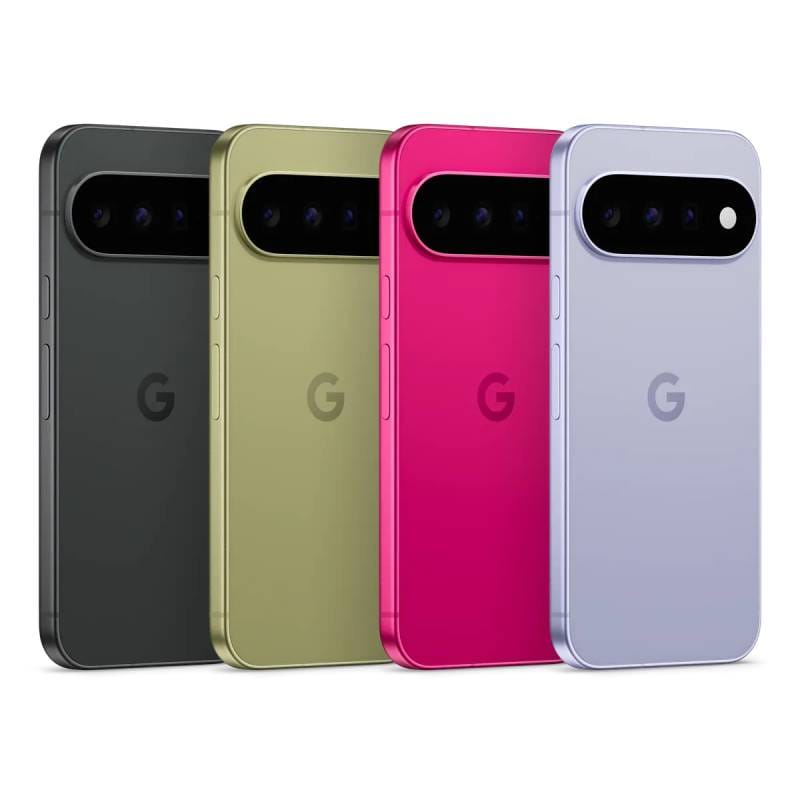
1. Google Pixel 11 – Best overall and best new flagship purchase
✅ Pros:
- Starts with 256 GB and has the newest seven-year software-support window.
- Upgrades Pixelsnap wireless charging to 25 W Qi2.2.
- Combines a larger stated main sensor with 5x telephoto reach and 30x Super Zoom.
⛔ Con:
- The year-on-year changes are too modest to justify £879 for most satisfied Pixel 10 owners.
Pixel 11 is the strongest phone of the three in isolation. It combines a compact 6.3-inch Actua OLED display with a 60–120 Hz refresh range, 1080 × 2424 resolution and up to 3,000 nits peak brightness. Tensor G6, Titan M3 and 12 GB RAM form its main computing platform, while storage begins at 256 GB and extends to 512 GB. It ships with Android 17 and carries Google’s seven-year operating-system, security and Pixel Drop update promise. [1] [2]
For someone replacing an older or damaged device, that is a balanced long-term package. The manageable screen size makes it less cumbersome than an oversized flagship, yet the phone retains a proper telephoto camera and premium conveniences. Independent reviews praised its polished everyday behaviour, one-handed usability, camera capability, long support and magnetic charging. Those strengths make Pixel 11 a good default new purchase even though they do not all represent changes from Pixel 10. [8] [9]
The standout feature is the combination of 256 GB base storage and 25 W Qi2.2 Pixelsnap charging. Storage is the quieter advantage: someone who records plenty of video or downloads media no longer has to step up from a 128 GB base configuration. Faster magnetic charging can also change how the phone is used. A correctly aligned Pixelsnap charger makes short desk or bedside top-ups more convenient, and the 25 W ceiling is appreciably higher than Pixel 10’s 15 W. Buyers still need to budget for a compatible magnetic charger and potentially a suitable case.
The camera upgrade is more nuanced. Pixel 11 uses a 48 MP wide camera with Macro Focus, a 13 MP ultrawide and a stabilised 10.8 MP 5x telephoto. Google claims optical-quality results at several steps through 10x and Super Zoom up to 30x. Its main sensor is also larger in the published specifications than Pixel 10’s. These changes should interest people who crop distant subjects or regularly work beyond 5x, but they do not introduce a new optical focal length: a Pixel 10 owner already has the same basic wide, ultrawide and 5x arrangement. [1] [3]
Battery specifications sound more dramatic than the physical change. Google lists 4,985 mAh and more than 30 hours for Pixel 11, versus 4,970 mAh and more than 24 hours for Pixel 10. The 15 mAh capacity difference is negligible by itself, and one independent comparative test found no battery-life improvement. Buy on the basis that Pixel 11 has a stronger official claim and a newer battery, not on a promise that every Pixel 10 owner will gain six hours of practical use. [1] [3] [10]
Likewise, Tensor G6 should be viewed as useful refinement rather than a gaming-led revolution. Reviews found the phone responsive in ordinary use, but comparative benchmark gains over Tensor G5 were limited and it remained behind leading rival flagship processors in demanding graphics tests. For messaging, photography, navigation and typical multitasking, the platform should feel polished. Someone expecting a dramatic improvement in sustained high-end gaming over Pixel 10 is likely to be disappointed. [9] [10]
There is no next-generation Wi-Fi incentive either: Pixel 11 and Pixel 10 both use Wi-Fi 6E. A limited connectivity caveat also deserves proportionate treatment. One UK reviewer experienced severe loading and refreshing problems in a few locations while combining a VPN with Three 5G, sometimes requiring Airplane Mode to reset the connection. Connectivity was otherwise described as solid, and colleagues had not reproduced the issue. This is an isolated observation to monitor, not evidence of a general Pixel 11 reception fault. [11]
Pixel 11 is best for a buyer who needs at least 256 GB, values faster magnetic charging, regularly pushes zoom beyond 20x, wants the latest support runway or is replacing a substantially older phone. A Pixel 10 owner should avoid paying full price unless one of those gains solves a real problem. Multiple independent assessments reached the same broad conclusion: it is a strong standard flagship, but not a large annual upgrade. [8] [9] [10]
👉 Check price on Amazon UK or check our website for more details on Google Pixel 11
2. Google Pixel 10 – Best value and the smart choice to keep

✅ Pros:
- Retains the same core 6.3-inch display specification and 12 GB RAM as Pixel 11.
- Includes a dedicated 5x telephoto camera and magnetic Pixelsnap support.
- Offers stronger price-to-feature value at the supplied discounted UK prices.
⛔ Con:
- Its 15 W Pixelsnap limit, older processor and shorter remaining support runway trail Pixel 11.
Pixel 10 is the most important phone in this guide because it changes the meaning of “best”. Pixel 11 is technically the better device, but Pixel 10 is the better value and usually the correct phone for an existing owner to retain. It is officially a 2025 model, included because it is the direct predecessor named in the comparison rather than being presented as a new 2026 release.
Its hardware explains why the upgrade case is weak. Pixel 10 has a 6.3-inch Actua OLED screen with 1080 × 2424 resolution, a 60–120 Hz refresh range, Gorilla Glass Victus 2 and a peak rating of 3,000 nits. It combines Tensor G5, Titan M2 and 12 GB RAM with either 128 GB or 256 GB storage. Those display and memory specifications closely match Pixel 11, so everyday scrolling, application switching and outdoor visibility do not receive an obvious headline transformation. [3]
The standout feature is how much of the current flagship formula Pixel 10 preserves. It has a 48 MP main camera, 13 MP ultrawide and stabilised 10.8 MP 5x telephoto. It records 4K video at up to 60 frames per second and offers Super Res Zoom up to 20x. Pixel 11 extends the maximum zoom claim and changes the stated main sensor, but a buyer who mainly photographs between 1x and 5x is not moving from a basic dual-camera system to true optical reach—the Pixel 10 already provides it. [3]
The same principle applies to charging. Pixel 10 supports Qi2-certified Pixelsnap magnetic wireless charging up to 15 W, compared with 25 W Qi2.2 on Pixel 11. The extra speed is convenient, particularly for frequent short top-ups, but magnetic alignment and accessory compatibility are not new concepts for a Pixel 10 owner. Wired charging is effectively level on the published headline: Google states up to 55% in about 30 minutes using a compatible 30 W USB-C PPS charger or higher, sold separately. [1] [3]
Battery life is a limitation, but not one the evidence turns into an automatic upgrade. Google’s official claim is more than 24 hours from a 4,970 mAh typical battery. That trails Pixel 11’s more-than-30-hour claim, yet comparative independent testing did not establish a practical Pixel 11 win. If a particular Pixel 10 has deteriorated after heavy use, replacement or service may become reasonable; if it still lasts through the owner’s normal day, the published claims alone are not enough to justify changing phones. [3] [10]
Software longevity is also reassuring. Pixel 10 launched with Android 16 and receives seven years of operating-system, security and Pixel Drop updates. Pixel 11’s period begins one year later, giving it a longer future runway, but the Pixel 10 is not approaching obsolescence. An annual upgrader would be paying partly to restart a support period that already remains unusually long. [1] [3]
In practical use, Pixel 10 is an established standard flagship rather than a compromised bargain model. One UK review characterised its camera combination as strong and battery life as solid rather than class-leading. Its IP68 rating, Wi-Fi 6E, Bluetooth 6 and physical nano-SIM-plus-eSIM configuration also keep it aligned with common premium-phone expectations. [3] [14]
The important purchase distinction is capacity. A new buyer comfortable with 128 GB can access the lowest supplied Pixel 10 price, while someone comparing 256 GB versions should focus on the £230 snapshot difference rather than the larger gap created by mismatched storage. A Pixel 10 owner whose 128 GB model is constantly full has a stronger reason to consider Pixel 11, although selling the current phone and buying a discounted 256 GB Pixel 10 may sometimes be the more economical route if live prices support it.
Pixel 10 is best for shoppers who want flagship Pixel photography, a bright 120 Hz-class screen, magnetic accessories and long software support without paying for the newest generation. It is also the decisive recommendation for most current owners: keep it if storage, battery health and reliability remain satisfactory. The compromise is accepting slower wireless charging, an older Tensor platform, a 20x rather than 30x zoom ceiling and one fewer year of remaining support in calendar terms.
If you’re weighing the Pixel 10’s price against the newer model, see the Google Pixel 10 ChoiceWise page for a clear breakdown.
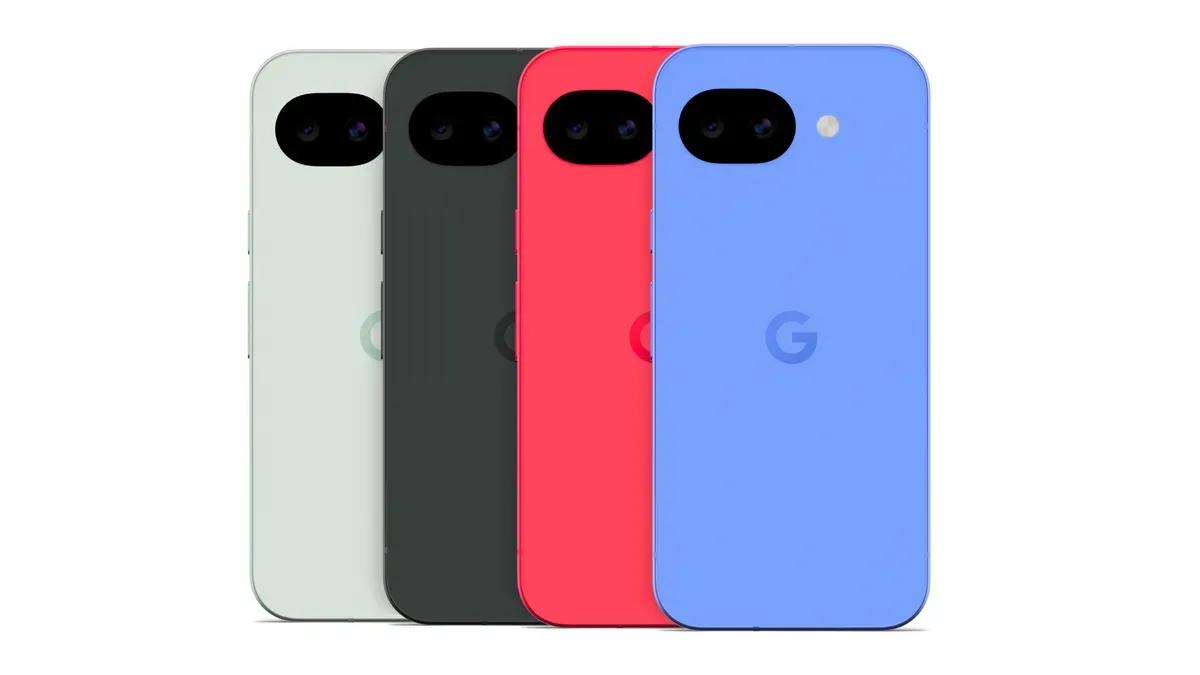
3. Google Pixel 10a – Best lower-cost 2026 alternative
✅ Pros:
- Offers a much lower entry price with seven years of software updates.
- Combines a 5,100 mAh typical battery with a 30-plus-hour official claim.
- Its lighter, flush-backed design is comfortable and sits flat on a table.
⛔ Con:
- Tensor G4, 8 GB RAM, no telephoto camera and no Pixelsnap make it a clear step below both flagships.
Pixel 10a serves a different buyer from the two flagship models. It is not a sensible “upgrade” from Pixel 10, because moving to it means giving up performance headroom, the dedicated 5x telephoto and magnetic Pixelsnap accessories. Its role is to show what a cost-conscious shopper can buy new in 2026 when long support and battery endurance matter more than flagship camera reach.
The 6.3-inch Actua pOLED display shares several attractive headline figures with the flagship phones: 1080 × 2424 resolution, a 60–120 Hz refresh range and up to 3,000 nits peak brightness. That makes the Pixel 10a look unusually competitive on a specification table. Buyers should not infer that every aspect of the display, sustained brightness, audio, processing speed or materials is identical, but the basic size, sharpness and refresh-rate format remain strong for a lower-cost device. [4]
Inside, Tensor G4 and Titan M2 are paired with 8 GB RAM and either 128 GB or 256 GB storage. That is adequate for general communication, maps, camera use, streaming and ordinary multitasking, and reviewers found the phone smooth in common daily tasks. It nevertheless has less headroom than the 12 GB Tensor G5 and G6 flagships. Demanding games, intensive editing and long-term power-user workloads are better reasons to spend more than minor differences in application-opening speed. [4] [12] [13]
The standout feature is battery-focused value. Google lists a 5,100 mAh typical battery—the largest capacity of the three—and a claim of more than 30 hours. One reviewer reported that the test phone comfortably handled a full day and much of the next under typical use. That experience is encouraging rather than guaranteed, because signal, brightness, navigation, hotspot use and photography alter endurance substantially. Even so, Pixel 10a is the most convincing option here for someone who prioritises time away from a charger over telephoto photography. [4] [13]
Charging requires careful reading. Google specifies up to 50% in about 30 minutes with a compatible 45 W USB-C PPS charger or higher, which is sold separately. It also includes Qi-certified wireless charging. However, Google does not list Pixelsnap support, so buyers do not receive the built-in magnetic alignment used by Pixel 10 and Pixel 11. A conventional Qi pad can still charge it wirelessly, but magnetic stands, wallets and power banks are not part of the native experience. [4] [12]
The camera compromise is equally clear. Pixel 10a has a 48 MP main camera and 13 MP ultrawide with Super Res Zoom up to 8x. There is no dedicated telephoto lens. For food, family groups, landscapes and nearby subjects, reviewers found the camera dependable. For concerts, wildlife, sport and distant travel details, digitally enlarging the main-camera image cannot substitute for the cleaner 5x optical reach offered by Pixel 10 and Pixel 11. [4] [12]
Design may provide a less obvious reason to choose it. At 183 g, Pixel 10a is lighter than the 204 g Pixel 10, and its flush camera area allows it to sit flat without rocking on a table. That can be pleasant for typing or using the phone beside a laptop. The trade-off is that this practical, understated design accompanies less ambitious camera hardware rather than hiding flagship internals. [3] [4] [12]
Pixel 10a still includes useful ownership fundamentals: IP68 resistance, Wi-Fi 6E, Bluetooth 6, nano-SIM plus eSIM support on the relevant configuration and Google’s seven-year OS, security and Pixel Drop promise. It launched with Android 16 despite being a 2026 model, so Pixel 11 begins on the newer Android generation. Google also lists a two-year Great Britain warranty, subject to the applicable terms and purchase route. [4]
This is best for someone buying a new phone on a controlled budget who values battery life, a lighter body and long support. It is also suitable for users who take most photos at wide or ultrawide angles and do not own magnetic accessories. Pixel 10 owners, keen mobile gamers, frequent zoom photographers and anyone already invested in Pixelsnap should avoid treating it as a like-for-like alternative. The lower price is achieved through meaningful performance, camera and accessory compromises.
If you want the cheaper “just works” option that still feels like a modern Pixel, take a look at the Google Pixel 10a on its ChoiceWise page.
Google Pixel 11 vs Pixel 10 comparison table
The decisive comparison is not screen size: all three use a 6.3-inch 1080 × 2424 display format with a 60–120 Hz range and 3,000-nit peak claim. Pixel 11 earns its premium through storage, faster magnetic charging, newer hardware and extended zoom. Pixel 10 keeps most flagship essentials for less, while Pixel 10a exchanges telephoto reach, RAM and Pixelsnap for lower cost and a larger stated battery. [1] [3] [4]
| Best for | Exact model | Key specifications | Key strength | Main limitation | Typical UK buyer |
|---|---|---|---|---|---|
| Best overall | Google Pixel 11 | 6.3in OLED; Tensor G6; 12 GB; 256/512 GB; 5x telephoto; 25 W Pixelsnap | Newest support window, 256 GB minimum and 30x zoom | Modest change from Pixel 10 at full price | Replacing an older phone or needing 256 GB and faster magnetic charging |
| Best value | Google Pixel 10 | 6.3in OLED; Tensor G5; 12 GB; 128/256 GB; 5x telephoto; 15 W Pixelsnap | Preserves the core flagship Pixel experience | Older platform and shorter remaining support runway | Value-focused flagship buyer or current owner deciding whether to keep it |
| Best lower-cost option | Google Pixel 10a | 6.3in pOLED; Tensor G4; 8 GB; 128/256 GB; dual camera; standard Qi | 5,100 mAh battery and seven-year support at a lower price | No telephoto or Pixelsnap; less performance headroom | Budget-conscious buyer prioritising battery and everyday use |
Google Pixel 11 → Check price on Amazon UK
Google Pixel 10 → Check price on Amazon UK
Google Pixel 10a → Check price on Amazon UK
Frequently asked questions
Is the Google Pixel 11 worth £879 if I already own a Pixel 10?
Usually no, if your Pixel 10 works properly and has enough storage. Pixel 11 improves the official battery claim, starts at 256 GB, raises Pixelsnap charging from 15 W to 25 W, introduces Tensor G6 and Titan M3, and increases Google’s maximum zoom claim from 20x to 30x. However, both phones retain a 6.3-inch 1080 × 2424 display with a 60–120 Hz range and 3,000-nit peak rating, 12 GB RAM, 30 W wired-charging compatibility and a stabilised 5x telephoto camera. [1] [3]
The upgrade becomes more defensible if your 128 GB Pixel 10 is constantly full, its battery has deteriorated, you regularly use magnetic charging, or a favourable trade-in substantially reduces the net cost. Otherwise, independent reviews consistently characterise the annual change as modest, and comparative testing did not prove a battery-life improvement. [8] [9] [10]
What are the meaningful Pixel 11 camera upgrades over Pixel 10?
The main changes are a larger stated 48 MP main-camera sensor, newer camera processing and software tools, and Super Zoom up to 30x rather than 20x. Both phones still use a 13 MP ultrawide and a stabilised 10.8 MP 5x telephoto, so the optical framing advantage at 5x is not new. [1] [3]
For someone who frequently crops distant scenes or photographs beyond 10x, Pixel 11 has the stronger specification. For family photographs, portraits and travel shots taken mainly between 1x and 5x, it is more likely to feel like refinement than a reason to replace a one-year-old phone. Storage may prove more valuable than the camera change if the 256 GB minimum allows substantially more video to remain on the device.
Will Pixel 10 stop receiving updates soon if I do not upgrade?
No. Google gave Pixel 10 a seven-year commitment covering operating-system, security and Pixel Drop updates. It launched with Android 16, while Pixel 11 launched with Android 17 and begins its own seven-year period one year later. Pixel 11 therefore has the longer remaining support runway as a new purchase, but Pixel 10 is not close to becoming unsupported. [1] [3]
Software longevity alone is a weak reason to upgrade after one year. The later support end point matters more to a buyer choosing between two new phones and planning to keep the purchase for as long as possible.
When is Pixel 10a a better buy than Pixel 10 or Pixel 11?
Pixel 10a is better when purchase price, battery capacity, lower weight and long support matter more than telephoto photography or magnetic accessories. It has a 5,100 mAh typical battery, a 30-plus-hour official claim and seven years of updates. The supplied Amazon snapshot also placed its selected 128 GB listing £520 below Pixel 11 256 GB, although that is not an equivalent capacity or camera configuration. [4] [5] [7]
The compromises are substantial enough to keep the comparison honest. Pixel 10a uses Tensor G4 with 8 GB RAM, has two rear cameras without a 5x telephoto, and supports ordinary Qi wireless charging rather than Pixelsnap. It is a sensible affordable new phone, not an upgrade for someone who already enjoys Pixel 10’s flagship camera reach and magnetic ecosystem.
Final verdict
Pixel 11’s decisive advantages are its 256 GB base capacity, 25 W Qi2.2 Pixelsnap charging, newer Tensor G6 and Titan M3 platform, later seven-year support window and 30x zoom ceiling. Pixel 10 answers with essentially the same core display specification, 12 GB RAM, 5x optical telephoto format, 30 W wired-charging compatibility and long remaining support. That makes Pixel 11 the strongest overall phone but Pixel 10 the smarter ownership decision for most annual upgraders.
- Google Pixel 11: choose it when buying from scratch, replacing a substantially older phone or needing its storage, charging and zoom gains → Check price on Amazon UK
- Google Pixel 10: choose it for flagship value—or keep the one you already own if its battery and storage remain adequate → Check price on Amazon UK
- Google Pixel 10a: choose it for a lower purchase cost, lighter design and battery-focused everyday use, accepting no telephoto or Pixelsnap → Check price on Amazon UK
For a UK Pixel 10 owner, the direct answer is therefore do not spend £879 by default. Calculate the net cost after resale or trade-in and upgrade only if a concrete limitation—usually storage, battery condition or charging routine—will genuinely be solved. Whichever model you choose, verify the live capacity, seller, fulfilment, returns and UK warranty route before checkout.
If you’re weighing Pixel 11’s current-generation baseline against Pixel 10’s previous-gen value (or the cheaper 10a), use the ChoiceWise AI Wizard for a personalised pick. AI Wizard
By ChoiceWise