Best Phones for Car Connectivity (UK 2026) – Reliable Android Auto, Bluetooth, GPS & In-Car Wireless Charging
The Galaxy S26 Ultra is our best all-round choice for car connectivity, while the Pixel 10 Pro XL excels for Google-led navigation and Qi2 charging. High-mileage drivers who prioritise rapid top-ups should consider the OnePlus 13.
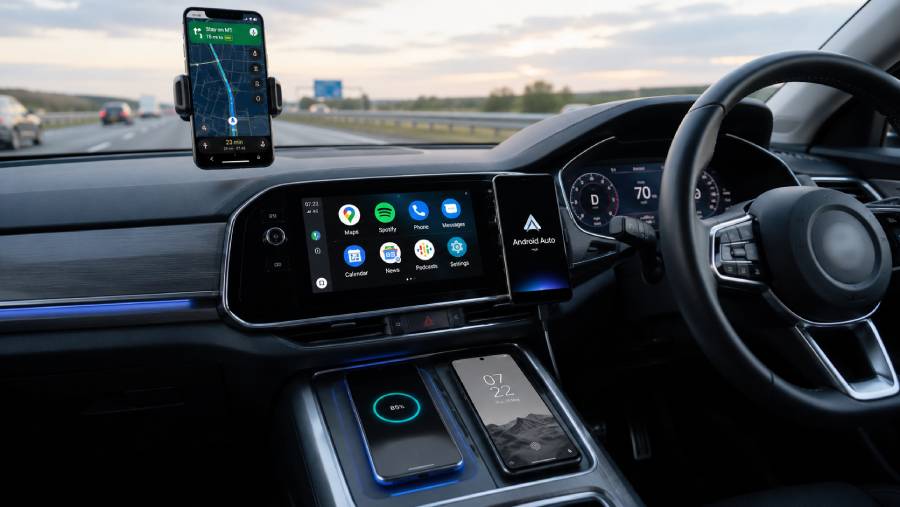
Replacing an unreliable Android Auto handset, preparing for regular motorway journeys or trying to make better use of your car’s wireless charging pad? This guide covers all three situations without assuming that a new phone will automatically work perfectly with every vehicle.
We assessed phone-side Android Auto readiness, Bluetooth and positioning specifications, charging options, physical size and long-term ownership support.
- Samsung Galaxy S26 Ultra — Best overall phone for reliable Android Auto, premium Bluetooth connectivity and in-car wireless charging — Check price on Amazon UK
- Google Pixel 10 Pro XL — Best clean Android Auto and GPS phone for long-distance drivers — Check price on Amazon UK
- OnePlus 13 — Best battery-and-fast-charging phone for high-mileage drivers — Check price on Amazon UK
👉 Continue for the full reviews, direct comparison and checks to make before connecting or charging a phone in your car.
Introduction
This guide is for UK drivers choosing a premium Android phone for navigation, hands-free calls, music and charging during or between journeys. Our shortlist of the best phones for car connectivity UK buyers can consider covers three different priorities: a rounded flagship, a Google-focused navigation phone and a model built around rapid charging.
Phone specifications are only one part of the connection chain. Android Auto also depends on the vehicle or aftermarket receiver, while wireless projection requires compatible equipment on both sides. Google states that wireless Android Auto supports phones running Android 11 or later, but it separately requires a compatible car or receiver.[6][7] All three selected phones comfortably meet that phone-side software baseline; none can guarantee trouble-free operation with every head unit, wireless adapter, case or charging cradle.
We ranked the phones using manufacturer specifications for Bluetooth, Wi-Fi, GNSS, battery and charging, alongside update policies and relevant third-party observations.
Top 3 products worth buying – UK 2026
1. Samsung Galaxy S26 Ultra — Best overall for a complete in-car set-up
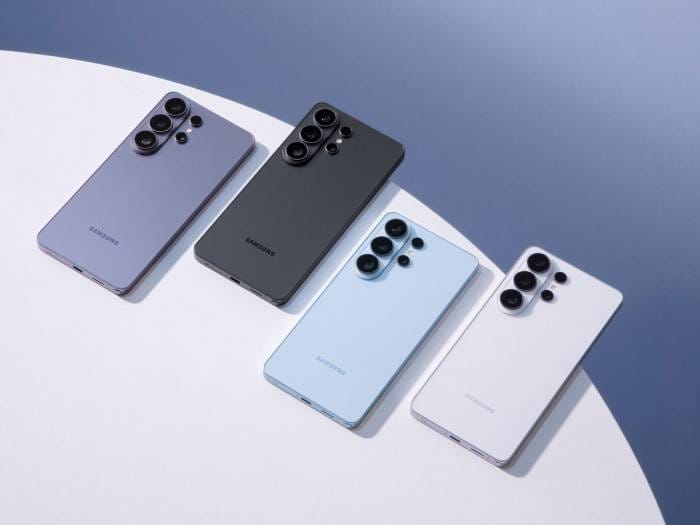
Positioning: The Galaxy S26 Ultra is the most convincing choice for an all-round upgrader who wants one flagship to cover navigation, calls, audio, wireless charging and several years of ownership.
Samsung lists Bluetooth 6.0, USB 3.2 Gen 1 and support for GPS, GLONASS, BeiDou, Galileo and QZSS.[1] These provide a modern foundation for hands-free calls, music and navigation, but Bluetooth version alone cannot guarantee reliability with a particular car. The phone also exceeds Google’s phone-side software and Wi-Fi baseline for wireless Android Auto; your vehicle or aftermarket receiver must support wireless projection separately.[6][7]
The 5,000mAh typical battery should suit extended navigation and media use, while Samsung confirms Fast Wireless Charging 2.0 and Wireless PowerShare.[1] Fast Wireless Charging 2.0 makes the handset a sensible candidate for a compatible in-car pad, but Samsung’s published feature does not establish a universal wattage for every third-party charger. Coil alignment, case thickness, camera clearance and cabin heat may all reduce output. If your vehicle only supports wired Android Auto, also check its USB socket output and the cable required by the head unit.
Size is the principal ownership compromise. Samsung lists a weight of 214g and dimensions of 163.6 × 78.1 × 7.9mm, with a large 6.9-inch-class format and IP68 protection.[1] TechRadar likewise characterises it as a large premium handset.[8] Check that your mount can grip it securely without obstructing the controls or camera area. Samsung’s commitment to seven generations of OS upgrades and seven years of security updates from global launch makes it especially attractive for longer ownership.[2]
✅ Pros
- Balanced combination of Bluetooth 6.0, multi-system GNSS and wired or wireless charging features.
- 5,000mAh typical battery and IP68 protection for demanding navigation and media use.[1]
- Seven OS generations and seven years of security updates from global launch.[2]
⛔ Cons
- Its 214g weight and large body require a sturdy mount and will not suit drivers seeking a compact handset.
Main standout feature: Its advantage is the breadth of the package rather than one headline specification. Modern Bluetooth, multiple satellite systems, Fast Wireless Charging 2.0, a substantial battery and long verified support make it the least specialised and most adaptable option here.
Who it is best for: Choose it if you are replacing an older flagship and want one premium phone for navigation, calls, music and charging. Avoid it if low weight or frequent one-handed removal from a mount matters more than flagship breadth. For further specifications, see the Galaxy S26 Ultra technical information on ChoiceWise [11].
2. Google Pixel 10 Pro XL — Best for Google-led navigation and Qi2 charging
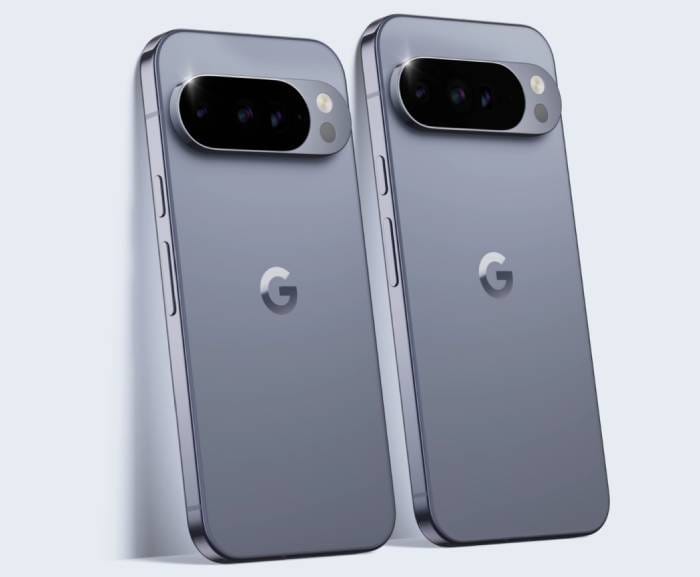
Positioning: The Pixel 10 Pro XL is aimed at long-distance drivers who prefer Google’s Android experience and want the clearest standards-based wireless-charging specification in this shortlist.
Google specifies Bluetooth 6 with antenna diversity and dual-band GNSS covering GPS, GLONASS, Galileo, BeiDou, QZSS and NavIC.[3] This is an extensive positioning specification for a phone likely to spend hours running navigation, although constellation count is not proof that the Pixel will outperform its rivals on every road. The app, phone placement, buildings, terrain and available data connection still affect the result.
The Pixel launches with Android 16 and supports Wi-Fi 7 across 2.4GHz, 5GHz and 6GHz bands, so it exceeds Google’s phone-side baseline for wireless Android Auto.[3][6] A compatible car or receiver remains essential.[7] Practical evidence is encouraging: a TechRadar reviewer reported using the phone with Android Auto in Kia, Acura and Subaru cars and using Bluetooth in an older BMW.[9] That shows it has worked across several vehicles, not that it will work with every UK model year or aftermarket unit.
Wireless charging is the Pixel’s clearest advantage. Google lists Qi2-certified Pixelsnap charging up to 25W, giving buyers a defined standard and headline output when choosing a charging mount.[3] You still need a compatible, correctly aligned charger, and a built-in vehicle pad should not be assumed to reach 25W. A thick case, camera-bump interference or a hot cabin may reduce output.
The 5,200mAh typical battery adds long-journey appeal. Google’s wired claim is up to 70% in about 30 minutes with a 45W USB-C PPS charger or higher, sold separately; a low-output car socket will not necessarily reproduce that result.[3] At 232g and 162.8 × 76.6 × 8.5mm, however, this is the heaviest phone in the shortlist. TechRadar found the large display particularly useful outdoors and for navigation, but also reported mixed battery results in its review.[9]
✅ Pros
- Qi2-certified Pixelsnap charging up to 25W provides the clearest standard-based wireless specification here.[3]
- Bluetooth 6 with antenna diversity and a comprehensive dual-band GNSS specification.
- Seven years of OS, security and Pixel Drop updates, plus a published two-year UK warranty.[3]
⛔ Cons
- At 232g, it places the greatest load on a mount and is the least convenient option for drivers prioritising low weight.
Main standout feature: Qi2-certified Pixelsnap charging is easier to plan around than an unspecified third-party pad rate or proprietary maximum. Combined with dual-band GNSS and Google’s software environment, it gives the Pixel a coherent long-distance-driving identity.
Who it is best for: Buy it if Google Maps, Google services, long software support and a suitably matched Qi2 mount are central to your set-up. Choose Samsung for broader flagship balance or OnePlus if rapid wired recovery defines your needs. See the Pixel 10 Pro XL technical information on ChoiceWise for further specifications.
3. OnePlus 13 — Best for rapid charging between long journeys
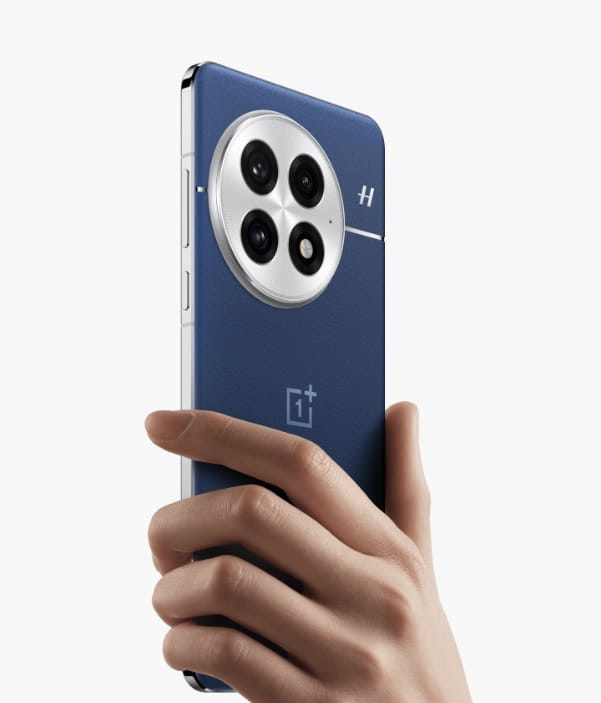
Positioning: The OnePlus 13 is the charging-led option for high-mileage users who may have only a short window at home, work or a service stop to recover battery.
OnePlus specifies 100W SUPERVOOC wired charging and 50W AIRVOOC wireless charging.[4] Under controlled test conditions, its stated results are 1–100% in 36 minutes by cable and up to 50% in 34 minutes wirelessly, using the appropriate official OnePlus charging equipment with the screen off.[4] Those figures are not predictions for a typical vehicle socket or built-in charging pad.
For high-mileage drivers, wired charging is the more dependable part of this proposition. A compatible high-output car charger, suitable cable or fast top-up at home or work is more likely to exploit the phone’s strength than an ordinary wireless tray. The 50W AIRVOOC claim specifically depends on OnePlus’s official 50W magnetic charger and stated conditions. A generic Qi pad may operate differently and should not be expected to match it.
OnePlus’s official European specifications list Bluetooth 5.4, Wi-Fi 7, GPS L1+L5, GLONASS, BeiDou, Galileo and QZSS, together with USB 3.2 Gen 1 Type-C.[5] These are relevant specifications for navigation and wired connectivity, but the detailed source is European rather than a UK-specific technical sheet. Check the exact UK retail variant if listing-level confirmation matters. Bluetooth 5.4 should not be treated as inherently less reliable in a car than the Bluetooth 6 implementations in the Samsung and Pixel.
OxygenOS 15 and its 5GHz-capable Wi-Fi mean the phone meets Google’s phone-side baseline for wireless Android Auto, but the vehicle, receiver or wireless adapter must also be compatible.[4][5][6][7] A TechRadar reviewer reported connecting the OnePlus 13 to a car stereo using Bluetooth and Android Auto, which is useful evidence for this use case rather than a universal compatibility guarantee.[10]
The Snapdragon 8 Elite platform provides flagship performance for navigation, media and multitasking, while OnePlus lists IP68/IP69 protection.[4] Accessory planning is more involved than with the Pixel’s Qi2 proposition. TechRadar found magnetic alignment useful with a compatible OnePlus magnetic case and AIRVOOC puck, but that does not mean the bare phone will attach correctly to every magnetic car mount.[10]
✅ Pros
- 100W SUPERVOOC provides the strongest official wired-charging proposition in this shortlist.[4]
- 50W AIRVOOC is available with the required official charging equipment and suitable conditions.
- Flagship Snapdragon 8 Elite performance, dual-frequency GPS support and USB 3.2 Gen 1 connectivity.[4][5]
⛔ Cons
- Its most impressive wireless-charging figure depends on proprietary OnePlus hardware rather than an ordinary in-car Qi pad.
Main standout feature: Rapid battery recovery is the reason to choose the OnePlus 13. It suits a driver who can plan the charging hardware around the phone rather than someone expecting an existing low-output USB socket or flat wireless tray to unlock its maximum rates.
Who it is best for: Choose it if you drive long distances, make short stops and are prepared to use suitable OnePlus or high-output charging equipment. Avoid choosing it solely because of the 50W wireless headline. Buyers wanting simpler Qi2 accessory planning should favour the Pixel, while those seeking the broadest ownership package should start with Samsung.
What makes a great product in this category in 2026
- Compatibility across the whole chain: A capable phone cannot add Android Auto to an incompatible car. Check the exact vehicle, model year and head unit using Google’s compatibility information before buying.[7]
- The right Android Auto method: Wired Android Auto provides a physical data connection and charges at the same time. Wireless Android Auto is more convenient, but long navigation sessions may still require a separate charging pad or cable.
- Modern Bluetooth without version-number assumptions: Bluetooth 6 is newer on paper than Bluetooth 5.4, but connection stability also depends on the car, software, pairing history, phone placement and interference.
- Capable positioning hardware: Multi-system or dual-band GNSS can help provide a robust positioning foundation. The number of supported satellite constellations does not automatically determine which phone will navigate best on every road.
- Charging hardware that physically fits: Check coil alignment, camera-bump clearance, case thickness and mount strength. A Qi2 mount, flat Qi pad and proprietary magnetic charger are not interchangeable promises of equal speed.
- Long-term support: Update commitments matter when a phone may outlast the car’s infotainment software. They reduce avoidable security and app-support concerns, although they cannot guarantee permanent head-unit compatibility.
The most useful specification is therefore the one your car can exploit. A 50W proprietary wireless maximum offers little benefit on a basic built-in pad, just as Bluetooth 6 cannot correct a poorly implemented vehicle system. Prioritise confirmed head-unit support, a safe and secure mount, sufficient charging output and a retailer return route if your own pairing test exposes a problem.
Comparison table: best phones for car connectivity UK
This comparison separates published handset capabilities from the equipment required in the car. Charging figures are manufacturer maxima or named features, not guaranteed outputs from a generic vehicle charger.
| Best for | Exact model | Key specifications | Key strength | Main limitation | Typical UK buyer |
|---|---|---|---|---|---|
| Best overall | Samsung Galaxy S26 Ultra | Bluetooth 6.0; GPS, GLONASS, BeiDou, Galileo and QZSS; 5,000mAh typical battery; Fast Wireless Charging 2.0; USB 3.2 Gen 1 | Most rounded combination of connectivity, protection, charging and long-term support | Large 214g body; no universal third-party in-car wireless wattage verified | Flagship upgrader wanting one balanced phone for calls, maps, audio and charging |
| Clean Android, navigation and Qi2 | Google Pixel 10 Pro XL | Bluetooth 6; dual-band GNSS; 5,200mAh typical battery; Qi2-certified Pixelsnap up to 25W; Android 16 | Clearest standard-based wireless-charging specification and strong Google integration | Heaviest phone here at 232g; fast wired charger sold separately | Long-distance driver centred on Google Maps, Google services and a Qi2 mount |
| Fast battery recovery | OnePlus 13 | Bluetooth 5.4; dual-frequency GPS; 100W SUPERVOOC; 50W AIRVOOC; USB 3.2 Gen 1 | Rapid wired top-ups with compatible high-output charging hardware | 50W wireless charging requires official OnePlus equipment and stated conditions | High-mileage user prepared to plan cables, charger and magnetic accessories carefully |
Samsung Galaxy S26 Ultra: 👉 Check price on Amazon UK
Google Pixel 10 Pro XL: 👉 Check price on Amazon UK
OnePlus 13: 👉 Check price on Amazon UK
What to consider before buying
- Check the vehicle first: Confirm the exact model year and infotainment system. Android Auto support can differ between trim levels, software versions and aftermarket receivers.[7]
- Decide between wired and wireless use: A cable is normally the more dependable route to simultaneous data and charging. Wireless projection is tidier, but it can increase battery use and may need a separate charger during long journeys.
- Inspect the car’s power output: A USB-C port does not automatically provide the wattage needed for manufacturer fast-charging claims. You may need an appropriate USB-C car adapter and cable.
- Measure the mount: Check width, weight capacity, camera clearance, control placement and whether the cradle remains secure over rough roads. The Pixel’s 232g mass and Samsung’s large body are particularly relevant.[1][3]
- Match the wireless standard: Do not assume that a MagSafe-style mount, Qi2 charger, standard Qi pad and OnePlus AIRVOOC puck will align with or charge all three phones equally.
- Protect long-term value: Samsung publishes seven OS generations and seven security years, while Google publishes seven years of updates.[2][3] An equivalent UK commitment was not verified here for the OnePlus 13.
- Check the live Amazon result carefully: Confirm storage, colour, UK or EU model designation, seller identity, condition, fulfilment, UK warranty and return terms. Google publishes a two-year warranty for the Pixel, but the specific listing still needs checking.[3] Samsung and OnePlus warranty coverage was not independently verified for the linked search results.
The supplied Amazon URLs are editorial placeholders. They are useful for finding the model, but they are not evidence of a current price, stock level, named seller or warranty arrangement.
Frequently asked questions
Will all three phones definitely work with my car’s wireless Android Auto?
No. Their current Android software and Wi-Fi capabilities meet Google’s phone-side baseline, but wireless Android Auto also requires a compatible vehicle or aftermarket receiver.[6][7] Check the exact car, model year and head unit. A third-party wireless adapter introduces another compatibility variable and should not be assumed to work simply because the phone is suitable.
Which phone has the clearest in-car wireless-charging specification?
The Pixel 10 Pro XL. Google specifies Qi2-certified Pixelsnap wireless charging up to 25W.[3] Samsung confirms Fast Wireless Charging 2.0 for the Galaxy S26 Ultra but does not provide a verified universal rate for every third-party car pad in the material used here.[1] OnePlus’s 50W AIRVOOC claim depends on its official magnetic charger and controlled conditions.[4]
Does Bluetooth 6 make the Samsung or Pixel more reliable than the OnePlus?
Not automatically. The Samsung and Pixel list Bluetooth 6.0 or Bluetooth 6, while the OnePlus lists Bluetooth 5.4.[1][3][5] In-car stability can also depend on the vehicle’s Bluetooth system, software versions, pairing history, interference and phone position. Test calls, contact syncing, steering-wheel controls and audio playback with your own car while you still have an appropriate retailer return option.
Which phone is best for frequent motorway driving?
Choose the Galaxy S26 Ultra for the strongest all-round ownership package. Pick the Pixel 10 Pro XL if Google’s software, dual-band GNSS and Qi2 charging are the priorities. The OnePlus 13 is the better fit when rapid wired recovery matters most and you are prepared to use compatible high-output equipment. None should be chosen on the assumption that every built-in wireless pad will deliver its advertised maximum.
Final verdict
If you are the all-round flagship upgrader from the opening scenario, start with Samsung. If navigation, Google services and predictable Qi2 accessory planning define your journeys, the Pixel is the more focused choice. High-mileage drivers with short charging windows should look to OnePlus.
- Samsung Galaxy S26 Ultra: Best overall for balanced car connectivity and long ownership — Check price on Amazon UK
- Google Pixel 10 Pro XL: Best clean Android Auto, GPS and Qi2 option — Check price on Amazon UK
- OnePlus 13: Best fast-charging choice for high-mileage drivers — Check price on Amazon UK
For most UK buyers, the Galaxy S26 Ultra is the safest starting point, but verify your own head unit, mount, charger and live retailer terms before committing.
By: ChoiceWise