Top 5G Phones with the Strongest Signal (UK 2026) – Reliable Reception in Rural & Urban Areas
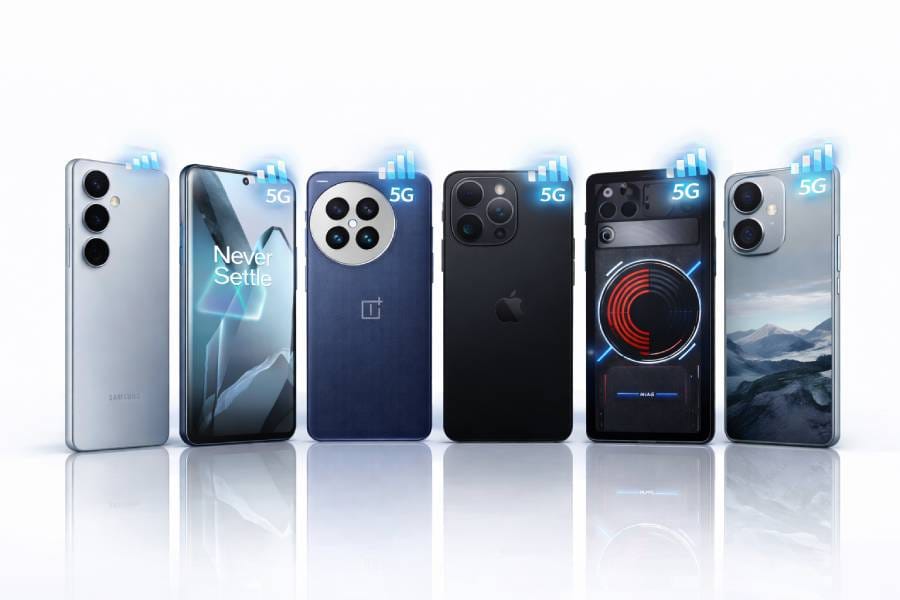
Reviewed for signal strength, connectivity & value – updated 2026
🥇 Samsung Galaxy S26 Ultra – Best overall signal performance → Check price on Amazon UK
🥈 iPhone 17 Pro Max – Best premium flagship for connectivity → Check price on Amazon UK
🥉 Samsung Galaxy S26 – Best value phone with strong signal → Check price on Amazon UK
👉 Scroll down to see full reviews and Amazon UK links
Introduction
This guide is for UK buyers who care less about “headline peak speeds” and more about what actually matters day-to-day: staying connected in weak-signal areas, keeping a usable 5G or 4G signal indoors, and avoiding annoying dropouts while commuting or travelling. That includes people living in rural areas (where coverage is patchier and low-band 5G/4G is often the difference between usable and unusable data) and city users dealing with signal blockers like thick walls, basements, and crowded transport hubs. Ofcom’s coverage reporting also shows that coverage and network experience varies by location and operator, so a phone that can hold onto signal and switch bands reliably is a practical advantage.[1]
Signal strength is also not the same as speed. A phone can hit huge speeds in ideal conditions but still feel “worse” if it drops to no service, struggles with handovers, or burns battery searching for signal.
These three phones were selected using a 2025–2026 shortlist and prioritise: modern modem platforms, broad UK-relevant band support, strong antenna/RF design from official specs, and real-world reviewer experiences that specifically mention connectivity stability (including travel and roaming scenarios).[2]
What Makes a Phone Strong for Signal in 2026
- Modem platform and radio tuning: In 2026, “strong signal” usually comes from a top-tier modem stack that can adapt quickly to changing conditions (coverage edges, congestion, and indoors). For example, iPhone 17 Pro Max uses Qualcomm’s Snapdragon X80 modem (as confirmed by teardown reporting and reviewers), and the S26 Ultra pairs a flagship Snapdragon platform with connectivity-focused features reviewers call out directly.[3]
- Antenna design and multi-band behaviour: Phones that support a wide spread of 4G/5G bands and handle switching smoothly tend to feel more reliable in real life. Official UK spec sheets for the Galaxy S26 Ultra and Galaxy S26 show broad 5G Sub‑6 support across both FDD and TDD, plus supplemental downlink support (useful for performance consistency in some network designs).
- UK band support that matches real deployments: For UK buyers, the practical “signal bands” to care about are the ones being used for coverage and capacity: 700MHz (coverage layer) and the 3.x GHz ranges (capacity backbone), alongside refarmed LTE/NR bands. UK-focused spectrum guides note 700MHz plus 3.4GHz and 3.6–4GHz as key ranges in use (with mmWave spectrum acquired more recently but historically not widely integrated at the time of writing).
- Band n78 / n28 reality check: n78 (around 3.5GHz “mid-band”) is typically where you get strong 5G capacity; n28 (700MHz “low-band”) is what helps you keep coverage further out in rural areas and deeper indoors (though usually at lower speeds).
- Weak-signal performance indoors and rurally: Indoors (terraced houses, offices, supermarkets) and in rural areas, low-band matters, and a phone’s ability to hold a stable connection often beats raw throughput. This is where broad low/mid band support and good radio behaviour can reduce “5G dropouts” and improve basic usability.[4]
- Stability while moving (trains, commuting, travelling): Trains and motorway travel punish phones because the device is constantly handing over between cells and sometimes between 5G and 4G. Reviewers explicitly praising call/data stability while roaming or travelling is a strong positive signal that the modem/antenna combo is doing its job.
- 5G to 4G handover reliability: In the real UK, you will still spend time on 4G — especially indoors and outside major towns — so strong LTE capability matters. Apple’s official specs emphasise 5G (sub‑6GHz) with 4x4 MIMO and Gigabit LTE with 4x4 MIMO, which aligns with smoother fallbacks when 5G isn’t available.
Top 3 Picks (UK 2026)
1. Samsung Galaxy S26 Ultra – Best overall signal performance
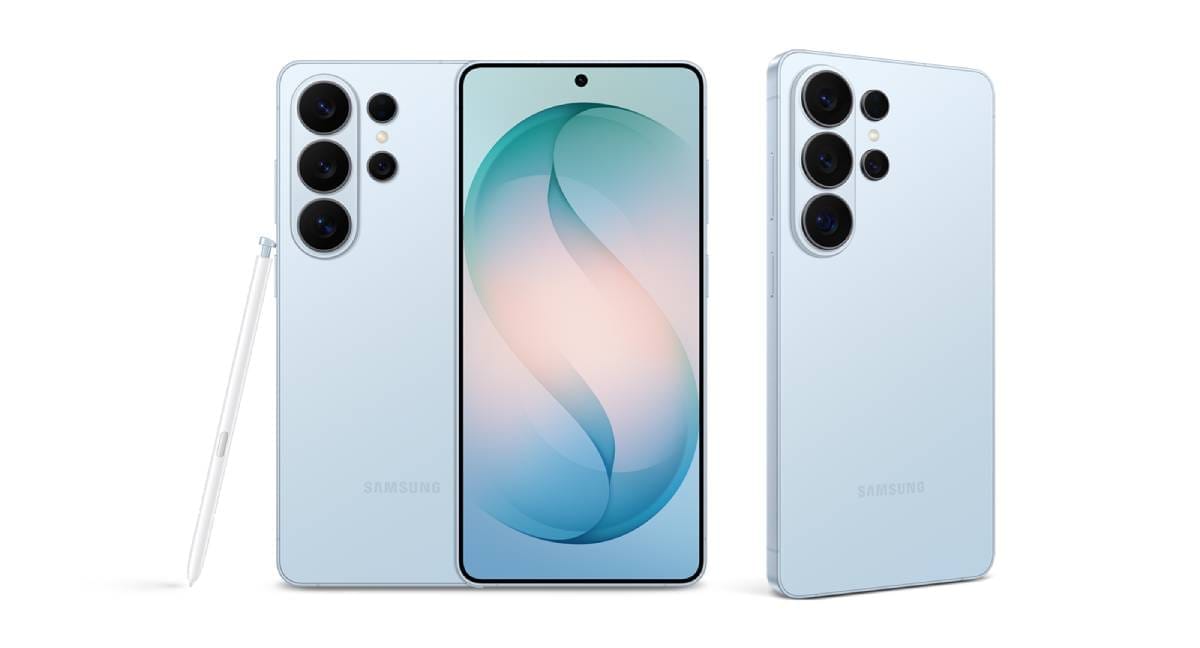
If your priority is reliable signal first and everything else second, the Galaxy S26 Ultra is the most confidence-inspiring option here. On the “hard specs,” its UK business spec sheet shows extremely broad cellular support: 5G Sub‑6 across FDD and TDD, including key bands that matter in the UK (notably n1, n3, n28, n77 and n78), plus supplemental downlink support (n75). That kind of band breadth helps in two common UK problem scenarios: rural coverage edges (where low-band makes a difference) and dense urban areas where your phone may jump between layers or refarmed spectrum.[5]
Where the S26 Ultra really earns its “best overall” spot is real-world connectivity confidence. In extended review use, testers report clear calls and no connectivity/data-speed problems across multiple networks — including while roaming in London (a useful real-world stress test because roaming plus city density can expose weak radio behaviour quickly). It also includes Samsung’s connectivity-optimising features intended to improve uplink behaviour across radios — exactly the sort of behind-the-scenes tech that can translate into fewer annoying “my phone says 5G but nothing loads” moments.
Indoors, the S26 Ultra benefits from the same fundamentals: low-band support for reach plus Wi‑Fi 7 capability for “indoor connectivity” that often ends up being Wi‑Fi-led in UK homes and workplaces. If you live in a thick-walled house, rely on Wi‑Fi calling, or work in offices with modern routers, Wi‑Fi 7 support can help keep “inside signal” feeling stable even when the network layer is weaker.
✅ Why this pick
Pros:
- Consistently strong real-world connectivity impressions (including roaming scenarios), plus flagship-grade radio platform.
- Extremely broad UK-relevant 5G band support (including n28 + n78 and more).
- Wi‑Fi 7 support for stronger indoor connectivity when mobile signal struggles.
Cons: Big and expensive for buyers who only want better reception (you’re paying for a full flagship).
Main standout feature: Combining very broad band support with reviewer-confirmed connectivity stability — including travel/roaming use.
Who it’s best for: UK users in rural or semi-rural areas, frequent travellers, commuters, and anyone who wants the most “set and forget” reception experience across EE, Vodafone, O2, and Three.
Amazon UK Check: 👉 Check price on Amazon UK – If signal reliability is your #1 priority (especially rural + travel), the S26 Ultra is the safest “buy once, keep for years” pick. Check our website for more details about Samsung Galaxy S26 Ultra.
2. iPhone 17 Pro Max – Best premium flagship for connectivity
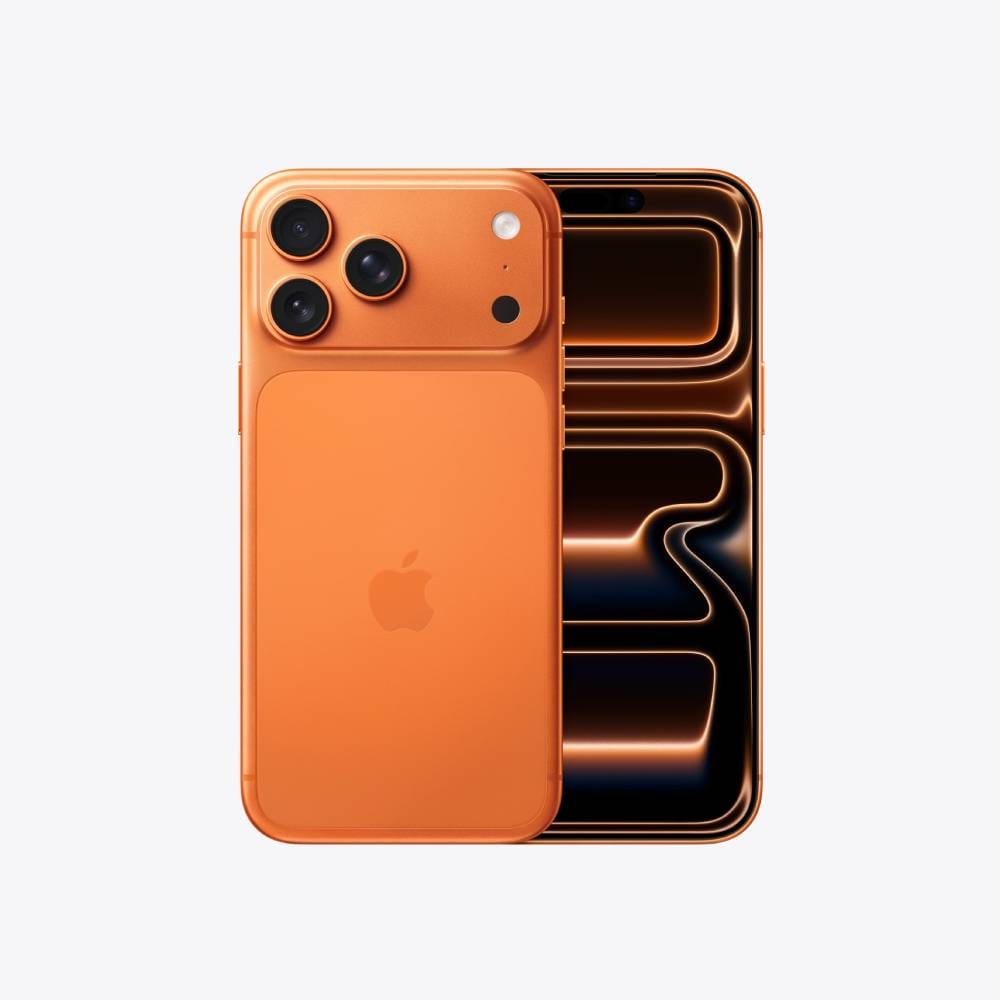
For UK iPhone users who want the most connectivity-forward Apple option, the iPhone 17 Pro Max is the standout because Apple is unusually explicit about its radio stack in the official tech specs. Apple lists 5G (sub‑6GHz) with 4x4 MIMO, Gigabit LTE with 4x4 MIMO, an Apple N1 wireless networking chip, and Wi‑Fi 7 (plus Bluetooth 6). It also lists an expansive set of FDD and TDD 5G NR bands — importantly including the bands UK buyers care about most for usable coverage and capacity (n1, n3, n28, n77, n78). In plain terms: it’s built to connect well in today’s networks and stay compatible as networks evolve.[2]
Under the hood, multiple 2025–2026 sources point to Qualcomm’s Snapdragon X80 modem inside the iPhone 17 Pro Max. Teardown reporting says the Pro Max uses the X80, and Qualcomm’s own positioning of the X80 highlights AI-assisted improvements that target not only speed, but also coverage and power efficiency (the exact three things that tend to matter when you’re on the edge of signal, inside buildings, or moving between cells). A 2026 reviewer summary also directly attributes the phone’s cellular capability to the Snapdragon X80 modem.
Real-world reliability is the deciding factor, and this is where the Pro Max’s “it just works” reputation is supported by reviewer experience: Thurrott reports day-to-day use without connectivity issues across multiple locations and travel, noting only an occasional odd moment where data didn’t immediately return after leaving Wi‑Fi range (resolved via reboot). That’s not a flawless report, but it’s actually useful context: the issue described is intermittent and not framed as persistent reception failure, while overall connectivity is described as problem-free.
Finally, if you’re often on trains or travelling and you’re doing “always-on connectivity” tasks (navigation, streaming, hotspot in a pinch), battery matters. Apple’s official battery figures for the Pro Max (up to 37 hours video playback, up to 33 hours streamed) suggest it’s well-suited to heavier connectivity days, which helps because weak-signal conditions can cause higher power draw.
✅ Why this pick
Pros:
- Premium connectivity stack: 5G sub‑6 with 4x4 MIMO, Wi‑Fi 7, and very broad NR band support.
- Snapdragon X80 modem + Apple N1 networking chip design emphasises future-proof wireless performance.
- Excellent battery capacity on paper for long travel/commute days.
Cons: Premium pricing — you’re paying for Apple’s top-tier experience, not just better reception.
Main standout feature: A flagship modem (Snapdragon X80) paired with Apple’s official 4x4 MIMO + Wi‑Fi 7 connectivity stack for long-term “stays connected” confidence.
Who it’s best for: iPhone users who want the most premium, most future-proof connectivity experience in 2026 — especially if you travel often, use eSIM, or need all-day battery with dependable network switching.
Amazon UK Check: 👉 Check price on Amazon UK – If you want a top-end iPhone with a modem/platform built for stable real-world performance, the 17 Pro Max is the premium connectivity pick. Check our website for more details about Apple iPhone 17 Pro Max.
3. Samsung Galaxy S26 – Best value phone with strong signal
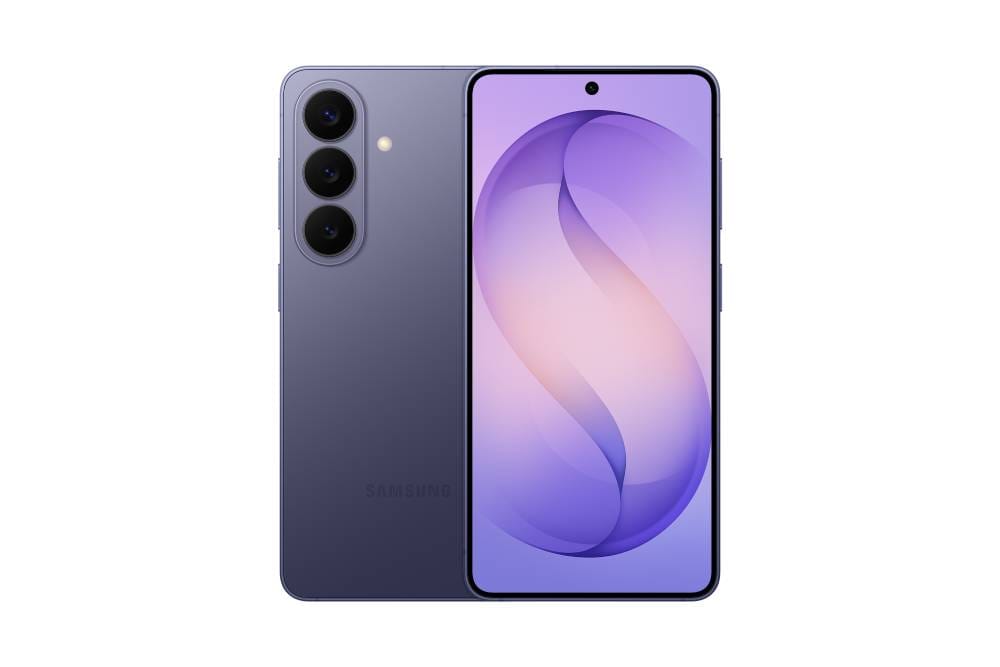
The Galaxy S26 earns the “best value” slot because it keeps the connectivity fundamentals that matter for UK reception — especially the bands and the 5G/4G coverage behaviour — while coming in at a much lower typical UK price than the two “maxed-out” flagships. Samsung’s UK pricing places the Galaxy S26 at a far more attainable level than the Ultra, which matters because reception improvements shouldn’t require a four-figure spend unless you genuinely need the Ultra’s full feature set.
From a signal-strength perspective, the most important point is the official Network/Bearer spec list: Samsung’s UK business specs show 5G Sub‑6 support across FDD and TDD, including the bands that align with UK coverage and capacity layers (notably n1, n3, n28 and n78) plus additional bands that can matter depending on operator and refarming strategy. It also supports supplemental downlink (n75), and its LTE list is extensive — which matters because real UK use still includes frequent 4G fallback indoors and in rural pockets.[5]
For indoor connectivity, the Galaxy S26 also supports Wi‑Fi 7 (802.11be) across 2.4GHz, 5GHz and 6GHz with modern MIMO support listed in the spec sheet. In practical UK use, that can be a bigger “stability win” than chasing marginal cellular improvements — because many indoor dead-zones are solved by Wi‑Fi calling + strong home/office Wi‑Fi rather than brute-forcing weak 5G through walls.
It’s also worth framing what you don’t get: some reviewers note the base model has less “premium” connectivity extras than higher-tier variants (for example, mmWave support being absent on the base model in at least some regions). For most UK buyers, that’s usually not a deal-breaker because UK-focused spectrum coverage guidance has historically emphasised sub‑6GHz layers (700MHz + 3.x GHz) as the practical backbone, with much higher frequency spectrum discussed as more situational and not always widely integrated at a given moment in time.
✅ Why this pick
Pros:
- Full, UK-relevant sub‑6 5G support (including n28 + n78) plus extensive LTE bands for reliable fallback.
- Wi‑Fi 7 support helps massively with indoor stability and Wi‑Fi calling setups.
- Significantly cheaper than the Ultra while keeping the signal fundamentals that matter.
Cons: You lose the “everything maxed out” Ultra advantage — this is value-first, not absolute best reception at any cost.
Main standout feature: A genuinely strong band-support foundation (5G Sub‑6 FDD/TDD + deep LTE support) at the most accessible price point of the three.
Who it’s best for: UK buyers who want a modern 2026 flagship experience with strong everyday reception on the big four networks, but don’t want to pay Ultra pricing.
Amazon UK Check: 👉 Check price on Amazon UK – If you want strong signal fundamentals and modern 5G band support at the lowest cost of these three, the S26 is the value pick. Check our website for more details about Samsung Galaxy S26.
Comparison Table: Top 5G Phones for Signal (UK 2026)
| FEATURE | SAMSUNG GALAXY S26 ULTRA | IPHONE 17 PRO MAX | SAMSUNG GALAXY S26 |
|---|---|---|---|
| Modem / chipset | Snapdragon 8 Elite for Galaxy platform with connectivity-focused features (Smart Transmit) | Qualcomm Snapdragon X80 modem + Apple N1 wireless networking chip; Wi‑Fi 7 + Bluetooth 6 | UK specs show full 5G Sub‑6 FDD/TDD support + Wi‑Fi 7 (chipset varies slightly by region) |
| Signal strength performance | Excellent real-world stability reported, including roaming use; strong “holds signal and works” impressions | Strong real-world reliability reported by reviewers; premium modem platform designed for coverage + efficiency | Strong “everyday” signal foundation via broad Sub‑6 + LTE support; value-first approach |
| UK band support | Very broad 5G Sub‑6 list including n1/n3/n28/n78 (and more), plus supplemental downlink (n75) | Broad FDD/TDD NR list including n1/n3/n28/n78; 5G sub‑6 with 4x4 MIMO | Broad 5G Sub‑6 list including n1/n3/n28/n78 plus n75; extensive LTE list for fallback |
| Indoor performance | Strong: low-band support + Wi‑Fi 7 helps when walls kill cellular | Strong: 4x4 MIMO + broad band support + Wi‑Fi 7 for indoor stability | Strong for the price: Wi‑Fi 7 + low-band support; great if you rely on Wi‑Fi calling indoors |
| Battery life (connectivity usage) | Large battery class; real-world reviews describe all-day (often beyond) endurance | Apple states up to 37h video playback / 33h streamed — excellent for travel days | Smaller battery than the Ultra but still designed for full-day use; “network environment” impacts vary in practice |
| Typical UK price | £1,279+ (Samsung UK pricing baseline) | £1,199+ for 256GB (Apple UK pricing shown) | £879+ (Samsung UK pricing baseline) |
| Best for | Maximum signal confidence (rural + commuting + travel) | Premium iPhone connectivity + battery endurance | Best-value 2026 pick for strong everyday reception |
Samsung Galaxy S26 Ultra → Check price on Amazon UK
iPhone 17 Pro Max → Check price on Amazon UK
Samsung Galaxy S26 → Check price on Amazon UK
What to Consider Before Buying
Even with three top-tier 2025–2026 flagships, the “strongest signal” phone for you depends on where you live, how you travel, and which network you rely on most.
Your location and usage: If you’re rural or frequently on A-roads and smaller rail routes, you’ll spend more time on coverage-led layers (including low-band) and 4G fallback. If you’re urban, you’ll often benefit most from the mid-band “capacity backbone” layers, but dense environments can still force frequent band switching indoors and on public transport. UK spectrum guidance highlights 700MHz plus 3.4GHz and 3.6–4GHz as key ranges in use, which aligns with prioritising phones that support those layers well.
Network differences: Coverage is not identical across Ofcom reporting, and it can vary by postcode, indoors vs outdoors, and by operator. Use Ofcom’s tools and published reporting as a reality check before assuming any new phone will “fix” a weak area on its own.
Battery drain on 5G: In weak-signal conditions, phones may work harder to maintain a connection, which can translate into more battery use. Samsung explicitly notes battery life varies by network environment and usage patterns in its own testing disclaimers — a useful reminder that “signal hunting” costs power.
Size vs antenna behaviour: Bigger phones can sometimes accommodate more antenna volume and thermal headroom, which can help sustained performance when radios are active for long stretches — but don’t overthink it. In practice, band support + modem quality are more important than assuming “bigger = better signal.”
Premium vs value: If you want the most consistent experience in the widest range of situations (rural + indoor + travel), the S26 Ultra is the “pay once” choice. If you want premium iPhone connectivity and battery endurance, the 17 Pro Max is the clear option. If budget matters but you still want modern UK-relevant band support, the S26 is the practical sweet spot.
Frequently Asked Questions
Q1: Which phone has the strongest 5G signal in the UK?
For an all-round “holds signal best” approach, the Samsung Galaxy S26 Ultra is the top pick because it combines very broad band support with strong real-world reviewer impressions (including travel/roaming contexts).
Q2: Do expensive phones have better reception?
Often, yes — mainly because the highest-tier models use the best modem platforms and the most complete radio stacks. But band support and your network’s coverage still matter more than price alone.
Q3: Which UK network works best with these phones?
All three are designed to work across the UK’s main networks. The best results depend on local coverage — check Ofcom’s coverage tools for your postcodes (home, work, commute).
Q4: Does 5G drain battery faster?
It can, especially in weak coverage where the phone is constantly switching or boosting transmit power. Strong battery specs help, but coverage conditions still play a major role.
Final Verdict
- Samsung Galaxy S26 Ultra is the best choice if you want the strongest, most stable real-world reception for rural + travel + indoor use → Check price on Amazon UK
- iPhone 17 Pro Max is the best premium iPhone for future-proof connectivity with excellent battery endurance → Check price on Amazon UK
- Samsung Galaxy S26 is the best value pick if you want modern UK band support and strong everyday reception without Ultra pricing → Check price on Amazon UK
Still deciding?
If you'd like to dive deeper into the specs or see how these models compare side-by-side, check out:
- 📊 Compare these phones here.
- 📱 View Samsung Galaxy S26 Ultra product page.
- 📱 View iPhone 17 Pro Max product page.
- 📱 View Samsung Galaxy S26 product page.
We update our comparisons regularly to keep everything accurate, up to date, and UK-focused.