Student Phones Under £400 (UK 2026) – Affordable Picks for Study, Streaming & Everyday Use
Solid everyday phones that won't break a student budget — our top picks under £400 for lectures, streaming and socialising.
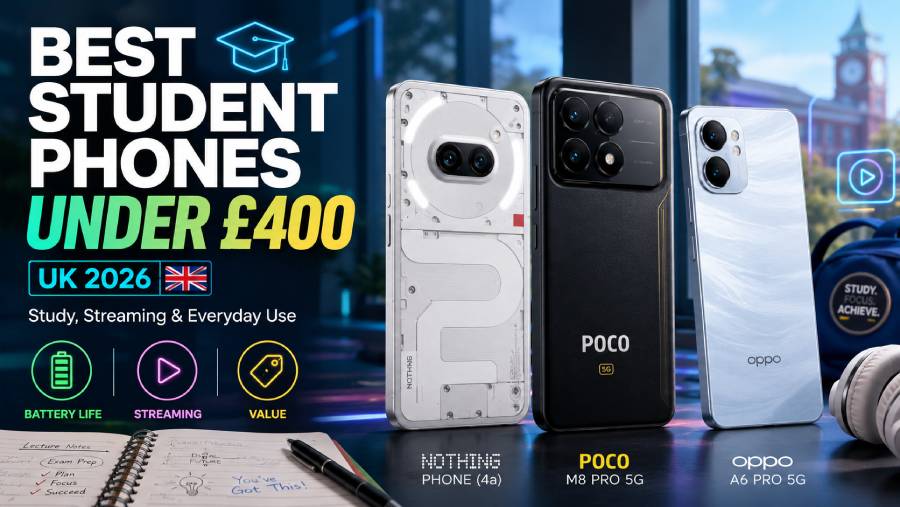
Reviewed for study use, display quality, battery life, performance & value – updated 2026
🥇 Nothing Phone (4a) – Best overall student phone under £400 → Check price on Amazon UK
🥈 POCO M8 Pro 5G – Best student phone for streaming, gaming and battery life → Check price on Amazon UK
🥉 OPPO A6 Pro 5G – Best-value durable student phone → Check price on Amazon UK
👉 Scroll down to see full reviews and Amazon UK links
Introduction
A good student phone in 2026 needs to do much more than just make calls and run WhatsApp. For a lot of UK students, it is the device used for lecture slides, email, Google Docs, online banking, travel apps, Spotify, Netflix, Teams calls, social media, photos, and day-to-day organisation. That is why the right budget is not necessarily the absolute cheapest phone you can find. Around the £400 mark, you start to get meaningfully better displays, stronger battery life, more usable cameras, smoother performance, and storage that will not feel cramped after a few months. [1]
This guide is aimed at university students, college students, sixth-form students, parents buying for a student, and anyone who wants a capable everyday mobile without spending flagship money. The three phones here were selected because they are recent 2026 models, they fit this under-£400 brief, and each one makes sense for a different type of student buyer: the Nothing Phone (4a) for all-round balance, the POCO M8 Pro 5G for screen, speed and battery-first use, and the OPPO A6 Pro 5G for practical value and durability. Official or launch pricing also places them in the right bracket, with the Nothing from £349, the POCO M8 Pro 5G from about £299, and the OPPO A6 Pro 5G at £249 on OPPO’s UK store. Amazon UK prices can move, so it always makes sense to check the latest listing before buying. [2]
What makes a great student phone under £400 in 2026
A strong student phone at this price is not about one headline spec. It is about how the package works in real life across long days on campus, commutes, revision sessions and evenings back at halls or home.
- Price and overall value: Under £400 is a sensible ceiling because it opens the door to newer 5G phones with high-refresh displays, larger batteries and enough power for multitasking, while still staying well below flagship pricing. In this bracket, value comes from getting the right balance of features rather than paying extra for prestige.
- Battery life for long study days: A student phone should comfortably handle lecture notes, messaging, maps, music, social media and evening streaming without becoming an anxious battery watch by late afternoon. Bigger batteries and reasonably fast charging matter more than flashy extras. [3]
- Screen quality for reading and streaming: Students spend a lot of time reading PDFs, watching recorded lectures, joining video calls and streaming in spare time. A sharp OLED or AMOLED panel with a 120Hz refresh rate makes scrolling cleaner, text easier to read and video more enjoyable.
- Reliable everyday performance: Most students do not need flagship power, but they do need a phone that stays smooth when switching between Chrome, Teams, Google Drive, notes apps, Spotify and messaging. Mid-range chips are now good enough, but weaker processors still show their limits in gaming and heavier multitasking.
- RAM and storage: 8GB RAM is a sensible starting point for 2026, and 256GB storage is especially useful if you download playlists, films, lecture recordings and a lot of apps. Students who keep phones for a few years should not underestimate how quickly storage fills up. [4]
- Durability and water resistance: Student life is hard on phones. Pockets, bags, libraries, shared kitchens, rain, drops and accidental spills all happen. Stronger glass, sensible ingress protection and reasonable replacement cost can matter as much as raw speed.
- Software and security support: A budget phone is better value when it still feels current in two or three years. Nothing is clear about the Phone (4a)’s support promise, while the POCO and OPPO UK product pages are clearer about launch software than long-term update length. That does not make them bad buys, but it is worth knowing before you commit.
Top 3 student phone picks under £400 — UK 2026
1. Nothing Phone (4a) – Best overall student phone under £400
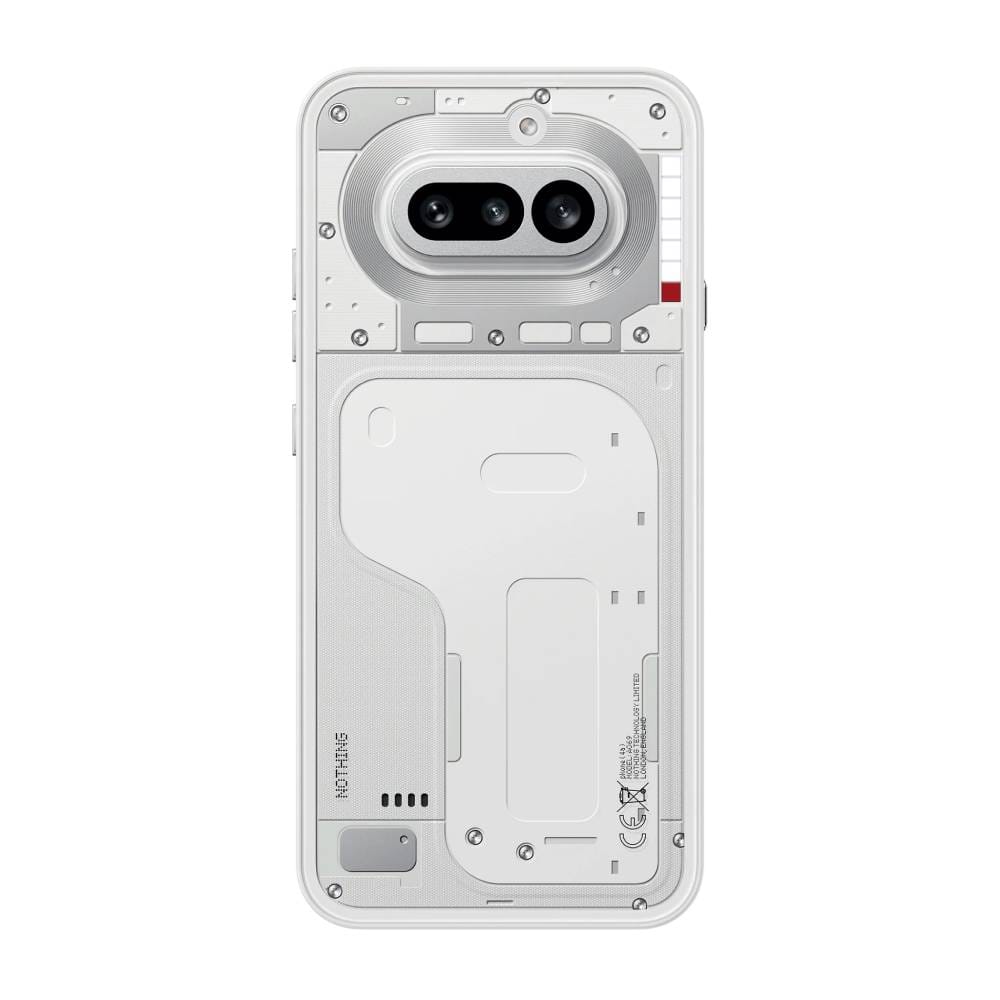
For student life, the biggest strength of the Nothing Phone (4a) is that it does not over-focus on one area at the expense of everything else. You get a 6.78-inch AMOLED display with a 120Hz refresh rate, a Snapdragon 7s Gen 4 chip, up to 12GB of RAM, up to 256GB of storage, and a 5,080mAh battery with 50W charging. In practical terms, that means a phone that is comfortable for reading lecture PDFs, watching YouTube on the train, keeping multiple messaging apps open, and handling everyday admin without feeling cheap or underpowered. Nothing’s software is also a real advantage for students who prefer a cleaner interface over something heavily skinned or cluttered. The Phone (4a) runs Nothing OS 4.1 on Android 16 and Nothing promises three Android OS updates plus six years of security patches, which is reassuring if you want to keep the phone through a full degree rather than replace it early. [5]
The display quality helps the Phone (4a) feel like more than a basic budget buy. Review coverage describes it as bright, sharp and easy to enjoy for films, games and social media, while official launch coverage confirms a 120Hz panel and the new Glyph Bar system that gives the phone a recognisable look without being just a gimmick. The performance is not true flagship level, but it is exactly where most students need it to be: smooth with notes, browsers, email, Spotify, Google Maps, banking apps and some light gaming. Battery life also looks well judged for campus use. Independent testing points to comfortable all-day endurance, even if it is not the longest-lasting phone in this guide.
The camera setup is unusually flexible for the money. Alongside the 50MP main camera and 8MP ultra-wide, the Phone (4a) includes a 50MP periscope telephoto with 3.5x optical zoom, which is rare in this class. That is useful for social shots, campus events and casual photography, and it also makes the phone more versatile than many budget rivals. The trade-off is that camera performance is not consistently brilliant in low light, and reviewers have called the ultra-wide the weakest part of the system. For students, though, the bigger picture is that this is a genuinely rounded phone under £400, with a student-friendly UK starting price of £349 and a software experience that should age well. [6]
Why this pick
✅ Pros:
- Clean, distinctive Nothing design with a strong 120Hz AMOLED display and a more polished software experience than many similarly priced phones.
- Sensible all-round spec for students, including Snapdragon 7s Gen 4, up to 12GB RAM, up to 256GB storage, 5,080mAh battery and 50W charging.
- Unusually flexible camera setup for the money, with a 50MP periscope zoom lens that stands out in this price bracket.
⛔ Cons:
- Battery life is good rather than class-leading, and the ultra-wide camera is the weakest part of the setup.
Main standout feature:
The Nothing Phone (4a) stands out because it feels more complete than most sub-£400 phones: good screen, good chip, clean software, sensible support promise and a proper zoom camera, all without losing sight of everyday value.
Who it’s best for:
It is the best choice for most students who want one phone to cover everything reasonably well: lectures, productivity apps, streaming, messaging, social media, casual gaming and years of normal daily use.
Amazon UK Check: 👉 Check price on Amazon UK – The Nothing Phone (4a) sits near the top of the under-£400 market, but that is also why it works so well as the best overall student pick. Official UK pricing starts at £349, and higher-spec versions stay within this guide’s budget band. It is good value if you want balance rather than one exaggerated headline feature, but Amazon UK pricing and discounts can change quickly, so it is worth checking the latest listing before you buy.
2. POCO M8 Pro 5G – Best student phone for streaming, gaming and battery life
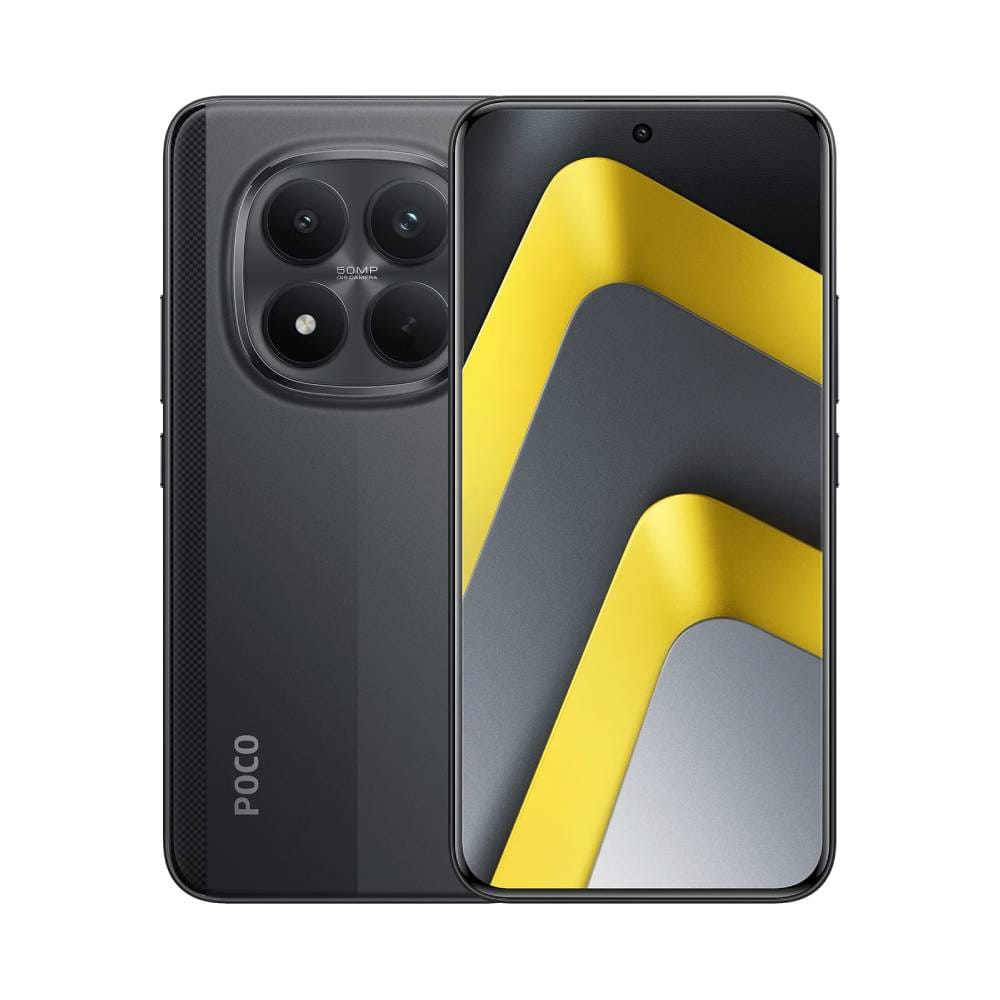
The POCO M8 Pro 5G is the easiest recommendation here if your day regularly includes Netflix in bed, YouTube between classes, Twitch on the bus, and mobile gaming when you should probably be revising. Official UK specs give it a 6.83-inch 1.5K AMOLED display with up to 120Hz refresh, Dolby Vision, HDR10+, stereo speakers, and a Snapdragon 7s Gen 4 processor. That combination makes it the most media-friendly phone in this three-way comparison. The screen is larger and more immersive than the Nothing and OPPO picks, and the official spec sheet also points to very high brightness, which should help with outdoor readability on campus. Students who stream a lot of lecture catch-up videos, football highlights or long playlists will notice the difference straight away. [7]
This is also the performance and battery champion of the group on paper. The POCO M8 Pro 5G pairs the Snapdragon 7s Gen 4 with either 8GB/256GB or 12GB/512GB storage options, and POCO’s UK materials highlight LiquidCool technology, a 6,500mAh battery, 100W HyperCharge and wired reverse charging. For student use, that means less worry about getting through a full day of classes plus evening entertainment, and more headroom for heavier app use than you would usually expect below £400. The official claim of a full charge in 40 minutes is obviously a lab figure, but even allowing for real-world variance, this should still be one of the quickest and most convenient phones in this price class. Digital Camera World’s launch coverage also places UK pricing from £299 for the 8GB/256GB model and £349 for the 12GB/512GB version, which is outstanding value for these specs. [8]
The trade-offs are mostly practical rather than deal-breaking. It is physically the biggest and heaviest phone here, so it is less elegant to use one-handed and less pocket-friendly than the Nothing or OPPO. The camera set-up is perfectly respectable for everyday use, with a 50MP OIS main camera, 8MP ultra-wide and 32MP selfie camera, but this is not the most interesting photography phone in the group. The bigger story is that the POCO M8 Pro 5G feels purpose-built for students who prioritise screen, battery and raw value. If study use for you includes split-screen notes, lots of video, train journeys, and regular gaming, this is the most convincing performance-per-pound pick in the article.
Why this pick
✅ Pros:
- Large 6.83-inch 1.5K AMOLED display, stereo speakers and strong media features make it the best pick here for streaming and lecture playback.
- 6,500mAh battery with 100W charging gives it the biggest battery and fastest charging setup of the three.
- Excellent value, with UK pricing reported from about £299 for 8GB/256GB and £349 for 12GB/512GB.
⛔ Cons:
- It is a large, weighty phone, so it is not the most comfortable option for small hands, tight pockets or lots of one-handed use.
Main standout feature:
The standout here is simple: the POCO M8 Pro 5G gives you a bigger, brighter display and a much larger battery than most phones at this price, without forcing you above the £400 ceiling.
Who it’s best for:
It is best for students who treat their phone as their main screen for films, sport, lectures, music, gaming and long daily use away from a charger.
Amazon UK Check: 👉 Check price on Amazon UK – In the under-£400 market, the POCO M8 Pro 5G is the value-performance pick. Current UK pricing context puts it comfortably inside this guide’s budget, with the better-specced version still below £400. That makes it especially appealing for students who want more screen and battery for their money, but Amazon UK deals and seller pricing can shift, so it is sensible to check the latest price before ordering.
3. OPPO A6 Pro 5G – Best-value durable student phone
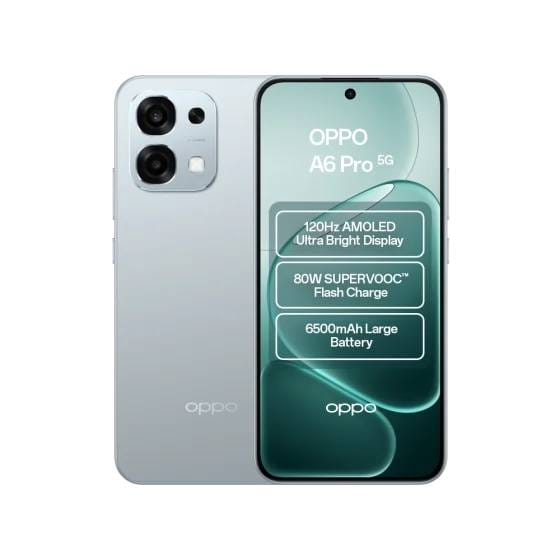
There is always a place in this market for a phone that does not pretend to be a flagship killer and instead focuses on the basics students genuinely use every day. That is exactly where the OPPO A6 Pro 5G makes sense. Its UK spec sheet lists a 6.57-inch AMOLED display, 120Hz refresh rate, 8GB RAM, 256GB storage, microSD support, MediaTek Dimensity 6300, and a 6,500mAh battery with 80W charging. In real student terms, that means good headroom for messaging, email, Blackboard or Moodle, Google Docs, social scrolling, Spotify, maps and streaming, plus enough storage to keep apps, photos and offline downloads from becoming a constant juggling act. The fact that storage expansion is supported is especially handy if you tend to keep lots of files locally. [9]
The real appeal, though, is value plus durability. OPPO’s UK overview leans hard into protection, highlighting water and dust resistance, military-grade shock resistance and a large battery designed for long-term durability. The UK specs page lists an IP68 ingress rating for regulatory display purposes, while also noting that the handset has been tested to IP69 conditions for high-pressure, high-temperature water ingress. That does not make it a rugged phone in the specialist sense, but it does make it one of the more reassuring choices for student life, where phones get thrown into bags, used in the rain and occasionally dropped. Add a current UK store price of £249, and the replacement-cost anxiety is much lower than it would be with a pricier model. [10]
There are, of course, compromises. The Dimensity 6300 is fine for everyday tasks, but it is not the gaming chip the POCO gives you, and the camera hardware is much simpler too: 50MP main, 2MP monochrome and 16MP front. That is enough for quick snaps, document scanning, social posts and video calls, but not the most flexible or ambitious camera setup in this guide. Still, for plenty of students that will be absolutely fine. What matters more is that the OPPO A6 Pro 5G feels dependable, lasts a long time away from the plug, charges quickly, and keeps the purchase price low. If you want a straightforward phone that can handle a full day of normal use without drama, this is a very sensible buy.
Why this pick
✅ Pros:
- Very strong everyday value, with a current UK store price of £249 for the 8GB/256GB model.
- Big 6,500mAh battery, 80W charging and 256GB storage make it practical for long campus days and heavy app use.
- Durability is a major selling point, with shock-resistance claims and UK pages that cite IP68 listing plus IP69 test compliance.
⛔ Cons:
- The Dimensity 6300 and simpler camera system make it better for everyday use than for demanding gaming or more advanced photography.
Main standout feature:
What makes the OPPO A6 Pro 5G stand out is how much practical, low-stress phone you get for the money: large battery, quick charging, ample storage and reassuring durability at a much lower buy-in.
Who it’s best for:
It is best for students and parents who care more about dependable daily use, battery life and lower replacement cost than about top-end gaming or camera bragging rights.
Amazon UK Check: 👉 Check price on Amazon UK – Within the under-£400 market, the OPPO A6 Pro 5G is the budget-friendliest of these three picks and still feels well-equipped for study, messaging, media and day-to-day use. Its current UK retail price gives it a strong value case, but Amazon UK promotions and marketplace pricing can change, so check the latest listing before buying.
Comparison table
|
Feature |
Nothing Phone (4a) |
POCO M8 Pro 5G |
OPPO A6 Pro 5G |
|
Typical Amazon UK price range |
Usually
about £349–£399 |
Usually
about £299–£349 |
Usually
about £249–£299 |
|
Display size and type |
6.78-inch
LTPS flexible AMOLED |
6.83-inch
CrystalRes AMOLED |
6.57-inch
flexible AMOLED |
|
Refresh rate |
120Hz |
Up
to 120Hz |
Up
to 120Hz |
|
Processor |
Snapdragon
7s Gen 4 |
Snapdragon
7s Gen 4 |
MediaTek
Dimensity 6300 |
|
RAM |
8GB
/ 12GB |
8GB
/ 12GB |
8GB |
|
Storage |
128GB
/ 256GB |
256GB
/ 512GB |
256GB |
|
Battery capacity |
5,080mAh |
6,500mAh |
6,500mAh |
|
Charging speed |
50W
wired |
100W
HyperCharge |
80W
SUPERVOOC |
|
Camera setup |
50MP
main + 8MP ultra-wide + 50MP periscope; 32MP front |
50MP
main with OIS + 8MP ultra-wide; 32MP front |
50MP
main + 2MP monochrome; 16MP front |
|
Water/dust resistance |
IP64 |
IP66
/ IP68 |
IP68
listed; OPPO says tested to IP69 conditions |
|
Software support |
3
Android OS updates + 6 years of security patches |
Xiaomi
HyperOS 2 at launch; exact UK support term not clearly stated on product page |
ColorOS
15.0 at launch; exact UK support term not clearly stated on product page |
|
Gaming suitability |
Good
for casual to moderate gaming |
Best
of the three |
Fine
for light gaming |
|
Streaming suitability |
Very
good |
Excellent |
Good |
|
Best student strength |
Best
all-round balance |
Best
battery and media experience |
Best
low-cost practicality |
|
Best for |
Most
students |
Entertainment-focused
students |
Value
and durability-first buyers |
Nothing Phone (4a) → Check price on Amazon UK
POCO M8 Pro 5G → Check price on Amazon UK
OPPO A6 Pro 5G → Check price on Amazon UK
What to consider before buying a student phone under £400
Before buying, it is worth thinking about how the phone will actually be used week to week, not just which specification sounds biggest on paper.
- Set a firm budget: Even under £400, there is a difference between about £250 and about £400. If you want the best all-round experience, spending closer to the top of the budget helps. If you mainly want reliability and battery life, there is no shame in saving money.
- Check the exact RAM and storage configuration: 8GB RAM is the realistic floor in 2026, and 256GB is much more comfortable for long-term use than 128GB if you download media or keep lots of apps.
- Think about battery versus size: Bigger batteries usually mean bigger phones. The POCO and OPPO give you more endurance, but the Nothing is easier to recommend if you want a better overall balance.
- Choose the right screen size: A larger display is excellent for reading notes and streaming, but a smaller or lighter phone can be easier to carry around all day and use one-handed.
- Be honest about gaming and streaming needs: If gaming and media are a priority, the POCO is the obvious fit. If your phone use is more mixed, the Nothing makes more sense. If it is mostly messaging, docs and everyday use, the OPPO is enough.
- Check camera needs: For scanning notes and routine photos, any of these will do. If you want the most flexible camera system, the Nothing is strongest because of its zoom lens.
- Look at software support and long-term use: Nothing is the clearest here with its three Android updates and six years of security patches. The POCO and OPPO pages are more specific about hardware than about support duration, so keep that in mind if you replace phones infrequently.
- Check what is in the box, the seller and the return policy: Charger inclusion is no longer guaranteed, and third-party marketplace listings vary. On Amazon UK, always look at the listing condition, seller reputation, delivery source, warranty details and the current price, because deals can change quickly.
Frequently asked questions
Is £400 enough for a good student phone in 2026?
Yes. It is enough for a genuinely capable 5G phone with a good OLED display, decent storage and battery life that can handle study apps, streaming and social media without feeling like a compromise purchase.
How much storage should a student phone have?
128GB is workable, but 256GB is a safer target if you keep phones for years or download lots of video, music, lecture files and photos.
Which phone is best for streaming and gaming?
The POCO M8 Pro 5G is the strongest option for that, thanks to its larger 6.83-inch display, Snapdragon 7s Gen 4 chip and 6,500mAh battery.
Do students need 5G?
Not necessarily, but it is useful for commuting, hotspotting and faster mobile data away from campus Wi-Fi. All three picks support 5G.
Which of these three is best for most students?
For most buyers, the Nothing Phone (4a) is the safest all-round choice because it balances display quality, software, performance, camera flexibility and long-term support more convincingly than the others.
Final verdict
- Nothing Phone (4a) is the best overall student phone under £400 for buyers who want balanced performance, distinctive design and a smooth everyday experience → Check price on Amazon UK
- POCO M8 Pro 5G is the best option for students who prioritise a large display, gaming, streaming and long battery life → Check price on Amazon UK
- OPPO A6 Pro 5G is the best-value durable student phone for buyers who want strong battery life, practical everyday performance and a lower purchase price → Check price on Amazon UK
For UK buyers, the right choice comes down to priorities rather than brand loyalty: the Nothing is the most complete, the POCO gives you the most entertainment hardware for the money, and the OPPO is the easiest on the budget while still covering the essentials well. Prices and discounts can change, so it is always worth checking the latest Amazon UK listing before deciding.
We update our comparisons regularly to keep everything accurate, up to date, and UK-focused.