Samsung Galaxy Z TriFold: The Foldable Revolution Now Rolling Out
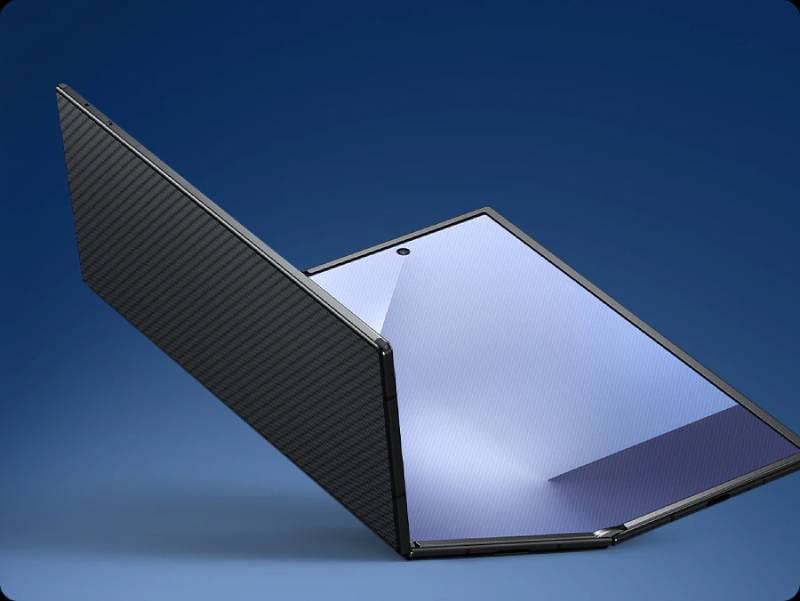
Samsung’s first triple-fold smartphone has arrived, offering users an unprecedented tablet-sized experience in a pocketable device. When unfolded, the Galaxy Z TriFold reveals a massive 10.0‑inch Dynamic AMOLED 2X display (2160×1584, 120Hz), the largest ever on a Galaxy phone. With folds on both sides, it essentially packs three screens: a 10″ main panel and a 6.5″ cover display (Full HD+ 2520×1080, 120Hz). This expansive setup is built with cutting-edge materials: armored aluminum frames, Gorilla Glass Victus 2 on the outer surfaces, and a reinforced, ceramic-glass fiber polymer back[1]. Samsung says its refined dual-hinge system can handle over 200,000 folds (roughly 100 per day for 5 years)[2], and the device is IP48-rated for water and dust resistance—the same protection level as the Galaxy Fold 7.
Under the hood, the TriFold is a true flagship. It runs on Qualcomm’s Snapdragon 8 Elite (essentially Galaxy S25 Ultra hardware), paired with 16GB of LPDDR5X RAM and 512GB or 1TB of UFS storage (no microSD slot). It packs a giant 5,600 mAh battery split across three cells (one in each segment) to balance weight, and supports 45W wired fast charging (included in-box) and 15W wireless charging. Software is equally beefy: Android 16 with Samsung’s One UI 8, along with Samsung’s commitment to 7 generations of OS updates. For productivity, the phone even introduces a new standalone Samsung DeX mode (no external dock needed) — effectively turning the TriFold itself into a portable desktop workstation.
Of course, this power and innovation come with trade-offs. At about 309g (10.9 ounces), the TriFold is quite hefty — heavier than most smartphones (even a small tablet) and roughly 50% heavier than a typical foldable phone. Folded up, it’s around 12.9mm thick (about 0.35 inches), so it’s noticeably chunkier in the pocket. Its price reflects that niche status: approximately 3.6 million won in Korea (about $2,800 USD), suggesting a similarly high tag (~£2,300) in Western markets. In short, reviewers call it a “high-class, showcase piece” for a very specific crowd — a sort of “pocket tablet” for power users.
Despite the caveats, the TriFold delivers on its promise of an ultra-large display and premium feel. As one hands-on report put it, it feels “quite well-built” and “solid” in the hand[3], with hinges that articulate smoothly and no visible crease on the screen. We’ll dive into the details below. But in brief, the TriFold is an engineering marvel aimed at professionals, content creators, and enthusiasts who truly need multi-screen productivity or immersive media on the go. For everyone else, its size, weight, and price make it a gadget-of-curiosity rather than an everyday phone.
Design & Display: A Tablet in Your Pocket
The Galaxy Z TriFold’s headline feature is its display. Unfolded, it becomes a 10.0″ tablet (2160×1584 px, ~16:11 ratio) that Samsung describes as “three 6.5-inch smartphones” side by side. This means apps are no longer cramped. Reviewers note that many apps adapt beautifully: for example, the Files app can show a full folder hierarchy at once, and Gallery or Health apps display extra data without scrolling[4]. Widescreen videos benefit greatly: due to the TriFold’s more rectangular aspect, widescreen movies and games fill the screen with roughly 50% more picture area (and much smaller black bars) than on a squarer Fold7 screen. You can also rotate the TriFold to portrait mode for long documents or reading, effectively giving a tall 10″ display when needed.
Samsung equipped the inner display with an updated panel: it’s a Dynamic AMOLED 2X (10-bit color) rated for up to 1,600 nits peak brightness. The outer 6.5″ cover panel is identical in spec to the Galaxy Z Fold7’s cover — a 2520×1080 Dynamic AMOLED at 120Hz, Gorilla Glass Victus 2, and even a claimed 2,600 nits peak brightness. In practice, both screens are extremely vibrant and sharp, with deep contrast. One reviewer said the colors and motion “pop” and the 120Hz refresh makes everything feel fluid. The two internal folds create two visible creases on the big screen; under most lighting they are noticeable but not terribly distracting. Users report they quickly tune them out during normal use, but they will catch your eye whenever bright light hits the screen at certain angles.
The hinge design behind this display setup is an engineering feat. Samsung calls it the Armor Flex Hinge, now refined for dual-folding use[5]. It actually uses two differently sized hinge mechanisms working together (a dual-rail structure). The result is a smooth, stable motion: unfolding the TriFold feels surprisingly natural, aided by magnets and haptic feedback. In fact, Samsung has built in clever touches — for example, if you try to fold it the wrong way, a strong vibration warning kicks in. Even the way you fold it has steps: first you unfold one side, then a magnet pushes up the second panel, making it easier to grab and fully open. After a few uses, this “two-fold dance” becomes intuitive.
When fully unfolded, the TriFold is extremely thin — just 3.9 mm at its slimmest point. This makes it even thinner than the Galaxy S25 Ultra at its thinnest, and far thinner than any past TriFold competitor. The screen panels lock flat with zero wobble, and reviewers praise how rigid it feels when open. (The extended battery and hinge do bulge it to about 9 mm where the panels overlap, but that’s still quite slim.) In other words, you get an expansive canvas without the “floppiness” you might expect from two big hinges. For context, the single-hinge Galaxy Z Fold7, when open, is around 5.2 mm thick; the TriFold at 3.9 mm is significantly thinner despite folding twice.
The flip side is that folded, the phone is thick and heavy. At 309 grams (10.9 oz), it’s one of the heaviest phones you can buy. For comparison, an iPhone 15 Pro weighs ~187g, the Galaxy Z Fold7 is ~231g, and Google’s Pixel Fold is about 258g. In fact, the TriFold feels like you’re carrying a smartphone plus a large power bank – one reviewer quipped that it’s like lugging an extra battery. Because of this heft, it’s not something you’ll forget you have; it gives a reassuring solidity in hand, but it also makes one-handed use impractical. Experts say you won’t mistake it for a “normal phone” when folded — it’s simply too big and thick.
Samsung did try to mitigate the weight: the 5,600 mAh battery is divided into three cells, each placed in a panel. This spreads out the mass so the weight balance feels fairly centered. Reviewers note that, despite the size, the TriFold doesn’t feel top-heavy or back-heavy – it sits well in the hand as a tablet. However, the overall mass does cause a stability issue: when placed on a table, every tap on the screen will make the device wobble or thunk, especially if the center panel’s heavy hinge is lifted. One reviewer described it as “practically unusable on a flat surface” without using the included case, because the narrow width and off-center weight causes it to rock. Luckily, Samsung includes a special kickstand-style protective case that effectively props up the TriFold (and even closes the hinge gap for extra support). In other words, keep that case on if you plan to use it on a desk.
All these screens and mechanics are wrapped in a high-quality package. The back panel uses a new fiberglass-reinforced polymer (marketed as a Kevlar-like finish). It looks and feels premium, but it also attracts fingerprints. Reviewers reported that the TriFold’s “vinyl-type” texture is extremely sticky: every surface quickly shows smudges and oils from your fingers. In fact, one tester admitted it was “borderline impossible to hold and unfold this phone without getting fingerprints everywhere”. So expect to clean it often.
In terms of durability beyond the obvious materials, Samsung emphasizes rigorous construction. Each device undergoes automated hinge-cycle testing, CT-scanning of circuits, and laser alignment checks. The dual hinges have armor covers to resist wear, and Samsung’s president touts that this phone is engineered to set “new benchmarks” in a portable form factor. Early impressions suggest the company succeeded: despite the two big creases, reviewers found the screen free of dust and the hinges operating smoothly after prolonged use. However, a tri-fold inherently doubles the stress points. Durability experts note that the hinges (and the thin glass between them) are the most vulnerable parts. Samsung’s IP48 rating (vs. Fold7’s also IP48) tells us it’s built to be splashproof and dust-resistant. But as always with any foldable, “baby it like it’s glass” is sage advice — minor drops or debris could be costly.
Indeed, with a gigantic folding inner screen, repair costs loom large. Reports from Korea indicate that replacing the inner 10″ panel could run around ₩1,657,500–1,834,500 (roughly $1,100–$1,200). That’s higher than any previous Galaxy; it reflects the complexity of a tri-folding display. The outer cover screen is much cheaper (about ₩137,000–226,000, ~$100–$170), similar to other flagships. In sum, if you break the inner display, it’ll cost as much as a used car battery. In practice, that means users are strongly advised to invest in Samsung Care+ or other insurance, and to use a robust case (the included one is not very protective on its own).
In summary, the TriFold’s design delivers a genuine tablet experience: a very slim, bezel-thin 10″ screen with vivid OLED colors and smooth 120Hz motion. It sacrifices lightness and rugged simplicity for that ambition. Everyone we spoke with agrees: the engineering is phenomenal, but it’s a big gadget. It feels futuristic in hand, yet also demanding of careful handling. You’ll love the screen when you see it, but you’ll also feel its weight in your pocket. This device is clearly meant for those who actually need or will greatly enjoy all that screen space — not casual users who value a small, easy phone.
Camera System: 200 MP Quad-Camera Rig
On the back, Samsung fitted the TriFold with a top-tier camera array. It mirrors the Fold 7’s triple-lens design but bumps the main sensor to 200 megapixels (f/1.7, OIS). The other two lenses are a 12MP ultra-wide-angle (f/2.2) and a 10MP 3× telephoto (f/2.4 OIS). This “quad” setup (including two 10MP selfie cameras) means you can shoot high-resolution images, ultra-wide scenes, and moderate zoom without compromise. In good lighting, expect excellent detail and color accuracy — essentially the same excellent quality Samsung has achieved in its Fold7 or S25 Ultra. Low-light performance is also likely to be very strong, thanks to the large 1/1.3″ main sensor and Samsung’s Nightography algorithms.
Samsung’s AI camera features also shine on the big screen. The Camera app includes Galaxy AI’s Photo Assist tools (Generative Edit and Sketch-to-Image) optimized for the 10-inch canvas. For example, you could use generative editing on a photo while easily viewing the results next to the original on the expansive display. The Browsing Assist can automatically summarize or translate text it sees through the camera, which is helpful when reading signs or menus on camera. The Gemini Live feature lets you ask context-aware questions or compare “before and after” shots side by side, taking advantage of the large workspace. These are novel tools, and having extra screen real estate makes them easier to use and understand.
In practical shooting scenarios, reviewers have noted one small inconvenience: because the TriFold’s cover screen is sandwiched between the two folding parts, using the rear camera while unfolded can lead to smudges on the cover panel. One journalist snapped a photo and immediately the central hinge area got coated with fingerprints. It’s a minor quirk, but it means photographers will have to keep a cloth handy if they often switch between the cover and back cameras.
Another difference vs. other foldables: the TriFold does not offer an intermediate folding mode for the screen. Unlike Huawei’s Mate XT (which had a “two-thirds open” Z-fold), the TriFold only works in two states: fully closed (cover screen only) or fully open (10″ tablet). Android Central notes there’s “no way to use it as a traditional book-style foldable”. If you close just one panel, the entire inner display shuts off until the phone is fully folded in the prescribed order. That means there’s no 7.9″ screen mode like you get on a Mate XT or in the original Galaxy Fold (which could open one side). This simplifies the software logic but sacrifices a little flexibility.
One interesting feature shown by Samsung (not yet tested by us) is Triple Recording mode: you can record video from all three rear cameras at once, with each lens’ view on one segment of the screen. In demo videos, you can see wide, tele, and selfie footage recording simultaneously — a neat trick for vloggers or documentaries. It’s a novelty, but it demonstrates the power of having all three sensors active. We expect some creative apps might leverage the tri-display for unique multi-stream content.
The front cameras follow Samsung’s recent pattern: two 10MP shooters (one on the cover screen, one on the inner display). This means you have a decent selfie camera available whether you’re using the phone closed or open. Video calls on the inner screen will fill that 10″ display nicely, which is great for group calls or presentations.
Overall, the TriFold’s camera is built to impress, matching Samsung’s best. Most reviewers haven’t done full testing yet, but hands-on impressions are very positive: colors, focus speed, and video stabilization are all on par with expectations. The 200MP sensor should give photographers plenty of detail for cropping or large prints, and the additional screens don’t seem to compromise Samsung’s refined camera software.
Performance & Battery
Under the hood, the Galaxy Z TriFold is unquestionably powerful. It uses Qualcomm’s Snapdragon 8 Elite chipset (a 3nm SoC introduced in late 2025), which is essentially the same processor running Samsung’s own Galaxy S25 Ultra. This octa-core CPU (with up to 4.47 GHz Cortex-X3 and 6x Cortex-X2 CPUs) and Adreno 830 GPU can handle anything you throw at it — from 3D games to video editing, and of course the heavy multitasking this device encourages. In benchmarks and everyday use, it should be on par with the latest flagship phones. (For comparison, Google’s Pixel Fold uses the Tensor G2, which is notably slower in raw compute; Samsung’s choice of Snapdragon is one reason the TriFold can render smoothly at full resolution even with three apps open.)
You get a generous 16GB of LPDDR5X RAM standard (no options for less), which means background apps can stay loaded easily. Storage is lightning-fast UFS: base model has 512GB, with a 1TB option for those who want extra space. There is no microSD card slot, following Samsung’s recent trend — so pick your storage size carefully. Wireless connectivity is top-tier: the TriFold supports sub-6GHz and mmWave 5G, Wi-Fi 7 for blazing home/office speeds, Bluetooth 5.4, NFC, and the works. Biometric unlock is via an under-screen fingerprint sensor (ultrasound type), which works quickly on both cover and inner screens.
In everyday performance tests, reviewers found the TriFold’s UI to be extremely snappy. Even with multiple apps displayed, animations and transitions never stutter. Mypitshop’s hands-on put it succinctly: “every animation I tested was buttery smooth”[6]. Samsung’s One UI 8 and Android 16 run fluidly. Multi-window switching is instantaneous, and dragging apps between zones does not pause or reload content. This is a far cry from early foldables, which often struggled with lag or forced app restarts. In fact, because the TriFold can show three apps at once (each essentially “phone-sized”), the combination of 16GB RAM and fast storage means even heavy multitasking doesn’t slow it down.
One possibly controversial design choice: the TriFold does not support the S Pen (or any stylus). Samsung’s own specs clarify that “S Pen support: Not supported”. This was not a surprise — Samsung removed the S Pen from the Galaxy Z Fold7 earlier in 2025 to make the phone thinner. The reasoning is that embedding a digitizer under such a large, flexible screen (with two folds) would add too much thickness and complexity. The downside is that creatives lose Samsung’s most precise input tool. You can use any passive third-party stylus, but you’ll lose the special pressure/tilt features of the S Pen. For many TriFold buyers this may not matter much (they may use it more as a keyboard-driven workstation), but it’s worth noting for anyone who expected a pen-enabled canvas.
Battery life is a crucial question. The TriFold’s total 5,600 mAh pack is the biggest Samsung has put in a foldable. However, it’s also powering an enormous 10″ 120Hz panel plus a 6.5″ 120Hz panel. Samsung claims “all-day” endurance, and “stream, create and work without limits”. Realistically, that means moderate use should get you through a full day — perhaps 6–7 hours of screen time, which is typical for large-screen phones. With heavy use (continuous video, gaming, or triple-app productivity at 120Hz), you might need to top up. The upside is that Samsung did include a 45W charger in the box (a 2025 rarity!). In tests, it reportedly can charge 0–50% in about 30 minutes with that charger. If you use 15W wireless (Qi), expect about twice as long to full.
Battery longevity is another consideration. Foldables already stress longevity with fold cycles, and adding triple hinges raises new questions. Samsung’s 200k-fold rating is reassuring, and the split-battery design prevents any one cell from overloading. There’s no simple way for a user to swap batteries (as with any phone now), so long-term, your life with the TriFold will likely match that of other flagships: a few years before battery capacity meaningfully declines.
Multitasking is practically the TriFold’s raison d’être, and software optimizations make it shine. Samsung’s new taskbar (in the bottom right corner in desktop mode) remembers your app layouts. If something interrupts you — a call, a lock screen, etc. — you can tap the taskbar icon to instantly restore your full three-app workspace. For example, an architect could be editing blueprints, drafting a proposal, and calculating costs side-by-side, and if a call came in, nothing in that setup is lost. Familiar apps like My Files and Samsung Health have been optimized for this large format to show more info at once.
If you prefer using a keyboard and mouse (or mousepad keyboard case), the TriFold becomes a credible laptop replacement. Its new DeX mode is especially potent here: without needing any dock, you tap a quick-settings toggle and the phone switches into a desktop-like UI. Windows become movable and resizable by dragging their top bars. You can open multiple virtual desktops (the TriFold allows up to four independent workspaces, each running up to five apps) and even connect an external monitor via HDMI or wireless. In one demo, Samsung showed a user having email on one desktop, a video in another, and dragging a file from one to the other seamlessly. The phone itself can serve as the second screen when an external monitor is connected, giving you a portable dual-monitor setup. In short, with a Bluetooth keyboard/mouse, the TriFold can replace your laptop for many tasks — a fact that genuinely impressed reviewers.
To sum up this section: the TriFold is a true heavyweight performer. It has the latest-gen hardware (apart from the very newest Snapdragon Gen 5), top-tier connectivity, and enough RAM to juggle dozens of apps. Battery capacity is the largest in its class, and Samsung even included a fast charger. Even its drawbacks — the lack of S Pen, and the caution needed to protect the inner display — reflect choices made to maximize thinness and incorporate complex hinges. As one reviewer bluntly put it: you can really push three normal apps at once, and it’s “game-changing” for multitasking. The phone just runs smooth, but you pay for it in fragility (and price) — so be sure you actually need this level of performance before splurging.
Multitasking & Software: Work on the Go
The TriFold’s software is designed to embrace all that screen space. Samsung touts that when the phone is open, its 10″ display behaves like “three 6.5-inch smartphones” mounted together. Indeed, One UI 8 on the TriFold defaults to a split view with up to three portrait-mode apps sharing the screen. Want to watch Netflix, chat on WhatsApp, and browse the web simultaneously? Just drag each app into one third of the screen. In this layout, each app is roughly phone-sized, so nothing feels squashed. You can also change the layout on the fly: make one app larger and the other two smaller (good for focusing on one main task with glances at two others) or keep them equal. There’s even a handy “swap” button to quickly reorder the apps if you opened them in the wrong spot.
Switching between these apps is intuitive. You can tap to expand an app to full screen or shrink it back. Most common UI functions (notifications, menus, etc.) work normally in any panel. Samsung has updated key apps for the format — e.g. My Files shows folder trees side-by-side, Samsung Health can display graphs and stats at once — thanks to the larger canvas. In practice, users report this feels very natural: one reviewer said multitasking on the TriFold “legitimately feels like three normal bar phones glued together”.
An especially useful feature is Saved App Trios. If you often run the same three apps together, you can save that combo as one icon. Tapping it launches all three at once in your chosen arrangement. The icon even shows which apps and layout you’ll get. This is ideal for workflow setups — say, email+calendar+notes, or music+podcast+recipe apps when cooking — launching with one tap. All animations remain buttery smooth even with three apps running, thanks to the 16GB RAM and powerful GPU.
Samsung’s new taskbar plays a central role. It sits on the edge of the screen (or at the bottom in DeX mode) and retains your recent apps and desktops. If a call or notification hijacks the screen, you won’t lose your spot: tapping the taskbar icon instantly brings back the entire multi-app layout you had open. For example, Samsung illustrated an architect drafting plans in one app, writing a proposal in another, and crunching numbers in a third. If an interruption happened, a single tap restores all three apps exactly as they were.
One UI also ensures app continuity between the cover and main screen. If you open an app on the 6.5″ cover display and then unfold the phone, the app automatically transfers and resizes to the 10″ screen. (Of course, not every developer has tailored their apps for this yet, but the ones that matter generally scale nicely.) This means you can start a task closed up and then unfold for more space without restarting. AndroidCentral’s hands-on noted that Samsung’s approach is much more Western-friendly than Huawei’s old HarmonyOS; having full Google Play support and One UI makes the TriFold ready for the world’s users.
For even more productivity, TriFold is the first Galaxy phone to treat Samsung DeX as a built-in mode. Years ago, DeX required a dock or cable, but here you just swipe down and tap DeX in Quick Settings. Instantly, the phone switches to a desktop-like interface across the 10″ screen (or an external monitor, if connected). Windows default to a resizable, draggable mode, and you can have multiple floating windows. It’s not just screen splitting; it’s a genuine windowed desktop. You can create up to four separate desktops, each holding multiple apps (Samsung says up to five per workspace). You could, for instance, review a presentation in one workspace, switch to a second to chat with colleagues, and keep a third for reference files. If you connect a mouse, the TriFold’s cursor behaves exactly as on a PC.
There’s even a clever trick: if you attach the TriFold to an external display, the phone itself becomes a second monitor. You could drag an app or document back and forth between the monitors, emulating a dual-screen laptop. This has been possible on Samsung tablets for a while, but the TriFold brings it to your always-with-you phone.
The Galaxy AI features we mentioned earlier also integrate into this software multitasking. For example, while editing photos or documents on the big screen, Photo Assist (Generative Edit) can let you make AI-driven changes with minimal typing. Browsing Assist can automatically generate notes or translate a page without switching apps. And Gemini Live can overlay information or suggestions in any window. These AI tools aren’t unique to TriFold, but they feel more powerful at this scale: editing a photo on a 10″ canvas or seeing side-by-side comparisons feels particularly natural.
From a user perspective, the TriFold is built for scenarios where multitasking is the main task. Samsung and reviewers give plenty of examples: business professionals who need spreadsheets, documents, and chat open at once; designers who need reference images, canvas, and tools simultaneously; students who might keep a lecture video, notes app, and calculator on screen while studying. Samsung’s own PR copy even highlights an architect drafting designs across three apps as a showcase scenario. In real life, you can imagine a market analyst with data charts, a report, and a messaging app, all visible; or a YouTuber editing clips on one panel while browsing a tutorial on another.
It’s worth noting again who this helps the most. The folks loving the TriFold are invariably those who need its muscle: power multitaskers, mobile pros, creative types. One reviewer summarized it well in a “should you buy?” list: the TriFold is for someone who “wants a genuine tablet in their pocket, uses Samsung DeX for work on the go, needs serious multitasking (three apps at once is game-changing), is invested in the Samsung ecosystem (Buds, Watch, etc.), and can afford the luxury”. In a survey of Android readers, concerns about tri-fold devices were mostly about durability (36%) and price (32%), reflecting that many are skeptical about paying so much and trusting such a complex gadget daily.
For multimedia or gaming, the TriFold is also great in its way: watching a 21:9 movie on a 10″ screen is delightful, and you still have room to chat or browse without pausing. Gamers can run performance metrics or Discord on the side. Avid readers can see two pages of a book at once. But yes, this is a phone heavy on novelty. Ordinary people might find two screens enough; tri-fold truly shines when you regularly engage in tasks that can leverage three simultaneous views.
Galaxy Z TriFold vs Other Foldables
By now, the TriFold has carved out its own niche, but it’s useful to see how it stacks up with peers. Samsung’s own closest relative is the Galaxy Z Fold7 (released summer 2025). The Fold7 has a 6.2″ cover screen and a 7.6″ internal display (all in 21:9 aspect). By contrast, the TriFold uses a larger 6.5″ cover and a 10.0″ internal, so its unfolded screen is vastly bigger (about 67% more area). On the downside, the TriFold is heavier (309g vs ~231g) and much thicker when closed (12.9mm vs ~7.1mm). Both devices share most other specs: both use Snapdragon 8 Elite, both have 200MP main cameras, both run One UI 8 on Android 16, and both carry IP48 ratings. However, the Fold7 retained S Pen support (via a special pen case), whereas the TriFold dropped it. The Fold7 also has a higher-resolution external display (7.6″ at 2600 nits vs TriFold’s 6.5″ at 2600 nits), whereas the TriFold’s big screen has a lower pixel density (4:3 aspect). In essence, the TriFold trades the Fold7’s sleeker design for raw screen area.
Samsung UK/EU buyers should note that, as of now, the TriFold is not (officially) coming to their markets. Samsung has instead been pushing deals on the Fold7 and Flip7 in Europe. If you really want a tri-fold, some buyers are turning to importing from Korea or China (Huawei Mate XT), accepting no warranty. Otherwise, the dual-fold Galaxy Fold7 remains the closest Samsung alternative, and Google’s rumored Pixel 9 Pro Fold (expected ~2026) is the other notable competitor on the horizon.
The Huawei Mate X series has an interesting place here. Last year Huawei released the Mate X’s been updated as Mate XT (China only). It also unfolds to ~10″, but in a Z-fold style: the whole screen zig-zags rather than having a separate cover panel. That design allowed the Mate XT to have a continuous display, and indeed it could rest in a semi-folded “two-thirds” mode — something the TriFold can’t do. The Mate XT was lighter (~298g) and even thinner (folded ~3.6mm) because it didn’t need an extra cover screen. However, Huawei’s global release hit a roadblock (no Google services) and Huawei didn’t promise long software updates. Samsung’s TriFold solves that by using Android/One UI with Google and a 7-year update plan, which reviewers see as a big advantage. As one PhoneArena editor noted: Huawei’s Mate XT is slick, but Samsung’s software and support give the TriFold its edge.
Other Android foldables (OnePlus Open, Oppo Find N series, etc.) are all dual-folders, not tri-folders. The upcoming Google Pixel Fold (2023) / Pixel 10 Pro Fold (2025) series also only fold once. For example, the Pixel 10 Pro Fold (announced late 2025) has a 7.6″ interior and a 7.1″ cover; it’s much more compact and lighter than the TriFold, but it also has a far smaller inner display. The Pixel Fold has a Gorilla Glass Victus inner cover and even better peak brightness (listed 2600 nits on the cover vs TriFold’s 1600 nits on the inner). However, it also has a much smaller 4821mAh battery and (in the US) starts near $1,799, far below the TriFold’s price. The Pixel’s Tensor G2 chip is slower than Samsung’s Elite, and Google only promises 7 years on Pixels now (which matches Samsung’s 7). In short, Pixel Folders are smaller, sleeker, and less expensive, but none come close to matching the TriFold’s raw screen space or multitasking prowess.
In summary, the TriFold stands alone in its form factor. Huawei’s Mate XT preceded it, and Google’s Pixel is the duofold alternative, but Samsung is the first (and for now only) major brand to bring a tri-fold with global services. Each design has its pros and cons: Huawei’s is simpler and lighter, Google’s is more polished and affordable, Samsung’s is the largest and most powerful.
Accessories, S Pen, and Galaxy Ecosystem
It’s worth noting what the TriFold includes and doesn’t in terms of extras. In the box, Samsung provides a surprisingly full kit: a 45W USB-C fast charger, a high-quality braided USB-C cable, a SIM eject tool, and a clear protective case. The included case is lightweight but has a clever design: it features an extra lip that acts like a book spine, covering the hinge area when the phone is closed. This gives added protection to the folds and a more solid feel. (Reviewers noted that the case, while minimal, turned out to be “more important than I initially thought” for handling the device.) Samsung also sells an optional kickstand case that holds the unfolded TriFold at an angle for comfortable viewing — useful for typing or watching media on a desk. Other accessories like a USB-C hub can be paired when using DeX, or Bluetooth peripherals (keyboard, mouse).
One longstanding accessory not supported is the S Pen. Samsung confirmed that “any existing S Pens will not work on the TriFold”. In fact, the Galaxy Z Fold7 earlier in 2025 also dropped S Pen support to slim the design, and TriFold follows suit. The TriFold’s software lists “S Pen support: Not supported” on the official spec sheet. For users who expected stylus input for note-taking or drawing, this is a disappointment. The reason is partly technical: adding a digitizer layer under such a large folding screen would make it even thicker and more delicate. Samsung has decided to reserve stylus support for dedicated tablets (Galaxy Tab series) and some clamshell phones (Flip series can still have S Pen), leaving Foldables to remain finger-only. So any pen-based artists will have to rely on touch input or third-party passive styli (which lack pressure sensitivity).
On the plus side, the TriFold fully embraces the Galaxy ecosystem. It seamlessly pairs with Galaxy Buds and Galaxy Watch devices via Bluetooth, so calls, notifications, and even DeX control can flow between them. For example, you could start drafting a document on the TriFold, switch to DeX on an external monitor, and answer a call on your Buds — all without breaking your workflow. Samsung Pay, Knox security, Samsung Notes (with cloud sync), SmartThings home control, and other Galaxy apps work just as they do on any Samsung phone. In fact, marketing copy highlights exactly this kind of continuity: “You can start a task on the Tri-Fold, continue on a Galaxy Tab or PC, and finish it on a Galaxy Watch or Buds, without losing context”. (This isn’t unique to TriFold, but having such a large device makes multi-device workflows even more compelling.)
To summarize accessories and ecosystem: the TriFold comes with everything you need to get started (even a charger, which is refreshing!). It does not support the S Pen, so it’s really geared toward finger-based use and external input devices for productivity. It fully integrates with Samsung’s broader ecosystem of laptops, tablets, earbuds, watches, and smart home devices — a selling point for anyone already invested in Galaxy products. Those who plan to use it as a mobile workstation will appreciate that synergy.
Repairability, Durability, and Long-Term Usability
Given its complexity, repairability is a concern. No foldable is truly user-serviceable, and the TriFold is among the most intricate. Replacing the inner 10″ display requires specialized factory-level work (the screen connector is hidden under other parts). As noted above, Samsung’s official repair price for the inner display is roughly $1,100–$1,200 in South Korea. That’s a big hit. (By contrast, Fold7 inner display repair is around $700–$900 per reports, so the TriFold’s is significantly higher.) Even replacing the outer cover display costs a couple hundred dollars. Given these numbers, many buyers will opt for Samsung’s Care+ insurance plan, which covers damage for a fixed fee (usually much less than the full repair cost).
In day-to-day use, early testers emphasize the need for care. The inner flexible display (with its ultra-thin protective layer) is quite delicate; as one reviewer warned, even leaning the open phone against a hard object left deep scratches on the TriFold’s screen protector. On top of that, any debris or grit that finds its way between the folds could press into the inner screen when closed. Samsung’s IP48 dust rating gives some confidence (the hinges have channels to keep out particles), but it’s still wiser to avoid sliding the TriFold around unprotected in a pocket with keys or coins.
Over time, all foldables accrue micro-wear on the hinge. Samsung says it designed the Armor FlexHinge to minimize friction and even includes dust channels, but the truth is regular use will stress the mechanism. As fold-cycle tests show, hinges can develop slight misalignment after thousands of folds. Fortunately, Samsung’s rating of 200,000 folds suggests that any wear will happen slowly — on the order of years, not months. Most reviewers found the hinge sensation very stable and smooth out of the box, and we expect it to stay that way with normal handling. However, unlike a rigid phone, you should expect that after a couple years you might see more visible creasing or hear a tiny bit more play in the hinge. That’s normal for all foldables; the TriFold’s unique design doubles those stress points, so dedicated hinge protection (like a well-fitted case) matters more than ever.
In terms of raw build quality, though, the TriFold is well above average. Reviewers noted the fit and finish is superb: tight tolerances, no dust gaps on uncovered edges, and a premium feel thanks to the aluminum and ceramic accents. Unlike some past Samsung foldables (Fold/Flip 3), the TriFold does not have any creaking or loose pieces — everything locks tightly. Samsung’s stated goal was to create “the perfect balance between portability, performance, and productivity”, and that shows in the refinement. Tom’s Guide commented that it “feels quite well-built” and “durable” in hand[3].
One unusual long-term factor is how the TriFold ages with software. Samsung has promised 7 years of updates, and that should ease concerns about obsolescence. With annual major Android releases, TriFold owners could expect support through Android 23 (if counting from Android 16), which is unheard of on any other phone. This is a major advantage for professional users who want stability over time. Contrast this with Huawei’s Mate XT, which never got an Android update in a year of use. So from an IT perspective, the TriFold has staying power.
Overall, the message on durability is: it can survive, but treat it kindly. It is sturdy for a foldable of its size, built with high-quality hinge and materials, and Samsung’s internal stress tests are reassuring. Still, it’s not a brick: accidents could be disastrous. Samsung’s likely aware of this — besides the build, it’s why they bundle a case and (implicitly) encourage insurance. Users should plan to handle it more like a mini tablet than a drop-resistant phone.
Market Context and Competition
The Galaxy Z TriFold arrives at an interesting moment in the smartphone market. Foldables have graduated from concept to mainstream for some buyers, with the Galaxy Z Fold and Flip series selling in the millions. Yet tri-foldables are still extremely rare. Samsung’s global rollout makes it the first widely-available tri-fold device. The only prior example was Huawei’s Mate XT (China-only), and a few small brands showed concepts, but no other company has shipped a mass-market tri-fold.
Samsung clearly wants to set the pace. A top executive boasts that Samsung is “continually shaping the future of mobile experiences” and that the TriFold “expands the boundaries of what’s possible” for a phone. It solves problems that foldables long faced: it provides a truly large, rectangular workspace without making the phone unwieldy when closed. In one way it does just that — you do get a 10″ tablet — but critics point out the contrarian problems (weight, etc.). Still, there’s no direct competitor out there doing exactly the same thing.
Samsung’s other foldable, the Galaxy Z Fold7, remains the default alternative in markets where the TriFold isn’t sold. For example, in the UK/EU Samsung has publicly signaled that the TriFold won’t launch there. Instead, UK consumers are directed toward the Fold7 and Flip7 deals. It’s likely a supply and certification issue. Thus, European buyers either stick with a dual-fold or import a TriFold at their own risk. Those importers (and domestic tech media) compare it to other handsets on sale. The tri-fold concept remains novel: as one AndroidAuthority article noted, most consumers are still wrapping their heads around foldables in general. A tri-fold is a clear “power-user gadget” even by foldable standards.
In Asia, the TriFold faces a bit more direct competition. Aside from Huawei, some Chinese brands might be researching tri-fold designs, but none are confirmed for release. The smartphone market is also seeing an influx of high-end tablets and ChromeOS laptops that could eat into the need for something like the TriFold. If you need a large screen at home, you might buy a Tab S-series instead for less money. The TriFold’s edge is portability and always-on connectivity; it’s not meant to replace a home tablet, but to bring that experience out with you.
In the bigger picture, the TriFold signals where phones could go next. If dual-folds unlocked a new category in 2019, tri-folds are the next frontier in 2025. Only time will tell if they catch on. For now, Google is preparing its own foldable strategy: the Pixel Fold has sold steadily in the US, and a Pixel 10 Pro Fold is expected in late 2025, promising better cameras and Gemini AI integration. Rumors of a Pixel “9 Pro Fold” in 2026 suggest Google believes there’s a market, even though their hinge design is still single-fold. Apple doesn’t have a foldable yet, but it’s rumored to be researching them, possibly starting with a clamshell (flip) design. Samsung’s early move may give it a leadership image in innovation — but it will also watch closely whether Samsung customers buy into this luxury device or shy away.
Meanwhile, Samsung is already thinking beyond TriFold 1.0. If the format proves viable, we may see refinements: thinner designs, perhaps an outer screen with higher resolution, or even reintroduced stylus support. But for now, the Galaxy Z TriFold stands as Samsung’s statement that foldables aren’t done evolving. It’s a bold, eye-catching device that pushes the limits of smartphone design.
Pricing & Availability (UK/EU Focus)
The Galaxy Z TriFold launched in South Korea on December 12, 2025. Samsung Korea priced it at 3,594,000 won (about $2,800 USD) for the 16GB/512GB model, and 3,994,000 won (~$3,100) for 16GB/1TB. Those are the highest price tags Samsung has ever put on a phone. Demand appears strong: reports from Korean media say the initial stock sold out very quickly. Samsung has indicated it will supply only a few thousand units in the first wave (about 700 nationwide in SK according to one report), so early buyers scrambled to reserve theirs.
Following Korea, Samsung plans to roll out the TriFold to other Asian markets (China, Taiwan, etc.) by end of 2025, and to the United States in Q1 2026. The U.S. launch should see prices in the same $2,800–$3,100 range (perhaps slightly higher to account for currency and taxes). Android Central reports the Galaxy Z TriFold has already passed US regulatory certification, so a Spring 2026 release is on track.
However, Samsung has made it clear the TriFold is not coming to Europe — at least not immediately. The UK and EU markets were notably absent from Samsung’s launch announcements. Samsung UK’s official channels have instead been advertising deals on the Galaxy Z Fold7 and Flip7 “while stocks last,” implicitly acknowledging the TriFold won’t be available there. A Samsung spokesperson simply said they have “nothing to share on TriFold availability in EMEA” (Europe, Middle East, Africa). Industry analysts speculate this could be due to market demand, regulatory hurdles, or supply limitations. In any case, European tech media suggest that eager customers would have to resort to importing the TriFold if they want one — a move that carries risks (no local warranty, potential 5G band mismatches).
In summary, the TriFold is rolling out to select markets. It’s already on sale in Asia, soon to come in the US, and stays out of Europe for now. Wherever it launches, it will sit at the very high end of the price spectrum (around $3000). Samsung and carriers in launch countries may offer installment plans or trade-in deals, but this will never be a bargain device. Buyers will have to weigh the productivity and novelty against the cost.
Conclusion
The Samsung Galaxy Z TriFold is a stunning piece of technology — probably the boldest smartphone Samsung has made in years. It realizes the dream of a tablet that fits in your pocket, with a level of refinement few could have expected. In use, it can be genuinely life-changing: you really can replace a laptop with it in many situations, run three apps side-by-side, and watch movies on a screen bigger than most tablets. Reviewers who have used it say it “legitimately” transforms their workflows and entertainment, calling it “triple the fun” or “the ultimate portable desktop”.
Of course, this isn’t a phone for everyone. Its sheer size, heft, and price put it firmly in the territory of enthusiasts and professionals. Durability and repairability remain concerns, as do the lack of stylus support and the hassle of double folding. Some users will find the cover screen annoying to smudge, or miss that intermediate folding mode. Price is a shock even for some Galaxy loyalists. An Android Authority poll of readers found many would balk at the TriFold’s steep cost and worry about its long-term durability[7].
On the other hand, if you love cutting-edge gadgets and can afford the cost, the TriFold is unlikely to disappoint. It achieves what very few phones do: providing a true multi-window experience with no compromise on performance. It slots perfectly into Samsung’s ecosystem of devices and services, and it pushes forward into “the AI era” with a screen built for intelligent features. The fact that Samsung has engineered such a complex device speaks volumes about where the industry is headed.
In short, the Galaxy Z TriFold is a niche tool that only feels necessary to a niche user. For a corporate executive wanting a pocketable workstation, for a content creator juggling many apps, or for a tech enthusiast craving the latest innovation, it’s a gadget worth having. For most people, however, the Galaxy Z Fold7 or even a traditional smartphone will be more practical. As Samsung put it, the TriFold is “powerful, versatile and ready for the modern AI era” — truly a glimpse of the future of mobile tech. Whether that future arrives en masse or remains a curious one-off will depend on how much people want three screens at the same time. What’s certain is that Samsung’s folding experiment has taken another giant step forward.
Thank you for reading!
- ChoiceWise