iPhone 17 Pro vs Samsung Galaxy S26 Ultra (UK 2026) – Which Flagship Wins?
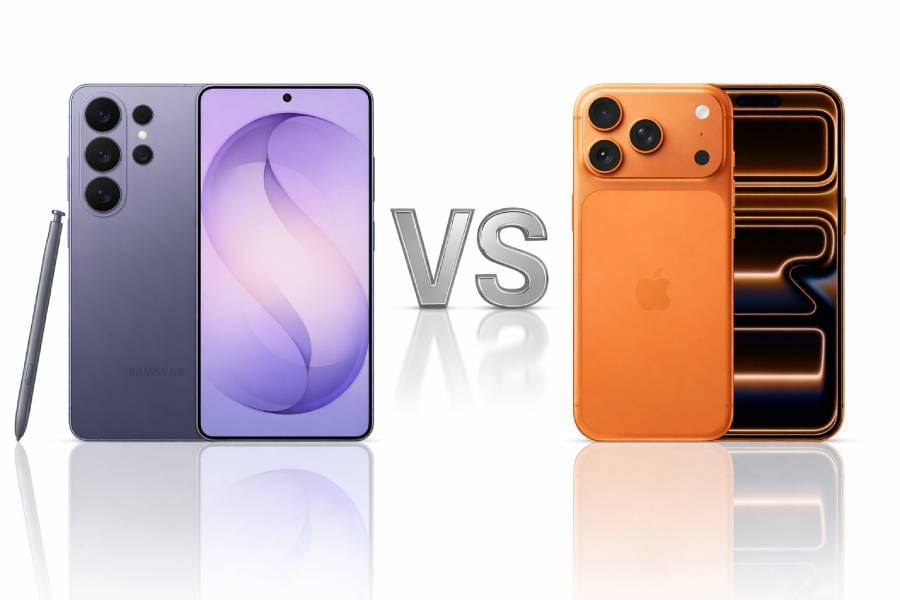
Reviewed for camera, performance, battery life & value – updated February 2026
🥇 iPhone 17 Pro – Best for Apple ecosystem users → Check price on Amazon UK
🥇 Samsung Galaxy S26 Ultra – Best for camera & display power users → Check price on Amazon UK
👉 Scroll down for full comparison and UK pricing
Introduction
The Apple iPhone 17 Pro and Samsung Galaxy S26 Ultra represent 2026’s flagship smartphone showdown, continuing the decade-long rivalry between the two industry giants. Both handsets pack cutting-edge tech: high-refresh OLED screens, powerful chips, advanced AI features and multi-lens cameras aimed at professional photo and video use. This guide is for UK buyers debating Apple vs Android, and weighing the best premium phone in 2026. We’ll compare design and build quality, display brilliance, core performance, AI-powered tools, camera systems, battery life, software support and overall value for money. By the end, you’ll have a clear picture of which model suits your needs – whether you’re glued to the Apple ecosystem or craving Android innovation.
What Makes a Great Flagship Phone in 2026
Flagship smartphones in 2026 are defined by three key areas. AI features are now front and centre: both Apple and Samsung have built dedicated AI engines into hardware and software. The iPhone 17 Pro’s Apple Intelligence includes on-device translation, visual lookup, generative writing tools, and advanced image generation[1]. Samsung’s Galaxy AI offers text-guided photo editing, Circle to Search, and creative studio tools[2]. Both brands promise fast on-device AI processing with strong privacy protections.
Camera systems remain a battleground. The S26 Ultra uses a 200MP main sensor (wider f/1.4 aperture) with dual telephoto lenses (50MP 5x + 10MP 3x for optical-quality up to 10x zoom), plus enhanced low-light video stabilization. Apple’s iPhone 17 Pro sports triple 48MP Pro Fusion cameras with an advanced Telephoto lens delivering up to 8x optical-quality zoom (the longest on iPhone yet via tetraprism design and larger sensor) and Apple’s Photonic Engine for improved colour and detail. AI-driven image pipelines on both phones help reduce noise and boost dynamic range.
Display technology is another hallmark. The iPhone 17 Pro has a 6.3-inch Super Retina XDR OLED with ProMotion (up to 120Hz), Always-On mode and peak brightness up to 3000 nits. Samsung’s S26 Ultra offers a larger 6.9-inch Dynamic AMOLED 2X panel (QHD+, 120Hz adaptive refresh) with Vision Booster, plus the industry’s first built-in Privacy Display that shields your screen from shoulder surfers[3]. Both screens use ultra-tough glass – Apple’s Ceramic Shield 2 (front and back) and Samsung’s Gorilla Glass Armor 2 – for drop and scratch resistance.
Battery and charging have also advanced. The iPhone 17 Pro features breakthrough battery life (Apple claims up to 33 hours video playback) with fast wired charging and MagSafe wireless charging. The S26 Ultra packs a 5,000 mAh battery (typical value) with 60W wired fast charging (to 75% in 30 min) and wireless PowerShare.
Performance draws on custom chips. Apple’s A19 Pro (6-core CPU, 6-core GPU with neural accelerators and a 16-core Neural Engine) delivers strong sustained performance thanks to vapor chamber cooling. Samsung’s Galaxy S26 Ultra uses the Snapdragon 8 Elite Gen 5 (Samsung-optimized) for snappy Android performance. Both phones are ideal for gaming, editing and running demanding AI tasks. Finally, software support is crucial: Apple guarantees at least 5 years of iOS updates (commonly up to 7 years in practice), and Samsung promises 7 generations of Android upgrades plus 7 years of security patches[4] – in line with EU regulations. Pricing at launch reflects their premium status (from about £999 for the 17 Pro and £1,279 for the S26 Ultra), but trade-in deals and ecosystem perks can sweeten the value.
Apple iPhone 17 Pro – Design, Performance & Ecosystem
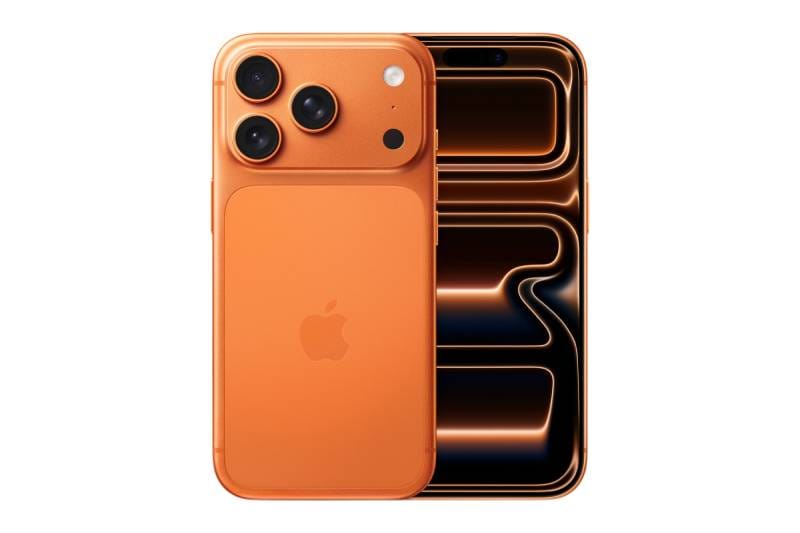
The iPhone 17 Pro is built around a new heat-forged aluminium unibody that optimises strength, cooling and weight. It comes in a choice of three colours (Cosmic Orange, Deep Blue, Silver) and introduces Ceramic Shield 2 on both front and back – Apple’s toughest glass yet (4× more drop-resistant, with 3× better scratch resistance on the screen). It retains IP68 water/dust resistance. The 6.3-inch Super Retina XDR OLED display features 120Hz ProMotion and Always-On functionality, while peak brightness hits 3000 nits, “the highest ever on iPhone”[5].
Under the hood is Apple’s A19 Pro chip, a 3 nm 6-core CPU/6-core GPU system-on-chip. Apple claims it’s “the most powerful and efficient iPhone chip ever”. In practice, that means ~40% better sustained performance over last year’s model, ideal for gaming, 4K video editing and on-device AI. A new vapor chamber cooling system maintains high performance for longer. The A19 Pro includes a 16-core Neural Engine to accelerate machine learning, and Apple has even added an N1 wireless chip for Wi‑Fi 7, Bluetooth 6 and Thread.
The camera system is a highlight. Apple describes it as “the ultimate pro camera” with three 48 MP Fusion lenses. The Main wide, Ultra-wide and Telephoto lenses are all 48 MP, enabling high-resolution stills. The Telephoto offers 4× optical zoom at 100 mm, with an advanced tetraprism design and larger sensor enabling up to 8× optical-quality zoom at 200 mm focal length – the longest zoom yet on an iPhone[6]. The Photonic Engine image pipeline uses machine learning to preserve detail and colour (especially in low light). A new Center Stage front camera uses an 18 MP square sensor for wider group selfies and can track subjects in video automatically. Advanced features like Dual-Capture video (front+rear recording) and ultra-stabilized 4K HDR video are supported. Overall, iPhone photos have Apple’s characteristic punchy contrast and colour, thanks to deep integration of hardware and software.
On battery life, Apple touts “best-ever” endurance. The iPhone 17 Pro achieves up to 33 hours of video playback on a charge. Compared to previous models, Apple says the redesign adds significant runtime gains. Fast charging is supported – 50% battery in ~20 minutes with a high-wattage adapter[7]. (Note: Apple no longer includes a power brick, so buying a 40W adapter will maximize charging speed.) MagSafe and Qi wireless charging continue, and Apple highlights that environmentally the battery uses 100% recycled cobalt.
In terms of ecosystem, the 17 Pro runs iOS 26 with new Apple Intelligence features. Live on-device translation in Phone, FaceTime and Messages lets you automatically translate text and audio in real time[1]. Visual intelligence can recognize elements in screenshots or photos to suggest actions. Apple touts offline on-device processing for privacy. Classic iPhone features like iMessage, FaceTime, Continuity (AirDrop, Handoff, Universal Clipboard) all work seamlessly if you also use Macs, iPads, and AirPods. Software updates are a strength – Apple’s support cycle of about 5–7 years means the 17 Pro should get OS updates through the early 2030s.
Pros: Class-leading performance and gaming, smooth 120Hz OLED display, excellent camera quality (especially video), deep integration with Apple services and accessories. Very long iOS update support (~7 years) and strong resale value. Breakthrough battery life and robust build quality (aluminium frame, Ceramic Shield).
Cons: Premium price (from ~£1,099), no headphone jack or stereo headphones, limited customisation vs Android. No built-in stylus or microSD expansion, and MagSafe ecosystem still smaller than Qi on Android.
Who it’s best for: Anyone invested in the Apple ecosystem or wanting the simplest, most polished experience. Perfect for content creators (video capture, editing) or those who value privacy and long-term updates.
Amazon UK Check: 👉 Check price on Amazon UK – for the latest deals (new models only; available in 256GB, 512GB, etc.). Check our website for more details about iPhone 17 Pro.
Samsung Galaxy S26 Ultra – Display, Camera & Power
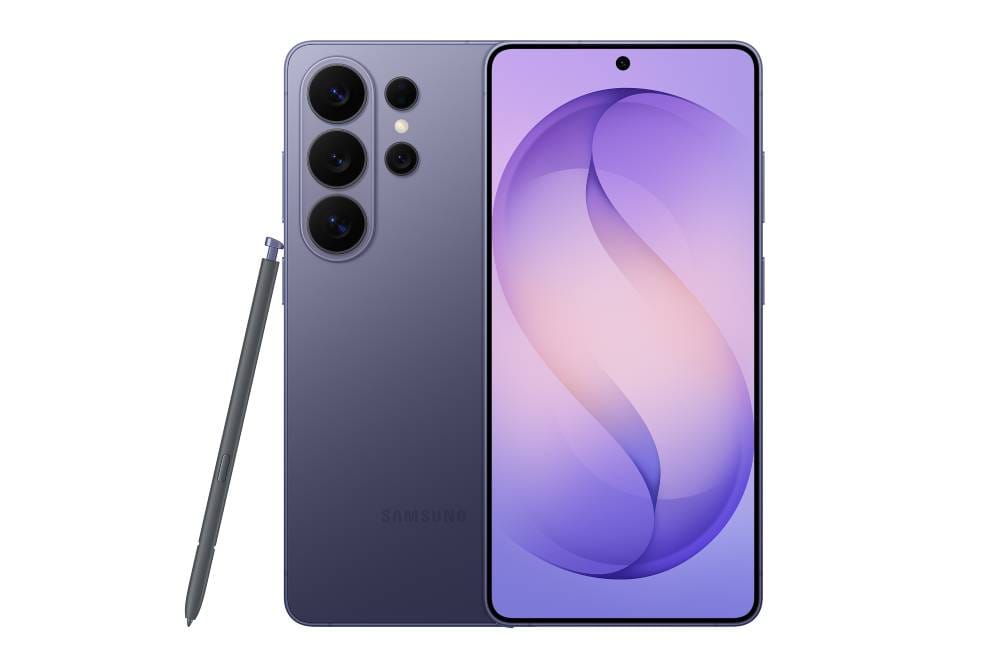
The Galaxy S26 Ultra is Samsung’s largest and most powerful S‑series model. It has a premium glass-and-metal build with Gorilla Glass Armor 2 on front and back and an aluminium frame. The device dimensions are 78.1×163.6×7.9 mm (214 g). It supports the S Pen stylus (sold separately) for note-taking and drawing. The Ultra’s stunning display is a 6.9-inch Dynamic AMOLED 2X with QHD+ resolution (3120×1440), 120 Hz adaptive refresh, and HDR10+. Samsung boasts up to 2600 nits peak brightness and Vision Booster for outdoor visibility. Uniquely, the display includes Samsung’s new Privacy Display technology – a hardware feature that projects each pixel with a built-in privacy filter, so off-angle viewers see only blackout cells[9]. This helps keep on-screen content hidden when in public. The S26 Ultra also carries IP68 dust/water resistance, stereo speakers and an under-screen fingerprint sensor.
Under the hood is the Snapdragon 8 Elite Gen 5 for Galaxy (custom Samsung variant of the top-tier chip) – an octa-core processor with two 4.6 GHz performance cores (Oryon V3) and six efficiency cores. This SoC gives rapid Android performance in gaming and multitasking. Samsung added a new vapor-chamber cooling design for sustained speed[8]. The phone ships with Android 16 and One UI 8.5, and Samsung promises an industry-leading seven major Android updates plus seven years of security patches, keeping it current into the 2030s.
The camera system on S26 Ultra is extraordinarily versatile. It has four rear cameras: a 200 MP main (f/1.4 wider aperture for 47% improved low-light brightness), a 50 MP ultra-wide (f/1.9), a 50 MP periscope telephoto (5x optical zoom, 10x optical-quality zoom hybrid), and a 10 MP telephoto (3x optical zoom)[10]. Samsung’s Adaptive Pixel technology can bin or split pixels for better detail in various lighting. In daylight shots, the S26 Ultra tends toward natural, realistic color reproduction (per Notebookcheck), whereas the iPhone’s processing often yields higher contrast. For zoom, Samsung leads: its 10x optical-quality hybrid beats the iPhone’s 8x optical-quality zoom, making it easier to capture distant subjects. Dual-PD autofocus and HDR ensure fast focus and rich color. On the front is a 12 MP sensor (with autofocus) for sharp selfies.
Samsung has also enhanced low-light and video performance. It supports Enhanced Nightography for brighter, clearer night photos, and video stablisation with “horizontal lock” to reduce shake[11]. The S26 Ultra can record up to 8K@30fps and 4K@120fps (HDR) video with continuous autofocus. Samsung’s new All-Pixel Vision (APV) professional codec delivers high-quality 10-bit video for easier editing. In practice, night shots on the S26 Ultra are very clean, thanks to sensor size and AI noise reduction.
Battery & charging: The S26 Ultra has a 5,000 mAh battery. Samsung’s Super-Fast Charging 3.0 (wired) can refill 75% in about 30 minutes using a 60W charger. It also supports Fast Qi2 wireless charging and reverse wireless charging for accessories. In real-world use the Ultra easily lasts a full day (and typically longer with moderate use).
AI features: Samsung’s Galaxy AI suite powers some unique tools. Photo Assist lets you edit images with simple text prompts, adding or removing elements automatically. Creative Studio can transform a photo into stickers or AR objects. Galaxy AI also offers context-aware suggestions and screen-based actions (for example quick shortcuts during calls or browsing)[3]. Crucially, all Galaxy AI processing is claimed to happen on-device with hardware-backed encryption (Samsung Knox), so personal data stays private. The phone also works with voice agents (via earbuds) to perform tasks hands-free.
Pros: Huge, high-resolution display (excellent for productivity and media) with built-in Privacy Display. Exceptional camera array (200 MP main sensor, 10× zoom) and rich AI-driven photo/video modes. Includes stylus support for note-taking. Very fast 5G, Wi‑Fi 7 and a big 5,000 mAh battery. Long software support policy (7 years OS+security).
Cons: Very large and heavy (214 g), which may not suit everyone. Expensive (from ~£1,279[12]). Samsung’s UI can be cluttered for some users compared to iOS, and some note that Samsung’s image processing is more “realistic” (muted) versus the iPhone’s punchy look. No 3.5 mm jack (Bluetooth only).
Who it’s best for: Power users who want the biggest screen and most flexible camera. Great for photographers (long zoom range) and multitaskers (large display, S Pen). Also appeals to Android fans wanting latest Galaxy AI tools.
Amazon UK Check: 👉 Check price on Amazon UK – for the S26 Ultra (expected available early March 2026; consider pre-order discounts and trade-in offers). Check our website for more details about Samsung Galaxy S26 Ultra.
Head-to-Head Comparison Table
| Category | iPhone 17 Pro | Samsung Galaxy S26 Ultra |
|---|---|---|
| Design & Build | 6.3″ Super Retina XDR OLED, Ceramic Shield 2 front/back, aluminium unibody, IP68 | 6.9″ Dynamic AMOLED 2X, Gorilla Glass Armor 2 front/back, aluminium frame, IP68, S Pen included |
| Display | 6.3″ Super Retina XDR OLED, ProMotion 1–120Hz, Always-On, 3000 nits peak | 6.9″ QHD+ Dynamic AMOLED 2X, 1–120Hz adaptive, 2600 nits peak, built-in Privacy Display |
| Performance | Apple A19 Pro 3nm chip (6-core CPU, 6-core GPU, 16-core Neural Engine, vapor chamber cooling) | Snapdragon 8 Elite Gen 5 for Galaxy (octa-core, custom NPU/GPU/CPU, vapor chamber cooling) |
| AI Features | iOS 26 with Apple Intelligence: Live Translation, Visual Intelligence, on-device generative tools | Android 16 One UI 8.5 with Galaxy AI: Photo Assist (text-guided editing), creative tools, on-device processing |
| Camera System | Triple 48MP Fusion lenses (Main, Ultra Wide, Telephoto with 4x optical at 100mm, up to 8x optical-quality at 200mm); Photonic Engine; 18MP Center Stage front | Quad camera: 200MP main (f/1.4), 50MP ultra-wide, 50MP 5x periscope tele, 10MP 3x tele (optical-quality up to 10x hybrid); 12MP front; AI-enhanced Nightography/video |
| Battery & Charging | Up to 33 hrs video playback; fast wired charging (~50% in 20 min with 40W+ adapter); MagSafe wireless | 5000 mAh typical; up to ~31 hrs video playback; 60W wired (75% in ~30 min), 15W wireless (Qi2), reverse wireless |
| Software Support | iOS 26 (upgradable), ~5–7 years of major updates | One UI 8.5 on Android 16, guaranteed 7 major OS upgrades + 7 years security patches |
| UK Starting Price | From £1,099 (256GB) | From £1,279 (256GB) |
| Best For | Apple ecosystem users, pro video/photography, seamless integration & privacy | Camera/display enthusiasts, power users (S Pen, long zoom, Galaxy AI), productivity |
🥇 iPhone 17 Pro → Check price on Amazon UK
🥇 Samsung Galaxy S26 Ultra → Check price on Amazon UK
Camera Comparison – Real-World Differences
In bright daylight, both phones deliver excellent shots but with different styles. The iPhone 17 Pro images tend to have higher contrast and vibrant colours, thanks to Apple’s tuning. The Samsung S26 Ultra favours a more neutral, realistic palette. For example, Samsung’s photos look truer to life, whereas the iPhone’s are punchier; this means Samsung images may need a tweak on social media to “pop,” while Apple’s can appear more eye-catching out of the box[14]. Both capture fine detail: Samsung’s 200 MP sensor lets you crop heavily, while Apple’s 48 MP shots are sharp and well-balanced.
In low light, advanced processing kicks in. The iPhone’s Photonic Engine uses machine learning to retain detail and colour in night photos, often preserving warmth and clarity. Samsung counters with its Nightography tech: a wide aperture (f/1.4) and long exposure work with AI to brighten dark scenes. Early tests suggest the S26 Ultra keeps colours realistic and detail solid even after sunset, while Apple’s Night mode tends to introduce a bit more warmth. Video performance is likewise impressive on both: the iPhone now records 4K at 120 fps with Dolby Vision HDR, and Samsung can shoot up to 8K30 or 4K120 (HDR). Samsung’s Enhanced Nightography video stabiliser produces smoother low-light videos, whereas Apple’s Cinematic mode (combined with Dolby HDR) gives filmmakers creative depth effects and powerful post-editing (ProRes Log, genlock support)[15].
For zoom, Samsung has the edge with its dual telephoto setup: up to 10× optical-quality hybrid zoom vs Apple’s up to 8× optical-quality zoom. In practice, far-off subjects look clearer on the S26 Ultra at long range. The iPhone still matches well at medium zoom (up to 4× native), but beyond that Samsung’s telephoto pulls ahead.
What to Consider Before Buying
A key decision is ecosystem. iPhone 17 Pro runs iOS and shines if you use Macs, iPads, Apple Watch, AirPods etc. Features like iMessage, FaceTime and Continuity are exclusive to Apple. The S26 Ultra runs Android with Samsung’s One UI; it integrates with Google’s and Samsung’s services, and even supports Samsung DeX (desktop mode) and stylus (S Pen) for productivity. Consider also app availability: most apps exist on both platforms, but iOS may get privacy or creative apps first.
Resale value is another factor. Historically, iPhones hold value longer, partly offsetting their higher price. Samsung’s trade-in deals can help mitigate cost at purchase time. Speaking of cost, note that neither phone includes a charger in the box (UK law now requires USB‑C, which both use). Apple’s MagSafe accessories (like MagSafe charger, wallets) are convenient but proprietary, whereas Samsung supports wider Qi2 charging and even reverse-charging of accessories (PowerShare).
In terms of longevity, both are future-proof. The iPhone 17 Pro will see updates for at least 5 years (likely up to 7), keeping it secure to around 2032. Samsung’s S26 Ultra will get seven major Android updates and seven years of security patches, potentially through Android 23. This ensures both devices stay current well beyond the typical mid-range phone.
Finally, think about accessories and extras. iPhone 17 Pro benefits from a mature ecosystem: MagSafe cases, the new Siri integrations, and AppleCare+ support. The Galaxy S26 Ultra works with the S Pen, Samsung’s Galaxy Buds and Watch, and Samsung Care+ plans. Battery life and charging habits may influence your choice: the S26 Ultra charges slightly faster (60W vs ~40W) but the iPhone’s battery life is very competitive for real-world use[13].
FAQ
Which phone has the better camera? Both cameras are outstanding, but they have different strengths. The S26 Ultra has higher megapixels and a 10× zoom lens, so it excels when cropping or shooting from a distance. The iPhone 17 Pro, however, produces very natural colours with high contrast and handles dynamic range extremely well. Tests show Samsung’s images are more true-to-life, while Apple’s are more vivid by default. For most users the difference is a matter of style, though the Samsung wins in zoom range.
Which has the longer battery life? Both flagships offer all-day endurance. The iPhone 17 Pro is rated up to 33 hours of video playback. Samsung’s 5000 mAh battery is rated up to 31 hours of video playback, and in practice both typically last a full day or more depending on usage. Actual runtime varies by habits, but both are excellent. Both support fast charging (Apple ~50% in 20 min with 40W+ adapter, Samsung 75% in 30 min with 60W) and wireless charging.
Which is better for gaming? Both phones are among the most powerful ever. The iPhone’s A19 Pro GPU is extremely fast (Apple calls it the “fastest CPU in any smartphone”) and Apple tightly optimises iOS games. The S26 Ultra’s Snapdragon 8 Elite Gen 5 also delivers top-tier Android performance. You’ll get high frame rates on either. The choice depends on platform preference: console-streaming, specific game libraries, etc. If you’re already on Apple Arcade or use a lot of Apple services, iPhone might be more convenient; otherwise Samsung is equally capable.
Which offers longer software updates? Samsung has a slight edge on paper. It promises seven generations of Android upgrades, meaning the S26 Ultra could run Android well into the 2030s. Apple typically supports iPhones for about 7 years from launch (iOS 26 in 2025 up to around iOS 33 in 2032). In practice, both phones will get at least 5–7 years of updates. So long-term support is excellent on both, and likely very similar in real terms.
Is the Samsung S26 Ultra better value in the UK? It depends on deals. The S26 Ultra has a higher launch price (~£1,279 vs £1,099 for iPhone), but Samsung often offers large trade-in credits and launch bundles. Apple’s base price is lower and iPhones hold resale value well, so effective cost over time can be competitive. For pure specs-per-pound, the Galaxy S26 Ultra is hard to beat (more screen, more camera) if you find a good deal. However, value also depends on which ecosystem you prefer and the apps/services you use.
Should Apple users switch to the S26 Ultra? If you’re deeply invested in Apple (MacBooks, iPads, iCloud, etc.), sticking with iPhone 17 Pro is easier: you keep all your apps, messages and continuity features. Switching means learning Android and losing iMessage/FaceTime. That said, if you crave Samsung’s features (stylus support, a bigger screen, unique AI tools), then changing ecosystems has its perks. The S26 Ultra is a very compelling Android device, but it makes the most sense for users who aren’t locked into Apple’s services.
Final Verdict
Best for Apple users → iPhone 17 Pro: Seamless with iOS, polished performance, and the deep Apple ecosystem. Ideal for photographers and videographers who value Apple’s creative tools and long support.
Best for camera & display enthusiasts → Samsung Galaxy S26 Ultra: Unmatched zoom, huge bright screen and innovative Galaxy AI features. Plus S Pen support for creative or productivity tasks.
Best for productivity → Samsung Galaxy S26 Ultra: Its large display, stylus compatibility and multitasking tools (Samsung DeX) give it an edge for work.
🥇 iPhone 17 Pro → Check price on Amazon UK
🥇 Samsung Galaxy S26 Ultra → Check price on Amazon UK
Overall: Neither phone universally “wins” – your choice should hinge on ecosystem preference. If you live in Apple’s world, the iPhone 17 Pro continues to be a fantastic workhorse. If you love Android innovation and want the cutting-edge camera and AI on a giant screen, the Galaxy S26 Ultra delivers. Both are top-tier flagships that will last years in performance and updates.
Still deciding?
If you'd like to dive deeper into the specs or see how these models compare side-by-side, check out:
- 📊 Compare these phones here
- 📱 See full product details for iPhone 17 Pro
- 📱 View Samsung Galaxy S26 Ultra product page
We update our comparisons regularly to keep things accurate and UK-focused.