Fastest Charging Phones (UK 2026) – From 0 to 100% in Under 15 Minutes
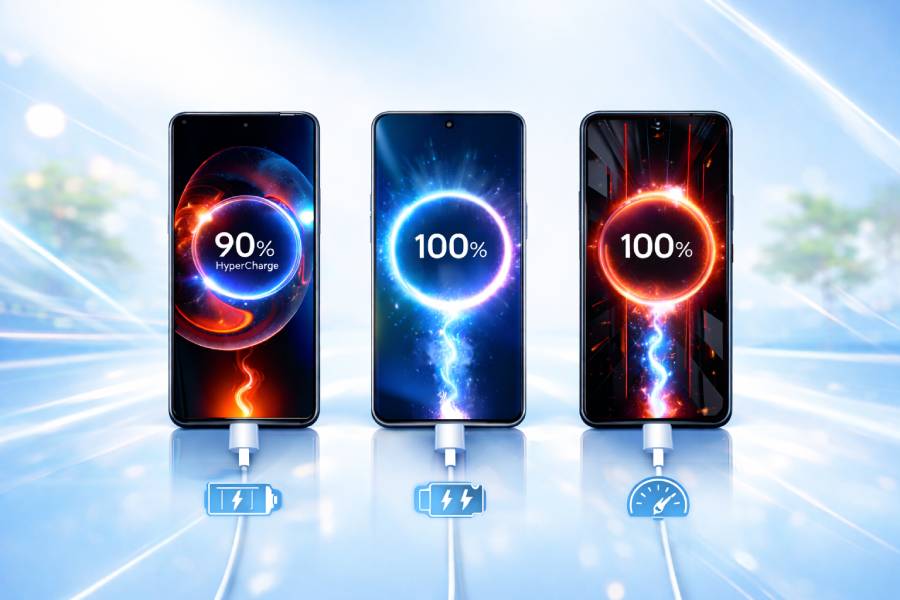
Grab ten minutes, get a full day of charge — our top fastest-charging phone picks for real-world quick top-ups.
Last updated: 2 August 2026.
Reviewed for charging speed, battery performance & value – updated 2026
🥇 Realme GT 7 Pro – Best overall fastest charging performance → Check price on Amazon UK
🥈 OPPO Find X9 – Best premium flagship for charging → Check price on Amazon UK
🥉 Xiaomi Redmi Note 15 Pro+ – Best value phone with fast charging → Check price on Amazon UK
👉 Scroll down to see full reviews and Amazon UK links
Introduction
If you’re the sort of person who grabs 10 minutes between meetings, commutes, school runs, gym sessions, or airport gates and thinks “I just need enough battery to get through the rest of the day”, this is the guide for you.
Fast charging matters more in 2026 because modern phones are doing more in the background (always-on connectivity, high-brightness displays, heavy camera processing, and AI features), which makes battery anxiety feel more real — especially when you’re away from a desk. The best fast-charging phones don’t just quote a big wattage number; they deliver meaningful real-world top-ups without turning into hand warmers.
It’s also worth saying out loud: “0–100% in under 15 minutes” is often a marketing headline that depends on ideal lab conditions (screen off, cool room temperature, and sometimes a “boost” mode). In real life, charging typically starts very fast and then slows down as you approach a full battery — the last 10–20% is almost always the slowest part. That’s why we focus heavily on both 0–50% behaviour (what you feel day-to-day) and 0–100% behaviour (what you get overnight or before a long trip).
These three phones were selected because they’re positioned around high-power wired charging in 2025–2026, and because credible sources (including manufacturer documentation and independent reviews) discuss their charging performance and battery design. [1]
What Makes a Phone Truly Fast-Charging in 2026
- Charging wattage is the headline — but not the whole story. In the UK market, “fast” typically starts around ~80W, while 100W+ is where full charges can become genuinely quick (under an hour) on large batteries. Manufacturer-rated times are usually measured under controlled conditions.
- Battery size vs speed is a balancing act. A huge battery can take longer to fill at the same wattage, but it also means you need to charge less often. That can be a better real-world “downtime” trade-off than chasing the highest peak wattage.
- Dual-cell battery architecture can help. Splitting the battery into two cells can make high-wattage charging more manageable (electrically and thermally) because the system can distribute current more efficiently. Some manufacturers explicitly describe dual-cell designs on fast-charging models.
- Thermal management and safety are what keep speeds consistent. Modern fast charging relies on monitoring heat, voltage, and battery state — and intelligently tapering power. Expect the fastest speeds when the phone is cool, the screen is off, and you’re using the intended charger/cable.
- Real-world 0–50% and 0–100% times matter more than “peak watts”. Most phones charge very quickly in the first half, then slow down significantly near the top end to preserve battery longevity and manage heat (the “charging curve”).
- Charger compatibility (and what’s in the box) is crucial. Some phones hit maximum speed only with their proprietary charger, while others support strong speeds on standard USB-C PPS chargers. Always confirm whether a power adapter is included in the retail box, because that can change the true cost of ownership.
Top 3 Picks
(1) Realme GT 7 Pro – Best overall fastest charging performance
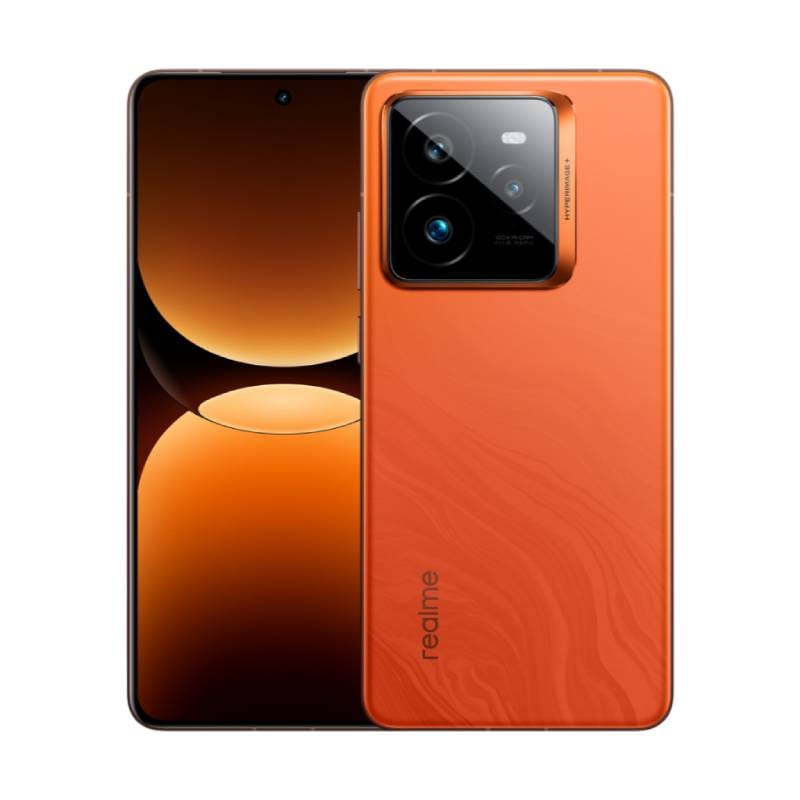
Realme GT 7 Pro is the go-to pick if your priority is maximum wired charging speed with minimal fuss, while still getting a proper big-battery phone you can lean on for travel and heavy daily use. It’s powered by a high-end chipset and pairs that performance focus with a charging setup that’s built to deliver quick top-ups and a fast full charge.
Real-world charging performance: On paper, the phone is rated to hit 50% in about 14 minutes and 100% in about 37 minutes using its 120W charging mode. That split tells you a lot about the charging curve: the first half is extremely rapid, while the second half slows as the system prioritises battery health and temperature control.
Independent testing aligns with the idea that it’s genuinely quick. For example, one hands-on review notes that the included 120W charger can fill the battery from 0% in roughly around 40 minutes, with an observed 7% to 99% run taking 38 minutes. In other words: expect “around the 40-minute mark” for a full charge in the real world, depending on temperature, background activity, and whether you’re using the intended adapter and cable.
0–50% behaviour: This is where it feels “instant” day to day — around 14 minutes to half charge under ideal conditions is exactly the kind of performance that changes habits. A short plug-in while you shower, pack, or make coffee can realistically carry you through a full working day for lighter-to-moderate use.
Heat management and safety: Realme explicitly highlights “GaN Charging” and “safe temperatures even if you play while charging”, plus “AI Smart Charging” battery-health management. That doesn’t mean it stays cool under every scenario, but it’s a strong signal that the charging system is designed to manage heat rather than simply push peak wattage.
A practical bonus for fast-charging reliability is the dual-cell configuration (presented as 3,250mAh + 3,250mAh to reach an equivalent 6,500mAh typical capacity), which is often used to make high-power charging more controllable.
Battery endurance vs charging speed: With a 6,500mAh class battery, you’re not just charging quickly — you’re also likely charging less often. That’s the underrated win: even if you miss a full overnight charge, your top-ups are so fast that downtime stays low.
✅ Why this pick
Pros:
- Elite wired charging pace that’s genuinely useful in real life (rapid 0–50% top-ups).
- Large battery capacity helps minimise how often you need to plug in at all.
- Strong on-paper safety/management features (GaN charging + AI smart charging emphasis).
Cons: Best speeds depend on using the right high-power setup (correct adapter/cable and favourable temperature conditions).
Main standout feature: 120W Ultra Charge with a big 6,500mAh battery that still reaches full in ~37–40 minutes.
Who it’s best for: Busy UK buyers who hate charging downtime — commuters, frequent travellers, mobile workers — and anyone who wants the confidence of a large battery without the penalty of slow charging.
Amazon UK Check: 👉 Check price on Amazon UK – if you’re buying for charging speed first, this is the most straightforward “plug in briefly and move on” pick.
(2) OPPO Find X9 – Best premium flagship for charging
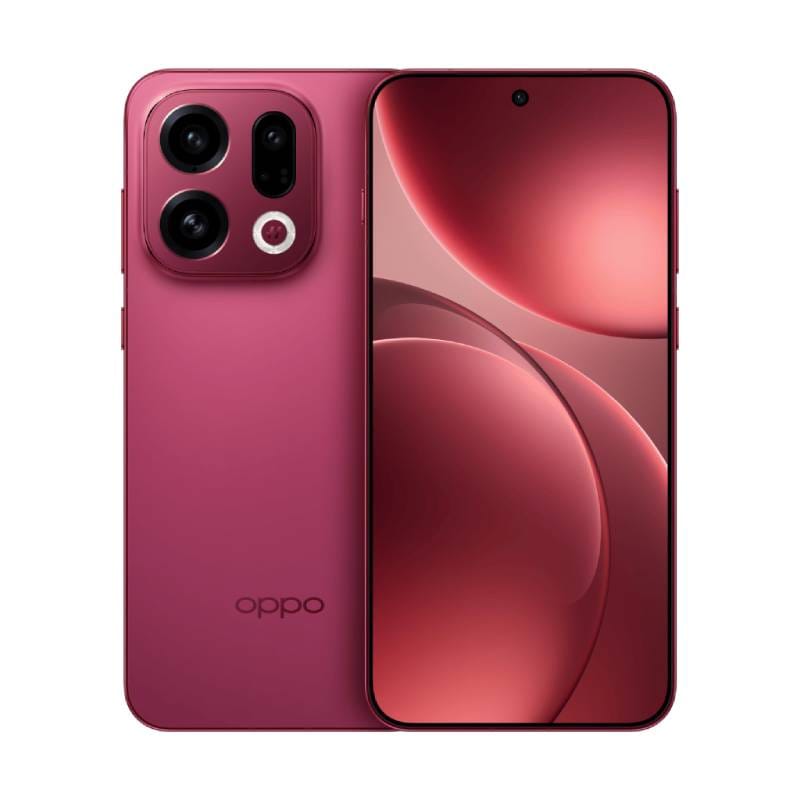
OPPO Find X9 is the premium choice if you want a flagship feel and monster battery longevity, while still keeping charging times respectable for a device with such a large cell. It’s not the outright fastest in this trio on a stopwatch, but it’s arguably the most effortless in real life because it combines big endurance with flexible charging support.
Battery-first flagship logic: OPPO lists a 7,025mAh typical battery capacity — huge by flagship standards — alongside 80W SUPERVOOC wired charging and 50W AIRVOOC wireless charging support. That battery size is the story: you’re buying fewer “charging emergencies” in the first place.
Real-world 0–50% and 0–100% charging: Reviewers’ numbers vary (which is normal — conditions and chargers differ), but they consistently place the Find X9 as “fast enough” rather than “class-leading fast”.
- One review reports 50% in 25 minutes and 0–100% in 1 hour 10 minutes using the supplied 80W charger.
- Another UK-facing review notes 0–100% in about 80 minutes, with 50% in around 30 minutes.
- A further review describes 0–50% in under 20 minutes and a full charge cycle of around 50 minutes, which suggests performance can improve with certain settings/conditions or measurement methods.
The buyer takeaway: in typical use, expect a 0–50% top-up in the 20–30 minute range, and a full charge somewhere around ~50–80 minutes. That’s slower than the fastest 120W/100W systems — but the battery is also significantly larger, so you’re not constantly tethered to a wall.
Heat management and charging confidence: A more conservative charging pace paired with a very large battery can be a practical advantage if you’re sensitive to heat or you often charge while using the phone. It may not feel as “instant” as the fastest pick, but it tends to feel steady and predictable.
Charger and protocol compatibility (big UK win): This is where the Find X9 shines. OPPO’s own specs list compatibility not only with SUPERVOOC and UFCS, but also 55W PPS and even baseline PD charging (listed as 11.7W PD). OPPO also states the Find X9 series supports up to 55W charging with standard USB PD and PPS compatible chargers, which is great for travellers who don’t want to carry a proprietary brick everywhere.
✅ Why this pick
Pros:
- Massive 7,025mAh battery means fewer charging sessions overall.
- Strong real-world top-ups despite the huge battery (commonly ~20–30 min to 50%).
- Excellent charger flexibility (not just proprietary charging; PPS support is a major convenience perk).
Cons: Not the fastest full charge in this guide — speed is good for its class, but not “blink-and-it’s-done".
Main standout feature: A flagship-grade 7,025mAh battery with broad fast-charging compatibility (including 55W PPS) — ideal for people who charge in different places with different chargers.
Who it’s best for: Premium buyers who want top-tier longevity for work and travel, and who value charger flexibility (home, office, car, airports) over headline “fastest possible” full-charge times."
Amazon UK Check: 👉 Check price on Amazon UK – especially worth a click if you want premium battery confidence plus fast-enough charging without being locked into one charger.
(3) Xiaomi Redmi Note 15 Pro+ – Best value phone with fast charging
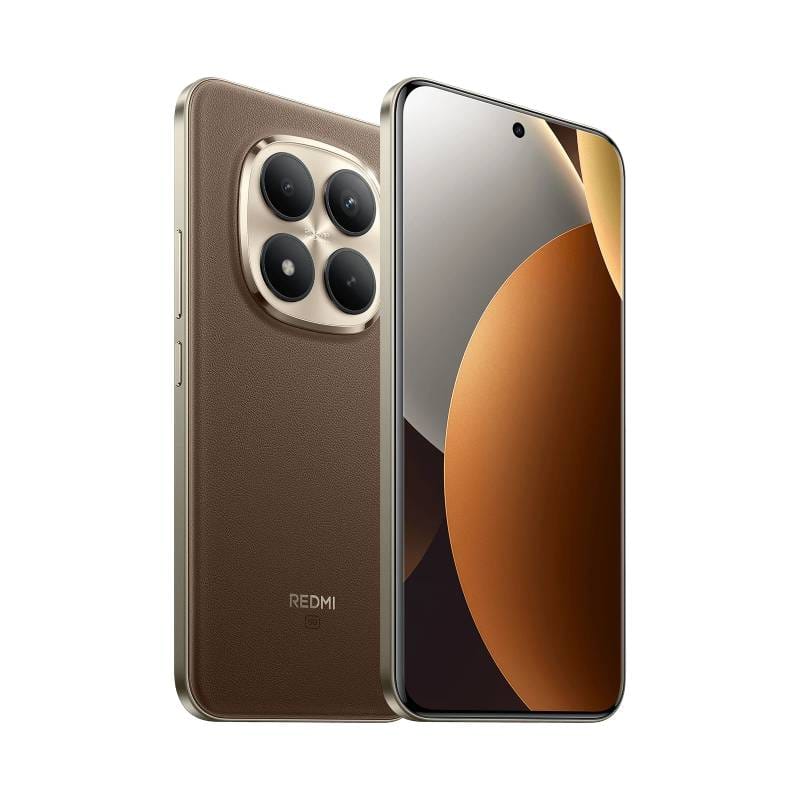
Xiaomi Redmi Note 15 Pro+ is the best-value pick if you want high-speed charging without flagship-level pricing — and you still want a genuinely large battery that won’t have you hunting for sockets by late afternoon. The key here is the 100W charging tier paired with a 6,500mAh battery: it’s a very “2026 practical” combination for UK buyers.
Real-world charging performance (what to expect): Xiaomi UK markets the phone as having a 6,500mAh battery with 100W HyperCharge, and states “40 minutes” to charge to 100%. Importantly, Xiaomi also clarifies the testing conditions: the 40-minute figure is tested in “boost mode”, using a 100W charger, at 25°C room temperature, with the screen off — and results can vary.
That context matters. In real life, you’ll often be charging with notifications coming in, sometimes with the screen on, sometimes in warmer environments (like a bag or a sunny room). Some independent coverage suggests the Pro+ can be closer to about 50 minutes for a full charge in practice, which is still strong for the price segment. [3]
0–50% behaviour: Several 2026 sources highlight the phone’s ability to reach around 50% in the mid-teens (minutes) at maximum speed — the sort of short top-up that genuinely rescues a busy day. For example, one report cites 50% in 16 minutes. That’s exactly the number that changes behaviour: a quick plug-in while you get ready can set you up for hours.
Heat management and “boost mode” reality: Like most high-speed charging systems, maximum performance tends to require the phone to manage heat and may rely on a special mode (in this case, Xiaomi refers to “boost mode” for its 40-minute full-charge claim). If you want consistent speeds, avoid charging under pillows, in direct sunlight, or while running demanding tasks — not because the phone is unsafe, but because thermal control will throttle power to protect the battery. [4]
Charger inclusion (don’t get caught out): This is the biggest “value” trap to watch. Xiaomi UK’s own product page explicitly states no power adapter is included in the box, and recommends using a 100W adapter that supports PD charging (or an official high-power adapter) to reach maximum speed. That means your “true” cost depends on whether your Amazon UK listing bundles a compatible fast charger — and it’s exactly why checking the listing details matters.
At the same time, Xiaomi support documentation also references different package configurations (including mentions of a “UK version (with charger)” versus “global version (without charger)”), so charger inclusion can clearly vary by retail package.
✅ Why this pick
Pros:
- Excellent value-to-charging-speed ratio (100W class charging without flagship pricing).
- Strong “full charge” claim (40 minutes) with transparent lab conditions, which helps set realistic expectations.
- Big 6,500mAh battery keeps day-to-day charging frequency low.
Cons:
• Charger may not be included — and without the right adapter, you won’t see “100W” performance.
Main standout feature: 100W HyperCharge paired with a 6,500mAh battery — with a stated 40-minute full charge under boost-mode lab conditions.
Who it’s best for: UK buyers who want fast charging and a big battery on a sensible budget — students, commuters, and anyone who wants charging convenience without paying premium flagship prices.
Amazon UK Check: 👉 Check price on Amazon UK – and double-check whether the listing includes a compatible high-power charger, because that can make or break the “fast charging” experience.
Comparison Table
| Feature | Realme GT 7 Pro | OPPO Find X9 | Xiaomi Redmi Note 15 Pro+ |
|---|---|---|---|
| Charging wattage | 120W wired (“Ultra Charge”). | 80W wired SUPERVOOC (max), 50W wireless AIRVOOC (max). | 100W HyperCharge (max). |
| Battery capacity | 6,500mAh class (with dual-cell configuration described). | 7,025mAh typical. | 6,500mAh. |
| Real-world charging time | ~14 min to 50% (rated); ~37 min to 100% (rated); ~40 min observed in review. | 0–50% commonly ~20–30 min; 0–100% commonly ~50–80 min depending on review/testing. | 40 min to 100% (boost-mode lab claim); real-world can be closer to ~50 min depending on conditions/charger. |
| Thermal efficiency | Emphasis on “safe temperatures” + AI smart charging; best speed when cool/screen-off. | More conservative pace relative to battery size; less “peak heat” pressure, but still benefits from proper charger and airflow. | Boost-mode speed is tested at 25°C with screen off; throttles are expected in warmer/active use. |
| Display | 6.78" 1.5K-class AMOLED with high peak brightness listed in specs. | 6.78" AMOLED (spec listed), up to 120Hz. | 6.83" 1.5K AMOLED (as marketed on Xiaomi UK). |
| Processor | Snapdragon 8 Elite (listed in Realme specs). | MediaTek Dimensity 9500 (listed in OPPO specs). | Snapdragon 7s Gen 4 (as marketed on Xiaomi UK / support docs). |
| Typical UK price | Typically around the ~£500+ region depending on configuration and retailer. | Roughly ~£850–£1,100 depending on retailer/colour/stock. | Often ~£280–£399 depending on configuration/retailer. |
| Best for | Absolute fastest “daily convenience” charging with big-battery confidence. | Premium flagship feel + massive endurance + flexible charger ecosystem. | Best-value fast charging — great speeds, but pay attention to charger inclusion. |
Realme GT 7 Pro → Check Price on Amazon UK
OPPO Find X9 → Check Price on Amazon UK
Xiaomi Redmi Note 15 Pro+ → Check Price on Amazon UK
What to Consider Before Buying
Even if you’re buying primarily for charging speed, a fast-charging phone can be either a daily-life upgrade or a mild disappointment depending on how you charge and what comes in the box.
Fast charging vs battery health: Modern systems are designed to protect batteries, but they do it partly by slowing down as you approach full. Xiaomi’s own community guidance highlights that charging typically slows after around 80–90% (a normal “taper” behaviour), which is why “0–50% speed” often matters more than “0–100% headline”. [5]
Charger availability and compatibility: Don’t assume a high-wattage phone will charge quickly on any high-wattage brick. Some ecosystems are proprietary (meaning best performance comes from the brand’s charger/cable), while others support meaningful speeds over USB-C PPS. OPPO explicitly lists PPS compatibility (55W) in its specs, which is a real quality-of-life benefit if you already own modern USB-C chargers.
Heat management: The fastest charging happens when the phone can stay cool. If you regularly charge in a warm room, in the car on a hot day, or while gaming, the phone will likely reduce power to control temperature. Realme explicitly markets safe temperature control during charging, while Xiaomi provides lab conditions (25°C, screen off, boost mode) for its fastest time claim — both are clues that environment matters. [6]
Daily usage patterns: If you’re a “top-up” charger (lots of short charges), prioritise the phone with the strongest 0–50% performance. If you’re a “charge once every day or two” person, a huge battery plus decent charging can feel better overall than the absolute fastest full-charge speed.
Value vs flagship pricing: Flagships can justify their cost with more than charging (cameras, build, software experience), but if you’re buying mainly to reduce charging downtime, the value pick can be the smarter “affiliate click” — as long as you account for the charger.
Charging speed is only part of the battery picture — see our best phones for battery life and best phones with silicon-carbon batteries for the other side of it. If overall battery life matters more to you than raw charging speed, the AI Wizard can help you weigh that trade-off.
Frequently Asked Questions
Q1: Which phone charges fastest in 2026?
Realme GT 7 Pro is the fastest of these three on stated charging speed, with 50% in about 14 minutes and 100% in about 37 minutes under ideal conditions.
Q2: Is 120W charging safe?
High-wattage charging is designed to be safe through monitoring and control, but speed depends on heat and battery state. Realme explicitly markets safe temperature control and AI battery health management while charging.
Q3: Does fast charging damage battery life?
Fast charging can increase heat and stress compared to slow charging, but phones manage this by tapering power — especially after around 80–90% charge — which is why “last 20%” is slower.
Q4: Do all phones include fast chargers in the box?
No. For example, Xiaomi UK notes that no power adapter is included for Redmi Note 15 Pro+ on its UK product page, while other package variants may differ — so always check the Amazon listing details.
Final Verdict
In 2026, the fastest-charging phone for you depends on whether you want the absolute quickest top-ups, the most premium all-rounder feel, or the best value:
- Realme GT 7 Pro is the best overall pick for minimal downtime charging, with extremely rapid 0–50% top-ups → Check price on Amazon UK.
- OPPO Find X9 is the best premium flagship choice if you want huge battery endurance with flexible fast-charging support → Check price on Amazon UK.
- Xiaomi Redmi Note 15 Pro+ is the best value option for fast charging, but confirm charger inclusion to reach full speed → Check price on Amazon UK.
We update our comparisons regularly to keep everything accurate, up to date, and UK-focused.