Best Tablets Under £200 (UK 2026) – Affordable Options for Work & Play
Reviewed for performance, screen quality & value – updated February 2026
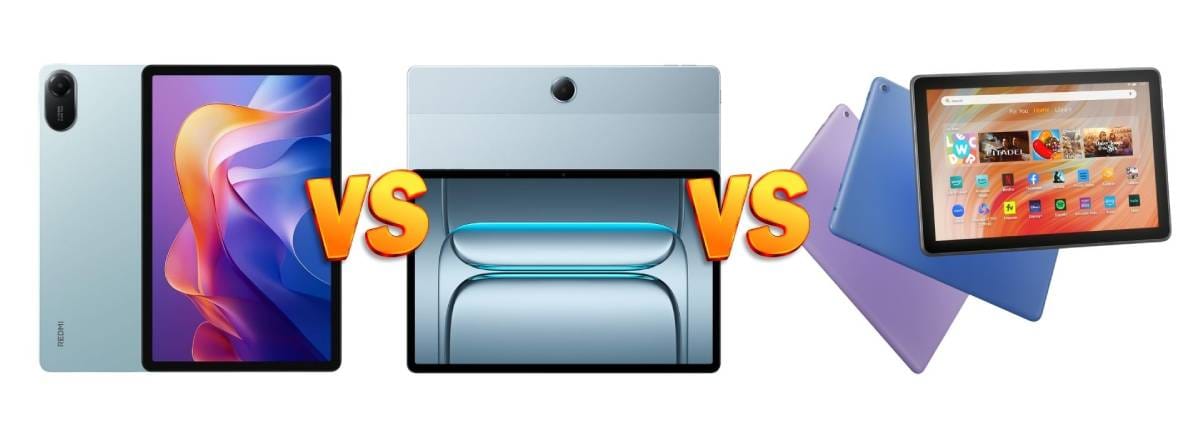
🥇 Xiaomi Redmi Pad 2 – Best all-round tablet under £200 → Check price on Amazon UK
🥈 OnePlus Pad Lite – Best productivity-friendly budget tablet → Check price on Amazon UK
🥉 Amazon Fire HD 10 (2023) – Best value / cheapest strong performer → Check price on Amazon UK
👉 Scroll down to see full reviews and Amazon UK links
Introduction
This guide is for UK buyers who want a capable tablet for everyday use in 2026—think browsing, streaming, school and study, casual gaming, and light productivity like emails, documents, and video calls. At under £200, you won’t get “laptop replacement” power or pro-level creative tools, but you can get a surprisingly good screen, dependable battery life, and smooth day-to-day performance if you pick carefully.[1]
Tablets in this price bracket have improved a lot recently, especially around display refresh rates (90Hz is now common), battery capacity, and software polish. The trade-offs are usually predictable: weaker cameras, slower charging, and less robust long-term software support than premium tablets (plus occasional compromises like no microSD expansion on some models).[2]
To keep this guide practical and UK-focused, every pick below is currently available in the UK, priced under £200 at the time of writing, and sold via Amazon UK and/or recognised UK retailers with standard UK consumer protections. Our selections are based on 2025–2026 expert reviews and hands-on testing methodology from established tech publications, plus current UK pricing/availability checks.[3]
What Makes a Great Tablet Under £200 in 2026
A genuinely good sub-£200 tablet in 2026 is less about chasing flagship specs and more about choosing the right balance for how you’ll actually use it. Here’s what matters most:
Display quality and size: For streaming and schoolwork, 10–11 inches is the sweet spot. Look for at least Full HD (1920×1200 or similar), and ideally a smoother 90Hz refresh rate for scrolling and app switching. Higher resolution is a bonus for reading and sharper video.[4]
Battery life expectations: Budget tablets can still last a full day of mixed use, but quoted figures vary. Review-based battery tests (not just manufacturer claims) are the best indicator of what you’ll get in real life.
Performance for everyday tasks: You want a chipset that stays responsive for web browsing, video, and light gaming. At this price, you should expect “good enough” performance rather than heavy multitasking with multiple demanding apps.[5]
Storage and memory (RAM): 4GB RAM is workable for basics, but 6–8GB helps if you plan to keep more apps open, do split-screen, or use productivity tools regularly. Storage is usually 32–128GB; expandable storage (microSD) can be a big win for downloads and offline video.
Connectivity (Wi‑Fi / LTE options): Wi‑Fi is fine for most people. LTE/4G models can be useful for commuting, uni, or work on the go—but they can push prices up, so it’s often something to “watch for deals” rather than assume you’ll get under £200.
Build quality and portability: A metal body is a nice bonus in this bracket (it tends to feel more solid and premium). Weight around ~500g is common for 11-inch models—fine in a bag, but worth considering if you’ll hold it one-handed for long reading sessions.
Software support: Under £200, software update promises vary widely (and can be shorter than premium tablets). If you want to keep a tablet for several years, prioritise brands with a clearer track record—and keep expectations realistic.[6]
Top 3 Tablet Picks (UK 2026)
1. Xiaomi Redmi Pad 2 – Best overall tablet under £200

If you want a “do-everything” tablet for typical UK home, school, and everyday use, the Redmi Pad 2 is one of the easiest recommendations under £200. It pairs an 11-inch 2.5K display (2560×1600) with a smooth 90Hz refresh rate, which is a rare combination at this price—especially when you find it heavily discounted on Amazon UK.
For media, it’s particularly strong: Tech Advisor highlights impressive audio with a quad-speaker setup and Dolby Atmos support, which makes streaming and YouTube feel more “big screen” than you’d expect from a budget tablet.
For day-to-day performance, you’re getting the MediaTek Helio G100-Ultra platform and a sensible baseline of 4GB RAM/128GB storage on the UK listings we checked—good for browsing, documents, study apps, and casual games. Importantly for budget buyers, it supports microSD expansion (Tech Advisor lists up to 2TB), so you’re not locked into internal storage if you plan to download shows or keep lots of files.
Battery is another highlight: the tablet carries a 9000mAh battery, and Tech Advisor’s testing shows solid endurance in benchmarks and real-world video use—exactly what most buyers need for school days, commutes, or sofa streaming.[7]
The main edge cases to know are software quirks: Tech Advisor notes HyperOS 2 (based on Android 15) is largely clean but not perfect, and specifically flags missing split-screen multitasking on this model—something to consider if your “work” involves running two apps side by side."
✅ Why this pick
Pros: Sharp 11" 2.5K (2560×1600) 90Hz display for reading and streaming; excellent quad-speaker audio with Dolby Atmos; outstanding UK value pricing when discounted (well under £200).
Cons: Limited advanced multitasking (split-screen is notably missing).
Main standout feature: A genuinely “premium-feeling” screen-and-speaker combo for around the £150 mark—ideal for work and play without overspending.
Who it’s best for: Most UK buyers who want one affordable tablet to cover streaming, browsing, school/study, and light productivity—without getting stuck with a low-res display or tinny speakers.
Amazon UK Check: 👉 Check price on Amazon UK Current UK pricing is comfortably under £200 for the 4GB/128GB model (we verified ~£152 on Amazon UK at time of writing), and the listing we checked is labelled with UK warranty coverage.
2. OnePlus Pad Lite – Best productivity-friendly budget tablet under £200

For buyers who specifically want a budget tablet that feels tidy and efficient for light productivity, the OnePlus Pad Lite is a strong option—mainly because of its software experience and multitasking approach. Tech Advisor describes it as a no-frills tablet built for everyday tasks (streaming, light gaming, video calls, and note-taking) with “clean, bloat-free” OxygenOS and “useful multitasking features.”[8]
The standout productivity angle here is OnePlus’ Open Canvas multitasking. Tech Advisor reports it can run two apps simultaneously (split-screen or floating layouts) in a way that’s easy for note-taking during a call, checking messages while watching a lecture, or referencing a webpage while writing.
Hardware-wise, the Pad Lite sticks to the essentials: an 11-inch 1920×1200 LCD with a 90Hz refresh rate, and the MediaTek Helio G100 platform with up to 8GB RAM depending on the model. That’s not a workstation spec sheet, but it’s enough for Office-style tasks, Google Workspace, web-based work tools, and school platforms—exactly the “light productivity” this guide targets.
Battery life is another practical win. Both Tech Advisor and TechRadar position the Pad Lite as a battery-strong budget tablet, which matters if you’re taking it to lectures or using it for long sessions without hunting for a charger.
There is one important compromise for work/study users: no microSD expansion. Tech Advisor calls this out clearly—so if you’re the type to download lots of offline video, save big PDFs, or keep large folders locally, you’ll need to be more careful with storage management.[9]
✅ Why this pick
Pros: Open Canvas multitasking is genuinely useful for light work; clean OxygenOS with minimal bloatware for a smoother “get things done” feel; strong value pricing under £200 via UK channels (including official pricing around £159 on OnePlus UK and sub-£200 availability on Amazon UK).
Cons: No microSD expansion, so you’re reliant on internal storage/cloud.
Main standout feature: Open Canvas multitasking—one of the most practical “work-friendly” features you’ll find in the budget segment.
Who it’s best for: Students and home users who want a budget tablet for emails, documents, web-based tasks, video calls, and light multitasking—without dealing with heavy bloatware or clunky software.
Amazon UK Check: 👉 Check price on Amazon UK At the time of writing we saw under-£200 UK pricing (Amazon UK listings show availability from ~£149, and OnePlus UK pricing shows £159 for the 8GB/128GB Wi‑Fi configuration).
3. Amazon Fire HD 10 (2023) – Best value / cheapest strong performer under £200
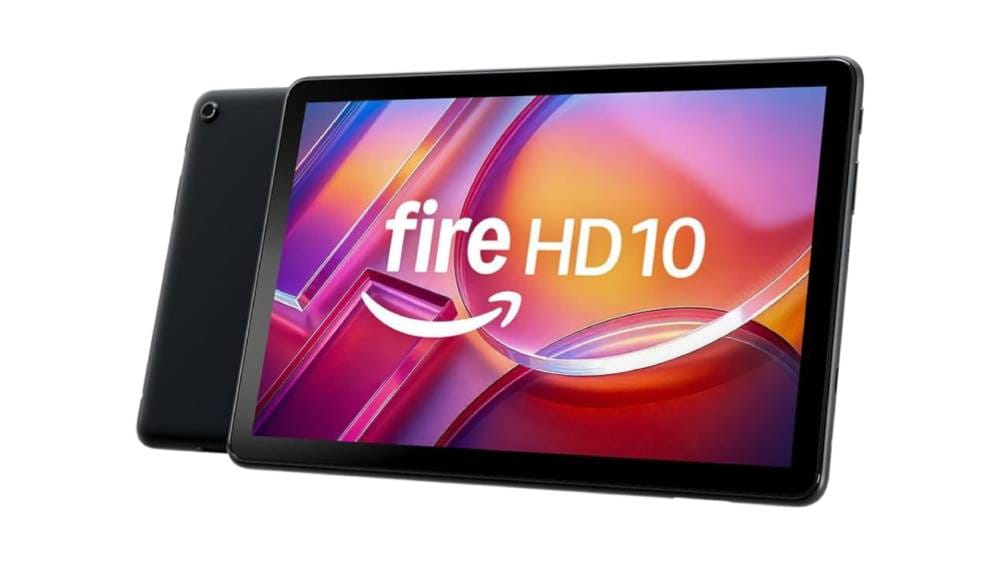
If your priority is maximum value—especially for streaming, casual use, and a general “household tablet”—the Amazon Fire HD 10 remains a standout under £200. It’s a 10.1-inch Full HD tablet with a battery quoted around 13 hours, expandable storage via microSD, and enough performance for browsing, reading, and casual gaming.
One reason it keeps appearing in UK buyer guides is that it’s consistently priced like a budget device while delivering a surprisingly enjoyable screen for video. What Hi‑Fi? gave the Fire HD 10 a very clear positioning: a great, affordable way to get your “movie fix on the move,” and even frames it as a top pick at its typical price point (they cite an official £150 price in the UK).
From a specs standpoint, UK retailer listings show Fire OS 8, 3GB RAM, and a MediaTek MT8186 octa-core platform (2.05GHz), plus microSD support up to 1TB—useful if you want to download Netflix titles, keep school PDFs, or store kids’ content offline.
Price is the biggest reason it’s here as the “cheapest strong performer.” UK price tracking and retailer listings show it commonly sits around ~£100–£150 for the 32GB model, and often dips in major sale periods. At the time of writing, UK price comparison data showed £99.99–£149.99 for the mainstream configurations, keeping it safely under £200.
The big compromise is the software ecosystem: Fire tablets use Amazon’s app approach rather than the full Google Play Store experience, and What Hi‑Fi? explicitly flags missing apps/services (for example, Apple TV/Apple Music/Tidal were noted as absent at the time of their review). If you need a “normal Android tablet” for specific apps, this can be a dealbreaker.
✅ Why this pick
Pros: Excellent value for streaming and basic everyday use; strong picture performance for the money (What Hi‑Fi? Awards 2025 winner); typically priced ~£150 in the UK, making it one of the safest “under £200” buys.
Cons: Fire OS app limitations can be restrictive versus standard Android/iPadOS.
Main standout feature: Best-in-class “watching films on a budget” value—especially if you already use Amazon services.
Who it’s best for: UK households who want an affordable big-screen tablet for streaming, browsing, reading, and light tasks—particularly if you’re comfortable in Amazon’s ecosystem (or you simply don’t need niche apps).
Amazon UK Check: 👉 Check price on Amazon UK Typical UK pricing sits around ~£150 (and we verified sub-£200 UK availability via current price comparison and retailer data).
Comparison Table: Best Tablets Under £200 (UK 2026)
|
FEATURE |
XIAOMI REDMI PAD 2 |
ONEPLUS PAD LITE |
AMAZON FIRE HD 10 (2023) |
|
Display size & resolution |
11" LCD, 2560×1600 (2.5K), 90Hz |
11" LCD, 1920×1200, 90Hz |
10.1" LCD, 1920×1200 (Full HD class) |
|
Processor |
MediaTek Helio G100‑Ultra |
MediaTek Helio G100 |
MediaTek MT8186 (octa‑core, 2.05GHz) |
|
RAM & storage |
4GB RAM / 128GB (model commonly under £200) + microSD support |
6–8GB RAM / 128GB (no microSD) |
3GB RAM / 32GB (microSD up to 1TB) |
|
Battery life |
9000mAh; strong test results for the price |
9340mAh; widely praised for battery life |
~13 hours quoted/typical |
|
Operating system |
HyperOS 2 (based on Android 15) |
OxygenOS 15.0.1 (Android) |
Fire OS 8 |
|
Connectivity (Wi‑Fi / LTE) |
Wi‑Fi model is common; variants may differ (check listing) |
Wi‑Fi common; LTE model exists (often pricier) |
Wi‑Fi (no mobile data) |
|
Typical UK price range |
~£150–£170 for common configs under £200 |
~£149–£199 depending on model/deals |
~£150 for 32GB model (often discounted) |
|
Best for |
Best overall balance (media + study + everyday use) |
Light productivity + multitasking + long battery |
Cheapest reliable streaming tablet; Amazon ecosystem value |
Xiaomi Redmi Pad 2 → Check price on Amazon UK
OnePlus Pad Lite → Check price on Amazon UK
Amazon Fire HD 10 (2023) → Check price on Amazon UK
What to Consider Before Buying
Even at under £200, small spec differences make a big real-world difference. Before you buy, it’s worth thinking through the following:
- Screen size vs portability: 11-inch tablets are great for streaming and schoolwork, but they’re not as comfortable for one-handed reading. If you’ll mostly use your tablet on the sofa, at a desk, or in a bag for commuting, 10–11 inches is ideal. If you’ll hold it for long periods, weight and grip matter more than you think.
- Battery life expectations: Review-tested battery endurance is more trustworthy than “up to” claims. If you’re using a tablet for lectures, travel, or kids’ screen time, prioritise models praised for battery (both the Redmi Pad 2 and OnePlus Pad Lite are positioned strongly here, with real-world results often exceeding quoted figures in mixed use).
- Performance vs price: Under £200, you can get smooth browsing and decent casual gaming, but heavy multitasking is still limited. If your idea of productivity includes lots of tabs, split-screen, and bigger apps, look for more RAM and better multitasking software (OnePlus’ Open Canvas is a good example).
- Storage and expandable storage: Some budget tablets give you microSD support (handy for downloads and big file libraries), while others don’t. If you’re buying for school or travel and want lots of offline video/PDFs, microSD support can be more important than a small bump in processor speed.
- Software version and updates: Budget tablets vary widely on software longevity. If you plan to keep the tablet for years, prioritise brands that clearly discuss update windows and generally ship newer versions of Android/skins. Just be realistic: long support is less consistent under £200 than with premium tablets.
- Accessories (keyboards, stylus): Keyboards and pens can make a budget tablet feel more “work-ready,” but they often cost extra and can push you beyond £200. Check the total bundle price, not just the tablet headline figure.
Frequently Asked Questions
Q1: Are tablets under £200 good for work?
Yes—for light work. Email, web apps, Office/Google docs, video calls and study tasks are realistic, especially on models with good multitasking software and enough RAM. They’re not ideal for heavy multitasking or demanding creative apps.
Q2: Should I choose a bigger screen or better performance?
For most people under £200, a good 10–11" Full HD+ screen improves the experience more than a small performance bump—especially for streaming and schoolwork. If you’ll multitask a lot, prioritise RAM and software features.
Q3: Can affordable tablets handle gaming and streaming?
Streaming is typically excellent on the best budget models. Casual gaming is fine too, but demanding 3D titles can expose limits—reviewers consistently flag this as the key trade-off in the sub-£200 space.
Q4: Is expandable storage important?
It depends. If you download films, save lots of PDFs, or want extra “breathing room,” microSD support is a genuine advantage. If you’re mostly cloud-based, internal storage can be enough.
Final Verdict
In 2026, the best tablet under £200 depends on what you’ll use it for:
- Xiaomi Redmi Pad 2 is the best overall pick for most UK buyers—great screen, strong audio, excellent value → Check price on Amazon UK
- OnePlus Pad Lite is the best productivity-friendly option for light work, thanks to clean software and Open Canvas multitasking → Check price on Amazon UK
- Amazon Fire HD 10 (2023) is the best value/cheapest strong performer, especially for streaming-first buyers → Check price on Amazon UK
We update our comparisons regularly to keep everything accurate, up to date, and focused on UK availability.