Best Smartwatch for Android (UK 2026)
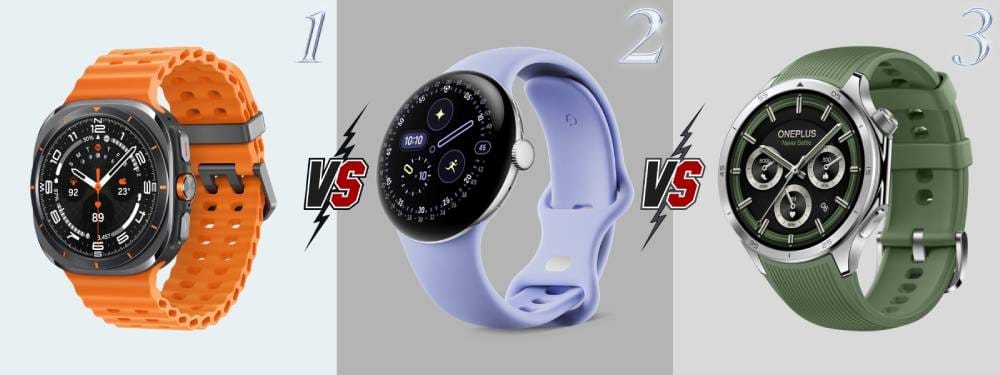
Reviewed for health tracking, battery life & value – updated February 2026
🥇 Samsung Galaxy Watch Ultra – Premium pick for durability & outdoor use → Check price on Amazon UK
🥈 Google Pixel Watch 4 – Best all-round smartwatch → Check price on Amazon UK
🥉 OnePlus Watch 3 – Best value & battery-focused → Check price on Amazon UK
👉 Scroll down to see full reviews and Amazon UK links
Introduction
Smartwatches have become essential companions for Android users, packing advanced fitness sensors, big bright screens and AI features in ever-sleeker designs. In 2026, look for wearables running Google’s Wear OS (or compatible platforms) – these pair seamlessly with Android phones[1][2]. Key trends include better battery life, robust health tracking (heart rate, SpO₂, ECG, etc.), and on-watch AI assistants (e.g. Samsung’s Galaxy AI or Google’s Gemini)[3][4]. Note that Apple Watches do not work with Android phones, so none are recommended here[2]. Instead, our guide focuses on fully Android-compatible watches that excel in durability, features and value for 2026.
What Makes a Great Smartwatch in 2026
Android Compatibility: Ensure the watch runs Wear OS or an Android-friendly OS. Some watches only work with iPhones, so for Android you want Wear OS (Samsung’s One UI Watch or Google’s Wear OS)[2].
Battery Life: Look for multi-day battery life to suit your routine. Many top picks now last 1–3 days with normal use; dedicated power-saving modes can stretch this even longer[5][6]. For example, Samsung’s Galaxy Watch Ultra has a 590 mAh battery lasting up to 60 hours normal use with AOD on (and up to 100 hours in power-saving mode)[5], while the Pixel Watch 4 offers up to 30 hours (41mm) or 40 hours (45mm) with always-on display (up to 48/72 hours in Battery Saver)[6], and the OnePlus Watch 3 can run up to 120 hours/5 days in smart mode (up to 16 days in power saver)[7].
Health & Fitness Features: A great smartwatch in 2026 should have full health tracking – heart rate, sleep, SpO₂ and ECG readings are common on flagship models. Built-in GPS (often dual-frequency) and many sport modes enable accurate workout tracking. For instance, the Pixel Watch 4 adds advanced sensors (skin temperature, blood oxygen, ECG) and 24/7 Fitbit integration[8], and the OnePlus Watch 3 includes ECG and dual-band GPS[9].
Display & Build: Sharp, always-on AMOLED screens (often ~1.2–1.5″) are standard, with very high brightness (Samsung’s Ultra peaks at ~3000 nits for outdoor use[10]). Sturdy materials like titanium or stainless steel and sapphire crystal glass improve durability. IP68/5ATM or 10ATM water-resistance is common – e.g. Pixel Watch 4 is rated 50 m waterproof[11], and the Galaxy Watch Ultra meets 10ATM + IP68 for dive resistance[12][5].
Smart Features: Check for LTE/cellular options (some models like the Galaxy Ultra and Pixel Watch offer eSIM), NFC payments, Bluetooth calling and mic/speaker support. Google Assistant (or Samsung’s Bixby) should be available, and a robust app ecosystem is a plus (Wear OS allows installing many apps from Google Play).
Style & Comfort: Finally, choose a size and style you’ll actually wear daily. Larger rugged watches (like the Ultra’s 47 mm case) often have better battery and robustness but can be heavy[13]. Smaller watches look sleeker but trade off some battery. Swappable bands let you personalize the look.
A smartwatch that balances these factors – compatibility, battery, tracking and comfort – will serve an Android user well in 2026[1][14].
Samsung Galaxy Watch Ultra (Premium Android Smartwatch)
Standout Feature: Extreme durability and battery life for outdoor use.
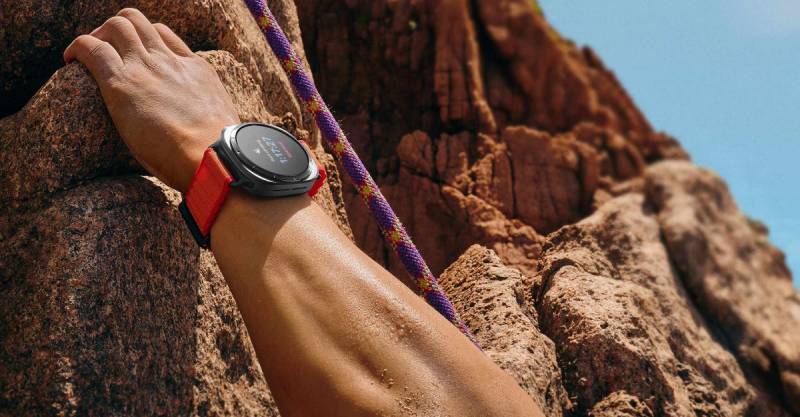
The Galaxy Watch Ultra (2025) is Samsung’s new premium Wear OS watch, built in aerospace-grade titanium with a massive 590 mAh battery. It offers an ultra-bright 1.5″ 480×480 AMOLED display (up to ~3000 nits)[10] and is 10ATM+IP68 rated – fully dive-resistant and MIL‑STD‑810H rugged[5]. It packs Galaxy AI health features (advanced sleep/recovery scores) and a full suite of sensors (heart rate, SpO₂, ECG, skin temperature and more) plus dual-frequency GPS for pinpoint outdoor tracking.
Pros:
- Long battery life: 590 mAh cell lasts up to 60 hours normal use with always-on display enabled (or up to 100 hours in power-saving mode)[5]. Real-world use often hits 2+ days, making it great for multi-day adventures without daily charging.
- Extremely durable: Titanium case, sapphire crystal glass and IP68/10ATM rating handle impacts and water sports[12][5].
- Excellent visibility: Very bright screen (ideal outdoors)[10].
- Full health suite: Includes ECG, body composition, oxygen monitoring, and even a built-in emergency siren.
- Fast charging and LTE: Optional cellular version and Qi wireless charging.
Cons:
- Bulky size: At 47 mm the watch is very large and chunky[13]; heavy for all-day wear (some found it uncomfortable overnight).
- Price: It’s a high-end device (over £500), plus Samsung bands are pricey (~£80 each)[15].
- No rotating bezel: Navigation is via touch/buttons only.
- Software quirks: Runs Wear OS under One UI; it pairs with any Android (after installing Samsung apps), but some features (like Galaxy AI) sync best with Samsung phones[16].
- Battery nuances: Despite big battery, in our testing even Ultra only lasted into day three in full use[17] (though this is still better than most).
Best For: Android users who want a top-tier, rugged smartwatch. Ideal for outdoorsy types and Samsung fans who prioritize durability and all-day use. Also suited for any Android user wanting premium build quality and extensive health/sport features.
Amazon UK Check: 👉 Check price on Amazon UK – The Samsung Galaxy Watch Ultra is positioned as Samsung’s premium Android smartwatch, typically priced from £599 in the UK (LTE model, depending on color/band and offers). Alternatively - visit our product page for more details under: SAMSUNG Galaxy Watch Ultra
Google Pixel Watch 4 (Best All-Round Android Smartwatch)
Standout Feature: Premium Google integration with advanced health and AI.
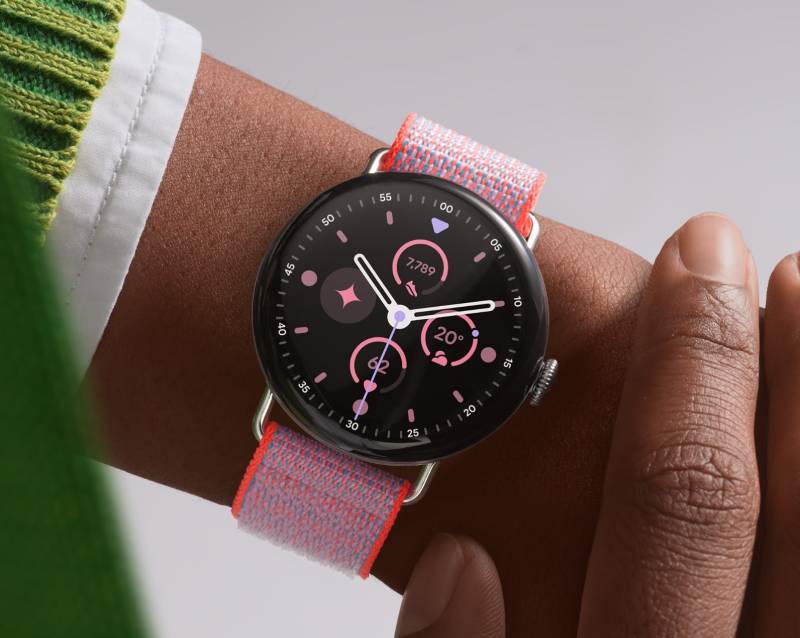
The Pixel Watch 4 is Google’s latest flagship Wear OS watch, built for seamless Android use. It has a domed 41 mm or 45 mm Gorilla Glass display (1.2″/1.3″ AMOLED) with 3000 nit peak brightness[11]. Fitness is a focus: it includes ECG, SpO₂, heart-rate, sleep and stress tracking, and even body temperature sensing. The Pixel Watch 4 leverages Google’s latest Gemini AI – offering smart replies, Google Assistant, live translations and more right from your wrist[4]. It ships with Fitbit Premium perks and dual-band GPS for precise workout tracking[18].
Pros:
- Rich Google features: Wear OS 6 with full Google apps, Google Assistant and Google Wallet support. Gemini AI enhances notifications and workflows.
- Health/flex: Full Fitbit/Google Health integration, with ECG, SpO₂, heart-rate zones and more[8]. New fitness apps and coaching features.
- Sharp, bright display: Vibrant AMOLED with always-on mode – exceptionally clear and visible, even outdoors[11].
- Comfortable design: Sleek circular body (aluminium chassis) and interchangeable bands.
- LTE option: Supports eSIM for calls/data independent of phone.
Cons:
- Moderate battery: Up to 30 hours (41mm) or 40 hours (45mm) with always-on display[6] – often stretches to 1.5–2 days in real-world use, or longer with Battery Saver (up to 48/72 hours). (Heavy GPS/music use drains faster.)
- Water rating: 5ATM (50 m) vs Ultra’s 10ATM, so it’s fine for swim/lap tracking but not a dive computer[11].
- No rotating bezel or crown: Uses touch and buttons only.
- Android 11+ required: Must run Android 11 or later to pair[19] (not iOS).
Best For: Any Android user (especially Pixel phone owners) wanting a stylish, feature-packed smartwatch. It’s great for everyday wear, workouts and being part of Google’s ecosystem. Its fitness features rival best iPhone watches, and it works with most Android 11+ phones[19].
Amazon UK Check: 👉 Check price on Amazon UK – The Google Pixel Watch 4 usually sits around £349–£399 in the UK, making it competitively priced for a flagship Wear OS smartwatch.
OnePlus Watch 3 (Value/Fitness Smartwatch)
Standout Feature: Exceptional battery life (up to 120 hours).
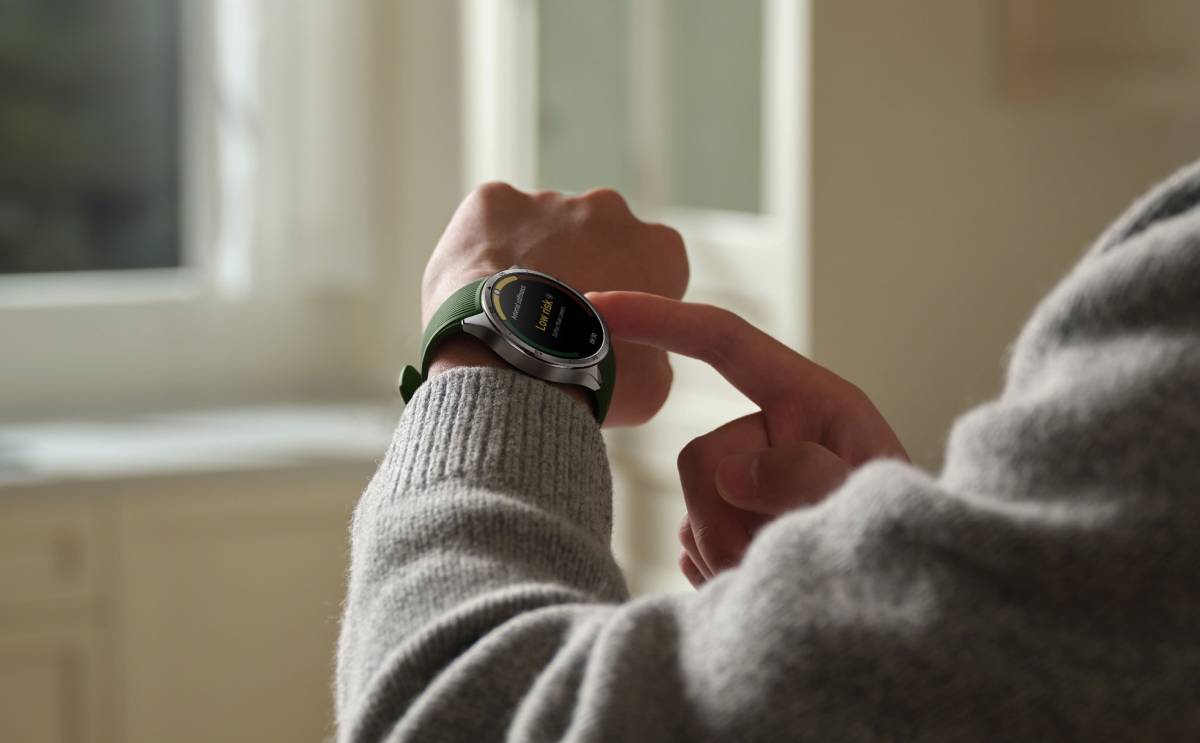
The OnePlus Watch 3 is a sporty Wear OS smartwatch that delivers big endurance. Its unique dual-processor design and large battery let it run up to 5 days or more on typical use[7]. It has a classic round 1.5″ LTPO AMOLED display and stainless-steel body with sapphire glass. The Watch 3 supports 100+ sports modes, built-in GPS (dual-frequency L1/L5) and even new health tools like ECG and a 60-second “heart health check”[9]. It also runs Google’s suite of apps and has a rotating crown for navigation.
Pros:
- Huge battery: Lasts up to ~120 hours with normal use[7] – one of the longest-lasting Wear OS watches. You’ll typically only need to charge every few days.
- Google-friendly: Full Wear OS 5 support with all Google apps and Play Store access[20].
- Rotating crown: Physical dial for intuitive scrolling (a welcome “classic” touch).
- Health suite: Includes ECG (pending full UK rollout/MHRA certification in 2025 Q3, may not be active yet), SpO₂, heart-rate monitoring, blood pressure checks (60-second health check-in), and advanced sleep analysis. Dual-frequency GPS ensures accurate outdoor tracking.
- Affordable: Generally cheaper than premium flagships, offering great features for the price.
Cons:
- Size and weight: It’s quite chunky and heavy for a 43 mm watch[21], which may feel bulky on small wrists.
- No LTE: Only Bluetooth/Wi-Fi; you can’t leave your phone behind for calls (no cellular model)[22].
- Occasional tracking quirks: Some users note minor issues with swim tracking and sleep accuracy[23].
- Performance: While generally smooth, Wear OS can still lag compared to simpler OS’s on fitness bands.
Best For: Android users seeking great fitness tracking at a lower price point, or anyone who hates daily charging. Its combination of long battery, reliable sensors and Wear OS makes it a strong value play.
Amazon UK Check: 👉 Check price on Amazon UK – The OnePlus Watch 3 is typically available from around £319 in the UK (depending on retailer and promotions), making it one of the best value Android smartwatches in 2026.
Comparison Table
| Model | OS & Compatibility | Battery Life | Key Highlights |
|---|---|---|---|
| Samsung Galaxy Watch Ultra | Wear OS 5 (One UI 6); Android 10+ | 590 mAh – up to 60 hours normal use with AOD on (up to 100 hours in power-saving mode; up to 48 hours in exercise power-saving) | 47 mm titanium case, 1.5" 480×480 AMOLED (up to ~3000 nits), 10ATM + IP68 + MIL-STD-810H, Galaxy AI features, dual-frequency GPS, LTE option |
| Google Pixel Watch 4 | Wear OS 6; Android 11+ | 325 mAh (41 mm) or 455 mAh (45 mm) – up to 30 hours (41 mm) or 40 hours (45 mm) with AOD; up to 48/72 hours in Battery Saver | 41/45 mm aluminum case, 1.2"/1.3" domed AMOLED (up to 3000 nits), Gemini AI, full Fitbit integration, ECG/SpO₂/temp, dual-band GPS, LTE option |
| OnePlus Watch 3 | Wear OS 5; Android 9+ | 631 mAh – up to 120 hours / 5 days in smart mode (AOD typical off); up to 16 days in power saver; up to 3 days heavy use | 43–47 mm stainless steel/titanium bezel, 1.5" LTPO AMOLED (up to 2200 nits), 100+ sports modes, rotating crown, ECG (UK available), dual-frequency GPS, no LTE |
Battery life is manufacturer-quoted “up to” figures in typical use (Always-On Display on). AOD = always-on display.
Samsung Galaxy Watch Ultra → Check Price on Amazon UK
Google Pixel Watch 4 → Check Price on Amazon UK
OnePlus Watch 3 → Check Price on Amazon UK
What to Consider Before Buying
Phone Compatibility: Check OS requirements. All picks here require Android 9/10 or newer (Apple Watch does not support Android[2]). The Pixel Watch needs Android 11+[19], but otherwise works with most Android phones. Samsung’s Wear OS watches pair with any Android, though some Samsung-only features may need a Galaxy phone[16].
Battery Needs: Think about your charging habits. If you want to charge rarely, go for long-life models (e.g. OnePlus Watch 3 or Amazfit trackers)[7]. If daily charging is fine, a compromise like the Pixel Watch 4 still offers ~2 days of use[6].
Fitness & Health Tracking: Ensure it has the sensors you want. All our picks track steps and heart rate; the Ultra and Pixel also offer ECG and SpO₂. If serious about running or cycling, built-in GPS (especially dual-band for accuracy) is crucial[9]. Also check water resistance (e.g. 5ATM for swimming, 10ATM for diving).
Build & Comfort: Consider size and materials. Larger metal/titanium watches (like Ultra) are tougher and have bigger screens, but may feel heavy. Smaller models are lighter but may have shorter battery. Swappable straps help tailor the look.
Smart Features: Decide if you need LTE (for phone-free use). The Galaxy Ultra has LTE, Pixel Watch 4 has an eSIM option, but OnePlus Watch 3 does not. All support Bluetooth calls and music via your phone. Check if you need NFC payments (Pixel and Galaxy watches support mobile wallets).
Price vs Needs: High-end watches cost £400–£600, whereas simpler models can be £100–£200. Balance your budget against the features you use daily. Sometimes last-generation flagships drop in price fast, offering good value.
In short, match the watch to your priorities: top-tier features and ruggedness (Galaxy Ultra), balanced smart/fitness features (Pixel Watch 4), or outstanding battery and value (OnePlus Watch 3).
Frequently Asked Questions
Q: Can I use an Apple Watch with my Android phone?
A: No. Apple Watches require iPhones to set up and use. They are not compatible with Android phones[2]. For Android phones, Wear OS devices (like the ones above) or other Android-compatible watches are the way to go.
Q: Which smartwatch OS should I pick for Android?
A: Wear OS (used by Pixel, Samsung, OnePlus) is the most versatile choice on Android. It runs Google apps and works with all modern Android phones. Some other brands use custom OS (like Garmin or Fitbit OS) – these can pair with Android but have limited app options compared to Wear OS.
Q: How long will the battery last on these watches?
A: It varies by model and usage. In practice, our picks get roughly: Galaxy Watch Ultra – ~2–3 days in normal mode, up to 5–6 days with strict power-saving[5][24]; Pixel Watch 4 – about 1–2 days (around 40 h)[6][25]; OnePlus Watch 3 – about 4–5 days (up to 120 h)[26]. Heavy use of GPS or streaming music will shorten these.
Q: Are these smartwatches waterproof? Can I swim with them?
A: Yes, all picks are water-resistant. The Pixel Watch 4 is rated 5 ATM (50 m)[11], and the Galaxy Watch Ultra is 10 ATM + IP68 (so safe for diving)[5]. The OnePlus Watch 3 has IP68/5ATM rating. You can shower or swim with them, but saltwater or diving beyond the rating should be avoided.
Q: Can I make calls or pay with these watches?
A: Each watch supports Bluetooth calling (paired to your phone). The Ultra and Pixel Watch have LTE models for standalone calling/data. All three have NFC for mobile payments (Galaxy uses Samsung Pay; Pixel and OnePlus use Google Wallet, depending on region).
Q: Do I need a Pixel or Samsung phone to use Pixel Watch or Galaxy Watch?
A: No specific phone brand is strictly required. The Pixel Watch 4 works with any Android 11+ phone[19], though it’s optimized for Pixel. The Galaxy Watch Ultra pairs with any Android (after installing Samsung’s Galaxy Wearable app)[16], but it unlocks extra features with Samsung phones. In general, any recent Android phone will work, but check OS version requirements.
Final Verdict
For Android users in the UK, our top three picks cover all needs:
- Samsung Galaxy Watch Ultra is the new king of premium Wear OS watches – a rugged “beast” of a device with top-end durability, brightness and long battery → Check price on Amazon UK
- Google Pixel Watch 4 strikes a fantastic balance, offering smooth Wear OS integration, cutting-edge health sensors and on-watch AI – great for everyday use if you want Fitbit/Google features → Check price on Amazon UK
- OnePlus Watch 3 delivers huge battery life and a classic watch design at a lower price point, perfect for those who want endurance and fitness tracking without breaking the bank → Check price on Amazon UK
All three fully support Android phones (no Apple Watches here, since they won’t pair)[2]. Choose Ultra for rugged outdoors use, Pixel 4 for all-round smart features, or OnePlus 3 for battery and value. Any of these will give you an excellent smartwatch experience in 2026.
Thakn you for reading!