Best Smart TV for Gaming (UK 2026)
Reviewed for low input lag, next-gen features & value – updated February 2026
🥇 LG C5 OLED – Best all-round gaming TV → Check price on Amazon UK
🥈 LG G5 OLED – Premium pick for future-proof gaming → Check price on Amazon UK
🥉 Philips OLED760 – Best value OLED gaming TV → Check price on Amazon UK
👉 Scroll down to see full reviews and Amazon UK links
Introduction
This guide is for UK gamers seeking the best smart TV for PlayStation 5, Xbox Series X/S or PC gaming in 2026. Modern gaming TVs must handle 4K at high frame rates, support VRR (Variable Refresh Rate) and ALLM (Auto Low-Latency Mode), and deliver excellent HDR visuals[1]. We’ve selected three top picks – an all-rounder, a premium/future-proof option, and a value choice – all available on Amazon UK and geared for next-gen gaming. Each TV was evaluated for low input lag, HDMI 2.1 support, 120 Hz performance, and HDR quality in a UK context. Wherever possible, we link to “Check price on Amazon UK” for the latest local pricing. Let’s dive into what makes a great gaming TV in 2026 before exploring our 🥇🥈🥉 medal picks.
What Makes a Great Gaming TV in 2026
In 2026, a top gaming TV balances cutting-edge performance with practical features for console and PC gamers. Key factors include:
- HDMI 2.1 & Next-Gen Support: To fully exploit a PS5, Xbox Series X or a high-end PC, your TV needs at least one HDMI 2.1 input for 4K at high frame rates[2]. Ideally, look for multiple HDMI 2.1 ports (the best TVs offer four) – note that many sets only have two, with one often shared as an eARC port[3]. This ensures you can connect multiple consoles (and a sound system) without swapping cables.
- High Refresh Rate & VRR: Gaming TVs now commonly feature 120 Hz panels, with some supporting 144 Hz or even 165 Hz for PC use[4]. A 120 Hz TV allows up to 120fps at 4K, yielding much smoother motion than older 60 Hz sets. VRR (Variable Refresh Rate) is equally crucial – it syncs the TV’s refresh to the game’s frame rate to eliminate tearing and stutters. All our picks support 4K120 and VRR (often both FreeSync and G-Sync) for fluid gameplay.
- Low Input Lag: Input lag is the delay between pressing a button and seeing the action on-screen. A great gaming TV keeps lag under ~20 ms, which is essentially “lightning-fast” and imperceptible to most players[5]. Competitive gamers may desire sub-10 ms lag. All our picks have a dedicated Game Mode to minimize processing and achieve very low latency (often ~5 ms at 120 Hz).
- HDR Brightness & Contrast: High Dynamic Range can dramatically enhance game visuals with brighter highlights, deeper blacks, and richer colors. The best gaming TVs combine high peak brightness (for impactful highlights) with either OLED’s perfect blacks or effective local dimming on LED TVs. Look for support of HDR10 and Dolby Vision (the Xbox supports Dolby Vision in some titles) for the widest compatibility[6]. Great HDR also requires strong contrast – OLEDs excel at blacks, while Mini-LED LCDs can approach OLED’s contrast with thousands of dimming zones. Ideally, a gaming TV should deliver vivid HDR without significant “blooming” around bright objects.
- Panel Type & Viewing Angles: OLED vs LCD remains a consideration. OLED TVs (including newer QD-OLED variants) offer instantaneous pixel response, inky black levels, and wide viewing angles – meaning the image stays accurate even when viewing off-center, ideal for couch co-op[7]. High-end OLEDs also tend to pack all the latest gaming features. On the other hand, LED-based TVs (QLED, Mini-LED) can get much brighter for HDR and have no risk of burn-in, often at lower cost. The trade-off: LCDs can suffer reduced picture accuracy at angles and slight motion blur, though top models mitigate this well. The best choice depends on your room (bright room -> leaning toward a bright LCD; dark room -> OLED shine) and usage habits.
- Smart Features & Extras: Almost all modern TVs run smart OS platforms (WebOS, Google TV, etc.) with streaming apps – these are standard and usually not a deciding factor for gaming. More relevant are gaming-specific extras: e.g. on-screen game dashboards that show frame rate and settings, auto genre picture modes (some TVs auto-detect a console and switch to low-lag Game Mode), and support for HGiG (HDR Gaming Interest Group guidelines for more accurate HDR tone-mapping in games). Audio features like Dolby Atmos support can be nice, but we recommend using a soundbar or headset for the best experience.
In short, the ideal 2026 gaming TV should seamlessly handle 4K120Hz gaming with VRR, have minimal input lag, produce a bright, contrast-rich HDR image, and include enough HDMI 2.1 connectivity for your setup – all while fitting your space and budget. The good news is that all three of our picks hit those marks, with varying strengths and price points.
Top 3 Gaming TV Picks (UK 2026)
🥇 LG C5 OLED – Best all-round pick
LG C5 OLED – LG’s mainstream 4K OLED that packs cutting-edge gaming tech in a balanced, accessible package. The LG C5 (2025 model) is the successor to the hugely popular C4, bringing improved brightness and the same outstanding gaming features that made its predecessors favorites among gamers. Available from 42″ up to 83″, it combines OLED’s perfect blacks and ultra-fast pixel response with a full suite of next-gen capabilities. All four HDMI ports are HDMI 2.1 (48 Gbps), supporting 4K @ 120Hz, VRR (Nvidia G-Sync & AMD FreeSync), and ALLM on every input. In practice, the C5 delivers silky-smooth gameplay with near-instantaneous response times and input lag around ~5 ms at 120Hz – virtually imperceptible. It’s also one of the first OLED TVs to offer an official 144Hz mode for PC gamers, ensuring even faster frame-rate potential[12].
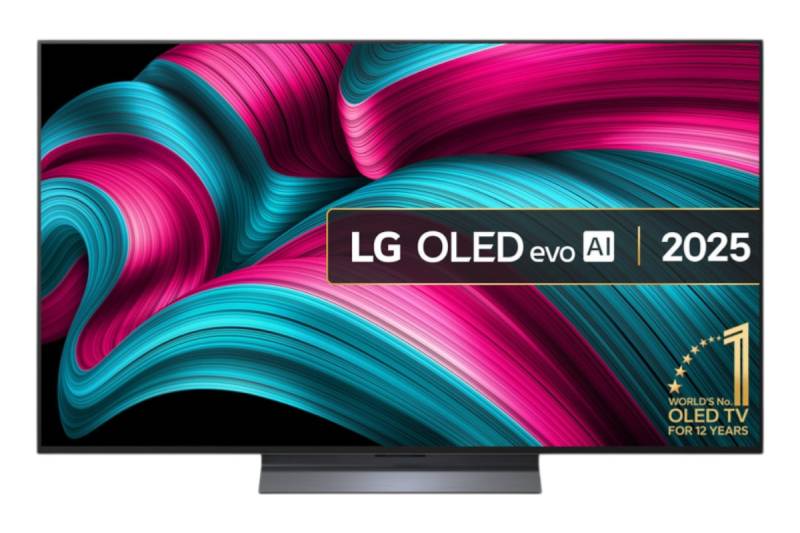
Despite not being LG’s flagship, the C5’s picture quality is phenomenal. OLED’s self-lit pixels mean true inky blacks and infinite contrast, which make dark game scenes incredibly immersive. Colors are rich and accurate, and while the C5 isn’t as blindingly bright as the top-tier G5, it still hits impressive HDR highlights (on the order of 800–1000 nits in small areas). In real-world use, it has ample HDR brightness for a deep, detail-rich picture in games and movies. Crucially for Xbox users, it supports Dolby Vision Gaming (as well as HDR10 and HLG), which many competing brands lack – allowing compatible games to leverage Dolby’s dynamic HDR format on this TV. The C5’s viewing angles are superb, so if you have friends over for local multiplayer, everyone sees a consistent image. It also features LG’s slick Game Optimiser dashboard, which lets you adjust settings on the fly and see real-time stats like frame rate.
✅ Why this pick:
Pros: Stunning OLED picture quality with perfect blacks and excellent colors. Low input lag (~5–13 ms) and instant response for a very responsive feel. HDMI 2.1 on 4 ports – play 4K@120Hz on any device freely[3]. VRR support for both G-Sync and FreeSync, plus Dolby Vision HDR support for Xbox games. Wide viewing angles; sleek design with sizes for any setup (from a 42″ desk-friendly model to 83″ home cinema).
Cons: Not as bright as QLED/Mini-LED rivals – in a sunlit room its HDR impact is less striking than an LCD’s. OLED panel risk of burn-in (mitigated by pixel-shift and other protections – only a concern with extreme static content). Launch pricing was high (e.g. ~£1,900 for 55″) but has fallen significantly with sales; still pricier than some mid-range LCD TVs.
Main standout feature: By offering nearly all the latest gaming enhancements in one TV – 4K120, VRR, ALLM, and Dolby Vision – the LG C5 OLED provides a complete, no-compromise gaming experience. It marries OLED’s renowned picture fidelity with the full spectrum of next-gen features, making it a true all-rounder that excels in both competitive and cinematic games.
Who it’s best for: Console or PC gamers who want the best overall balance of performance and price. The C5 is ideal for most UK gamers, handling fast FPS action as adeptly as it displays gorgeous open-world RPG vistas. If you game in a moderately lit or dark room and value top-tier image quality with your high refresh rates, the C5 hits the sweet spot. It’s also great if you have multiple devices (PC, PS5, Xbox) since it has four 2.1 ports – something very few TVs offer. Only those who need an extra level of brightness (for a very bright room or who simply want bragging rights) or who must stick to a tighter budget might look elsewhere.
Amazon UK Check: 👉 Check price on Amazon UK – The 55-inch LG C5 typically hovers around £1,000–£1,400 (with smaller sizes like 42″ often under £1,000). While not a budget TV, its price has dropped from launch and frequently sees discounts. For the performance on offer – essentially flagship-level gaming prowess at a mid-range price – the C5 is a strong value. It’s our top recommendation for most gamers, offering 90% of the flagship LG G5’s gaming performance at a significantly lower cost[18]. Unless you absolutely need the G5’s extreme brightness (or are on a tight budget where our value pick shines), the C5 is the best overall gaming TV for UK gamers in 2026.
🥈 LG G5 OLED – Premium pick for future-proof gaming
LG G5 OLED – LG’s flagship “Gallery Series” OLED is the premium, future-proof choice for gamers who demand the absolute best. The G5 introduces an entirely new 4-layer “tandem” OLED panel (replacing the older MLA tech), resulting in a huge leap in brightness and color volume. Available in 55″ up to an enormous 97″, the G5 is designed to impress: it’s a super-slim, wall-mount-first TV with a sleek “picture frame” aesthetic. But the real magic is under the hood – in our tests it turned out to be one of the brightest OLED TVs ever made, reaching brightness levels over twice that of the C5 in small highlights. HDR games on the G5 look incredibly impactful, with specular highlights (like muzzle flashes or magic effects) that pop in a way previously only possible on high-end LED TVs. At the same time, it retains OLED’s perfect black levels and pixel-level precision, so you get the best of both worlds: OLED contrast with almost QLED-like brightness[20].
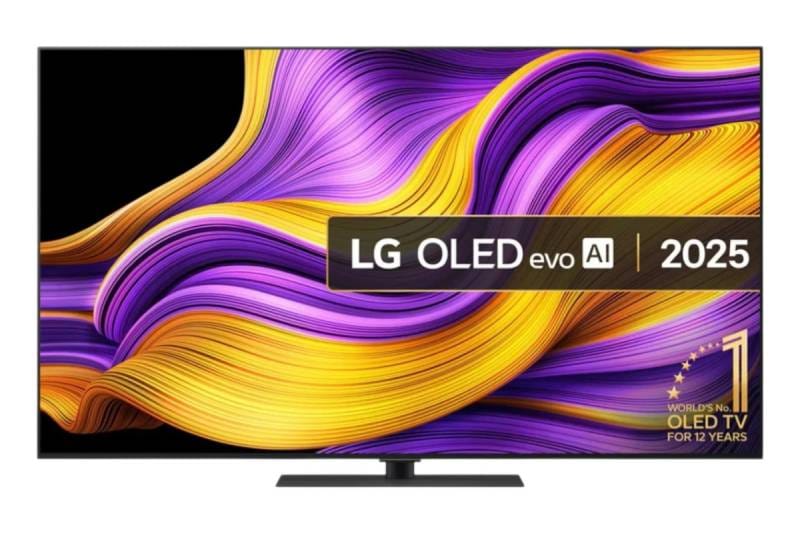
Gaming features on the LG G5 are virtually identical to the C5 – which is to say, top-notch. You get four HDMI 2.1 ports, all capable of 4K 165Hz input (LG actually pushes beyond the usual 120Hz, advertising 4K@165Hz support for the G5). This makes it arguably the most “future-proof” TV around, ready for any potential mid-gen console upgrades or high-end PC GPUs. Naturally it supports VRR (FreeSync Premium Pro and G-Sync), ALLM, and LG’s Game Optimiser menu, plus Dolby Vision, HDR10, HLG formats. Input lag is extremely low – among the lowest ever measured, at just ~9–10 ms at 60Hz and ~5 ms at 120Hz (essentially identical to the C5’s lag). In practice, the G5 feels just as responsive as the C5 for fast gaming, but looks even more spectacular thanks to that panel. Its color reproduction is also enhanced – LG’s new panel tech yields wider color gamut and better volume, so games with HDR wide color (like neon cyberpunk cities or lush jungles) appear even more vibrant and lifelike[20]. Motion handling remains as pristine as any OLED (near-instant pixel response means virtually zero motion blur).
✅ Why this pick:
Pros: Unprecedented OLED brightness – the G5 can hit ~1500–1600 nits on highlights, unheard of for OLED until now, giving HDR games huge impact. Retains perfect blacks and infinite contrast, with even more vivid colors than the C-series[20]. Full 4K 165Hz support and four HDMI 2.1 ports for ultimate future-proofing. All the expected gaming features (VRR, ALLM, Dolby Vision, etc.) – essentially no compromises. Ultra-low input lag and instant response, so it’s just as fast for competitive play. Premium design with ultra-thin build – looks stunning wall-mounted (and an optional stand is available if needed).
Cons: Very expensive – commands a significant price premium over the C5 (often £500+ more for the same size). Sold as a “wall-mount” model; the 55″/65″ G5 includes a wall bracket by default, but a stand costs extra unless you get the G5S variant. The incredible brightness is mainly in small highlights – full-screen brightness is still lower than an LED TV (common to all OLEDs). As with any OLED, a degree of burn-in risk exists (though mitigated by LG’s precautions); heavy static HUD users should still be mindful[14]. For many, the C5’s performance is “good enough” – the G5’s improvements, while massive on paper, may not justify the steep price jump unless you’re a true videophile or have a bright viewing environment.
Main standout feature: The LG G5’s standout feature is its next-generation OLED panel that achieves brighter HDR and more intense color than any OLED before. It’s literally twice as bright as the C5 in key areas[20], redefining what OLED can do. For gamers, this means titles in HDR look more dynamic and future games can shine to their full potential. In short, the G5 delivers reference-caliber image quality paired with every gaming feature imaginable – a combination that simply didn’t exist until now.
Who it’s best for: The G5 OLED is best for enthusiast gamers and home theater buffs who refuse to compromise. If you’re the sort who wants the absolute best display technology and you’re willing to invest for it, the G5 will reward you with a sublime gaming experience. It’s especially suitable if you game in a brighter room or just love eye-searing HDR – the G5’s extra brightness will be evident in those scenarios. It’s also a great showpiece if you want a large screen (77″, 83″, even 97″) with top performance – something only a flagship like this can provide. For competitive gamers, the G5 offers no advantage over the C5 in responsiveness (both are excellent), but for immersive single-player gaming, cinematic experiences, and ensuring you’re set for many years of console upgrades, the G5 is as future-proof as it gets. (If budget or practicality is a concern, most people will be perfectly happy with the C5 – but if you demand the best, the G5 is it.)
Amazon UK Check: 👉 Check price on Amazon UK – The LG G5 is priced as a true premium product. As of early 2026, expect around £1,900–£2,500 for the 55″ (deals hit ~£1,379), £2,800+ for 65″, and higher for larger sizes (the 77″ was ~£4,500 at launch). This roughly £500–£600 (or more) jump over an equivalent C5 size reflects the G5’s advanced panel and design[22]. For gamers who can afford it, the G5 justifies its cost by delivering arguably the finest gaming image quality on the market, period. It’s a flagship TV built for the future, and its price aligns with that positioning. Before buying, consider whether you’ll fully utilize its extra brightness and slight picture edge over the C5 – if yes, the G5 will delight. If not, you might save money with the C5. But if you want the best of the best, the G5 OLED is the premium pick that pulls no punches in 2026.
🥉 Philips OLED760 – Best value OLED gaming TV
Philips OLED760 – The Philips OLED760 proves that you do not need to pay flagship prices to get a genuinely premium OLED gaming experience. As a 4K OLED TV with full HDMI 2.1 support, the OLED760 delivers the core features serious gamers care about: perfect blacks, ultra-fast pixel response, and smooth 4K @ 120Hz gameplay. It is available in popular UK-friendly sizes (55″, 65″ and 77″) and is widely stocked on Amazon UK, making it a strong and reliable third pick for 2026.
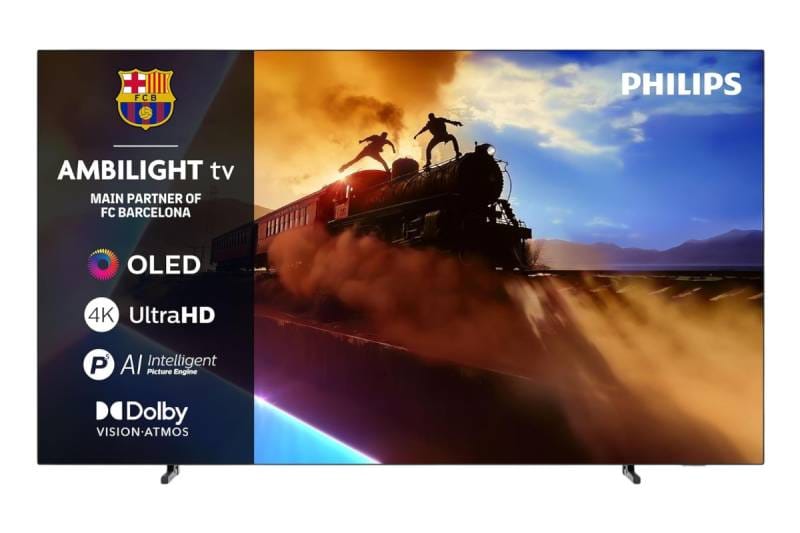
For gaming, the OLED760 ticks all the right boxes. It supports 4K 120Hz, VRR, and ALLM across its HDMI 2.1 ports, ensuring smooth, tear-free gameplay on PS5, Xbox Series X, and gaming PCs. Input lag in Game Mode is very low, and OLED’s near-instant pixel response eliminates motion blur and ghosting, giving fast-paced games a sharp, responsive feel. Competitive and single-player titles both benefit from the clarity and precision OLED provides.
Where the Philips OLED760 really shines is picture quality. Thanks to OLED technology, blacks are truly black, contrast is effectively infinite, and shadow detail in dark scenes is excellent. HDR gaming looks rich and cinematic, supported by Dolby Vision, HDR10+, HDR10 and HLG — a rare all-format combination that ensures full compatibility across games, movies, and streaming apps. While it cannot match the extreme peak brightness of top Mini-LED TVs, OLED’s contrast and accuracy often deliver a more natural and immersive HDR presentation, especially in dim or evening viewing conditions.
The OLED760 runs Philips Titan OS in the UK. It is simpler than LG’s WebOS or Google TV but remains fast and reliable, with all major UK apps included (Netflix, Prime Video, Disney+, YouTube, BBC iPlayer, ITVX). Build quality is solid, with slim bezels and a minimalist stand design. Philips’ Ambilight feature adds extra immersion for gaming and movies by projecting on-screen colours onto the wall behind the TV. Audio quality is also above average, with built-in Dolby Atmos support that is perfectly usable without an immediate soundbar upgrade.
✅ Why this pick:
Pros: OLED panel delivers perfect blacks, excellent contrast, and wide viewing angles. Full HDMI 2.1 gaming support with 4K 120Hz, VRR, and ALLM. Supports all major HDR formats including Dolby Vision and HDR10+. Extremely fast response times and low input lag for responsive gameplay. Ambilight adds immersion. Strong value pricing for an OLED gaming TV.
Cons: Peak brightness is lower than high-end Mini-LED TVs, making it less ideal for very bright rooms. Titan OS is functional but more basic than rival smart platforms. OLED burn-in risk exists in theory (though minimal with normal mixed usage).
Main standout feature:
True OLED gaming performance — perfect blacks, instant response, and full next-gen console support — at a price well below flagship OLED models.
Who it’s best for:
The Philips OLED760 is ideal for gamers who want OLED picture quality without paying premium flagship prices. It is perfect for PS5 and Xbox Series X owners who value contrast, responsiveness, and cinematic HDR gaming, especially in darker or evening viewing environments. If you want a premium gaming experience and excellent all-round TV performance at a more accessible price, the OLED760 is a smart and balanced choice.
Amazon UK Check: 👉 Check price on Amazon UK – The Philips OLED760 is frequently discounted in the UK (55" often £900–£1,200), making it one of the best-value OLED gaming TVs currently available. It comfortably earns its 🥉 position as the best value OLED gaming TV in this guide.
Check our website for more details about the Philips OLED760
Comparison Table
| Feature | LG C5 OLED | LG G5 OLED | Philips OLED760 |
|---|---|---|---|
| Panel Type | OLED evo | OLED evo (Gallery series, tandem stack) | OLED |
| Available Sizes (UK) | 42″, 48″, 55″, 65″, 77″ | 55″, 65″, 77″, 83″ | 55″, 65″, 77″ |
| Resolution / Refresh Rate | 4K @ 120Hz (up to 144Hz VRR) | 4K @ 120Hz (up to 165Hz VRR) | 4K @ 120Hz |
| HDMI 2.1 Ports | 4 × HDMI 2.1 | 4 × HDMI 2.1 | 4 × HDMI 2.1 |
| Gaming Features | VRR (HDMI VRR, FreeSync, G-SYNC), ALLM, Game Optimiser | VRR (HDMI VRR, FreeSync, G-SYNC), ALLM, Game Optimiser | VRR, ALLM, FreeSync |
| HDR Support | Dolby Vision, HDR10, HLG | Dolby Vision, HDR10, HLG | Dolby Vision, HDR10+, HDR10, HLG |
| Input Lag (Game Mode) | ~6 ms @ 120Hz | ~6 ms @ 120Hz | ~6–7 ms @ 120Hz |
| Peak Brightness (HDR) | High (OLED evo, ~800–1100 nits peaks) | Very high (brighter tandem stack, ~1500–2200+ nits peaks) | Moderate (typical OLED, ~800–1000 nits) |
| Smart TV Platform (UK) | webOS | webOS | Titan OS |
| Audio Support | Dolby Atmos (no DTS) | Dolby Atmos (no DTS) | Dolby Atmos + DTS |
| Build & Design | Slim OLED design with stand | Ultra-slim “Gallery” wall-mount design | Slim OLED with Ambilight |
| Special Features | Best all-round OLED gaming balance | Premium brightness & wall-mount aesthetics | Ambilight immersion, full HDR format support |
| Typical UK Price Tier | Premium | High-end / flagship | Upper-mid range |
🥇 LG C5 OLED → Check price on Amazon UK
🥈 LG G5 OLED → Check price on Amazon UK
🥉 Philips OLED760 → Check price on Amazon UK
What to Consider Before Buying a Gaming TV
Choosing a gaming TV involves balancing your gaming habits, room setup, and budget. Before buying, here are the key factors you should think through to avoid regret later.
Room Lighting & Screen Type
Your gaming environment plays a huge role in how a TV performs. If you mainly game in a bright room or during daytime, brightness becomes critical. High-end Mini-LED LCD TVs can push well beyond 1,000 nits and punch through glare more effectively than most OLEDs. In those scenarios, a premium Mini-LED (such as Samsung’s Neo QLED range) may still have an edge for sheer brightness.
However, if you game mostly in the evening or in a dimly lit room, OLED is unmatched. OLED TVs deliver perfect blacks, infinite contrast, and no blooming — making dark scenes in games look dramatically better. This is where TVs like the LG C5, LG G5, and Philips OLED760 excel. OLEDs are also superior for wide seating arrangements, as they maintain colour accuracy and contrast even when viewed from the side, whereas VA-based LCD panels lose contrast off-axis. If your setup involves friends watching or split-screen gaming, OLED is the safer choice.
Size & Seating Distance
Bigger screens increase immersion, but size should match your room and viewing distance. For desks, bedrooms, or close seating, 42–48 inch TVs work exceptionally well — many gamers now use a 42″ OLED like the LG C5 as a large-format gaming monitor. For typical living rooms with seating around 7–9 feet away, 55–65 inches is the sweet spot. Going 65″ or larger truly enhances open-world games and cinematic titles.
Also consider physical design details. Stand height and width matter if you plan to add a soundbar — some TVs have low-profile stands that can block front-firing speakers. OLED models like the C5 and OLED760 use relatively low, central stands, which may require either a slim soundbar or a raised mount. Wall mounting eliminates this issue but requires checking VESA compatibility and wall strength.
Multiple Devices & HDMI Ports
If you own multiple gaming devices — PS5, Xbox Series X, and possibly a gaming PC — HDMI 2.1 port count matters a lot. Many mid-range TVs only offer two HDMI 2.1 ports, and one is often shared with eARC for audio. This can quickly become limiting if you also run a soundbar or AVR.
Premium OLEDs like the LG C5 and LG G5 stand out by offering four full-bandwidth HDMI 2.1 ports, giving you complete flexibility. The Philips OLED760, while still excellent for gaming, typically offers fewer HDMI 2.1 inputs — which is fine for one console plus a PC, but less ideal for complex setups. If you expect to expand your setup later, port count is worth planning for now to avoid cable swapping or external HDMI switches.
Longevity & Burn-In
OLED burn-in is far less of a concern in 2026 than it once was. Modern OLED TVs use advanced mitigation techniques like pixel shifting, logo dimming, and improved panel materials. Reported burn-in cases have dropped dramatically over the past few years, and for normal mixed usage (games, movies, TV), it is now considered rare.
That said, usage patterns still matter. If you play the same game with static HUD elements for hundreds of hours (MMOs, MOBAs, sports games with fixed overlays), any OLED — including the Philips OLED760 — can theoretically develop image retention over time. If this worries you, an LCD may offer peace of mind. Otherwise, sensible habits (varying content, enabling protection features, avoiding max brightness 24/7) make OLED perfectly safe for most gamers. LCDs avoid burn-in but can develop uniformity issues or backlight wear over many years — no display technology is immortal.
Audio & Extras
Most modern TVs are extremely thin, which limits speaker performance. Built-in audio is usually adequate for casual gaming, but to truly experience directional audio cues, explosions, and cinematic soundtracks, a soundbar or surround system is strongly recommended.
Among OLEDs, audio quality varies. LG OLEDs are competent but clearly benefit from external audio. The Philips OLED760, however, performs slightly better than average thanks to Dolby Atmos support and Philips’ tuning, making it more usable out of the box if you are not adding a soundbar immediately. Also consider smart TV platforms — LG’s WebOS, Samsung’s Tizen, and Philips’ Titan OS all support major UK streaming apps, but differ in polish and customization. If you plan to use the TV as a PC monitor, features like chroma 4:4:4 support and proper PC modes are worth checking as well.
Design also matters. TVs like the LG G5 are designed primarily for wall mounting, while others include stands. Make sure your furniture, wall mount, and room layout can accommodate the TV’s size, weight, and mounting pattern.
Budget vs Performance
The key rule is simple: buy the best TV you can afford for your priorities. In this guide, the picks cover different value tiers. The Philips OLED760 delivers genuine next-gen gaming performance with OLED contrast at a more accessible price point. The LG C5 offers a near-perfect balance of gaming features, brightness, and flexibility. The LG G5 pushes performance and design to the limit — but at a steep premium.
If budget is tight, last-year models can still be excellent value. Older OLEDs or premium Mini-LEDs often retain HDMI 2.1, VRR, and low input lag while being heavily discounted during UK sales events. Always double-check port counts and feature support before buying older stock. Large discounts on OLEDs are increasingly common, and a well-timed deal can significantly narrow the gap between mid-range and premium options.
Final Thought
Ultimately, the goal is to match the TV to how and where you game. Think about room lighting, screen size, device count, and how sensitive you are to picture quality differences. Whether you choose the balanced excellence of the LG C5, the premium polish of the LG G5, or the strong value OLED performance of the Philips OLED760, make sure the TV has the core gaming essentials — 4K 120Hz, VRR, and low input lag — so you can enjoy next-gen gaming properly for years to come.
FAQ
Q1: OLED or QLED/Mini-LED – which is better for gaming?
A: Both technologies excel at gaming, but they shine in different scenarios. OLED TVs (such as the LG C5, LG G5, and Philips OLED760) generally offer the best overall picture quality, with perfect black levels, instant pixel response, and excellent motion clarity. This means no blooming, no haloing, and virtually no motion blur — ideal for fast-paced games and dark, atmospheric scenes. OLEDs also tend to include the latest gaming features like 4K 120Hz, VRR, ALLM, and low input lag, making them a favourite among console and PC gamers.
However, OLEDs typically cannot reach the same peak brightness as the brightest LED TVs. In very bright rooms or during daytime gaming, Mini-LED/QLED TVs (such as Samsung’s Neo QLED range) can appear more impactful thanks to their higher brightness and stronger glare resistance. LED-based TVs also have no risk of burn-in, which may appeal to users who play games with static HUDs for extremely long sessions. The trade-off is that many LED TVs — especially VA-based panels — have narrower viewing angles and may show some haloing around bright objects on dark backgrounds.
The gap between the two technologies has narrowed significantly. Modern OLEDs like the LG G5 are much brighter than older generations, while Mini-LED TVs have improved black levels and local dimming control. Our advice: if you game mostly in a dim or controlled-light environment and want the best contrast and responsiveness, go OLED. If your room is very bright or you prioritise maximum brightness and peace of mind over burn-in, a high-quality Mini-LED is a strong alternative. Both can deliver excellent gaming experiences — it’s about matching the TV to your environment and habits.
Q2: Should I get an 8K TV for gaming, or is 4K enough?
A: For almost all gamers in 2026, 4K is more than enough, and 8K TVs are not worth the premium. While the PS5 and Xbox Series X technically support 8K output on paper, neither console actually delivers native 8K gaming in practice — and there are no signs this will change meaningfully during their lifespan. Even newer hardware revisions focus on higher frame rates and better image quality at 4K, not higher resolution. Running games at 8K is extremely demanding, and even top-tier gaming PCs struggle to do it smoothly.
Content availability is another issue. There is virtually no native 8K gaming or streaming content, and what exists relies heavily on upscaling. Sony has already shifted marketing emphasis away from 8K toward 4K 120Hz, acknowledging where real-world benefits lie. In fact, many high-end 4K TVs now support advanced gaming features like ultra-low input lag, VRR, and even very high refresh rates for PC gaming — all of which matter far more than raw resolution.
As for future-proofing, it’s likely another console generation (or more) before 8K gaming becomes practical. By then, today’s 8K TVs will be outdated and significantly cheaper. Some current 8K TVs even have higher input lag or fewer gaming-focused features than top-tier 4K models. Our recommendation: invest in the best 4K gaming TV you can afford, prioritising refresh rate, HDR quality, and gaming features. You’ll get a far better experience now — and won’t miss out when 8K eventually becomes relevant.
Final Verdict
In 2026, the best gaming TV for you ultimately depends on your priorities, room setup, and budget — but the good news is that all three of our picks deliver an excellent next-gen gaming experience. To recap:
LG C5 OLED (🥇 Best Overall)
is the top choice for most gamers. It combines elite gaming performance — 4K 120Hz, VRR, ultra-low input lag, and four full HDMI 2.1 ports — with the stunning contrast and responsiveness of OLED, all at a price that is premium but still justifiable[16]. It is the true all-rounder: equally at home with competitive gaming, cinematic single-player titles, and everyday streaming. If you want a safe, no-compromise choice that excels in almost every scenario, the C5 remains the standout recommendation.
LG G5 OLED (🥈 Premium / Future-Proof Pick)
is the ultimate option for gamers who want maximum brightness, colour performance, and cutting-edge OLED technology, and are willing to pay for it. With its brighter OLED panel, premium Gallery-style design, and flagship-level processing, the G5 delivers one of the most impressive HDR gaming experiences available today[20][21]. It is built to remain relevant for years to come and is ideal for enthusiasts who want the very best — especially if wall-mounting fits their setup (or you are happy to purchase a stand separately).
Philips OLED760 (🥉 Best Value OLED Gaming TV)
earns its place as the value-focused pick by offering true OLED picture quality and next-gen gaming features at a more accessible price point than flagship OLEDs. With 4K 120Hz support, VRR, ALLM, and wide HDR format compatibility, it delivers the core gaming essentials without cutting corners where it matters most. While it does not reach the extreme brightness levels of the G5 or offer as many HDMI 2.1 ports as the C5, it rewards gamers with perfect blacks, fast response times, and an immersive presentation — especially in darker or evening gaming environments. For those who want OLED gaming without stretching to premium flagship pricing, the OLED760 hits a very appealing sweet spot.
All three models will serve PS5, Xbox Series X, and PC gamers exceptionally well. The key is matching the TV to your priorities:
- C5 for balanced excellence and flexibility → Check price on Amazon UK
- G5 for no-holds-barred performance and future-proofing → Check price on Amazon UK
- OLED760 for strong value with authentic OLED gaming quality → Check price on Amazon UK
Whichever you choose, you will be set up to enjoy smooth 4K gaming, responsive controls, and high-impact visuals for years to come. Be sure to check the Amazon UK links above for the latest pricing and availability — deals change often, and a well-timed discount can make any of these picks an even better buy. Happy gaming! 🎮