Best Rugged Phones 2026 UK – Toughest & Most Durable Picks
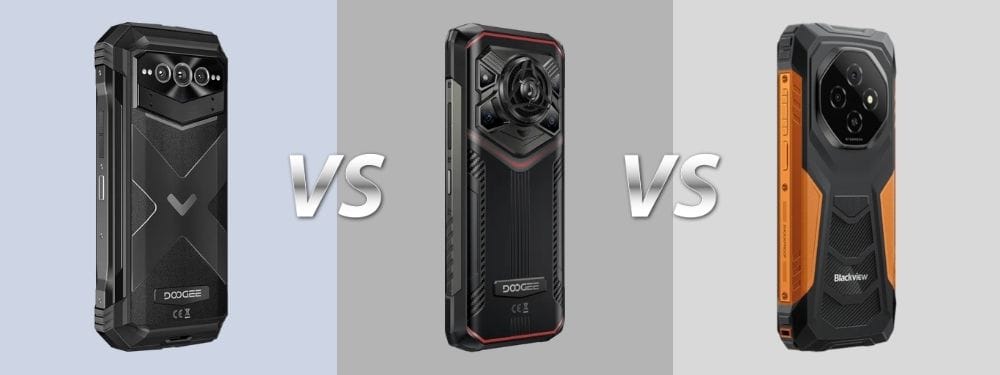
Reviewed for durability, battery life & real-world toughness – updated February 2026
🏆 DOOGEE V Max Pro 5G – Best overall rugged phone → Check price on Amazon UK
⚙️ DOOGEE Blade 20 Pro – Best extreme rugged phone → Check price on Amazon UK
💰 Blackview Fort 1 – Best value rugged phone → Check price on Amazon UK
👉 Scroll down to see full reviews, durability breakdowns and Amazon UK links
Introduction
For UK buyers working in construction, industry or who love hiking and outdoor adventures, a rugged phone is essential. These Android phones are built to survive dust, drops and extreme weather, with heavy-duty seals and military-grade testing. In 2026, look for devices with IP68/IP69K water-and-dust resistance and MIL-STD-810H certifications (eg. 1.5–1.8 m drop onto steel)[1][2]. They often pack enormous batteries (5,000–22,000 mAh) for multi-day use and durable frames (Gorilla Glass or reinforced panels). This guide covers the top ultra-rugged Android phones you can buy on Amazon UK now, plus a detailed comparison, buying tips, and FAQs. We focus on durability specs, real-world battery life, weight and practicality. Each pick links to Amazon UK for current pricing. Let’s dive in and find the toughest phone for your needs.
What Makes a Great Rugged Phone in 2026
A great rugged phone combines extreme durability with enough performance for everyday use. Key factors include:
Durability & Certifications: Top rugged phones are certified IP68 and IP69K, meaning dust-tight and protected against powerful water jets[3][1]. They also meet MIL-STD-810H (military drop/shock tests) – e.g. drop-tested from ~1.5 m onto steel. Look for front/back Gorilla Glass (often Victus/7) and sealed ports. Some models even offer anti-microbial coatings (seen on Cat phones). The screen may support glove-touch mode so you can use it wet or with gloves on.
Battery Life: Rugged use demands long battery life. Unlike regular phones (typically ~3,000–5,000 mAh), many rugged models sport huge cells (6,000–22,000 mAh). For example, the DOOGEE Blade 20 Pro has an 11,800 mAh battery, and the DOOGEE V Max Pro 5G features an enormous 22,000 mAh battery (with real-world multi-day heavy use). These can last several days of heavy use in remote environments. Fast-charging (and sometimes reverse-charging) is also common. Expect trade-offs: very large batteries add weight and thickness.
Performance & Hardware: Most rugged phones use midrange or battery-efficient chipsets (MediaTek Helio/Dimensity or Snapdragon 600–700 series) with ample RAM. High-end choices now offer 12–24 GB RAM via RAM expansion (eg. DOOGEE and OUKITEL). Storage is often 128–256 GB, expandable via microSD. These run the latest Android (Android 14/15 in 2026). Performance is adequate for navigation, photos, videos and typical apps, but don’t expect flagship-level speed. Some prioritize efficiency to boost endurance in extreme conditions.
Display & Usability: Screens on rugged phones range ~5.5–6.7 inches, usually LCD (sometimes OLED on premium models). Look for high brightness and anti-glare for outdoor visibility. Many have Gorilla Glass Victus+ or similar. A 90–120 Hz refresh rate is increasingly common. Touch responsiveness in rain or with gloves is an important feature (many rugged phones now explicitly support glove-touch and wet-touch modes[4]). Physical features often include programmable side buttons (for push-to-talk or SOS) and sometimes a 3.5 mm jack (rare in modern smartphones but still present on select rugged models).
Connectivity & Extras: Most rugged phones now support 4G LTE, and many flagship rugged models have 5G (like DOOGEE V Max Pro 5G and newer DOOGEE/OUKITEL models). Dual-SIM slots are common, along with expandable storage (microSD). Extras may include NFC for payments (Google Pay), FM radio, or powerful LED lights for camping and worksites. Some niche models (e.g. Cat S75) even offer satellite messaging/SOS.
Size & Weight: Rugged phones are bulkier than standard smartphones due to their reinforced chassis and larger batteries. Expect weights from ~250 g (relatively “light”) up to 400–500 g for maximum-capacity models. For comparison, balanced rugged phones may sit closer to 250–280 g, whereas heavy-duty battery-focused models like the Blackview Fort 1 around 300–350 g (or higher on variants). If pocketability is important, consider a more moderate model or ensure the extra heft is acceptable for daily carry.
Software & Support: Rugged brands vary in software support. Larger manufacturers may offer multi-year update commitments, while smaller brands often guarantee security patches for a shorter period. Most rugged phones run near-stock Android and are sold unlocked for UK network flexibility. Always check supported 4G/5G bands to ensure compatibility with your carrier.
Cost & Value: Rugged phones tend to be pricier than equivalently-specced regular phones. Premium rugged devices can cost £600–£900 or more, especially those with large batteries, 5G, and full IP/MIL certifications. Many mid-range rugged models cost £150–£400. Choose based on your needs: if you require maximum endurance and certified durability, be prepared to spend. For budget needs, brands like Blackview and Ulefone offer tough devices at more accessible prices.
In summary, pick a phone with high IP and MIL-STD ratings, a big battery, and good screen/handling features for outdoor use. Balance the phone’s weight against its battery capacity and durability. In the next section, we compare the top options meeting these criteria.
Top Rugged Phone Picks (UK 2026)
1. DOOGEE V Max Pro 5G – Best Overall Rugged Phone
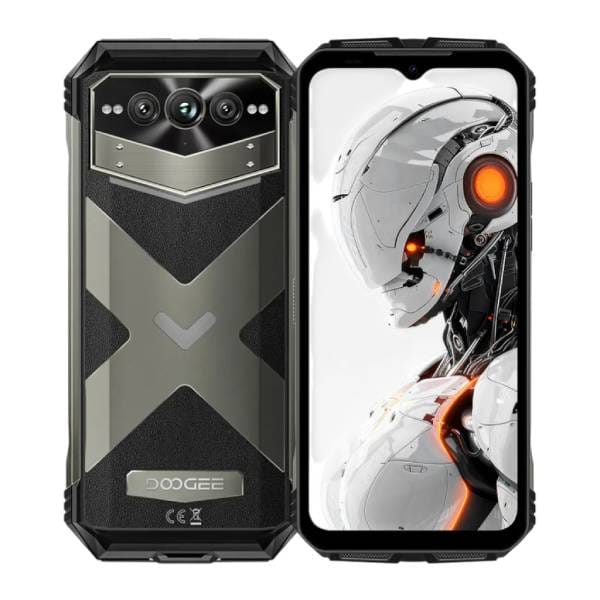
The DOOGEE V Max Pro 5G is a powerhouse rugged smartphone designed for users who need both extreme durability and exceptional battery life. It features a 6.58″ Full HD+ 120 Hz display protected by reinforced glass and housed within a thick shock-absorbing frame. Durability is top-tier: IP68/IP69K water-and-dust resistance and MIL-STD-810H certification ensure it survives drops, submersion, mud and harsh weather conditions.
Internally, it runs Android 14 with a MediaTek Dimensity 7050 5G chipset, generous RAM and large storage options, plus dual SIM and 5G support. Unlike more business-focused rugged phones, the V Max Pro prioritises battery endurance above all. Its enormous 22,000 mAh battery dramatically outperforms standard rugged devices, allowing multiple days of heavy field use without charging. Despite its size, it supports fast charging and even reverse charging for powering other devices.
In real-world use, the V Max Pro feels extremely solid and weighty — as expected from a high-capacity rugged model. It includes programmable side keys, NFC for payments, and powerful rear LED lighting for outdoor utility. The camera system (including a high-resolution main sensor and night vision capability) is suitable for documenting worksites and low-light environments, though image quality is functional rather than flagship-level.
✅ Why this pick: Balanced rugged certification combined with unmatched battery endurance and modern 5G connectivity.
Pros: Massive 22,000 mAh battery; full IP68/IP69K & MIL-STD-810H certification; 5G support; 120 Hz display.
Cons: Very heavy and thick due to battery size; premium price compared to mid-range rugged models.
Main standout: Extreme multi-day battery performance in a fully certified rugged body.
Who it's best for: Professionals working long shifts outdoors, field engineers, industrial users, and adventurers who prioritise battery life and durability over slim design.
Amazon UK Check: 👉 Check price on Amazon UK
The DOOGEE V Max Pro 5G is a high-capacity rugged flagship typically around £249–£350 on Amazon UK (depending on config/deals), due to its enormous battery and 5G hardware. If you need maximum runtime and full rugged protection, it’s one of the strongest options available on Amazon UK.
2. DOOGEE Blade 20 Pro – Best Extreme Rugged Phone
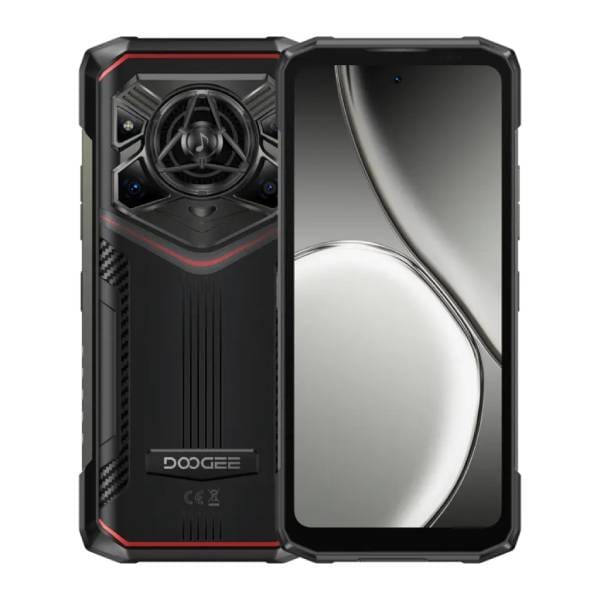
For pure toughness and battery life, the DOOGEE Blade 20 Pro is hard to beat. This phone emphasizes raw specs: a colossal 11,800 mAh battery (the largest here) and triple flashlights make it ideal for multi-day outdoor missions. It runs Android 15 on a fast octa-core CPU with Up to 24 GB RAM (6 GB physical + 18 GB virtual expansion) and 256 GB storage (expandable to 2 TB). The 6.6″ HD+ display is 90 Hz for smooth scrolling. Cameras include 50 MP + 20 MP + 8 MP rear sensors, plus an 8 MP front camera for selfies.
In toughness, the Blade 20 Pro meets the mark: it’s rated IP68/IP69K water/dustproof and MIL-STD-810H certified for extreme conditions. You can literally hosedown or drop it without worry. Despite its size, it’s surprisingly lighter than some (about 360 g). Audio is over-the-top: a 3.5 W 125 dB loudspeaker helps you hear calls on noisy sites. It even has an impressive 4,280 cm³ (17.4×8.12×1.58 cm) rugged metal frame. Doogee uses a Gorilla Glass 7 panel, so the screen is tough.
This phone’s battery lasts ages: DOOGEE claims a single charge runs ~24 h of continuous use (and days of standby). It supports 33 W fast charging and reverse charging to top up your gear. While not as slick-looking as Samsung, it’s built like a tank for demanding use. Be aware: at £150–£180 it’s very affordable for what you get (multiple sellers on Amazon UK show it new from ~£150), but Chinese support and UI polish may be mixed.
✅ Why this pick: Wildly long runtime and durability at a reasonable price. The Blade 20 Pro’s 11800 mAh battery easily outlasts other phones, and it packs full rugged certifications.
Pros: Monumental battery (up to ~55 h talk time claimed, days of standby in real-world mixed use), IP69K/MIL-STD rating, loud speaker (125 dB), triple SIM slot.
Cons: midrange processor (Unisoc T7200 or similar octa-core for efficiency), heavy and large (360 g), camera quality OK but not flagship.
Main standout: Extreme battery endurance – use it for days of hiking or fieldwork without charging.
Who it's best for: Outdoor adventurers or industrial users who need maximum uptime and durability at a midrange price.
Amazon UK Check: 👉 Check price on Amazon UK
The Blade 20 Pro is surprisingly affordable (often under £200) given its specs. It’s a top choice if you want extreme battery life and ruggedness on Amazon.
3. Blackview Fort 1 – Best Value Rugged Phone
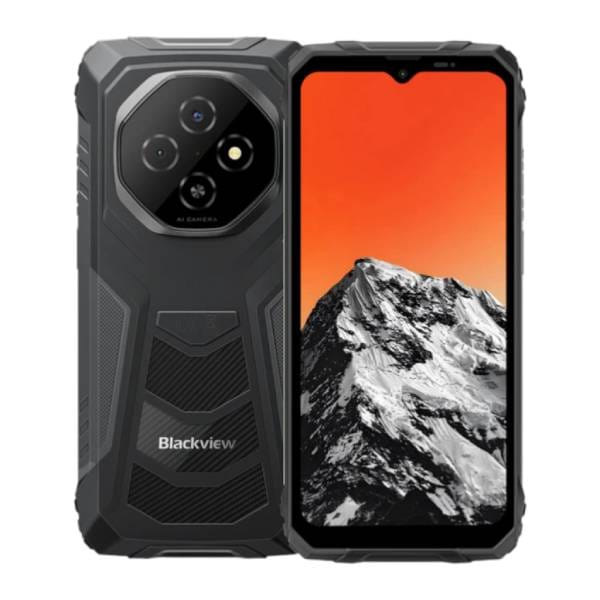
For budget-conscious buyers, the Blackview Fort 1 strikes a sweet balance of toughness and features at a low cost. It boasts a big 10,000 mAh battery and a 6.56″ HD+ display (90 Hz). The performance is driven by a recent Helio chipset, 12 GB RAM (4 GB fixed + 8 GB virtual), and 128 GB storage (plus microSD). It runs Android 15 and even includes NFC, face ID, and headphone jack – things often skipped on cheap phones.
Importantly, the Fort 1 has full rugged credentials: IP68/IP69K dust- and waterproof (can be submerged 1.5 m) and is shockproof from a 1.5 m drop (per its Amazon listing). Its body is reinforced but surprisingly light for a rugged phone (about 390 g). The cameras are basic (16 MP rear, 8 MP front), but adequate for documenting your work or hike. Triple SIM slots let you use two SIMs plus a memory card simultaneously.
The Fort 1’s real appeal is price: it’s often under £110 (Amazon shows ~£109 for the 12+128 GB model). For this price, you get a truly durable phone with 10000 mAh that can last multiple days. Blackview’s software is mostly stock and includes an 18 W charger in box. It’s not ultra-premium, but for many users it’s hard to beat on value.
✅ Why this pick: Outstanding features for the money. The Fort 1 offers IP68/69K protection and 10,000 mAh battery for a tiny fraction of flagship prices.
Pros: Very affordable (~£110), huge 10,000 mAh battery, IP69K water/dustproof, 12 GB RAM (expandable), NFC and 3 SIM slots.
Cons: Lower-end LCD display (720p), middling processor (4G only), basic cameras, heavy (390 g).
Main standout: Incredible battery life and toughness for the price.
Who it's best for: Anyone needing a rugged smartphone on a tight budget (construction workers, travellers on a budget, etc.).
Amazon UK Check: 👉 Check price on Amazon UK
The Blackview Fort 1 represents huge value. It sells around £108 (RRP ~£150) and includes the charger. For rough-and-tumble use without spending a fortune, it’s the bargain pick.
Comparison Table: Rugged Phone Specs (UK 2026)
| Feature | DOOGEE V Max Pro 5G | DOOGEE Blade 20 Pro | Blackview Fort 1 |
|---|---|---|---|
| Screen Size | 6.58″ FHD+ (120 Hz) | 6.6″ HD+ / FHD+ (90 Hz) | 6.56″ / 6.58″ HD+ (90 Hz) |
| Battery Capacity | 22,000 mAh | 11,800 mAh | 10,000 mAh |
| IP Rating | IP68 / IP69K | IP68 / IP69K | IP68 / IP69K |
| MIL-STD Certification | MIL-STD-810H | MIL-STD-810H | MIL-STD-810H |
| Processor | MediaTek Dimensity 7050 (5G) | MediaTek Helio G99 (or similar octa-core) | MediaTek Helio G85 / T615 |
| RAM / Storage | 12GB+ (RAM expansion) / 256GB+ (up to 512GB variants) | Up to 24GB (6GB physical + virtual) / 256GB | 8–12GB (RAM expansion) / 128GB |
| Expandable Storage | Yes (microSD) | Yes (microSD up to 2TB) | Yes (microSD) |
| Connectivity | 5G, 4G LTE, Dual SIM | 4G LTE, Dual/Triple SIM | 4G LTE, Dual SIM |
| Weight (Approx.) | ~536–570 g | ~360 g | ~390 g |
| Typical Amazon UK Price Tier | Premium rugged (~£249–£350+) | Mid-range rugged (~£150–£270) | Budget rugged (~£108–£150) |
🏆 DOOGEE V Max Pro 5G → Check price on Amazon UK
⚙️ DOOGEE Blade 20 Pro → Check price on Amazon UK
💰 Blackview Fort 1 → Check price on Amazon UK
What to Consider Before Buying a Rugged Phone
Choosing a rugged phone is about matching it to your environment and needs. Before you click “Buy” on Amazon UK, keep these buyer-focused factors in mind:
Use Case: Consider your daily demands. If you’re on a construction site or factory, extreme durability (high IP ratings, MIL-STD certification) and loud speakers/microphones may matter most[1]. For outdoor adventuring (hiking, camping, offshore work), big battery capacity and reliable GPS performance are key. If you just need a tougher-than-average phone for occasional outdoor use, a mid-range rugged model will suffice.
Durability Standards: Verify the IP and MIL certifications. IP68 means dust-tight and safe in around 1.5 m of water[1]. IP69K (common on serious rugged phones) adds protection against high-pressure hot water jets. MIL-STD-810H (or 810G/H) indicates it passed military stress tests (drops, shock, extreme temperatures). For example, some rugged models are rated for 1.5–1.8 m drops onto steel and multiple hours of water immersion. If your work involves heavy shock or repeated exposure to water (e.g. marine environments or industrial cleaning), pick a model with the highest available ratings. Note that some phones claim IP68 but skip IP69K — we recommend at least IP68 as a minimum.
Battery vs Portability: Rugged phones often trade weight for battery endurance. Decide if you prefer multi-day battery life or a lighter device. Heavy-duty models with 10,000 mAh+ batteries can weigh 350–500 g. High-capacity models like the DOOGEE V Max Pro 5G push this even further, prioritising extreme runtime over slim design. For lighter everyday use, a 5,000–8,000 mAh battery may reduce weight while still offering strong endurance. Remember that in demanding environments, battery life is critical — but a super-heavy phone may feel cumbersome on long shifts. Also consider charging speed: many rugged phones now support fast-charging and some offer reverse charging for powering accessories.
Connectivity: Check the phone’s network support and extras. Most modern rugged phones support 4G LTE, and many newer models include 5G (such as DOOGEE and other 2026 rugged releases). If you often work in remote areas (mountains, offshore sites), consider whether the device offers strong GPS accuracy or emergency features. For urban use, 5G may be less essential. Ensure dual-SIM and microSD expansion options if you need work and personal lines on one device. NFC is useful for contactless payments and is increasingly common in rugged devices.
Screen and Interface: A bright, glove-friendly display is essential if you use the phone outdoors in sunlight or rain. Many rugged phones support glove-touch and wet-touch functionality. Also check for programmable physical buttons (useful for push-to-talk apps or SOS shortcuts). Screen size matters too: larger displays (~6.5″) improve visibility but increase overall device size and weight; smaller models may be easier to handle with gloves or in tight spaces.
Software Support and Ecosystem: Consider how long you plan to keep the phone. Update policies vary significantly between brands. Some manufacturers offer longer-term Android updates, while smaller rugged brands may provide limited long-term support. Check the Android version (Android 14/15 are current in 2026) and ensure compatibility with UK networks. Most rugged phones are sold unlocked and SIM-free, offering flexibility across UK carriers.
Budget and Extras: Rugged phones span a wide price range. Premium rugged devices can cost £600–£900 or more, especially those with 5G and very large batteries. Mid-range and value rugged models are often priced between £150–£400. Decide which features are essential and which you can compromise on to save cost. In the UK, Amazon frequently offers limited-time discounts or bundle deals, so check for “Prime” labels or coupons before purchasing. Also review return policies (Amazon UK typically offers 30-day returns).
Practical Features: Think beyond raw durability. Many rugged phones include practical extras such as dual SIM + microSD slots, FM radio, powerful LED torches, loud speakers, or high-capacity batteries that double as emergency power banks. Confirm these features in the specifications if they matter to you. Most rugged phones use USB-C charging, and some newer models support fast-charging or reverse charging. If camera quality is important, set realistic expectations — rugged phones usually prioritise durability and battery over flagship-level photography.
By weighing these factors — protection ratings, battery capacity versus weight, connectivity needs and price — you can choose the rugged phone that best suits your demanding lifestyle.
FAQs
Q1: What is a rugged smartphone and why would I need one?
A rugged smartphone is a device built to withstand harsh environments. It has reinforced housings, shock-absorbent corners, and sealed ports to resist dust and water[3]. You’d choose a rugged phone if you work outdoors (construction, mining, emergency services) or enjoy extreme outdoor activities (hiking, sailing). They are designed so you can drop them, get them wet or dusty, and still keep working. For example, a typical rugged phone might survive 1.5 m drops and submersion in around 1.5 m of water, whereas a regular smartphone could break. In short, if you can’t afford to have your phone fail when conditions get tough, a rugged phone is worth it.
Q2: What do IP68, IP69K and MIL-STD-810H mean?
These are industry durability standards. IP68 means the phone is completely dust-tight (6) and can be submerged in about 1.5 m of water for 30 minutes (8). IP69K adds protection against high-pressure hot water jets (used in industrial cleaning). Together they ensure superior water and dust resistance. MIL-STD-810H (military standard) indicates the phone passed a series of tests (drops, shocks, vibration, temperature) defined by the US military. In practice, higher IP and MIL certifications indicate a tougher device. Always check the phone’s spec sheet: a good rugged model in 2026 typically includes at least IP68 and MIL-STD-810H.
Q3: Will a rugged phone have better battery life than a normal phone?
Generally yes. Rugged phones often include very large batteries (6,000–22,000 mAh) to ensure extended use in demanding conditions. For example, many regular smartphones average around 4,000–5,000 mAh, whereas rugged models in our list range from 10,000 mAh (Blackview Fort 1) up to 22,000 mAh (DOOGEE V Max Pro 5G). In real-world use, a rugged phone can last several days on a single charge. However, they also include bright screens and powerful radios, so actual battery life depends on usage patterns. Most rugged phones support fast charging, and some support reverse charging to power other devices. In summary: yes, expect significantly longer battery life compared to typical smartphones — with added weight as the trade-off.
Q4: Aren’t rugged phones too heavy and bulky to carry around?
It’s true they are heavier than slim smartphones. A rugged phone’s reinforced frame and high-capacity battery increase overall weight. Our picks range from approximately 360 g (DOOGEE Blade 20 Pro) to around 390 g (Blackview Fort 1), while ultra-high-capacity models like the DOOGEE V Max Pro 5G are heavier still due to their 22,000 mAh battery. By comparison, a typical midrange smartphone weighs around 180–200 g. So yes, they feel substantial in the hand. However, many users consider this acceptable given the durability and multi-day battery endurance. If pocketability is a priority, consider a mid-weight rugged model rather than a battery-focused flagship. Ultimately, balance toughness and endurance against portability for your daily routine.
Q5: Can I use a rugged phone in water or dirty environments?
Yes — that is exactly what they are designed for. A true rugged phone with IP68 certification can be submerged in water (often 1–2 m) without damage. IP69K-rated devices can withstand high-pressure sprays and industrial cleaning conditions. They are also dust-tight, meaning they function in mud, sand, sawdust or debris-heavy environments. You can use them confidently in heavy rain, rinse them under a tap, or drop them in a puddle without issue. After exposure to saltwater or dirty water, rinsing with clean water is advisable. As long as you stay within the rated limits, rugged phones are built to survive environments that would damage ordinary smartphones.
Q6: Are rugged phones expensive and worth it?
Rugged phones span a wide price range. Premium rugged devices with 5G, high IP/MIL ratings and very large batteries can cost £600–£900+. However, many capable rugged phones are available at far lower prices. Brands like DOOGEE, Blackview, Ulefone and OUKITEL offer durable models between £150–£400. For example, the Blackview Fort 1 combines a 10,000 mAh battery and IP69K protection at a relatively accessible price point. Whether it’s worth it depends on your environment. If you frequently damage phones due to drops, water or dust, the additional upfront cost can save money long-term. Rugged devices are designed for longevity under stress.
Q7: Can I use all my usual apps on a rugged phone?
Absolutely. Rugged phones run standard Android, so you can install any apps from the Google Play Store just like on a regular smartphone. They support Wi-Fi, Bluetooth, GPS and mobile data (4G or 5G) for connectivity. The major difference is physical durability, not software limitations. You’ll still have access to Google Maps, email, WhatsApp, work apps and streaming services. Many rugged phones include NFC for contactless payments and keycard functionality. As long as the device supports the necessary UK network bands (listed in the specifications), it will function like any other Android smartphone — just in a much tougher shell.
Final Verdict
- DOOGEE V Max Pro 5G – A well-rounded rugged flagship that balances extreme battery life, modern performance and full protection. With IP68/IP69K and MIL-STD-810H certification, huge 22,000 mAh battery and 5G connectivity, it handles multi-day field use without recharge and stands up to drops, dust and rain → Check price on Amazon UK
- DOOGEE Blade 20 Pro – The extreme champion with an 11,800 mAh battery and IP68/IP69K water-dust proofing. It weighs ~360 g and is Android 15 ready. Ideal for multi-day outings or heavy industrial use on a mid-range budget → Check price on Amazon UK
- Blackview Fort 1 – Best value pick. An IP68/IP69K rugged phone (1.5 m drop-proof) with 10,000 mAh battery at a bargain price (~£110). It runs Android 15 and packs 12 GB RAM, making it a tough performer for the cost → Check price on Amazon UK
Each of these picks survives tough conditions and is available on Amazon UK. Check their current prices on Amazon (links above) and choose the one that best fits your balance of durability, battery life and budget.
We update our comparisons regularly to keep everything accurate, up to date, and focused on UK availability.