Best Drones for Beginners (UK 2026) – Affordable Aerial Photography Picks
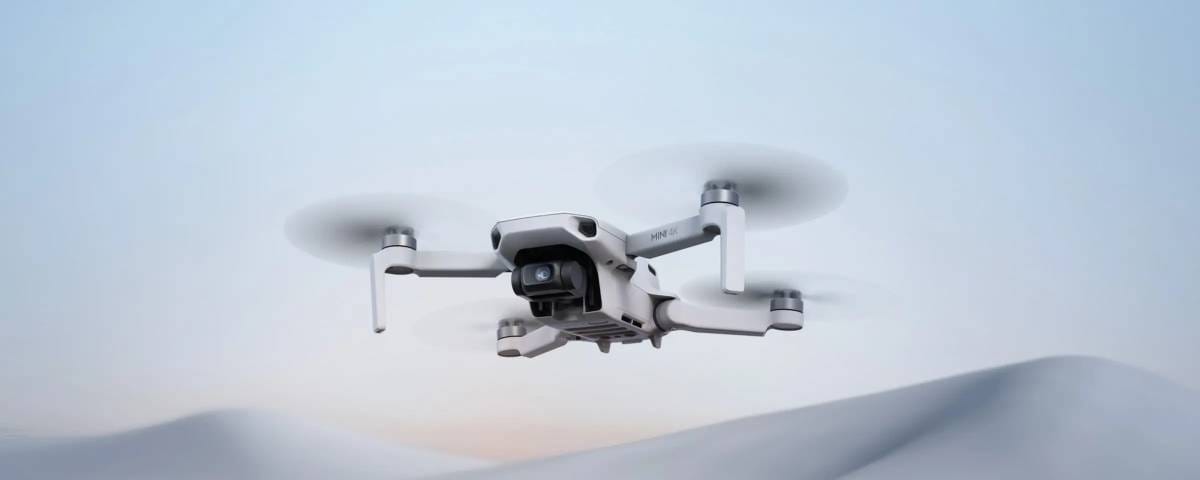
Reviewed for ease of use, camera quality & value – updated Feb 2026
🥇 DJI Mini 4K – The safest “first proper drone” all-rounder for most beginners → Check price on Amazon UK
🥈 DJI Mini 3 – Best step-up choice if camera quality is the priority → Check price on Amazon UK
🥉 DJI Neo – Lowest-cost, ultra-portable beginner pick for casual 4K clips → Check price on Amazon UK
👉 Scroll down to see full reviews and Amazon UK links
Introduction
This guide is for UK buyers who want an easy-to-fly first drone in 2026: something stable, reliable, and affordable, with a camera good enough for holidays, weekend walks, and “first aerial photography” projects — without drifting into pricey pro drones or FPV racing setups. In 2026, light under-250g camera drones (often UK0 class) remain a top choice for beginners, as they qualify for the Open category A1 (Over People) sub-category and are straightforward to operate, provided you follow the UK Civil Aviation Authority’s ID and safety rules.[1]
Beginner drones are different from pro drones because the priorities flip: instead of maximum sensor size, advanced obstacle sensing, and high-end colour profiles, you want predictable hovering, simple take-off/landing, clear app guidance, and strong “get me home safely” fail-safes like Return-to-Home.
To select the three picks below, we cross-checked current UK pricing and availability on Amazon UK / mainstream UK retailers, confirmed key specs from manufacturer pages, and prioritised models repeatedly recommended in recent 2025–2026 testing and buying guides from major consumer drone publications.[2]
What Makes a Great Beginner Drone in 2026
In 2026, a great beginner drone in the UK should feel “confidence-building” from the first battery: predictable controls, stable video, and enough safety automation that you’re not constantly fighting panic or wind drift.
Ease of use: Look for stable hovering, clear in-app tutorials, and simple, repeatable take-off/landing. Drones like the Mini 4K are explicitly positioned as beginner-friendly with one‑tap take-off/landing, stable hovering and Return to Home.
Camera quality: For beginners, the biggest quality jump is stabilisation. A multi‑axis mechanical gimbal generally produces smoother video than electronic stabilisation alone, especially in wind. A good baseline is 4K/30fps video and 12MP photos — then “better” comes from larger sensors and HDR processing (for highlights and shadows).
Flight time: Real-world flights are shorter than advertised, but you’ll still feel the difference between ~18 minutes and ~30–38 minutes per battery. (That’s why “Fly More” kits or spare batteries matter.) DJI lists 31 minutes for Mini 4K and UK listings commonly quote up to 38 minutes for Mini 3.
Range and controller: Most modern drones advertise multi‑km transmission, but UK flying rules require you to keep the drone in direct sight (VLOS), which usually matters more than raw range. Controller-free Wi‑Fi modes can be very short range (for DJI Neo, DJI lists 50m “effective operating range” over Wi‑Fi).
Safety features: Return‑to‑Home is the big one for beginners. Obstacle avoidance is excellent — but often missing from truly budget-friendly drones, so you’ll rely on good habits (space, height, and line of sight) rather than sensors.
UK legal basics (weight/classes): Under‑250g drones (typically UK0 class or legacy C0) can be flown in the Open category A1 (Over People), and from 2026 the CAA recognises UK0 and UK1 classes (or equivalent legacy C0/C1) for A1 operations, with UK1 extending eligibility up to under 900g. You still need the right IDs: as of January 2026, you must have a Flyer ID for drones 100g and above, and an Operator ID for drones 100g and above with a camera (or 250g and above regardless of camera).
Top 3 Picks (UK 2026)
DJI Mini 4K – Best overall beginner drone
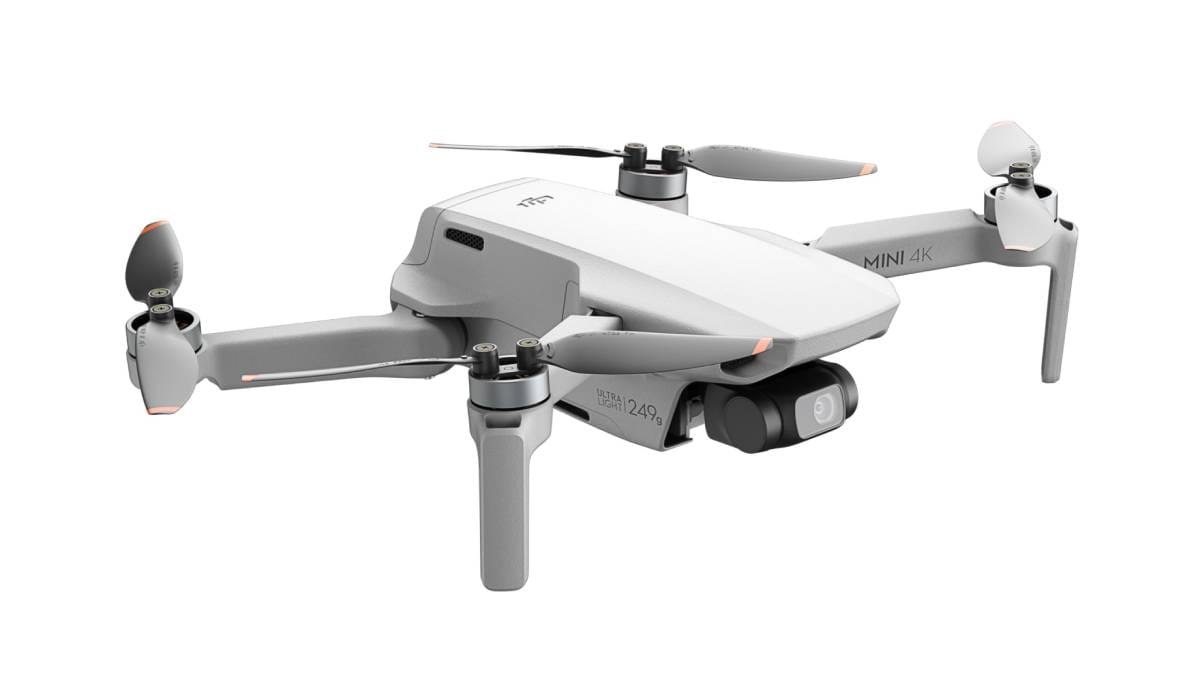
The DJI Mini 4K is one of the most straightforward “first serious drone” options you can buy in the UK in 2026 — because it delivers the essentials (stable flight + stabilised 4K footage) without the price jump that comes with advanced sensing systems. DJI markets it as “Aerial Photography Made Easy” and explicitly highlights one-tap take-off/landing, Return-to-Home (RTH) and stable hovering for beginners. It stays under 249g, which is the sweet spot for portability and Open category A1 (Over People) flying as a UK0/legacy C0 class drone (while still requiring the correct UK IDs because it’s a camera drone).[3]
Camera-wise, you’re getting a 1/2.3-inch CMOS camera capable of 4K/30fps video, backed by a 3‑axis gimbal — a key reason footage looks smooth even when your hands are shaky on the sticks. DJI also lists a 10km video transmission system (DJI O2), plus QuickShots and Panorama modes that help beginners get “cinematic-looking” clips without flying complex manual paths. In UK real-world use, you’ll mainly fly within line of sight, but the stronger link can still mean fewer dropouts in open countryside.
✅ Why this pick
Pros:
- Proper stabilised 4K/30 video with a 3‑axis gimbal (smooth footage without extra editing).
- Beginner-focused features: one-tap take-off/landing, stable hover and Return-to-Home.
- Strong value in the UK: commonly ~£215–£269 depending on deals/kits.
Cons:
- Lacks advanced obstacle avoidance and subject tracking found on pricier drones.
Main standout feature: A 3‑axis gimbal paired with true beginner-friendly flight automation — it’s the most “forgiving” way to get real 4K aerial footage on a sensible UK budget.
Who it’s best for: First-time pilots who want a reliable travel drone for landscapes, family trips and hobby filming — and who value predictable controls over “smart tracking” gimmicks.
Pricing is also genuinely beginner-friendly. At the time of research, Amazon UK listings show it around £269, and UK deal coverage in early 2026 has also highlighted drops into the £215–£269 range depending on bundles and sales.
DJI Mini 3 – Best camera-focused beginner drone
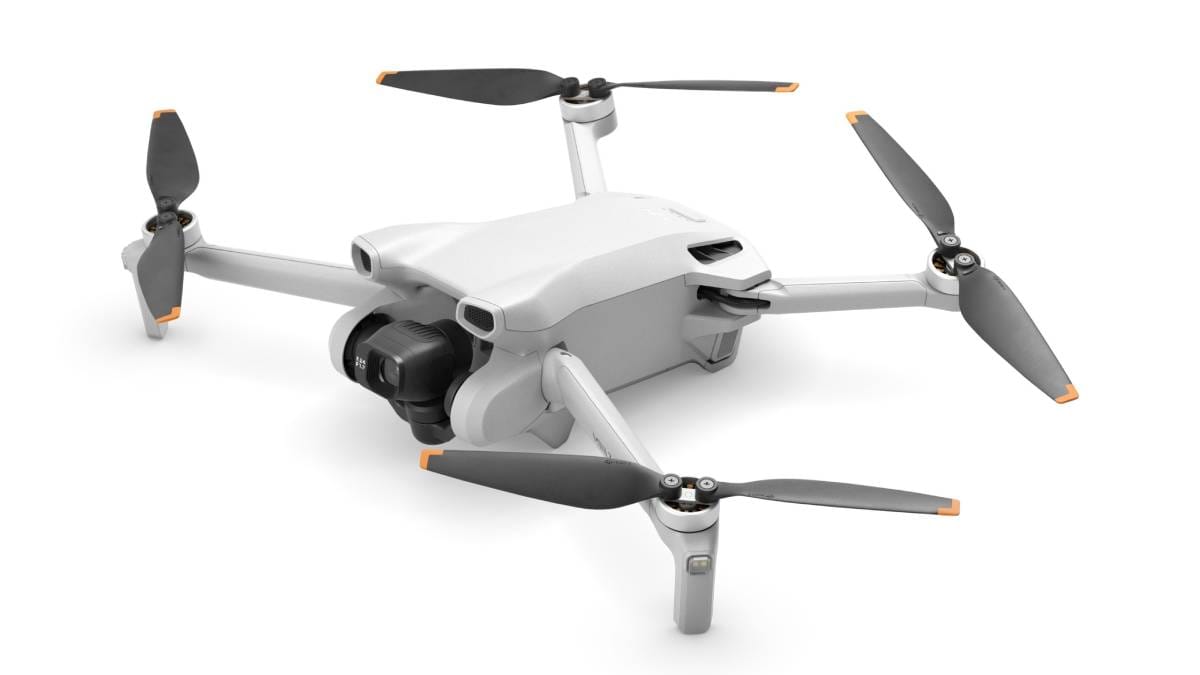
If your main goal is better-looking footage — especially in tricky lighting — the DJI Mini 3 is the most sensible “camera upgrade” while still staying in a true beginner category. DJI positions the Mini 3 as a compact, ultra‑lightweight camera drone built for 4K HDR video and “True Vertical Shooting”, which is particularly useful if you want ready-to-post social clips without awkward cropping.[4]
The biggest photography advantage is the sensor: DJI highlights a 1/1.3‑inch sensor (with dual native ISO) for the Mini 3. In practice, that usually means cleaner results at dusk, less noisy shadows, and more flexibility when you’re filming sunrise/sunset scenes — exactly the kind of situations beginners love shooting on holiday. It remains under 249g for easier packing and Open category A1 (Over People) alignment as a UK0/legacy C0 class drone.
Flight time is another reason it’s a “camera-first” beginner pick. UK retailer listings commonly quote up to 38 minutes of flight time, which gives you more breathing room to compose shots, redo takes, and land safely without rushing. And like the Mini 4K, it’s built around the familiar DJI-style GPS stability and automated return, so it doesn’t feel like a risky upgrade — it feels like “more time and better footage”.
✅ Why this pick
Pros:
- Better imaging headroom for beginners thanks to the 1/1.3‑inch sensor and 4K HDR capture.
- True Vertical Shooting makes it far easier to create social-friendly clips without cropping.
- Longer quoted endurance (commonly up to ~38 minutes) helps beginners take their time with framing and safe landings.
Cons:
- Still a “budget-oriented” drone in safety terms — you’re not buying this for advanced obstacle avoidance.
Main standout feature: A larger 1/1.3-inch sensor paired with 4K HDR and true vertical shooting — the most noticeable real-world image-quality upgrade that still feels beginner-friendly.
Who it’s best for: Beginners who care about photo/video quality first (travel, content creation, landscapes) and are happy to pay a bit more than the Mini 4K for stronger camera performance.
On price, it sits above the Mini 4K but is still within beginner-friendly territory if you’re shopping sensibly. Amazon UK listings show the Mini 3 around £339 for common kits, and some listings show lower/higher depending on configuration (controller bundle, Fly More packs, etc.).
DJI Neo – Best value budget beginner drone
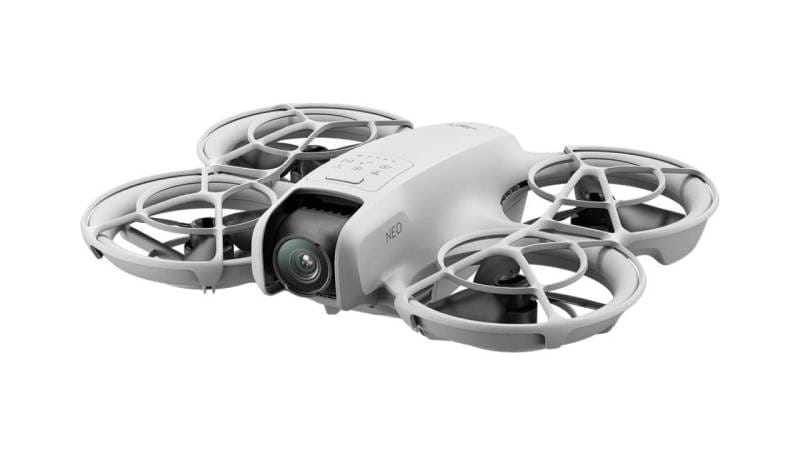
For many beginners, the real barrier isn’t skill — it’s the fear of spending £300+ and then crashing on day one. DJI Neo is the most budget-friendly option in this guide because it’s designed to lower that risk: it’s extremely light (135g), compact, and built around “just get it in the air” features like palm take-off/landing and automated subject tracking.[5]
Camera specs are also stronger than you might expect at this price. DJI lists a 1/2‑inch image sensor, 12MP photos, and 4K/30fps recording (with EIS on), plus a vertical 9:16 option at 1080p for social clips. It also includes 22GB of internal storage, which can be convenient if you don’t want to think about microSD cards immediately.
The trade-off is endurance and “proper drone” handling. DJI lists roughly 18 minutes max flight time, so this is more of a quick‑session drone than an all-day landscape machine. Control options also matter: DJI Neo can be used in a controller-free, Wi‑Fi style mode, but DJI’s own specs list an “effective operating range” of 50m via Wi‑Fi — meaning it’s best for close-by shots unless you add a remote controller. With the DJI RC‑N3 remote, DJI lists O4 video transmission up to 6km under CE rules (relevant for the UK), but UK pilots must still keep the drone in direct sight regardless of transmission range. [6]
✅ Why this pick
Pros:
- Very low cost of entry for a DJI-branded 4K drone (often ~£125–£169 depending on deals).
- Beginner-friendly “selfie drone” design: palm take-off/landing, tracking and QuickShots-style automation.
- Solid on-paper imaging for the price: 1/2-inch sensor, 12MP photos, 4K/30 (with EIS).
Cons:
- Shorter flight time (around 18 minutes max) and less “cinematic stability” than drones with a full multi-axis gimbal.
Main standout feature: Palm take-off + tracking-driven “set piece” shots at the lowest beginner-friendly price — ideal if you want to see whether the hobby sticks before upgrading.
Who it’s best for: Absolute beginners, casual travellers, and anyone who wants simple 4K clips (and low financial risk) more than long flights or cinematic landscape filming.
UK pricing is the final reason it earns the budget medal. Amazon UK listings show it around £169 in standard form,[18] and UK deal coverage has reported drops into the ~£125–£169 range during promotions.
👉 Check price on Amazon UK
Comparison Table
Comparison Table: Best Beginner Drones (UK 2026)
|
FEATURE |
DJI MINI 4K |
DJI MINI 3 |
DJI NEO |
|
Camera specs (photo / video) |
12MP stills; 4K/30 video; 1/2.3" CMOS;
3‑axis gimbal. |
1/1.3" sensor; 4K HDR; True Vertical
Shooting; designed for better low-light results. |
1/2" sensor; 12MP; 4K/30 (EIS on) +
vertical 1080p; 22GB storage. |
|
Flight time |
Up to ~31 mins (spec claim). |
Up to ~38 mins (commonly quoted UK listings). |
Up to ~18 mins (spec claim). |
|
Control range |
DJI O2 up to 10km (spec claim; UK flying is
VLOS). |
Commonly listed up to 10km transmission (still
VLOS in UK). |
With RC: max 6km (CE); Wi‑Fi effective range
50m. |
|
Weight & portability |
<249g; folds small for travel. |
<249g; compact travel drone. |
135g; easiest to pack and the least
intimidating. |
|
Safety features |
Stable hover + Return-to-Home; no advanced
obstacle avoidance. |
GPS stability + automated return; built for
simple, safe flying. |
Propeller-guarded, palm take-off/landing,
tracking automation; shorter flights. |
|
Price range in UK |
Typically ~£215–£269 depending on deals/kits. |
Typically ~£295–£339 for common kits (varies
by bundle). |
Typically ~£125–£169 depending on sales. |
|
Best for |
Most beginners who want stable 4K and a
“proper” drone feel. |
Beginners prioritising image quality, HDR and
vertical content. |
Lowest-cost entry point; casual 4K clips and
quick sessions. |
DJI Mini 4K → Check Price on Amazon UK
DJI Mini 3 → Check Price on Amazon UK
DJI Neo → Check Price on Amazon UK
What to Consider Before Buying
Even among “beginner drones”, your best choice depends on where and how you’ll actually fly.
UK drone rules and registration: As of January 2026, UK rules require a Flyer ID for any drone or model aircraft 100g and above, and an Operator ID if the drone is 100g and above with a camera (or 250g and above regardless). That means all three picks here (camera drones above 100g) require both a Flyer ID and an Operator ID.[7]
Class marks and what C0/C1 means in the UK: From 1 January 2026, new drone models placed on the UK market must carry a UK class mark (UK0–UK6). If your drone has an EU C class mark (common on models like the Mini series and Neo), the CAA allows you to fly it as the corresponding UK class (e.g., C0 as UK0, C1 as UK1) until 31 December 2027.[8]
Battery life and spares: Expect to want at least one spare battery. Mini 4K (~31 minutes) and Mini 3 (~38 minutes) are far less “rushed” than Neo (~18 minutes), especially when you’re learning.
Portability and travel: Under‑250g drones are easier to pack and generally easier to fly in the Open category A1 (Over People) (still: no crowds, and always fly responsibly). Neo is the easiest “throw it in a bag” option; the Minis offer better landscape filming.
Controller type and compatibility: Controller-free modes can be convenient but may be short range (DJI lists 50m via Wi‑Fi for Neo).[17] If you want a more “classic drone” experience and smoother panning shots, a controller + gimbal-based drone (Mini 4K / Mini 3) is the easier learning platform.
Camera quality vs price: If you care about cinematic smoothness and stable horizons, prioritise a multi‑axis gimbal (Mini 4K / Mini 3). If you mainly want quick social clips and low cost, Neo’s stabilised 4K can be “good enough” — with the trade-off of shorter flights.
Frequently Asked Questions
Q1: Do beginner drones need registration in the UK?
Yes, in most cases. As of January 2026, you need a Flyer ID for drones 100g+ and an Operator ID if the drone is 100g+ with a camera.
Q2: What camera quality is “good enough” for beginners?
Look for 4K/30 video and decent stabilisation. A mechanical gimbal usually looks smoother than EIS alone, especially when it’s windy.
Q3: How long can beginners expect to fly?
Roughly 18–38 minutes per battery depending on the drone (Neo at the low end; Mini 3 at the high end). Extra batteries make learning far less stressful.
Q4: Are replacement parts easy to find?
For mainstream models, yes: props, batteries, and cases are widely stocked on Amazon UK and major UK retailers. Budget for spare props and at least one extra battery.
Final Verdict
In 2026, the best beginner drone for most UK buyers is the DJI Mini 4K: it’s easy to fly, stable, and delivers genuine 4K footage at a realistic entry-level price. The DJI Mini 3 is the right choice if you’re buying primarily for better-looking images (HDR + larger sensor). If you want the cheapest, least intimidating way to start flying 4K, DJI Neo is the clear budget pick.
- DJI Mini 4K is the best overall starter drone for stable 4K travel filming → Check price on Amazon UK
- DJI Mini 3 is the best beginner choice if camera quality is your top priority → Check price on Amazon UK
- DJI Neo is the best value budget pick for casual 4K clips and quick sessions → Check price on Amazon UK
We update our comparisons regularly to keep everything accurate, up to date, and focused on UK availability.