Best Camera Phones (UK 2026) – Top Picks for Zoom, Portraits & Low Light
A detailed UK comparison of three flagship camera phones for effortless portraits, enthusiast photography and genuine long-distance optical zoom.
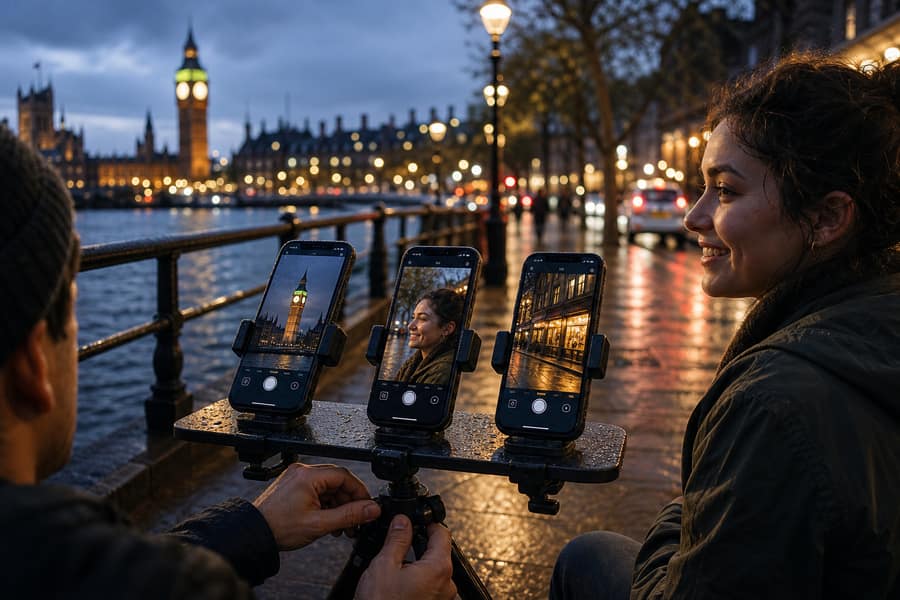
Quick answer: choose the Google Pixel 11 Pro XL for dependable point-and-shoot photography and natural-looking portraits, the Xiaomi 17 Ultra for large-sensor hardware and flexible Leica telephoto framing, or the OPPO Find X9 Ultra when a genuine 10x optical camera matters most. This guide is updated for 2026 and separates native optics from processed zoom claims.
- 🥇 Google Pixel 11 Pro XL — Best for computational photography, portraits and easy point-and-shoot results — Check price on Amazon UK
- 🥈 Xiaomi 17 Ultra — Best specialist camera phone for Leica imaging, large sensors and long-range zoom — Check price on Amazon UK
- 🥉 OPPO Find X9 Ultra — Best for maximum optical reach, concerts and detailed telephoto photography — Check price on Amazon UK
👉 Continue for detailed reviews, a direct specification comparison and the checks UK buyers should make before ordering.
Introduction
The best camera phones UK 2026 buyers can choose are not necessarily the models with the largest megapixel number. Someone photographing children, pets and friends needs fast, reliable automation and believable skin tones. A travel photographer may care more about sensor size and several useful telephoto framing options. At a concert, wildlife reserve or distant landmark, the decisive feature may instead be a genuinely long optical lens that does not depend on an extreme crop.
Those situations lead to three different recommendations. The Google Pixel 11 Pro XL is the approachable option: it combines a 50MP main camera, 48MP ultrawide and 48MP 5x telephoto with Google’s computational photography and editing tools.[1] Xiaomi takes a more camera-hardware-led route with the Xiaomi 17 Ultra, using a 1-inch-type main sensor and a mechanically variable 75–100mm telephoto.[3][4] OPPO goes furthest for native reach, pairing a 70mm 3x portrait telephoto with a separate 230mm-equivalent 10x optical camera.[5]
No specification guarantees the best result in every scene. A large sensor can help gather light, but exposure timing, autofocus, optical stabilisation, lens quality and processing still shape the photograph. Night photographs and night video must also be judged separately: stacking several still frames is a different challenge from controlling noise, focus and motion continuously while filming.
We selected these exact 2026 models because they represent three meaningfully different approaches rather than three interchangeable flagships. Official manufacturer and support documentation establishes the hardware and feature claims, while reputable independent reviews provide context on portrait rendering, detail, processing and low-light limitations. ChoiceWise has not claimed first-hand testing here.
Best camera phones UK 2026: the top three worth buying
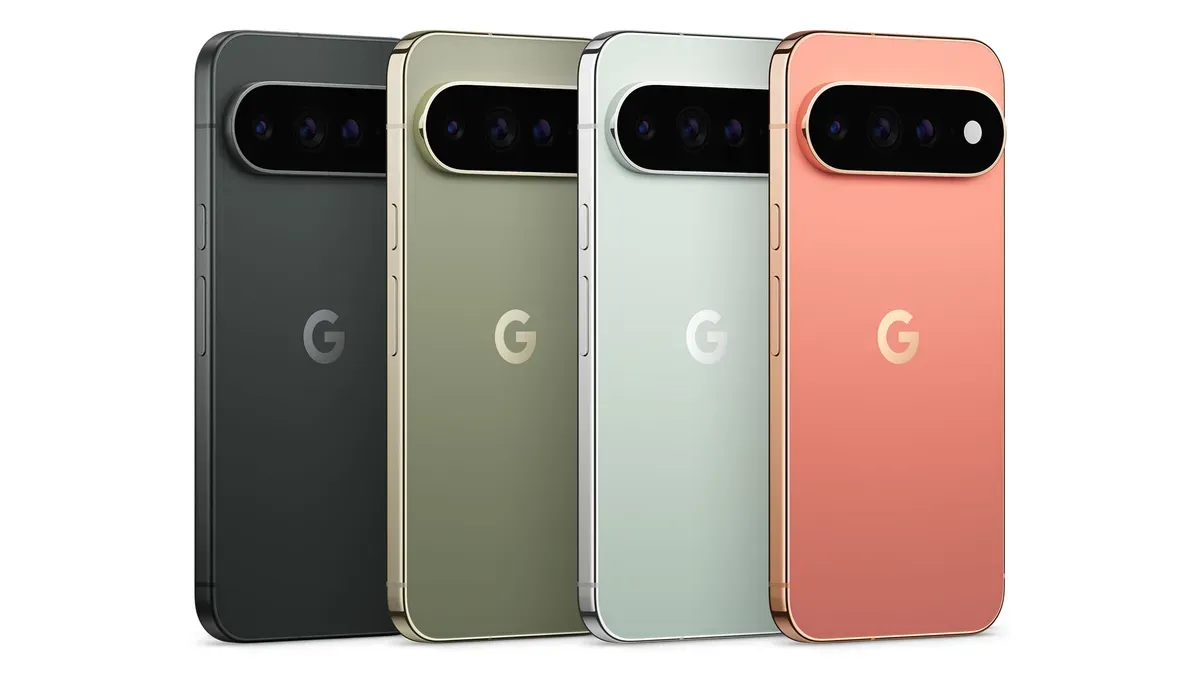
1. Google Pixel 11 Pro XL — Best for effortless portraits and point-and-shoot photography
✅ Pros:
- Excellent computational tools for quick portraits, HDR scenes and night photographs
- Useful triple-camera system with a genuine stabilised 5x optical telephoto
- Clear seven-year commitment covering OS, security and Pixel Drop updates
⛔ Con:
- Its 5x native telephoto cannot match OPPO’s dedicated 10x camera for repeated extreme-distance shooting
The Google Pixel 11 Pro XL is the strongest overall recommendation for most buyers because it asks the least of the photographer. Its appeal is not that it has the most exotic hardware in this comparison; it is that Google combines capable cameras with automated exposure, HDR, portrait and editing systems designed to produce a useful image with minimal intervention.
The rear array consists of a 50MP wide camera with a 1/1.3-inch sensor and optical image stabilisation, a 48MP autofocus ultrawide with Macro Focus, and a stabilised 48MP telephoto offering 5x optical zoom. Google also lists optical-quality zoom positions through 10x and Pro Zoom up to 120x.[1] Those descriptions need separating carefully. The 5x lens is the genuine optical starting point; the higher figures involve cropping and computational enhancement. A 120x Pro Zoom label therefore does not mean that the phone contains a 120x optical lens.
For daily photography, the Pixel’s advantage is how much it does around that hardware. Its official feature set includes High-Res Portrait Mode, Instant Night Sight, Astrophotography, Real Tone, Macro Focus, Camera Coach, Magic Capture, Photo Unblur, Zoom Enhance and Portrait Light.[1] These tools address common real-world failures: a face that is poorly exposed, a night scene with bright highlights, an old or slightly blurred photograph, or a portrait that needs its lighting adjusted after capture.
Independent evidence supports the portrait-led positioning without proving that every image will be perfect. Android Central found that the Pixel 11 Pro camera platform retained fine texture rather than smoothing it away aggressively, and reported substantially improved portrait subject separation over the previous generation.[8] DXOMARK’s Pixel 11 Pro XL assessment praised exposure, highlight preservation, accurate skin tones, reliable autofocus and a progressive portrait blur gradient.[9] Together, those observations make the Pixel especially attractive for familiar faces, pets and travel companions, where skin colour and convincing subject edges can matter more than dramatic sharpening.
Low light is another reason to consider it, but still images and video should not be merged into one claim. Instant Night Sight and Google’s multi-frame processing make dim still photography approachable, while the independent exact-model test found good exposure and dynamic range. That test also identified residual noise in darker video, however, as well as weaker fine detail from the ultrawide.[9] The practical conclusion is that the Pixel is a strong automated night-photography choice, not a guarantee of pristine footage from every dark moving scene.
Video specifications are broad enough for most users. Google lists rear 4K recording at up to 60fps, 10-bit HDR, Night Sight Video and several stabilisation modes. It also lists 8K at 24 or 30fps through Video Boost.[1] The qualification matters: buyers should not assume that every 8K benefit is captured and completed entirely on the handset. For family clips and social video, 4K is likely to be the more manageable everyday mode in terms of storage, processing and editing.
Main standout feature: the Pixel’s defining strength is its balance between a versatile 5x camera system and computational assistance. It can handle wide scenes, close-up Macro Focus shots, people and moderately distant subjects without requiring the owner to think like a manual-camera user. It may not deliver OPPO’s native 10x reach or Xiaomi’s mechanically changing telephoto focal length, but it is the most coherent choice when missed moments matter more than technical experimentation.
Ownership confidence also favours Google. The Pixel 11 Pro XL is explicitly covered by seven years of OS, security and Pixel Drop updates, measured from first availability on the Google Store in the US.[2] Google lists IP68 resistance and offers 256GB, 512GB and 1TB configurations within the Pixel 11 Pro family specifications.[1] Confirm the precise capacity on the retailer page, particularly if high-resolution photographs and video will accumulate over several years.
Who it is best for: families, travellers and social photographers who want attractive results without spending time adjusting controls. It is also the most reassuring option here for someone who places high value on a clearly documented long-term update policy. Avoid making it your first choice if concerts, wildlife or distant architecture dominate your camera roll. Its practical compromise is straightforward: you receive the easiest overall photographic workflow, but accept less native reach and less specialist optical hardware than the two Ultra models.
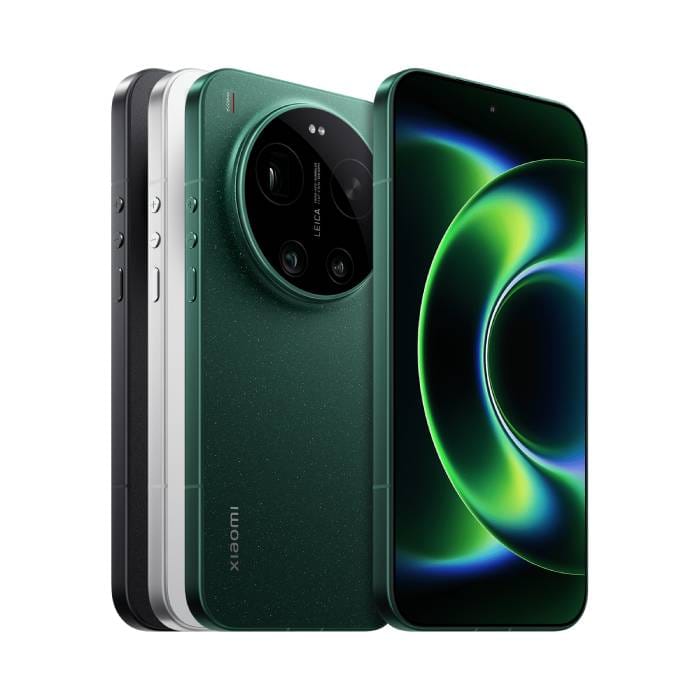
2. Xiaomi 17 Ultra — Best for Leica imaging and enthusiast telephoto framing
✅ Pros:
- Large 1-inch-type main sensor with optical image stabilisation
- Unusual 200MP telephoto that moves optically from 75mm to 100mm
- Strong still-photography credentials for portraits, low light and deliberate framing
⛔ Con:
- Independent testing is less convincing about low-light video than low-light still photography
The Xiaomi 17 Ultra is the specialist choice for someone who enjoys the act of photography, not merely the final image. Its hardware is designed around useful sensor area and deliberate focal-length selection. That makes it more interesting than a phone that relies on one very high maximum zoom label, particularly for portraits, street details, travel and landscapes.
The centrepiece is a 50MP Leica main camera with a 1-inch sensor, f/1.67 aperture and optical image stabilisation. It is joined by a 50MP Leica ultrawide with a 115-degree field of view and close focusing for 5cm macro work.[3] A large main sensor can provide a stronger foundation for light gathering and natural depth, but it does not automatically defeat every smaller-sensor rival. Focus accuracy, exposure, lens performance and image processing still determine whether its theoretical advantage survives into the finished photograph.
The telephoto is what makes the Xiaomi genuinely distinctive. It uses a 200MP, 1/1.4-inch sensor behind a mechanical optical zoom system spanning 75–100mm, with listed positions at 75mm, 85mm, 90mm and 100mm.[3] Leica describes the design as meeting its APO standard, intended to support high optical precision and reduce colour fringing.[4] This is not the same strategy as switching between several fixed camera modules. The focal length of Xiaomi’s telephoto optics changes mechanically within that range.
That difference has everyday value. A 75mm view is well suited to environmental portraits and details where some context should remain. Moving towards 90mm or 100mm tightens framing and increases the compressed telephoto appearance without forcing the photographer to walk immediately closer or rely only on a digital crop. For travel, it provides several meaningful compositions between a standard view and genuinely long-distance photography. Xiaomi also lists 200mm and 400mm output positions, but these should not be confused with the native 75–100mm mechanical optical range.[3]
Independent findings broadly support the stills-first case. DXOMARK found the Xiaomi particularly strong for telephoto and portrait photography and described its low-light photo performance as excellent, with high detail in most tested situations.[11] TechRadar likewise characterised the combination of Leica collaboration, 1-inch main sensor, large telephoto sensor and mechanical zoom as an especially strong integration of photographic hardware and software.[10] These are reviewer assessments rather than universal guarantees, but they suggest the unusual specification has practical substance.
The caveat is video. Xiaomi officially advertises 4K 120fps Log capture and Dolby Vision-oriented tools, giving experienced users useful options for slow motion and colour work.[3] However, DXOMARK rated video as good rather than class-leading and found low-light moving-image performance notably weaker than the phone’s low-light still photography.[11] Anyone comparing camera phones for night-time events should therefore ask whether the priority is a carefully captured photograph or continuous footage of moving people. The Xiaomi’s strong night photographs do not automatically make it the best night-video phone.
Main standout feature: the mechanically variable 75–100mm Leica telephoto is the reason to buy the Xiaomi 17 Ultra. It supplies real framing flexibility across classic short-to-medium telephoto focal lengths instead of making the photographer jump from the main camera to one fixed long lens. It is particularly useful for considered portraits and travel details, where composition matters more than reaching the largest number on a zoom slider.
Practical ownership features include a typical 6,000mAh battery, 90W PPS wired charging, 50W wireless charging and IP68 resistance under specified laboratory conditions.[3] Xiaomi warns that liquid damage outside those conditions is not covered by warranty, so the rating should be treated as accident protection rather than permission for underwater photography.
Xiaomi offers Photography Kit and Photography Kit Pro accessories separately. They are not included automatically, and the attached Photography Kit has an IP54 rating under stated laboratory conditions rather than retaining the phone’s full IP68 classification.[3] Buyers attracted by a camera-style grip should account for the extra cost and check exactly what a retailer bundle contains. The available research also does not establish a model-specific UK software-support duration for the Xiaomi 17 Ultra, so it would be unsafe to assume that it matches Google’s seven-year commitment.
Who it is best for: enthusiasts who understand why 75mm, 85mm and 100mm framing choices matter, and who want large-sensor still photography in a phone. It also suits portrait photographers who enjoy controlling viewpoint rather than relying entirely on software blur. Buyers focused primarily on simple automatic shooting may get more value from the Pixel, while those needing native 10x reach should choose OPPO. The compromise is that Xiaomi’s still-photo hardware is more compelling than its independently assessed low-light video performance, and its UK support duration is less certain in the current source set.
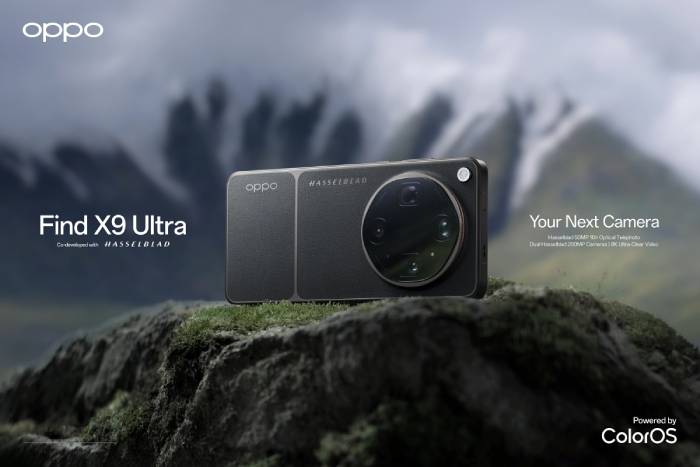
3. OPPO Find X9 Ultra — Best for native 10x zoom, concerts and distant subjects
✅ Pros:
- Dedicated 230mm-equivalent camera provides genuine 10x optical zoom
- Separate large-sensor 3x telephoto is practical for portraits and nearby details
- Extensive creative video and manual shooting features for advanced users
⛔ Con:
- Default processing can occasionally look overly sharpened or HDR-heavy
The OPPO Find X9 Ultra has the clearest specialist purpose of the three phones: it is designed for subjects that cannot easily be approached. At a concert, across a landscape, around wildlife or when picking out architectural details, its separate native 10x optical camera begins with more credible distant-subject material than asking a 5x lens to perform all the remaining enlargement through cropping and processing.
Its camera system is unusually comprehensive. The main camera uses a 200MP, 1/1.12-inch Sony sensor, a 23mm-equivalent view and f/1.5 aperture. A second 200MP camera provides a 70mm-equivalent 3x telephoto view, using a 1/1.28-inch sensor, f/2.2 aperture and 15cm telephoto-macro capability. The phone also includes a 50MP, 14mm ultrawide with a 123-degree field of view.[5] Those three cameras already cover broad landscapes, everyday scenes, portraits and close details before the longest lens is considered.
The fourth rear camera is the decisive one: a 50MP periscope unit with a 230mm-equivalent view and native 10x optical zoom. OPPO additionally claims 20x optical-quality zoom and up to 120x digital zoom.[5] Only the 10x position should be treated as the separate native optical lens. The 20x and 120x figures are processed extensions, useful in some conditions for identification or a record shot but not equivalent to adding further optical cameras.
The dual-telephoto arrangement makes more sense than judging the phone solely by 10x. A 230mm view is too long for many nearby people and everyday details, particularly indoors. The 70mm 3x camera fills that gap with a large sensor and a perspective naturally suited to portraits, food, stage performers at moderate distance and compressed travel compositions. It means the owner does not have to choose between an ordinary main camera and one extreme long lens.
Digital Camera World described the 10x camera as a substantial step beyond ordinary digital zoom and praised the main, 3x and 10x cameras as an unusually complete imaging system.[12] That supports the OPPO’s reach-first role without establishing that it wins every scene. The same review noted that default results can occasionally appear over-sharpened or overly HDR-heavy.[12] Buyers who prefer a restrained rendering may need to use a different shooting mode or edit contrast and sharpening afterwards.
Advanced controls give those buyers somewhere to go. OPPO’s Hasselblad Master Mode documentation lists manual ISO, shutter speed, focus and white-balance adjustment, along with RAW MAX, JPG MAX, ProXDR and Master Motion Photo capture formats.[5] These controls are useful when automatic exposure is not giving the desired treatment of stage lighting, movement or high-contrast skies. They also make the phone more accommodating to photographers who already understand exposure choices.
Video specifications are extensive. OPPO advertises 8K at 30fps in 10-bit Log with O-Log2, 4K 120fps Dolby Vision slow motion and 4K HDR Motion Photo across focal lengths from 0.6x to 10x.[5] On paper, that is the most expansive creative video feature set in this comparison. It should still be viewed as a workflow advantage rather than proof of universally better footage: Log needs colour processing, high-resolution and high-frame-rate clips consume substantial storage, and the current research does not contain a controlled three-way low-light video test.
Main standout feature: the combination of a practical 70mm 3x portrait camera and a separate 230mm 10x optical camera. The first handles people and medium-distance details; the second tackles subjects beyond the useful reach of most phones. This staged approach is more versatile for a committed zoom user than relying on one telephoto module and a large digital maximum.
OPPO lists a typical 7,050mAh battery, 100W wired SUPERVOOC charging and 50W AIRVOOC wireless charging.[5] It also specifies IP66, IP68 and IP69 testing under controlled conditions, while explaining how IP68 is displayed under the EU e-label regulation.[5] These are laboratory ratings, not an assurance against every form of liquid exposure.
Longer-term security documentation is reasonably clear: OPPO UK currently lists a product security update end date of 8 May 2032 for the Find X9 Ultra.[6] That should not be expanded into a promise of every future Android version or feature. OPPO also sells its Hasselblad Earth Explorer Kit and TILTA KHRONOS Kit separately.[5] An independent review reports that the optional teleconverter does not work in every camera mode, so accessory buyers should verify supported modes rather than treating it as a universal extension.[12]
Who it is best for: concert-goers, wildlife enthusiasts, travellers and parents photographing outdoor sport from a distance. It is also suitable for advanced users who value manual controls and Log recording. Buyers who mostly photograph nearby friends may find the Pixel simpler, while portrait specialists may prefer Xiaomi’s continuously useful 75–100mm range. The OPPO compromise is a camera-centric system whose default processing may need intervention, but it is the strongest choice here when genuine long optical reach is non-negotiable.
If you want the longest optical reach for gigs and detailed telephoto shots, Oppo Find X9 Ultra has the full rundown on its ChoiceWise page.
What makes a great camera phone in 2026?
A great flagship camera phone should solve the photography problems its owner actually has. These criteria are more useful than ranking the three models by megapixels alone.
- Native focal length before maximum zoom: Pixel’s telephoto begins at a genuine 5x; Xiaomi’s lens moves optically from 75mm to 100mm; OPPO has separate 3x and 10x modules.[1][3][5] These systems solve different problems. A dedicated 10x lens is the strongest foundation for distant subjects, while Xiaomi’s shorter variable range offers more subtle control over portrait and travel composition.
- The whole rear-camera system: consider the ultrawide, main and telephoto cameras together. The lens used for a sweeping landscape will not be the one used for a performer across a venue. A brilliant main camera cannot compensate for the wrong telephoto strategy if zoom is the reason you are upgrading.
- Sensor size in context: Xiaomi’s stated 1-inch main sensor and OPPO’s 1/1.12-inch main sensor are larger than Pixel’s stated 1/1.3-inch component.[1][3][5] Greater area can help light gathering and depth, but it is only a foundation. Lens quality, stabilisation, capture timing, autofocus and processing determine how much detail reaches the final image.
- Portrait focal length and processing: a short-to-medium telephoto view can produce flattering perspective without placing the phone too close to someone’s face. Hardware is only half the job: skin colour, subject edges and the transition from sharp detail to simulated background blur determine whether a portrait looks believable.
- Night stills versus night video: a phone can combine several still frames into one clean photograph, but video must manage motion, noise, focus and changing exposure continuously. Xiaomi’s independently praised low-light still photography therefore does not erase its reported low-light video weakness.[11] Pixel also has a dark-scene video noise caveat despite capable stills.[9]
- Useful processing rather than conspicuous processing: computational photography should recover highlights, choose exposure and improve detail without making faces waxy or outlines harsh. Pixel’s approachable appeal comes from automated processing and editing, while OPPO provides manual alternatives when its default sharpening or HDR treatment is not to the owner’s taste.[1][12]
- Video features that match the workflow: 4K 120fps, 8K and 10-bit Log are valuable only if you have the storage, editing software, display and time to use them. Pixel offers 8K through Video Boost; Xiaomi lists 4K 120fps Log; OPPO goes further on stated creative options with 8K 30fps 10-bit Log and 4K 120fps Dolby Vision.[1][3][5]
- Support and storage: camera phones accumulate valuable personal images, so long update coverage and sufficient capacity matter. Google’s seven-year policy is the clearest commitment in this group, while OPPO publishes a specific security end date.[2][6] Xiaomi’s exact UK support duration was not verified in the available sources.
Camera phone comparison
The decisive split is convenience versus optical flexibility versus maximum reach. Pixel is the easiest all-round camera, Xiaomi supplies the most distinctive variable telephoto for enthusiast composition, and OPPO offers the strongest native route to very distant subjects.
| Best for | Exact model | Key specifications | Key strength | Main limitation | Typical UK buyer |
|---|---|---|---|---|---|
| Point-and-shoot photos and portraits | Google Pixel 11 Pro XL | 50MP main; 48MP ultrawide; 48MP 5x telephoto | Natural-looking automation and long confirmed support | Less native reach than OPPO | Families, travellers and everyday photographers |
| Large-sensor stills and flexible portrait framing | Xiaomi 17 Ultra | 1-inch 50MP main; 200MP 75–100mm mechanical telephoto | Real optical framing choices across 75–100mm | Low-light video trails its still-photo performance | Enthusiasts who enjoy deliberate composition |
| Concerts, wildlife and distant detail | OPPO Find X9 Ultra | 200MP main; 200MP 3x telephoto; separate 50MP 10x telephoto | Native 230mm-equivalent optical reach | Default processing may look over-sharpened | Frequent zoom users and advanced creators |
Google Pixel 11 Pro XL: Check price on Amazon UK
Xiaomi 17 Ultra: Check price on Amazon UK
OPPO Find X9 Ultra: Check price on Amazon UK
What to consider before buying
- Inspect the live Amazon listing: a search link does not establish today’s stock, seller or terms. Check whether the phone is new, who sells it, who fulfils the order, the expected delivery date, return conditions and the practical warranty route. Also confirm the exact UK or EU model designation rather than relying on a generic title.
- Confirm storage and included items: high-resolution photographs, 4K 120fps and Log footage can consume space quickly. Select the capacity deliberately and check whether a charger, case, grip or any other accessory is included. Optional Xiaomi and OPPO photography kits are separate purchases unless a specific retailer listing clearly states otherwise.[3][5]
- Do not pay for a zoom number you will not use: OPPO’s native 10x camera is highly valuable for distant subjects, but less decisive for someone who mostly photographs people across a table. Xiaomi’s 75–100mm range may be more useful for portraits, while Pixel offers the simplest balanced experience. Match the optical system to recurring subjects rather than a rare demonstration shot.
- Decide how much editing you want: Pixel is designed to produce a polished result with minimal input. Xiaomi rewards more deliberate focal-length decisions. OPPO offers manual controls and Log workflows that can be powerful but require knowledge and editing time. Advanced modes are not automatically better value for an owner who always uses automatic mode.
- Check accessory compatibility: camera grips and teleconverters can improve handling, but they add cost, bulk and restrictions. Xiaomi’s photography kits are optional, and the attached kit carries its own IP54 laboratory rating. OPPO’s kits are also optional, and its teleconverter is reported not to support every mode.[3][5][12]
- Treat water resistance conservatively: Pixel and Xiaomi list IP68, while OPPO lists controlled IP66, IP68 and IP69 testing.[1][3][5] These laboratory classifications do not make any phone an unrestricted underwater camera. Avoid deliberate immersion, salt water and charging while wet, and read the manufacturer’s conditions before taking a handset near a pool or beach.
- Compare confirmed software support: Pixel has a specific seven-year OS, security and Pixel Drop policy.[2] OPPO lists security support to 8 May 2032 for the Find X9 Ultra.[6] The available evidence does not confirm an equivalent duration for Xiaomi, so long-term buyers should seek an up-to-date UK commitment rather than extrapolating from another model.
- Plan for event restrictions: a phone with a long lens can be convenient at concerts and sporting events, but venues may restrict detachable grips, teleconverters or filming. Check the organiser’s current rules before carrying optional camera equipment.
- Keep proof of purchase: save the listing details, invoice and seller information. UK consumer remedies for faulty goods exist under the Consumer Rights Act framework, but clear order records make it easier to identify the retailer responsible and pursue the appropriate repair, replacement or other remedy.[7]
Value ultimately comes from fit, not specification density. A simpler camera that consistently captures family moments can be a better purchase than an advanced system whose controls remain unused. Conversely, a dedicated 10x lens can justify a premium for a buyer who repeatedly encounters distant subjects that an ordinary phone cannot frame convincingly.
Frequently asked questions
Which phone has the best genuine zoom for concerts, wildlife and landmarks?
The OPPO Find X9 Ultra is the clearest choice for genuine long-distance reach. Its separate 50MP camera provides a native 230mm-equivalent view and 10x optical zoom, alongside a 200MP 70mm 3x telephoto for closer subjects.[5] Xiaomi’s 200MP telephoto is optically flexible from 75mm to 100mm, making it excellent for portraits and medium-distance travel details, but it does not begin at OPPO’s 230mm reach.[3] Pixel’s stabilised 5x telephoto is useful for everyday zoom, but its 120x Pro Zoom is a computational extension rather than a 120x optical lens.[1] OPPO’s 20x optical-quality and 120x digital claims should be treated in the same careful way.
Are 200MP cameras automatically better for portraits and low light?
No. Megapixels can provide capture and crop headroom, but they do not independently determine image quality. Low-light results also depend on sensor area, aperture, stabilisation, autofocus, exposure timing and multi-frame processing. Portraits depend on focal length, skin-tone rendering, subject separation and the quality of the simulated blur transition. Pixel’s lower-resolution telephoto is supported by computational tools and earned positive independent findings for skin tones and segmentation.[8][9] Xiaomi’s testing was particularly positive for portraits, telephoto work and low-light stills.[11] OPPO combines high resolution with separate 3x and 10x optical perspectives.[5] Each system uses its pixels differently.
Which is safest if I want good photographs without manual controls?
Choose the Google Pixel 11 Pro XL. Features such as Instant Night Sight, High-Res Portrait Mode, Real Tone, Magic Capture, Photo Unblur and Portrait Light are designed to solve common photographic problems automatically or with simple post-capture adjustments.[1] Independent reviews also support its case for reliable exposure, skin colour and improved portrait separation.[8][9] It is not the strongest native 10x option, and dark video still has noise caveats, but it demands less commitment to a camera-style workflow than Xiaomi or OPPO.
Which is best for low light?
For easy low-light still photography, Pixel is the most approachable choice; for enthusiast stills based on large-sensor hardware, Xiaomi is particularly compelling. Independent testing describes Xiaomi’s low-light photographs as excellent but is less positive about its low-light video.[11] Pixel’s exact-model assessment praises still exposure and highlight preservation while noting residual noise in dark footage.[9] OPPO has a large main sensor and extensive video modes, but the current evidence does not provide an equivalent independent low-light-video result that justifies declaring it the universal winner. Choose separately for night photographs and night video rather than assuming one result covers both.
Final verdict
Google Pixel 11 Pro XL is the strongest overall pick for most UK buyers. Its 5x telephoto is not the longest here, but its combination of approachable computational photography, convincing portrait handling, useful low-light automation and a clearly documented seven-year update policy creates the most balanced ownership proposition. It is the phone most likely to suit someone who wants better photographs without turning every shot into a technical exercise.
- Google Pixel 11 Pro XL: best for effortless portraits, family photography and dependable everyday results — Check price on Amazon UK
- Xiaomi 17 Ultra: best for enthusiasts who value a 1-inch main sensor and mechanically variable 75–100mm Leica telephoto — Check price on Amazon UK
- OPPO Find X9 Ultra: best for concerts, wildlife, travel details and other situations where native 10x optical reach is decisive — Check price on Amazon UK
Choose Xiaomi instead if photographic hardware and careful portrait framing are part of the enjoyment. Choose OPPO if subjects are frequently too far away for a 5x lens. Whichever model fits, verify the live Amazon seller, condition, fulfilment, storage, UK or EU variant, returns and warranty route before paying; none of the supplied search links is evidence of current retail terms.
This guide weighs Pixel’s effortless computational portraits against Xiaomi’s Leica-style imaging and OPPO’s far-tele reach for zoom-heavy nights—tell ChoiceWise what matters and get a personalised match with the ChoiceWise AI Wizard .
By ChoiceWise